AQL Sampling Plans for PCB and PCBA Acceptance Checks
No fabrication shop inspects every feature of every board, and no customer expects it. Instead, both sides agree on how many units to examine, what to look for, and how many defects are too many. That agreement is a sampling plan, and when it is written clearly it prevents arguments that would otherwise be settled by whoever is more persistent.
Why Sampling Beats Full Inspection
Full inspection is slow, expensive, and not necessarily more reliable, because inspectors lose attention when they repeat the same task thousands of times. Sampling replaces that with a defined, statistically based procedure that gives a predictable level of protection. The result is a decision rule that both parties can apply consistently.
Sampling also protects the process. Measuring a sample and recording the results produces data that shows whether the process is stable, which a pass or fail decision on individual units does not. That data is the basis for reducing inspection over time as the supplier demonstrates control. Without records, every shipment is judged on the last argument rather than on evidence.
Lot Definition and Lot Size
A sampling plan only works if the lot is meaningful. A lot should consist of units produced under essentially the same conditions, from the same material and process, within a defined time. Mixing panels from different plating baths or different laminate lots into one submission hides variation and makes the sample unrepresentative.
Lot size determines the sample size in most standards, so a supplier who submits small lots frequently will inspect proportionally more. The customer should specify how lots are formed, particularly for continuous processes, since the definition can be manipulated to reduce inspection effort without improving quality. Write the rule into the specification so that both parties form lots the same way, week after week.
Inspection Levels and Sample Size Codes
Standard sampling systems define general inspection levels, usually designated I, II and III, plus special levels for reduced or tightened inspection. Level II is the normal default. The chosen level and the lot size together select a sample size code letter, which in turn fixes how many units must be examined.
Higher levels sample more units and provide more protection at greater cost. Special levels are used where the inspection is destructive or where the checks are time consuming, and they accept a correspondingly higher risk. The level should be stated explicitly, because the difference between levels is not obvious from the plan alone.
AQL Values and Defect Classification
The acceptable quality limit defines the worst process average that is still considered satisfactory for a given defect class. It is usually expressed as a percentage, with tighter values for serious defects and looser values for cosmetic ones. The figure is not a target for the supplier to aim at, but the boundary between acceptable and unacceptable process performance. A typical scheme classifies defects as critical, major, and minor, each with its own limit.
Classification is where most of the judgement lies. A shorted net is critical, a missing solder mask patch may be major, and a slight silkscreen smudge is minor. Assigning a defect to the wrong class changes the protection level dramatically, so the classification belongs in the specification rather than in the inspector’s discretion.
Accept, Reject and Switching Rules
Each sample size comes with an acceptance number and a rejection number. If the number of defects found is at or below the acceptance number, the lot is accepted; if it reaches the rejection number, the lot is rejected and the supplier must act. Real plans also include switching rules that tighten inspection after rejections and relax it after a run of acceptances.
Switching rules are what make sampling a system rather than a single test. A supplier with a history of rejections moves to tightened inspection, which samples more and accepts fewer, until performance improves. Ignoring the switching rules means the plan rewards and punishes nothing. Review the inspection status of each supplier at fixed intervals, and record the reason whenever the status changes.
Applying AQL to PCBA and Dimensional Checks
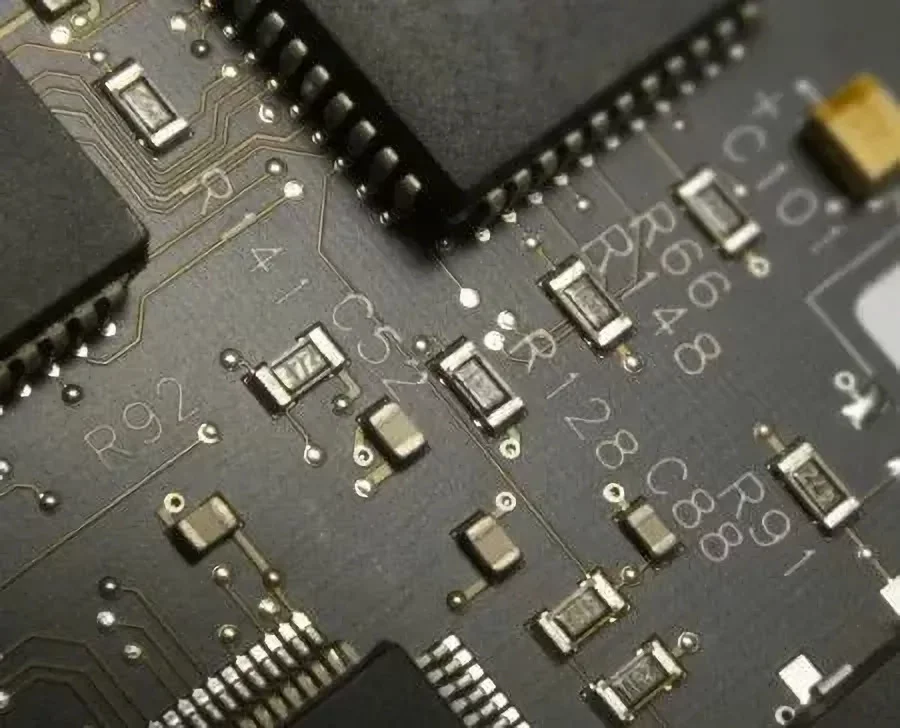
On assembled boards, sampling applies to visual criteria such as solder fillet shape, component alignment, and cleanliness, and to measurable characteristics such as hole diameter, plating thickness, and board dimensions. Destructive tests, like microsections, are usually sampled at a much lower rate than visual checks because the unit is consumed.
The plan should distinguish between attributes, which are counted, and variables, which are measured. Variables data from an SPC programme can justify reduced sampling, because the process is being monitored continuously rather than judged from a snapshot. Where SPC is not in place, attribute sampling remains the practical option.
Common Misuse and Pitfalls
The most common mistake is treating an accepted lot as proof that every unit is good. A sampling plan limits the risk of accepting a poor lot; it does not certify individual boards. Customers who then reject a field failure with the argument that the lot was accepted have misunderstood what the plan guarantees.
Other pitfalls include changing the lot definition to reduce the sample size, applying a single AQL to critical and cosmetic defects alike, and skipping the switching rules entirely. Sampling also fails when the inspection criteria are vague, because two inspectors counting different things cannot produce comparable data. Photographs of each defect class, agreed in advance, remove most of that ambiguity and make training new inspectors far quicker.
Records, Trends and Supplier Feedback
Every inspection should produce a record: lot identification, sample size, defects found by class, and the resulting decision. Over time those records show whether quality is improving or drifting, and they provide the evidence needed to move to reduced inspection or to justify a corrective action request.
Feedback should be specific. Telling a supplier that defects increased is less useful than showing that the majority were solder bridges on one connector family in the last three lots. Data with a pattern lets the supplier fix a cause rather than respond with general reassurance. A short monthly review of defect Pareto charts, shared with the supplier, is usually enough to keep the conversation focused on causes.
Writing the Requirement into the Purchase Order
The purchase order or specification should state the standard being used, the inspection level, the AQL values per defect class, how lots are defined, and what records must accompany the shipment. It should also state what happens when a lot is rejected, including who bears the cost of sorting and of expedited replacement.
Ambiguity here is expensive later. A supplier who is told only to apply an acceptable quality level will choose a convenient interpretation, which is rarely the one the customer intended. A page of clear requirements prevents weeks of dispute and gives both parties a shared definition of acceptable work.
FAQ
Does an accepted lot mean every board is good? No. Sampling accepts or rejects a lot based on a sample, with a defined risk of both accepting a poor lot and rejecting a good one. If a product requires unit-level assurance, that must be stated separately, usually through full inspection of specific critical characteristics.
What AQL should I specify for PCB fabrication? Most specifications classify defects by severity and assign values accordingly, with critical defects often at zero tolerance. The important step is to classify each defect type explicitly, because applying one loose limit to everything gives away protection on the characteristics that matter.
Can sampling be reduced over time? Yes, and it should be. A supplier with a consistent record and a monitored process can move to reduced inspection under the switching rules, which lowers cost for both parties. Reduction should be based on data and be reversible if performance slips.