PCB Assembly Process: PCB Design & PCB Manufacturing Guide
PCB Assembly (PCBA) is the process of mounting and soldering electronic components onto a printed circuit board (PCB) to create a complete and functional electronic circuit. A bare PCB provides the conductive pathways and mechanical foundation, but it cannot perform its intended electronic functions until components are installed and electrically connected.
Engineers, product designers, manufacturers, and companies developing electronic products all need to understand what PCB Assembly involves. From smartphones and medical equipment to industrial automation systems and automotive electronics, reliable PCB assembly is essential to the performance and service life of modern electronic products.
This guide explains what PCB assembly is, compares PCB and PCBA, introduces major PCB assembly methods, describes the complete assembly process, reviews testing and inspection techniques, discusses IPC standards, and provides practical guidance for choosing a reliable PCB assembly manufacturer.
What Is PCB Assembly?
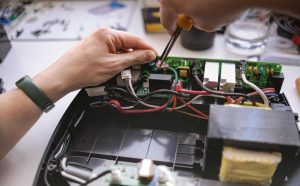
PCB Assembly is the complete process of converting a manufactured bare PCB into a functional electronic assembly by installing, soldering, inspecting, and testing electronic components.
Depending on the product requirements, components can be mounted using surface mount technology (SMT), through-hole technology (THT), or a combination of both.
Typical components installed during PCB assembly include:
- Resistors
- Capacitors
- Inductors
- Diodes
- Transistors
- Integrated circuits (ICs)
- Microcontrollers
- Connectors
- Switches
- Sensors
- LEDs
- Power components
After components are correctly placed and soldered, the assembled board undergoes inspection and electrical testing to verify that it meets the design requirements.
In other words, PCB manufacturing creates the physical circuit board, while PCB Assembly transforms that bare board into a functional electronic product.
How Does PCB Assembly Work?
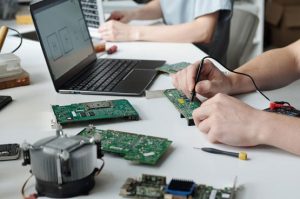
Once PCB fabrication is completed, the board enters the assembly stage. Depending on the design, the assembly process may involve SMT, THT, or mixed-technology assembly.
The basic workflow is:
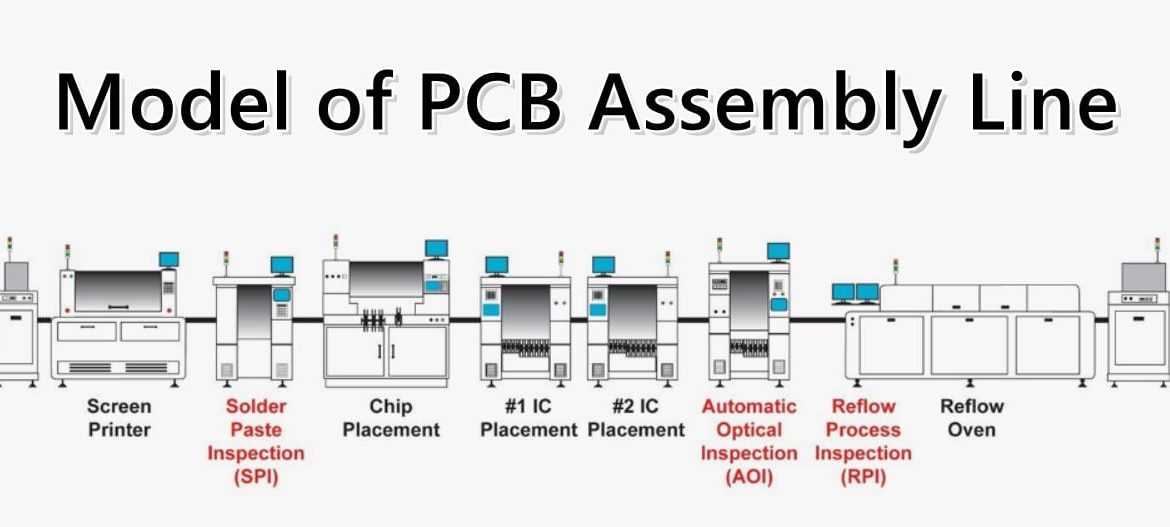
PCB Design → PCB Manufacturing → Solder Paste Printing → Component Placement → Reflow Soldering → THT Installation → Wave or Selective Soldering → Inspection → Cleaning → Testing → Final Assembly
Each stage is carefully controlled because an error in component placement, solder volume, soldering temperature, or inspection can affect the reliability of the finished PCBA.
Key Components Used in PCB Assembly
Electronic components installed on a PCB perform different electrical functions.
Passive Components
Passive components do not normally provide signal amplification or active switching. Common examples include:
- Resistors
- Capacitors
- Inductors
- Transformers
They are used to control current, voltage, filtering, timing, impedance, and energy storage.
Active Components
Active components perform functions such as switching, amplification, processing, and control.
Examples include:
- Transistors
- Diodes
- Integrated circuits
- Microcontrollers
- Microprocessors
- Power management ICs
Electromechanical and Interface Components
Depending on the application, PCB assemblies may also contain:
- Connectors
- Switches
- Relays
- Sensors
- LEDs
- Displays
- Antenna components
The selection and placement of these components must be considered during PCB Design to ensure electrical performance, manufacturability, thermal management, and mechanical compatibility.
PCB vs. PCBA: What Is the Difference?
PCB and PCBA are closely related terms, but they refer to different stages of electronic manufacturing.
| Feature | PCB | PCBA |
|---|---|---|
| Definition | Bare printed circuit board | Fully assembled printed circuit board |
| Components | No electronic components installed | Components installed and soldered |
| Function | Provides conductive paths and mechanical support | Performs the intended electronic functions |
| Manufacturing stage | PCB fabrication | PCB assembly |
| Typical inspection | Dimensional, visual, electrical bare-board testing | AOI, X-ray, ICT, FCT, visual and functional testing |
| Final use | Ready for component assembly | Ready for product integration |
Why Does the Difference Matter?
Understanding the difference between PCB and PCBA is important when requesting quotations or planning production.
PCB Manufacturing focuses on producing the physical circuit board, including:
- Copper layers
- Dielectric materials
- Vias
- Drilled holes
- Solder mask
- Surface finish
- Silkscreen
PCB assembly begins after the bare board has been manufactured and involves component sourcing, solder paste printing, component placement, soldering, inspection, and testing.
Confusing PCB fabrication with PCB assembly can result in inaccurate quotations, incomplete manufacturing requirements, or production delays.
Why Is PCB Assembly Important?
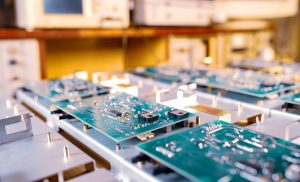
PCB assembly is one of the most important stages of electronic product manufacturing because it directly affects electrical performance, reliability, durability, and production yield.
Even a perfectly fabricated PCB can fail if components are incorrectly placed or soldered.
Ensures Reliable Electrical Performance
Proper component placement and soldering create reliable electrical connections between components and PCB pads.
High-quality assembly helps minimize:
- Open circuits
- Short circuits
- Intermittent connections
- Solder bridges
- Insufficient solder joints
- Incorrect component orientation
Improves Product Reliability
A properly controlled soldering process helps PCB assemblies withstand vibration, temperature changes, humidity, and other operating conditions.
This is particularly important for automotive, industrial, medical, aerospace, and other demanding applications.
Supports High-Volume Production
Automated PCB Assembly equipment enables manufacturers to produce large quantities of electronic assemblies with consistent placement accuracy and repeatable process control.
Automated SMT lines can place thousands of components per hour, depending on equipment configuration and component mix.
Reduces Maintenance and Repair Costs
A reliable PCBA is less likely to experience premature failures after deployment.
Better assembly quality can therefore reduce:
- Field failures
- Warranty claims
- Maintenance costs
- Product returns
- Rework requirements
Types of PCB Assembly
Different electronic products have different requirements for component density, mechanical strength, production volume, and reliability. Several PCB assembly methods are therefore used in modern manufacturing.
1. Surface Mount Technology (SMT)
Surface Mount Technology (SMT) is one of the most widely used PCB assembly technologies.
Instead of inserting component leads through holes, SMT components are placed directly onto PCB pads.
Advantages include:
- High component density
- Compact product design
- High-speed automated assembly
- Reduced component size
- Suitable for double-sided assembly
- Efficient high-volume production
SMT is widely used in smartphones, computers, communication equipment, consumer electronics, automotive electronics, and industrial products.
2. Through-Hole Technology (THT)
Through-Hole Technology (THT) involves inserting component leads through drilled holes in the PCB.
The leads are then soldered to the opposite side or within the plated-hole structure.
THT provides strong mechanical attachment and is commonly used for:
- Connectors
- Transformers
- Relays
- Large capacitors
- Power components
- Components exposed to mechanical stress
Although THT generally requires more board space than SMT, it remains important for applications where mechanical strength and component durability are priorities.
3. Mixed-Technology Assembly
Many modern products combine SMT and THT components on the same PCB.
This approach provides the compactness and automation advantages of SMT while retaining the mechanical strength of selected THT components.
Mixed-technology assembly is particularly useful when a PCB contains both high-density ICs and mechanically demanding components such as connectors or large power devices.
4. Single-Sided PCB Assembly
In single-sided assembly, components are installed primarily on one side of the PCB.
This approach is relatively simple and can reduce manufacturing complexity and cost.
It is suitable for simpler electronic products with relatively low component density.
5. Double-Sided PCB Assembly
Double-sided assembly places components on both sides of the PCB.
This increases the available component mounting area without requiring a larger board.
It is commonly used for products with moderate to high component density.
6. Multilayer PCB Assembly
Multilayer PCB assembly is used for highly complex electronic designs requiring multiple interconnected copper layers.
Multilayer PCBs are common in:
- Telecommunications
- Medical electronics
- Aerospace systems
- Servers
- High-performance computing
- Industrial control systems
- Networking equipment
Careful stackup planning, impedance control, thermal management, and component placement are essential when assembling advanced multilayer boards.
PCB Assembly Process
The PCB Assembly Process consists of multiple controlled manufacturing operations. Each step contributes to the electrical and mechanical reliability of the final PCBA.
1. PCB Design and Manufacturing Data Verification
Before assembly begins, the manufacturer reviews the available production data.
Typical files include:
- Gerber files
- Drill files
- BOM
- Pick-and-place files
- Assembly drawings
- Schematic information when available
- PCB fabrication specifications
The manufacturer may also perform a Design for Manufacturing (DFM) review to identify potential assembly problems before production.
2. Solder Paste Printing
For SMT assembly, solder paste is deposited onto selected PCB pads using a stencil.
The stencil controls where solder paste is applied and helps maintain consistent solder volume.
Printing accuracy is critical because insufficient or excessive solder paste can lead to:
- Weak solder joints
- Solder bridges
- Component shifting
- Tombstoning
- Open connections
3. Component Placement
After solder paste printing, automated pick-and-place machines accurately position SMT components on the corresponding PCB pads.
The machine uses the assembly data to determine:
- Component identity
- Component location
- Rotation
- Orientation
- Placement coordinates
High-speed placement equipment allows modern SMT production lines to assemble complex boards efficiently and consistently.
4. Reflow Soldering
After component placement, the PCB passes through a reflow oven.
The board is heated according to a controlled temperature profile. The solder paste melts during the reflow stage and forms permanent mechanical and electrical connections as it cools.
A typical reflow profile includes several stages:
- Preheating
- Soaking
- Reflow
- Cooling
The exact temperature profile depends on the solder alloy, PCB materials, component requirements, and process specifications.
5. Through-Hole Component Installation
If the PCB includes THT components, their leads are inserted through the appropriate plated holes.
Components may be inserted manually or using automated insertion equipment, depending on product design and production volume.
6. Wave or Selective Soldering
THT components may be soldered using wave soldering or selective soldering.
Wave soldering is suitable for efficient high-volume production when the board configuration allows the entire solderable region to pass over a molten solder wave.
Selective soldering provides more localized control and is particularly useful for mixed-technology PCBs where SMT components are already assembled and sensitive areas must be avoided.
7. PCB Cleaning
Depending on the soldering process, flux chemistry, product requirements, and cleanliness specifications, the assembled PCB may require cleaning.
Cleaning can remove:
- Flux residues
- Ionic contamination
- Manufacturing residues
- Other contaminants
The appropriate cleaning method depends on the assembly materials and the manufacturer’s process requirements.
For sensitive electronics, cleanliness can be important for reducing corrosion risk, leakage currents, and long-term reliability problems.
8. In-Process Inspection
Inspection points are integrated throughout the assembly process to identify defects before they move to subsequent production stages.
Early defect detection can reduce:
- Rework
- Scrap
- Production delays
- Material waste
It also helps improve overall manufacturing yield.
9. Electrical and Functional Testing
After assembly, the PCBA may undergo electrical and functional testing.
Testing confirms that the assembled circuit behaves according to the intended design before it is integrated into the final product.
PCB Assembly Testing and Inspection
Even a small soldering defect or incorrect component can cause an electronic product to malfunction. Comprehensive PCB Assembly Testing therefore plays an important role in quality assurance.
Automated Optical Inspection (AOI)
Automated Optical Inspection (AOI) uses cameras and image-processing software to inspect assembled PCBs.
AOI can identify defects such as:
- Missing components
- Incorrect component orientation
- Component placement errors
- Solder bridges
- Insufficient solder
- Excessive solder
- Visible solder defects
AOI is particularly valuable for high-volume SMT production because it provides fast and repeatable inspection.
X-Ray Inspection
X-ray inspection is used to examine solder joints and structures that cannot be inspected effectively from the surface.
It is especially useful for:
- BGA packages
- QFN packages
- Bottom-terminated components
- Hidden solder joints
- Voids within certain solder joints
X-ray inspection is a non-destructive technique and is valuable for advanced and high-density PCB assemblies.
In-Circuit Testing (ICT)
In-Circuit Testing (ICT) uses dedicated test equipment and fixtures to evaluate electrical characteristics and connections on the assembled board.
Depending on the test strategy, ICT can help identify:
- Open circuits
- Short circuits
- Incorrect component values
- Component placement problems
- Electrical connection failures
Functional Circuit Testing (FCT)
Functional Circuit Testing (FCT) evaluates whether the completed PCBA performs its intended functions.
The board is powered and operated under controlled test conditions to verify functions such as:
- Signal processing
- Communication
- Power conversion
- Input/output operation
- Sensor interfaces
- Control functions
FCT is particularly important when a board must perform complex functions that cannot be verified through visual inspection alone.
Factors That Affect PCB Assembly Quality
PCB assembly quality depends on more than soldering alone. Design decisions, materials, equipment, process control, component quality, and operator expertise all contribute to final product performance.
Component Quality
Components should be sourced through reliable and traceable supply channels.
Counterfeit, damaged, obsolete, or incorrectly specified components can cause premature failures even when the assembly process itself is correct.
Solder Paste Quality
Solder paste composition, storage conditions, handling, stencil design, and printing accuracy all affect solder joint quality.
Improper solder paste management can contribute to:
- Solder bridges
- Insufficient solder
- Poor wetting
- Weak solder joints
- Tombstoning
- Inconsistent reflow results
Process Control
Consistent process parameters are essential for repeatable production.
Important parameters include:
- Stencil printing settings
- Placement accuracy
- Reflow temperature profile
- Conveyor speed
- Soldering parameters
- Cleaning conditions
- Inspection criteria
Stable process control helps reduce variation between production batches.
Operator and Engineering Expertise
Although modern PCB assembly is highly automated, skilled engineers and technicians remain essential.
They are responsible for:
- Programming production equipment
- Reviewing manufacturing data
- Optimizing assembly processes
- Troubleshooting production problems
- Managing rework
- Verifying quality requirements
Quality Control
Reliable manufacturers use multiple quality-control checkpoints, including:
- Incoming inspection
- First article inspection
- In-process inspection
- AOI
- X-ray inspection
- ICT
- Functional testing
- Final inspection
A multi-stage quality system helps identify problems as early as possible.
Applications of PCB Assembly
PCB assembly is fundamental to electronic products across almost every major industry.
Consumer Electronics
Smartphones, laptops, tablets, smart TVs, game consoles, wearable devices, appliances, and other consumer products rely heavily on PCBA technology.
High-density SMT assembly allows manufacturers to integrate more functionality into increasingly compact products.
Automotive Electronics
Modern vehicles contain numerous electronic control systems for:
- Powertrain control
- Safety systems
- Infotainment
- Navigation
- Body electronics
- Driver assistance
- Battery management
Automotive PCB assemblies must withstand vibration, humidity, thermal cycling, and other demanding operating conditions.
Industrial Automation
Industrial equipment uses PCB assemblies for:
- PLCs
- Motor drives
- Robotics
- Industrial sensors
- Control systems
- Monitoring equipment
These assemblies often require high reliability and stable operation in demanding industrial environments.
Telecommunications
Telecommunication equipment uses advanced multilayer PCB assemblies to support high-speed signal processing and data transmission.
Signal integrity, impedance control, thermal management, and reliable solder connections are particularly important in networking and communication hardware.
Medical Electronics
Medical equipment often requires highly controlled PCB assembly processes because electronic failures can affect equipment availability and product performance.
Applications include:
- Patient monitoring systems
- Diagnostic equipment
- Imaging systems
- Laboratory equipment
- Portable medical devices
Depending on the application, additional traceability, validation, cleanliness, and quality requirements may apply.
Important IPC Standards for PCB Assembly
International industry standards help manufacturers establish consistent requirements for electronic assembly quality.
IPC-A-610: Acceptability of Electronic Assemblies
IPC-A-610 defines acceptability criteria for electronic assemblies.
It covers areas such as:
- Component installation
- Soldering
- Connections
- Assembly workmanship
- Cleanliness-related considerations
- Visual acceptance criteria
It is widely used as a reference for evaluating finished electronic assemblies.
J-STD-001: Requirements for Soldered Electrical and Electronic Assemblies
J-STD-001 establishes requirements for soldered electrical and electronic assemblies.
It addresses areas including:
- Soldering materials
- Soldering processes
- Workmanship requirements
- Process control
- Inspection requirements
It is particularly relevant to establishing consistent soldering practices.
IPC-2221: Generic Standard on Printed Board Design
IPC-2221 provides general design guidance for printed boards.
It addresses design considerations related to:
- Electrical requirements
- Mechanical requirements
- Materials
- Environmental conditions
- Reliability
- Manufacturability
Following appropriate design guidelines can reduce manufacturing problems and improve the transition from PCB Design to PCB Manufacturing and assembly.
How to Choose a PCB Assembly Manufacturer
Selecting the right PCB assembly partner can significantly affect product quality, production efficiency, cost, and time to market.
Manufacturing Experience
Choose a manufacturer with experience handling products similar to yours.
Relevant experience may include:
- High-density SMT
- Mixed-technology assembly
- Fine-pitch components
- BGA assembly
- High-reliability electronics
- Automotive electronics
- Medical electronics
- Industrial electronics
Testing and Inspection Capabilities
A capable manufacturer should have appropriate inspection and testing equipment.
Depending on the application, this may include:
- AOI
- X-ray
- ICT
- FCT
- SPI
- Visual inspection
- Electrical testing
A broader testing capability can help identify different types of manufacturing defects.
Component Sourcing and Supply Chain
Reliable component sourcing is essential for production continuity.
A qualified manufacturer should have appropriate supplier-management processes and component traceability systems to reduce the risk of counterfeit parts, shortages, and unexpected production interruptions.
Engineering and Customer Support
Strong engineering support can help identify problems before production begins.
Look for manufacturers that provide:
- DFM analysis
- Assembly design review
- BOM review
- Component engineering
- Process optimization
- Prototype support
- Production troubleshooting
Early technical communication can prevent costly design changes later.
Cost and Overall Value
Price is an important consideration, but it should not be the only selection criterion.
A low initial quotation may become expensive if it leads to:
- High defect rates
- Rework
- Production delays
- Component shortages
- Poor reliability
- Warranty claims
A more useful approach is to evaluate total manufacturing value, including quality, engineering capability, testing, supply-chain reliability, production capacity, and long-term support.
Conclusion
PCB Assembly is the critical process that transforms a bare printed circuit board into a functional electronic assembly. Every stage—from solder paste printing and component placement to reflow soldering, inspection, and electrical testing—can affect the final product’s performance, reliability, and service life.
Understanding the difference between PCB and PCBA, the various assembly methods, the complete PCB Assembly Process, testing technologies, and relevant IPC standards enables engineers and purchasing teams to make better manufacturing decisions.
As electronic products become smaller, more powerful, and more complex, reliable PCB assembly requires more than automated component placement. It requires strong PCB Design, controlled PCB Manufacturing, qualified components, precise soldering processes, comprehensive inspection, and effective testing.
For companies developing prototypes or preparing for mass production, working with an experienced PCB assembly manufacturer such as Kingda can help connect design, fabrication, assembly, testing, and production support within a coordinated manufacturing process. A qualified manufacturing partner can help identify DFM issues early, improve production consistency, reduce manufacturing risks, and support the transition from prototype to reliable mass production.