PCB Assembly Cost: What Drives the Quote
The question every project manager asks before a build is simple, and the answer is not. PCB assembly cost is the sum of the design, the parts, the process, the quantity, and the services attached to the order, and each of those has its own logic. Understanding the parts separately is what makes a quotation checkable instead of mysterious.
Design complexity
Layer count is the first variable. A four or six layer board costs more to assemble than a single-sided or double-sided board because it consumes more material and more labour at every stage. Component density is the second: a design populated with small packages and fine-pitch parts needs more precise placement and more careful handling, which raises the cost of the line time.
Board size interacts with both. A large panel consumes more material and more time per unit, while a very small board can be more expensive to process per unit because it demands greater positional accuracy in handling and test.
Component cost
Parts are usually the largest single line in an assembly quotation. Standard passives and common logic are inexpensive and predictable, while microprocessors, high-frequency modules, and custom devices can dominate the total. Availability matters as much as price: a part on a long lead time either delays the build or forces a purchase at a premium, and both outcomes appear in the price.
Component sourcing is also a service decision. A turnkey build puts procurement with the assembler, which simplifies the project but adds a margin to the parts. Consignment supplies the parts yourself, which can reduce the cost and increases the work at your end, along with the risk of a shortage mid-build.
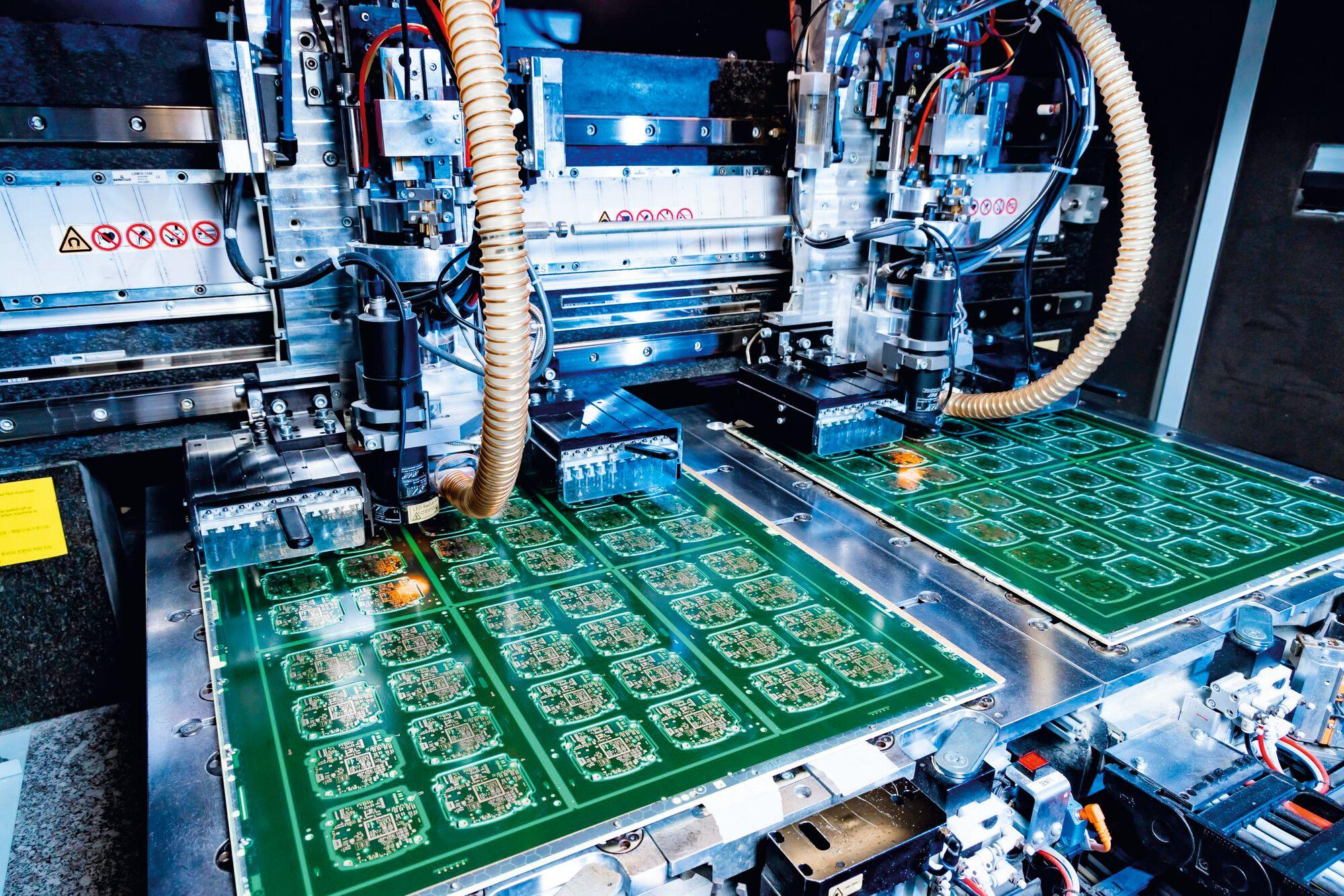
The bill of materials decides the price of an assembly more often than the assembly process does. A design review of the BOM is usually the highest-value cost exercise in a project.
Volume and the commercial model
Quantity changes the unit price through setup time. Tooling and a stencil have to be made, the line has to be programmed and set up, and the first article has to be inspected, and those costs are fixed. On a small order they dominate; on a large order they disappear into the unit price.
This is why a prototype is expensive per board and a production run is not. It is also why the honest comparison between two suppliers is made at the same quantity with the same specification, since a quote at a different volume measures a different thing. Panelising several different boards into one run has a similar effect on setup time, because the line is programmed and verified once while several products share the benefit.
Assembly technology
Surface mount assembly is the standard route for modern boards, and it is the most cost-effective way to place a high component count. Through-hole technology is used for parts that cannot be reflowed, such as large connectors or power devices, and it needs more manual labour. A mixed-technology board pays for both processes, because it passes through the line more than once.
The choice is usually made by the components rather than by cost. Selecting through-hole parts where a surface mount equivalent exists adds labour to every unit for the life of the product, and that is a decision worth revisiting while the design is still open.
Services that add cost, and are usually worth it
Inspection and test are the most common additions. Functional test verifies that the assembly works, automated optical inspection verifies that it looks correct, and X-ray inspection verifies the joints that cannot be seen. Each one adds cost and each one removes a class of escape, so the decision is about which failures would be most expensive in the field rather than about whether testing is affordable.
Conformal coating adds material and labour but extends the life of the assembly in moisture or chemical environments, and it is cheaper to apply as part of the build than to retrofit. A full box build, where the board is installed in an enclosure with wiring and hardware, adds assembly labour to the quotation but removes an entire coordination problem from the project.
How the cost bands behave
Prototype and small-batch orders carry the highest unit cost, because tooling and stencil charges, line setup, and first-article inspection are spread across few boards. Medium batches reduce the unit price noticeably as those fixed costs are diluted. High-volume production reaches the lowest unit cost, but only after the design and the process are stable enough that yield is predictable.
The direction of travel is always the same, and the practical implication is that a design should be frozen before the volume rises. Moving to production at a higher quantity with an unsettled design multiplies the cost of the next change order.
Cost per unit falls with volume; cost per change rises with it. That is the trade-off behind every decision to freeze a design.
Reducing cost without reducing quality
Most of the available savings are in the design. Reducing layer count where the routing allows it, using standard component sizes instead of exotic packages, and removing parts that exist only for margin all lower the quotation without touching quality. Standardising the bill of materials across products compounds the benefit, because quantities can be combined.
The rest is scheduling. Expedite charges exist because a line has to be rearranged, so planning further ahead removes a cost that buys nothing. Buying long-lead components early avoids premium purchases later, and choosing an assembly partner whose capacity matches the order size avoids paying enterprise prices for a small build. Panelising several boards into one assembly operation reduces setup time per unit as well.
What to send with a request for quotation
A complete quotation request includes the fabrication data and the bill of materials, the assembly quantity, the required delivery date, and any special requirements such as test coverage or coating. It should also state which parts are consigned and which are to be procured, because that single line item changes both the price and the responsibility split.
Ask for the quotation to be itemised by tooling, components, assembly, and services. An itemised quote can be compared with another supplier and it reveals the assumptions, while a single figure hides them. It is worth asking, as well, what the quotation excludes: programming time, stencil ownership, first-article approval, and packaging are common omissions that reappear later as change orders. More background on how a board moves from design data to a finished assembly is available in our guide to the PCBA development process; the two service decisions that appear most often in quotations are covered under conformal coating for board protection and placement order and pad positioning.
FAQ
What is the biggest single cost in a PCB assembly quote? Usually the components. They are also the line most affected by availability, so a bill of materials review tends to save more than a negotiation on labour rates.
Is turnkey always more expensive? The parts are marked up, but the assembler carries the procurement risk and the shortage work. For small teams it is often cheaper in total, even when it is more expensive per part.
How much does quantity really change the price? Enough that a quote at one volume says little about another. Asking for two or three quantities with the same specification is the fastest way to see where the fixed costs end.