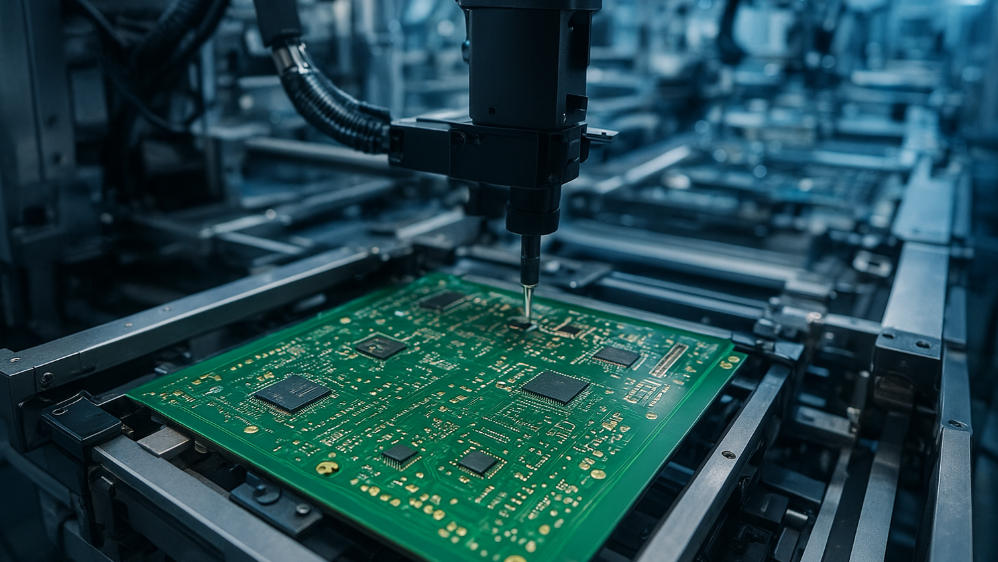
PCB Coating Adhesion Test: Practical Process Controls Buyers and engineers often focus on the finished product and forget the production line behind it. In practice, most field failures can be traced back to process decisions made during assembly. Understanding PCB coating adhesion test gives you a practical advantage when you…

Parasitic Elements in PCB Design: Stray Capacitance and Inductance Every trace on a board is a component. It has resistance, it has capacitance to whatever is next to it or beneath it, and it has inductance along its length. The designer did not place these elements, which is exactly why…
Backplane Design: Thick Boards, Press-Fit Connectors and Stubs A backplane is the board that connects everything else. It carries little or no active circuitry, it is often the thickest board in the system, and it is expected to survive being assembled once and then working for a decade. Designing one…
Ground Plane Splitting: When It Helps and When It Hurts Separating the analogue ground from the digital ground is one of the most widely repeated pieces of advice in hardware design, and it is also one of the most widely misapplied. The reasoning behind it is sound: digital circuits switch…
PCB Conformal Coating Bubbling: When the Coating Blisters Electronics manufacturing has become a discipline of small details. Solder paste volumes, placement accuracy, temperature profiles and inspection limits all add up to the final result. This guide looks at PCB conformal coating bubbling from the perspective of a PCBA factory floor,…
Multilayer PCB Manufacturing: Registration, Lamination and Drilling Multilayer boards are not simply conventional boards stacked up. The number of layers, the thinness of the dielectric between them, the density of the routing, the number of holes and the size of the panel all combine to make a different set of…
Pad Naming Convention: Building a Library That Stays Readable A pad name is the label a layout tool uses to match a net, a symbol pin and a footprint pad. When the convention behind those names is inconsistent, the mistakes appear late and quietly: a component that connects to the…
USB-C Hub Design: PD Negotiation, Alt Mode and Routing A USB-C hub or dock looks like a small accessory and contains problems from several disciplines at once. It negotiates power with the host, it switches video lanes between two protocols, it carries multi-gigabit differential pairs through connectors and PCB traces,…
Humidifier Circuit Design: Driving an Ultrasonic Transducer A humidifier looks like a simple appliance: a tank, a fan and something that turns water into mist. Electrically it contains a mains input, an isolated supply, a high frequency high voltage driver, a microcontroller with sensors, and a set of protections that…
Core Board Power Design: Rails, Sequence and Copper A core board built around a high performance applications processor is a power design problem wearing a digital costume. The device presents a dozen or more supply rails at different voltages and very different current levels, it changes its load in nanoseconds,…