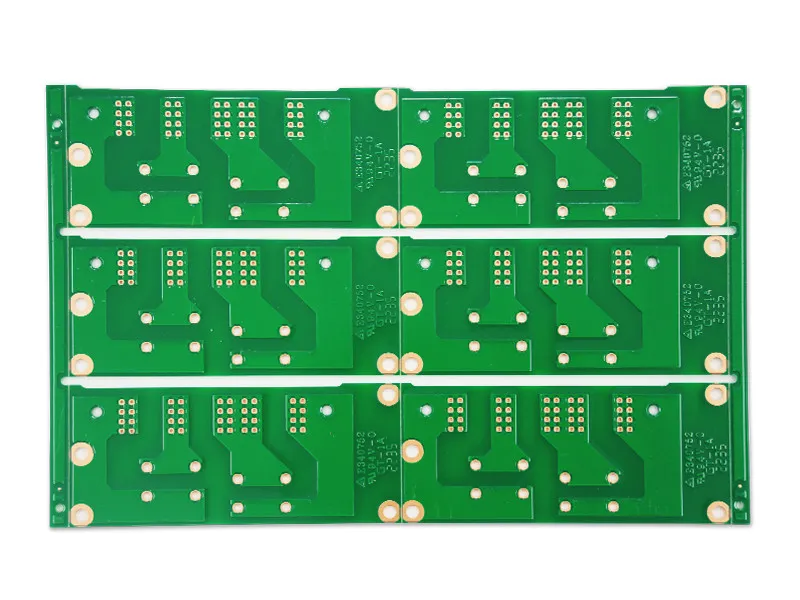
Ceramic PCB Basics: Materials, Processes and Selection When FR-4 Is the Wrong Answer Consumer and industrial electronics are built on glass fibre epoxy laminates, and for the overwhelming majority of products that is correct. But as power density rises, feature sizes shrink and operating environments become harsher, the limitations of…
PCB Copper Dissolution in Wave Solder: Losing Copper to the Solder Buyers and engineers often focus on the finished product and forget the production line behind it. In practice, most field failures can be traced back to process decisions made during assembly. Understanding PCB copper dissolution in wave solder gives…
Wireless Module PCBA Assembly: RF, Quality and Cost Where Radio Performance Is Decided Wireless modules are now embedded in almost everything: IoT sensors and gateways, industrial monitoring, smart home products, wearables and consumer devices. Whatever the radio technology, whether Wi-Fi, Bluetooth, LoRaWAN, NB-IoT, LTE or 5G, the final performance of…
PCB Gold Embrittlement in Solder Joint: Process Details and Inspection Points Buyers and engineers often focus on the finished product and forget the production line behind it. In practice, most field failures can be traced back to process decisions made during assembly. Understanding PCB gold embrittlement in solder joint gives…
Quick Turn PCB Sourcing: China vs United States vs Europe What a Real Quick Turn Service Has to Deliver Speed alone does not make a quick turn PCB service useful. A supplier who promises twenty four hours but cannot answer a design question for two days, or who can build…
PCB Lead Free HASL Versus Leaded: What Matters on the Production Line Buyers and engineers often focus on the finished product and forget the production line behind it. In practice, most field failures can be traced back to process decisions made during assembly. Understanding PCB lead free HASL versus leaded…
Eighteen Layer PCB Boards: Stackup, Process and Cost Where High Layer Counts Earn Their Cost As systems integrate more interfaces, run faster and demand tighter power integrity, the multilayer board has to grow. An eighteen layer board sits in the territory where the additional layers are no longer about fitting…
PCB Mixed Alloy Solder Joint: When Two Solders Meet Electronics manufacturing has become a discipline of small details. Solder paste volumes, placement accuracy, temperature profiles and inspection limits all add up to the final result. This guide looks at PCB mixed alloy solder joint from the perspective of a PCBA…
Why Impedance Changes Along a High Speed Trace A Trace Is Only a Transmission Line While It Behaves Like One Once signal edges become fast enough that the rise time is short compared with the trace length, the interconnect stops behaving like a wire and starts behaving like a transmission…
PCB Bismuth Solder Reflow Profile: Key Process and Quality Checks Modern electronics depend on boards that are assembled correctly the first time. Every product – a phone, a charger, a medical instrument or an industrial controller – relies on thousands of solder joints that must conduct current for years. This…