Component Adhesives and Staking
Why Bond a Component
Adhesive is used on an assembly for several reasons: to hold a component during a wave soldering operation, to stop a heavy component moving under vibration, to reduce the load on a solder joint, to seal a component against moisture and to secure a wire or a connector body. Each purpose calls for a different material and a different application, and the choice should follow the purpose rather than the material that happens to be available. A bond that is applied for the wrong reason can cause more problems than it solves, particularly if it makes rework impossible or if it stresses the joint it was meant to protect.
Holding Components for Wave Soldering
Where a board carries surface mount parts on the underside before a wave process, the parts have to be held in place, and a dot of adhesive is the standard method. The adhesive is dispensed between the pads before placement, the component is placed into it, and the adhesive is cured before the wave. Its properties matter: it must not spread onto the pads, it must cure at a temperature the assembly tolerates, and it must not lift the component or leave it tilted. The dot’s size and position are part of the process, and a dot that is too large can push the component up off its paste.
Reducing the Load on a Joint
A heavy component, such as an electrolytic capacitor or a large inductor, loads its joints through the distance between its centre of mass and the board. Under vibration that load becomes a fatigue cycle, and a crack forms. A bead of adhesive along the component’s base or a bond to a nearby structure distributes the load into the board and reduces the strain at the joint. The adhesive’s modulus and its coefficient of expansion should be considered, because a rigid material with a very different expansion from the component will introduce its own stress during temperature cycling. A compliant material is usually the better choice for this purpose.
Staking and Structural Bonding
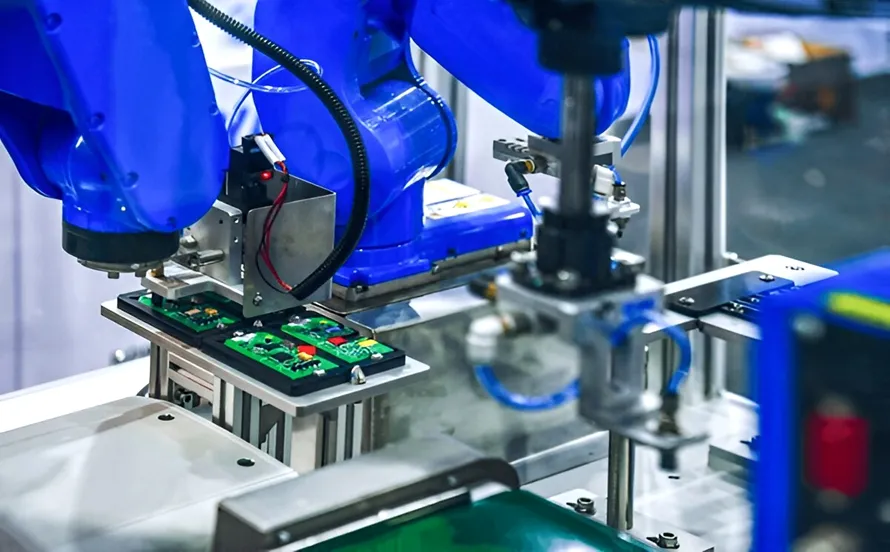
Staking is the use of adhesive to secure a component or a wire as a structural measure, often where the component is large or the environment is severe. The material is applied as a bead or a fillet, sometimes on two or more sides of the part, and it may be extended to the board or to a neighbouring structure. The bond’s strength, its temperature range and its cure have to suit the application, and the staking should not create a rigid bridge that transfers a load into a different part of the board. Where the assembly will be coated, the adhesive’s compatibility with the coating should be confirmed, since a coating over a staking material is a common source of adhesion failures.
Materials
The common materials are epoxy, polyurethane, silicone and acrylic, and each has a place. An epoxy gives the strongest bond and the best chemical resistance and is used where the bond is structural. A polyurethane is more compliant and tolerates thermal cycling better. A silicone is the most compliant and has the widest temperature range, and it is the usual choice for a component that must move slightly. An acrylic cures quickly under ultraviolet light, which suits a process that needs a fast hold. The selection should consider the modulus, the expansion, the cure mechanism, the temperature range and the rework requirement.
Application and Cure
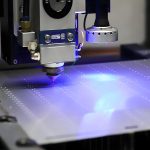
The application is by a dispenser with a needle or a jet, and the volume has to be controlled because a variable dot changes the bond’s strength and can contaminate a pad. The cure may be thermal, ultraviolet or a combination, and the cure schedule has to be within the assembly’s tolerance. A shadowed area under a component may not receive enough ultraviolet light, so a dual cure material or a thermal cure is used where the geometry is complex. The cured adhesive should be inspected for its size, its position and its bond, and the process should be verified by a destructive test on a sample where the load matters.
Rework and Its Consequences
An adhesive changes the rework. A component that is bonded with a rigid material is difficult to remove without damaging the board, the pads or the neighbouring parts, and the residue has to be removed before a replacement can be fitted. Where a product may need a repair, the adhesive should be chosen so that it can be cut or softened, or its use should be limited to the components that will not be reworked. The decision belongs in the design and the process specification rather than being made at the repair bench, because the repair is where the material’s rework consequences appear.
Verification and Records
The verification depends on the purpose. A holding adhesive is verified by its position and its cure, a staking adhesive by its size and its bond, and a structural bond by a destructive test on samples. The material, its lot, the dispense pattern and the cure should be recorded with the product, since the adhesive is difficult to inspect after assembly and the record is the evidence. Where the product has a reliability requirement, the bonded components should be included in the vibration and thermal cycling tests, because the adhesive changes the assembly’s mechanical behaviour and the test without it is not representative.
FAQ
Why use adhesive on a component? To hold it during processing, to reduce the load on its joints, to secure it structurally or to seal it.
Which material is best for a heavy component? Usually a compliant one such as a silicone or a polyurethane, since a rigid bond introduces its own thermal stress.
Why can a big adhesive dot be a problem? It can lift the component off its paste before reflow, and it can spread onto a pad.
How does adhesive affect rework? A rigid bond is difficult to remove and its residue must be cleaned, so the choice should consider the repair policy.
How is a structural bond verified? By a destructive test on samples, since the bond cannot be inspected after assembly.
Conclusion
Adhesive is applied for a purpose, so choose the material for that purpose and control the volume and the cure. Consider the rework before the bond is made. Bonding practice belongs to PCB assembly, the placement and the wave process sit in SMT PCB assembly, and the acceptance is part of quality management. Bonding requirements for a new product are set during prototype PCB assembly in 2026.