PCB Contract Manufacturer Selection: Choosing a Builder
Electronics manufacturing has become a discipline of small details. Solder paste volumes, placement accuracy, temperature profiles and inspection limits all add up to the final result. This guide looks at PCB contract manufacturer selection from the perspective of a PCBA factory floor, covering selecting a contract manufacturer and the checks that turn a capable line into a predictable one.
1. What PCB Contract Manufacturer Selection Means in Practice
The capability, the capacity and the way each one handles change.
2. Why It Matters
A builder chosen on price alone usually costs more by the second order.
3. Inspection and Testing in Practice
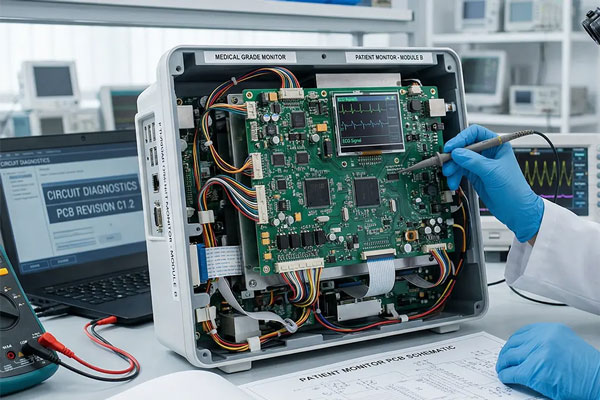
First article inspection plays a special role at the start of every order. The first board is checked against the design in detail: component values, orientation, polarity and solder quality are verified before the line continues, which prevents an entire batch from inheriting a setup error. After the run, every board passes automated optical inspection, and samples move on to electrical test so the solder joints and the circuit are both proven before packing; this combination is the core of a practical PCBA testing plan.
Traceability turns good intentions into proof. The factory records which program ran, which reels of paste and components were used, which operator handled the job and what the inspection found. When a field return arrives six months later, that record is the fastest way to find the cause, and it is the clearest evidence that a documented quality management system is working.
4. Doing It
The candidates are audited and a trial build is run before commitment.
5. The Production Route in Practice
Practical control of the process starts with setup discipline. Operators verify the program, the tooling and the materials before the first board runs, and engineers monitor parameters during production rather than waiting for the end of the batch. Paste volumes, placement offsets and oven temperatures are compared with the specification, and deviations are corrected while they are still small. That routine keeps SMT PCB assembly predictable even when the product mix changes. Documenting turnkey PCB assembly alongside it makes the improvement cycle repeatable for every new program.
6. Applications Across Industries
Application experience also matters for manufacturability. A factory that has built similar products for PCB quality, supplier and management already knows the typical failure modes, the component pitfalls and the customer questions. That knowledge shortens the DFM review, avoids repeated trial batches and makes the transition from prototype to volume production much smoother for the buyer.
7. Details That Are Easy to Overlook
Collecting data about selecting a contract manufacturer pays for itself quickly. Print reports, placement statistics, oven profiles and test results cost little to record, yet they turn arguments into decisions: when a customer complains, the batch record shows what actually happened, and when a process drifts, the trend line reveals it before scrap grows. Factories that treat records as part of the process rather than paperwork tend to find problems while they are still cheap to fix, and their customers see the difference in delivery performance and defect rates over time.
8. Factory Line or In-House Bench?
A dedicated line only pays for itself when it runs constantly, and keeping process data, calibration records and quality documentation current takes engineering time that is easy to underestimate. Most product companies therefore choose a partner that spreads its equipment investment over many customers and offers services such as high volume PCB assembly and PCB assembly under one roof.
When factories are compared, the price per board should never be the only number. Process controls, inspection equipment, component sourcing and communication decide the real cost, and a partner that reviews files before production, reports risks honestly and keeps its delivery promises will always be cheaper in the long run than one that quotes low and surprises later.
9. How gopcb Supports Your Build
A clear quote from our factory states audit in the breakdown, so the buyer knows exactly what is included before placing the order.
At gopcb, process control is a habit rather than an exception. Every batch is printed, placed and reflowed against a written specification, inspected at the right stages and tested before packing. Our engineers speak the same language as your design team, so questions about pads, profiles and tolerances are answered quickly.
Contact gopcb with your design files today. We will confirm the manufacturability of your board, recommend the right assembly route and deliver quality boards on the schedule your product launch needs.
Nothing about selecting a contract manufacturer is decided once and forgotten. Parameters drift, materials change and operators rotate, so the factory reviews its data continuously, ranks the top defects and removes them one by one. Factories that follow this discipline gradually lower their defect rates and shorten their lead times, while factories without data simply repeat the same mistakes at the same cost. The improvement review should happen at least monthly, with the same attendees and the same metrics, so progress stays visible and no problem waits for a crisis to be fixed.
The best factories treat selecting a contract manufacturer as a system rather than a checklist. Every decision, from stencil cleaning frequency to test coverage, connects to the others, so a change in one area is checked against its effect on the rest. A faster placement speed may save time today and create tombstoning tomorrow, and a thicker stencil may fix opens while causing bridges. That systems view, supported by data from inspection and test, is what turns a capable line into a predictable one over years of production.
Communication decides how well selecting a contract manufacturer matches the product intent. When the buyer shares the operating environment and the reliability target, and the factory answers with concrete process choices and test plans, small process changes are approved before they become quality incidents. Regular reporting during production keeps both sides aligned from prototype to volume, and a written summary of every change gives both parties a record they can trust at the end of the program.
Every person touching the process needs training, and that rule applies fully to selecting a contract manufacturer. Operators must understand why a parameter window exists before they adjust it, inspectors must know what a real defect looks like, and engineers must be able to explain a change in the data. Factories that invest in training get faster responses to problems and fewer repeated mistakes, because knowledge on the floor is what turns written procedures into daily practice.
Suppliers and materials carry risks of their own, especially when it comes to selecting a contract manufacturer. A component that quietly changes its plating, a solder paste batch with different viscosity or a reel stored in humidity can all shift the process without any machine warning. Professional factories qualify their materials, check certificates of analysis and keep alternates approved in advance, so a supply change never becomes a quality incident on the production line.
Conclusion
Put simply, PCB Contract Manufacturer Selection is not one decision but a series of small ones running from the first drawing to the shipping carton. Each of them is ordinary on its own, and taken together they decide whether the boards reach the assembly line ready to use. Handling them in order, with the numbers written down, is what separates a stable supply from a permanent firefight.
That is the full picture on “PCB Contract Manufacturer Selection: Choosing a Builder”. For layout review, board fabrication, SMT assembly, component sourcing, stencil production, conformal coating, final assembly or test, contact gopcb with your files. You will receive a DFM report, an itemised quotation and a production schedule in writing before anything is committed to the line.