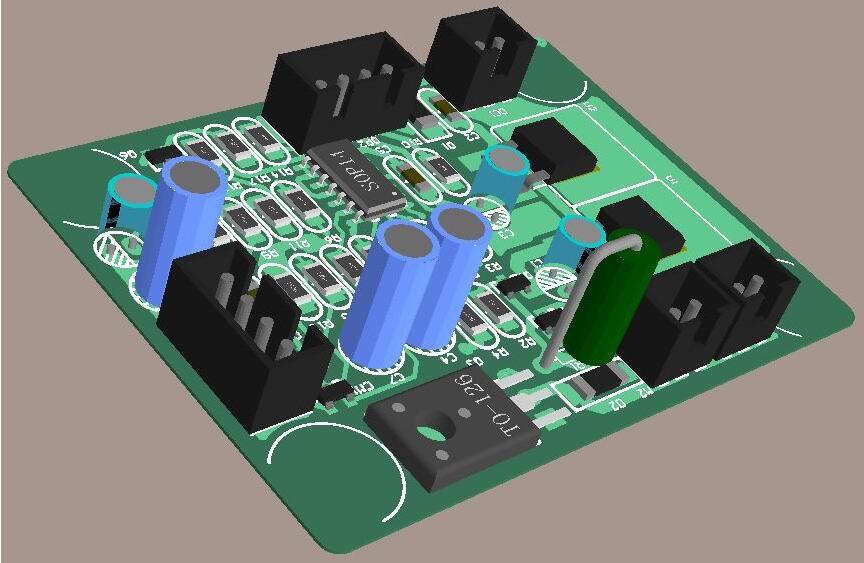
Depaneling Methods Compared
Depaneling is the step that separates the finished boards from the panel, and the depaneling methods in common use differ mainly in where they put the stress. Every method applies some force or some heat to the board, and the difference between them is where that energy goes and how much of it reaches a solder joint. Choosing a depaneling method is therefore a decision about the components on the board as much as about the outline and the volume.
The Methods in Use
Routing uses a rotating bit to cut the outline. It follows any shape, it leaves a clean edge and the force it applies is mostly in the plane of the panel.
Scoring cuts a V shaped groove on both faces and the board is snapped along the line. It is fast, cheap and restricted to straight lines.
Laser depaneling cuts the outline with a focused beam. It applies no mechanical force, it can follow a complex outline and it produces a charred edge that has to be considered.
Punching and Hand Separation
Punching uses a die to shear the panel along the outline. It is very fast for a high volume rectangular board and it requires a dedicated die, which makes it unsuitable for a low volume or a frequently changing design.
Hand snapping breaks the boards out by hand or with a simple fixture. It applies an uncontrolled bending moment, and its use should be restricted to a board with generous margins and no brittle components near the separation line.
A cutting tool such as a shear or a hand router is sometimes used for a single board. It gives no control over the edge and it should be treated as a repair method rather than a production one.
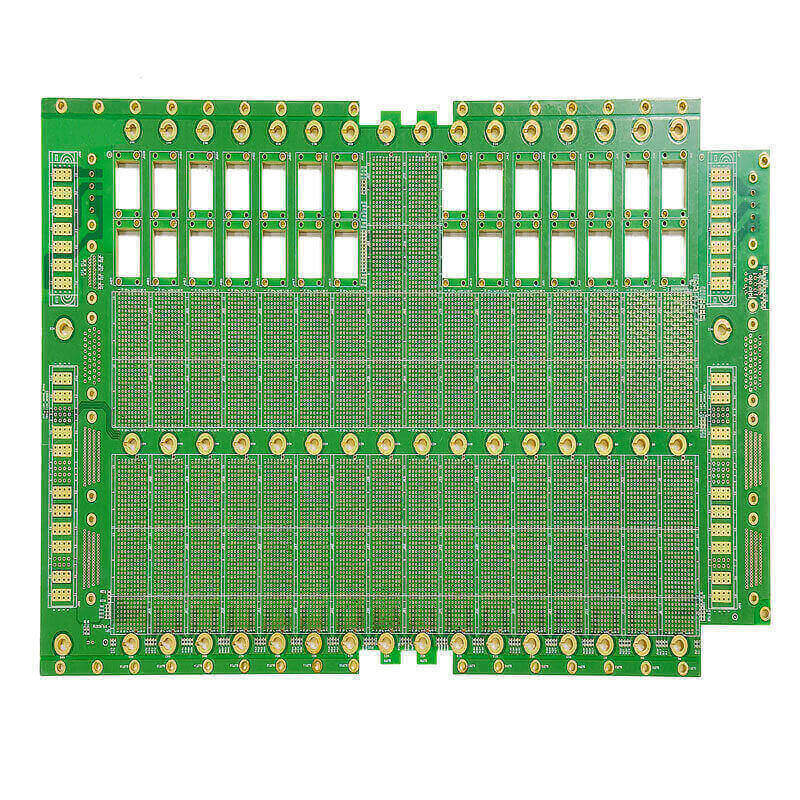
Stress and the Joint
The mechanical methods apply a strain to the board, and the strain is largest close to the separation line. A solder joint or a ceramic capacitor within a few millimetres of the line sees the greatest bending.
Routing and laser cutting apply the least, and the difference is large enough to change the layout rules for the components near the edge. Scoring applies a bending moment at the snap, and hand separation applies an uncontrolled one that depends on the operator.
The design response is to keep the critical components away from the separation line. A keep out of a few millimetres costs nothing and removes the problem entirely, and it should be part of the layout rule set rather than a later correction.
Edge Quality
A routed edge is smooth and square with a slight tool mark. A scored edge carries a taper from the groove and a ridge where the web broke. A laser cut edge is clean in shape with a narrow heat affected zone that may be discoloured.
A punched edge is sheared and shows a burnished band and a fracture band. The proportion of the two depends on the clearance between the punch and the die, and a correct clearance gives a clean edge while an excessive one tears the material. The clearance should be set from the material thickness and the temper of the copper, and it should be recorded with the die.
The edge requirement should come from the product. A board that slides into a connector or sits in a housing with a defined gap needs a predictable edge, while a board that is mounted on standoffs inside a case does not.
Volume and Changeover
Routing is the most flexible method. The program is a file and a change of design is a change of the file, so the changeover cost is low. The cycle time per board is the longest of the methods.
Punching has the lowest cycle time and the highest tooling cost. It suits a product that will be built in large numbers without a change to the outline.
Laser and routing both suit a design that changes, with the laser usually faster on a complex outline and the router cheaper to run on a simple one.
Heat and Material Effects
Laser cutting introduces heat into a narrow zone along the edge. The laminate is vaporised and the adjacent material is heated, which can char the resin and change its properties close to the cut.
The heat affected zone is narrow but it is a different material from the rest of the board, and its adhesion and its moisture behaviour differ. Where the edge is used for a seal or for an adhesive bond, the zone should be removed or the edge should be cut by another method.
Mechanical methods also generate heat, but it is generated in the chip rather than in the board, and the extraction carries it away. A dull router bit or a blocked extraction changes that balance and heats the board.
Fixtures and Handling
Every mechanical method needs the panel to be held. A fixture that supports the panel close to the cut reduces the deflection and improves the edge, and one that clamps only at the edges allows the middle to move.
The fixture also protects the components. A board that is held by its components or that has a connector resting on the fixture table will be damaged before the cut begins.
The handling after separation matters as well. A separated board that is dropped into a bin can crack a joint that survived the cut, and the collection method should be part of the process rather than an afterthought. A tray or a conveyor that receives the board without dropping it is cheap insurance against a defect that stays invisible until the test.
Choosing the Method
The choice follows from the outline, the volume, the edge requirement and the components. A rectangular board in high volume is punched or scored, a shaped board in low volume is routed, and a board with a critical component close to the line is laser cut or routed.
The cost comparison should include the tooling, the cycle time, the yield and the cost of the defects. A cheap method that damages a few joints per panel can be the most expensive option on the list.
The decision should be made with the fabricator and the assembler, because the array, the outline and the assembly handling are all connected and a change after the tooling is released affects all of them.
Practical Rules
Keep a keep out around the separation line, support the panel near the cut and choose the method from the outline and the components. Inspect the edge against a sample and treat the separated boards carefully.
Record the method and the parameters with the build records and the panelization design, and review the router bit selection and the v cut scoring guide when a method is compared.
FAQ
Which depaneling method stresses a board least? Laser cutting, because it applies no mechanical force, followed by routing. Scoring and hand snapping apply a bending moment at the separation line.
What is the limit of v cut scoring? Straight lines only, and it leaves a tapered edge. A shaped outline or a critical edge needs routing or laser cutting.
Why keep components away from the separation line? The strain is largest within a few millimetres of the cut. A keep out removes the risk at no cost, whatever method is used.