



PCB Industry in 2026: The Computing Power Core
Printed circuit boards carry every powered device, from smart home nodes to AI servers and automotive controllers. Entering 2026, three forces reshape the industry at once. AI computing demand is exploding, vehicles are electrifying and adding intelligence, and domestic supply chains are maturing fast. The old trough caused by weak consumer electronics is gone. Growth is now steady in total volume but sharply split by product tier.
The same year brings real friction. Low-end and mid-range capacity is crowded, high-end materials and equipment remain bottlenecks, and weaker manufacturers face a shakeout. Engineers and buyers feel this split directly in lead times, quoting behavior and material availability. A board that was routine two years ago may now sit in a different supply tier. Understanding where your product falls on that ladder is the first planning step for 2026.
Market Scale and Structure
Global PCB output value reached about 84.9 billion US dollars in 2025, growing more than 15 percent year on year. Forecasts for 2026 point to roughly 94 to 98 billion dollars, with growth near 12 to 15 percent. The industry is approaching the 100 billion dollar mark. More important than the headline number is the mix. Ordinary multilayer growth has slowed to a crawl, while high-layer-count, high-frequency, high-order HDI and substrate products drive the increase.
China remains the largest production base, with a domestic market above 500 billion yuan in 2025 and a global share above 53 percent. That share may climb toward 54 to 56 percent in 2026. Complete local chains now cover copper-clad laminate, copper foil, equipment and processing. For buyers, this means sourcing options are deep at the low end. At the high end, the number of qualified suppliers stays small, and capacity is often booked well ahead.
AI Computing Demand
AI servers set the pace for the whole industry in 2026. Their boards are far more demanding than traditional server boards. Layer counts move from 8 to 12 layers up to 20 to 40 layers, and the most advanced models exceed 70 layers. Per-machine board value rises several times over. These boards need high-speed, low-loss laminate grades such as M8.5 and M9, which pushes process control to its limits.
Demand growth outruns supply. Global AI server shipments are expected to grow by more than 55 percent year on year, and effective capacity covers only part of the requirement. Leading manufacturers have their lines locked by long-term orders from chip vendors and cloud operators. Full utilization is normal, and pricing power sits with suppliers who can hold yield on these stacks. Buyers should plan early and expect firm, less flexible schedules for computing boards.
Yield on these stacks is fragile because the process window is narrow. A small drift in lamination pressure or ramp rate can leave voids between high-layer pairs. Back-drilling depth must stay inside a tight band, or the stub reflects signal energy at high data rates. Impedance coupons should be measured on every panel lot, not only at first article. Buyers should ask for the coupon data and the drill log before approving volume.
Automotive and Communications
Automotive electronics forms the second growth curve. New energy vehicle penetration, 800V platforms, smart cockpits and driver-assistance controllers all raise board content. A conventional fuel vehicle carries about 1,000 yuan of PCB value, while new energy models reach 3,000 to 5,000 yuan and high-end intelligent models exceed 6,000 yuan. High-frequency automotive boards keep taking a larger share of that total, and domestic suppliers now serve major vehicle makers directly.
Communications and consumer electronics are recovering from the bottom. 5G base stations, 1.6T switches and optical modules pull high-frequency and high-speed demand, with growth near 10 percent. In consumer products, AI phones and AI PCs lift demand for high-order HDI, and boards above six orders have become mainstream. HDI growth should stay above 15 percent in 2026. Together these segments support steady volume, though margins remain thinner than on computing boards.
Automotive work adds its own failure modes. Thermal cycling in the engine bay and under the hood stresses plated barrels and solder joints. A void at the barrel wall may pass initial test and open after a few hundred cycles. Buyers should request thermal cycling data and confirm the via fill and plating thickness on the drawing. High-frequency radar and antenna boards also need tight dielectric constant control, so material certificates matter as much as the artwork.
Low-End Overcapacity
Expansion over the past two years concentrated in conventional boards, where technical thresholds are low and margins are thin. Capacity in that tier grew faster than demand, creating a clear supply and demand imbalance. Products are highly similar, so competition runs on price. Gross margins keep compressing, and some smaller manufacturers face losses or suspended production. The shakeout will accelerate through 2026 as weaker players exit.
For buyers, this tier offers leverage on price but carries supply risk. A supplier that wins on price alone may not survive a slow quarter. Check financial stability, delivery history and process documentation before committing volume. A partner with sound quality management will show records rather than promises. Where the design allows, standardize on proven stackups so you can move between qualified suppliers without a full requalification cycle.
High-End Capacity Gap
High-end capacity is scarce in the opposite way. Only a limited number of domestic plants can mass-produce high-layer computing boards and advanced HDI. These products demand fine-line processing, tight lamination control, signal integrity discipline and thermal design. Processes such as mSAP, anylayer build-up and thick copper through holes raise the yield threshold. Small and medium manufacturers find it hard to enter, so the gap between tiers widens each year.
Upstream materials add another constraint. High-speed low-loss laminate, high-end copper foil and precision equipment have long been dominated by American and Japanese suppliers. Domestic breakthroughs exist but remain limited in volume. Expansion cycles for high-end lines run 18 to 24 months, which limits how fast capacity can respond. Buyers of computing boards should treat material qualification as part of the schedule, not an afterthought.
Material qualification itself takes time and costs money. A new laminate grade must pass thermal, electrical and process trials before it enters a controlled stackup. Dielectric loss and glass weave effects can shift insertion loss enough to fail a link budget. Buyers should ask which grade is qualified on which line, and whether an alternate is approved. A second source that is named but never built is not a real backup.
Technology and Localization
Technology is moving toward finer features and higher speeds. Layer counts cross from below 16 layers to 20 to 80 layers. Line width and spacing shrink from 50 micrometers toward 30 and 20 micrometers. Signal rates climb from 16 Gbps to 112 and 224 Gbps. Substrates, substrate-like boards and rigid-flex boards take a larger share as equipment becomes more integrated and compact.
Localization is advancing in steps. Conventional boards and ordinary HDI are fully domestic. High-order HDI localization may rise from 40 percent in 2025 to above 50 percent in 2026. Domestic laminate makers have broken through M8 and M9 grades and gained customer certification. IC substrates remain the hardest frontier, with key breakthroughs but limited volume. Green manufacturing also spreads, with lead-free and halogen-free substrates moving from about 65 percent toward 85 percent usage.
Finer features raise the cost of every process step. A 30 micrometer line needs thin copper, tight etch control and clean imaging to hold width. Registration between layers becomes critical as layer counts rise, because a small offset can short a via to a plane. Buyers should ask how the supplier measures registration and what limit it holds. Process capability data on a real production lot is stronger evidence than a capability chart.
What Buyers Should Verify
Ask suppliers which tier of work they actually run, and ask for evidence. Request stackup proposals with material grades named, not generic FR-4 claims. Confirm lamination cycles, drilling capability and impedance control methods for your design. For prototypes, use rapid PCBA prototyping to validate the stack before committing to volume. Early samples reveal pad geometry issues and process behavior while changes are still cheap.
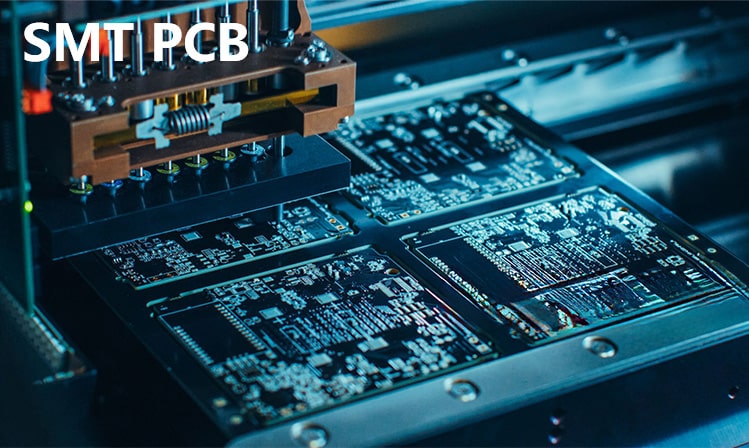
Assembly and test deserve equal scrutiny. Confirm that SMT PCB assembly lines support the finest pitch on your board and that paste print and placement are monitored. Ask how PCBA testing covers opens, shorts and functional behavior under power. For mixed technology or box-level work, review the full PCB assembly scope before quoting. Documentation, inspection data and test reports show whether process control is real or only described.
Change notification is another item to settle in writing. Materials, operators and programs change over a product life, and each change can shift yield. Ask how the supplier informs you of a laminate substitution, a plating line move or a drill program update. Require approval before any change reaches your boards. A clear change process protects both sides and prevents a quiet substitution from becoming a field failure later.
Planning Through 2026
The lesson for 2026 is to match your design to the supply tier that can build it reliably. High-layer computing boards need early capacity booking and qualified materials. Automotive boards need high-frequency capability and traceable process records. Consumer and industrial boards can use competitive pricing, but only with a supplier whose stability you have checked. Choosing the right track matters more than shaving a few percent off a quote.
Build a qualification file for each supplier: stackup approval, first article data, test coverage and change notification terms. Review it before every major order, because materials and operators change over time. Design reviews, pilot runs and written records cost little at the start and save far more later. That discipline is what carries a product from first sample to steady volume in a year defined by structural split rather than simple growth.