PCB Manufacturing Cost: Key Factors That Affect PCB Pricing
PCB manufacturing cost is a major consideration for electronics companies, product developers, and procurement teams. Understanding how PCB pricing is calculated can help businesses select suitable materials, optimize board designs, control production expenses, and choose the right manufacturing process.
The final cost of a PCB is rarely determined by board size alone. Material selection, copper thickness, layer count, circuit density, special manufacturing technologies, production quantity, delivery requirements, and quality standards can all influence the final quotation.
This guide explains the main factors that determine PCB Pricing and provides a practical overview of how manufacturers evaluate PCB production costs.
Material selection is one of the most important factors affecting PCB Manufacturing Cost. Different PCB applications require different substrate materials, copper weights, solder masks, and other production materials.
Copper-clad laminate is the fundamental material used to manufacture printed circuit boards. Its electrical, thermal, and mechanical properties directly influence both PCB performance and production cost.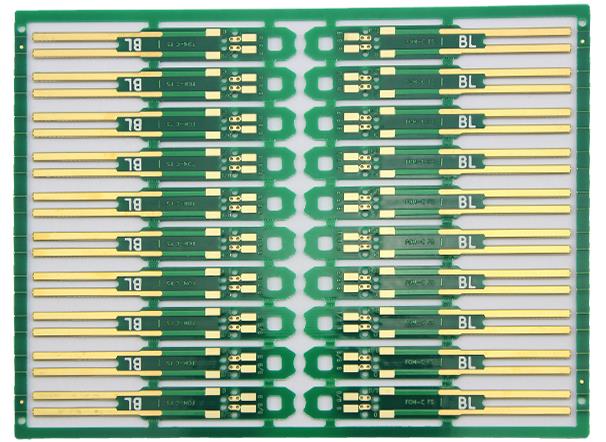
FR-4 is one of the most widely used materials because it offers a good balance between electrical performance, mechanical strength, thermal resistance, and cost. It is suitable for many general-purpose electronic products and industrial applications.
For high-frequency or high-speed applications, however, conventional FR-4 may not provide the required electrical characteristics. Specialized materials, including PTFE-based laminates and other high-performance substrates, may be required. These materials generally cost more because of their specialized properties and manufacturing requirements.
Copper foil is responsible for forming the conductive circuitry of a PCB. Its thickness is another important component of PCB Pricing.
In general, thicker copper requires more raw material and additional processing. Heavy-copper boards can therefore cost considerably more than standard boards. Copper prices in the global market can also affect material costs and ultimately influence PCB quotations.
Different copper foil technologies may also be selected depending on the application. For example, specialized low-profile copper foil may be required for high-speed circuit designs where signal integrity is particularly important.
In addition to laminate and copper foil, PCB production involves solder mask ink, silkscreen ink, surface finishes, chemicals, and other consumables.
Standard materials are usually more economical, while specialized materials may increase production costs. For example, high-performance solder mask materials may provide improved insulation, chemical resistance, and reliability for demanding applications.
Although these materials may represent a smaller percentage of the total cost than the laminate or copper, they still contribute to the final quotation.
The complexity of a board has a significant impact on PCB Manufacturing Cost. As circuit density, layer count, and manufacturing requirements increase, more processes, equipment, engineering time, and inspection procedures may be required.
For projects that require complete fabrication from bare board production through assembly, choosing an experienced PCB Manufacturing partner can also help reduce manufacturing risks and improve cost control.
Layer count is one of the most obvious factors affecting PCB cost.
Single-sided and double-sided PCBs generally require fewer manufacturing steps and are relatively straightforward to produce. Multilayer PCBs, on the other hand, require additional inner-layer fabrication, lamination, drilling, registration, and inspection processes.
As the number of layers increases, manufacturing becomes more demanding. A 4-layer board typically requires more processing than a 2-layer board, while high-layer-count designs require even tighter control of layer alignment, dielectric thickness, impedance, and interconnection reliability.
Therefore, increasing the layer count generally results in a higher PCB quotation.
High-density interconnect technology can significantly increase manufacturing costs because it involves more advanced fabrication processes.
HDI PCBs may use laser-drilled microvias, blind vias, buried vias, sequential lamination, and fine-line circuit structures. These processes require specialized equipment and strict process control.
Microvia diameter, via depth, pad dimensions, layer registration, and circuit spacing all need to be carefully controlled. The additional engineering and manufacturing requirements can make HDI boards substantially more expensive than conventional PCBs.
High-frequency and high-speed circuit boards require greater attention to material selection, impedance control, signal integrity, dielectric characteristics, and transmission-line geometry.
Specialized laminate materials may be necessary to achieve stable electrical performance at higher frequencies. Manufacturers may also need to control trace width, spacing, dielectric thickness, copper roughness, and layer stack-up with greater precision.
These requirements increase engineering complexity and production costs compared with standard PCB fabrication.
The tighter the manufacturing tolerances, the greater the potential production cost.
Trace width and spacing are important indicators of PCB manufacturing difficulty. Standard designs are generally easier to fabricate, while very fine lines and spaces require more precise imaging, etching, plating, and inspection processes.
Drilling requirements also affect cost. Small holes, high aspect ratios, tight positional tolerances, and large numbers of vias may require advanced drilling equipment and additional process control.
When a PCB design requires extremely fine features, manufacturers may also need to account for increased production difficulty and yield risks.
Production quantity has a direct influence on PCB Pricing because PCB manufacturing involves both fixed and variable costs.
A PCB prototype usually involves engineering preparation, tooling, programming, material setup, and process adjustment. When only a small number of boards are produced, these fixed costs are distributed across fewer units.
As a result, the unit price of a prototype PCB can be significantly higher than that of a large production order.
For product development projects, PCB Prototype production is often necessary because engineers need to validate circuit performance, mechanical compatibility, component selection, and manufacturability before committing to larger production volumes.
A dedicated PCB Prototype service can help companies identify design and manufacturing problems earlier, reducing the risk of expensive redesigns later in the development cycle.
Low-volume PCB production is useful for engineering verification, pilot production, product testing, and early-stage commercialization.
As order quantities increase, setup and engineering costs can be distributed across more boards. Manufacturers may also achieve better material utilization and purchasing efficiency.
For companies that need small production runs without immediately committing to mass production, Low Volume PCB Assembly can provide a practical transition between prototype development and full-scale manufacturing.
Large production orders typically benefit from economies of scale. Fixed costs such as engineering preparation, tooling, programming, and production setup can be distributed across a greater number of units.
High-volume manufacturing can therefore reduce the average cost per PCB, provided that the design, materials, production process, and quality requirements remain stable.
However, large-volume production also requires strong process control, stable supply chains, reliable quality systems, and consistent production capacity.
Production lead time is another factor that can influence PCB Manufacturing Cost.
Under a standard production schedule, manufacturers can arrange materials, equipment, engineering resources, and production capacity according to normal planning procedures.
Urgent PCB orders require manufacturers to prioritize production, rearrange manufacturing schedules, accelerate material preparation, and sometimes allocate additional labor or production resources.
For this reason, expedited PCB manufacturing is normally more expensive than standard production.
Companies should therefore balance delivery requirements with actual project needs. If a standard production schedule is acceptable, avoiding unnecessary rush orders can help reduce overall procurement costs.
When evaluating the total cost of an electronic product, it is important to distinguish bare-board manufacturing costs from PCB Assembly costs.
A finished PCBA may require component sourcing, solder paste printing, component placement, reflow soldering, inspection, through-hole soldering, testing, and other processes.
For projects that require surface-mount components, SMT PCB Assembly can be an important part of the overall manufacturing quotation. The number of components, component package types, placement density, board complexity, and inspection requirements can all affect assembly costs.
For products requiring both surface-mount and through-hole components, additional assembly processes may be necessary.
If the project requires PCB fabrication, component procurement, assembly, and testing under one manufacturing workflow, a Turnkey PCB Assembly solution can simplify supplier management and reduce coordination between multiple vendors.
Quality requirements can also affect PCB Pricing.
Manufacturers serving demanding industries may need to implement stricter incoming-material inspection, process control, traceability, electrical testing, dimensional inspection, and final quality checks.
Automotive electronics, medical electronics, industrial control systems, telecommunications equipment, and other reliability-sensitive applications may require higher manufacturing and inspection standards than basic consumer electronics.
For example, automotive-related PCB production may require compliance with automotive quality management requirements, while medical electronics can require additional controls to support product reliability and regulatory expectations.
Higher quality requirements generally mean greater investment in engineering, inspection equipment, process management, documentation, and personnel training. These additional resources are reflected in the overall manufacturing cost.
Reducing PCB Manufacturing Cost does not necessarily mean selecting the cheapest material or the lowest-cost supplier. A better approach is to optimize the complete design and manufacturing process.
Use the minimum practical number of layers while maintaining the required electrical performance, routing density, power integrity, and mechanical requirements.
Unnecessary layers can increase laminate consumption, lamination processes, drilling requirements, and overall manufacturing costs.
High-performance materials should be used when the application requires them, but they are not always necessary for conventional circuits.
Selecting an appropriate laminate according to frequency, thermal requirements, mechanical conditions, and reliability expectations can help balance performance and cost.
Extremely tight trace, spacing, hole, and registration requirements can increase manufacturing difficulty.
Designing according to realistic manufacturing capabilities can improve production yield and reduce unnecessary costs.
If a product is expected to move from prototype to mass production, discussing the expected production volume with the manufacturer early can help optimize materials, tooling, panelization, and manufacturing processes.
A design optimized only for prototypes may not always be the most economical solution for high-volume production.
Design for Manufacturing can identify potential fabrication problems before production begins.
A professional manufacturing review can detect issues related to trace spacing, hole sizes, component placement, soldering, panelization, and material selection. Correcting these issues during the design stage is usually much less expensive than fixing them after production.
A reliable PCB quotation requires more than simply providing the board dimensions.
Manufacturers typically need information such as:
For assembled boards, additional information such as the BOM, component specifications, PCB design files, assembly drawings, and testing requirements may also be necessary.
Providing complete and accurate manufacturing data allows suppliers to evaluate the project more efficiently and provide a more reliable quotation.
There is no single fixed price for PCB production because every board has different material, design, manufacturing, quantity, and quality requirements.
The major factors affecting PCB Manufacturing Cost include material selection, copper thickness, layer count, HDI technology, high-frequency requirements, manufacturing precision, order quantity, lead time, assembly requirements, and quality standards.
For prototype projects, cost optimization should focus on rapid validation and manufacturability. For low-volume production, the goal is to balance flexibility and unit cost. For high-volume production, process stability, yield, material efficiency, and supply-chain consistency become increasingly important.
Understanding these factors before requesting a quotation allows engineering and procurement teams to make better decisions and avoid unexpected costs.
Ultimately, the most competitive PCB Pricing is not simply the lowest initial quotation. It should reflect the right combination of manufacturing capability, quality, reliability, delivery performance, and long-term production value.