Medical Robot PCB Assembly
Precision That Has to Hold for Years
A surgical robot, a rehabilitation exoskeleton or an imaging robot is judged by how precisely it moves and how reliably it repeats that motion. The servo drive, the force feedback, the imaging chain and the embedded controller all sit on boards, and the assembly quality of those boards sets the accuracy the machine can achieve. This is not a case where a component tolerance can be absorbed by the software: a joint that misreads its position is a clinical event.
Medical robot assembly is therefore treated as high reliability electronics work, with the placement accuracy, cleanliness and traceability that the application demands rather than the tolerances of consumer production.
The Electronic Subsystems Involved
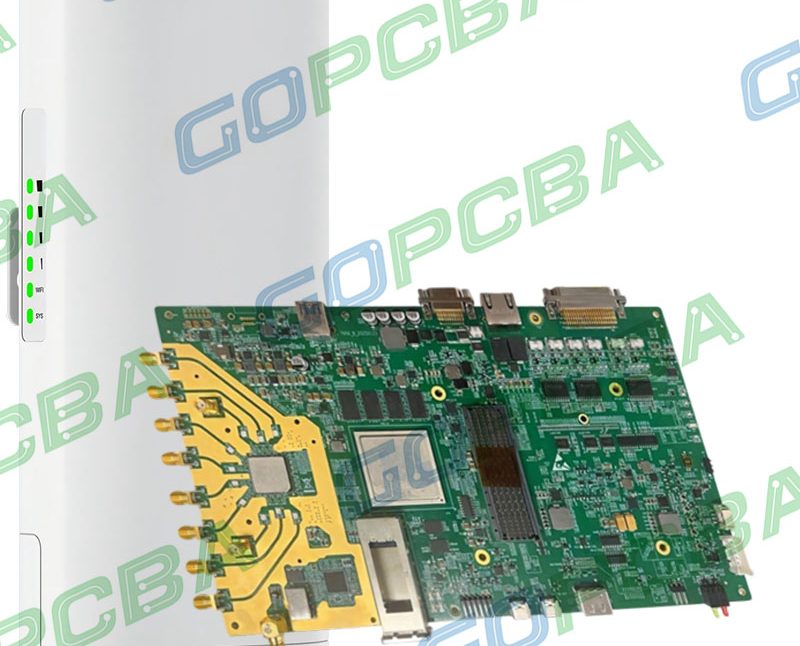
A modern medical robot integrates motion control and servo drive electronics, high speed data acquisition and signal processing, vision and imaging modules, and the embedded computing that runs the control algorithms. Each of these places different demands on the board: the servo drive handles current and switching, the acquisition chain cares about noise, and the computing section is a dense high speed digital design.
What they share is the requirement that the board keeps working while the machine moves, vibrates and runs continuously for hours.
What Precision Assembly Means
Precision in this context is measurable. Components are placed with a tolerance measured in tens of microns, which allows fine pitch integrated circuits, micro ball grid arrays, quad flat no lead packages and chip scale packages to be assembled reliably. Multi layer boards of eight to twenty layers or more, with laser drilled microvias and buried via structures, are used to fit the routing into the space available.
Just as important as the placement is the control of the process around it: solder paste printing that deposits the same volume every time and a reflow profile developed for the specific mix of packages and laminate on the board. Our PCB assembly group runs this class of build.
Reliability and Life
Medical robots are designed for a service life of seven to ten years or more, during which they run continuously, move repeatedly and are exposed to the electromagnetic noise of their own motors and actuators. The board has to survive that without drifting out of specification, which puts the emphasis on solder joint integrity, on the mechanical design of connectors and heavy components, and on the robustness of the assembly to vibration.
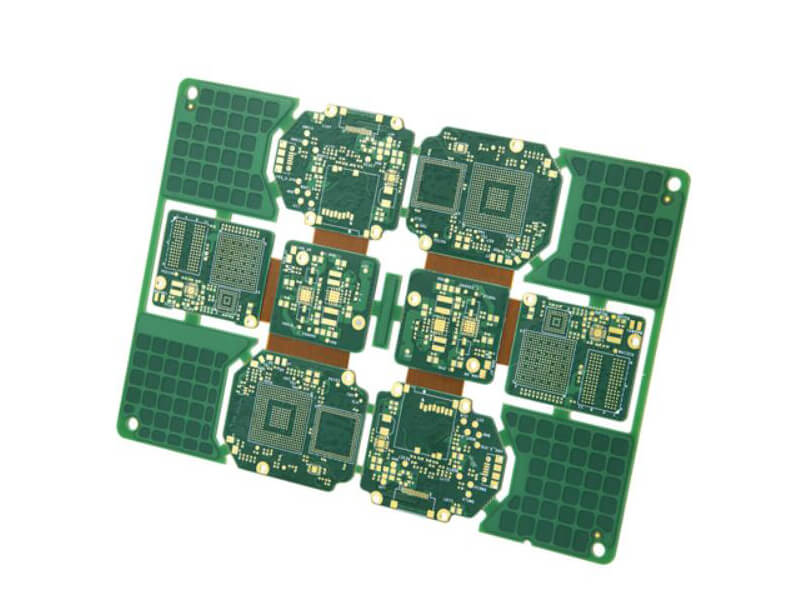
Where the machine is mobile, the boards also see shock and, in some cases, repeated flexing, which is where rigid flex and mechanically reinforced constructions earn their cost.
Noise, EMI and Thermal Control
Servo drives switch large currents and the acquisition chain measures small signals, so the two have to be kept apart on the board and in the grounding plan. Good assembly quality supports this by delivering the connection quality the design assumed: a joint with a void under a ground pad raises the impedance, and an impedance that was not designed in becomes a coupling path.
Meeting the electromagnetic compatibility requirements of a medical device depends on both the design and the build, and thermal reliability in a sealed enclosure depends on the heat path being built as designed, which is again an assembly question.
Standards and Compliance
Because the machine interacts with patients, the manufacturing process itself is validated rather than merely monitored. Reflow profiles, paste printing parameters and inspection settings are established during the pilot stage and held within defined limits afterwards, so that the board delivered in year three is built the same way as the board that was validated in year one. Any change to a material, a process or a supplier is assessed and revalidated before it is introduced.
The work is carried out under an ISO 13485 quality system with controlled processes, document management and batch traceability, and the boards are built to IPC Class 3 where the application is safety critical. Regulatory submissions for the device in each market rely on the manufacturing records, so the traceability is not an optional extra.
Our notes on medical PCBA and quality management describe how the process is controlled and recorded.
Process and Inspection
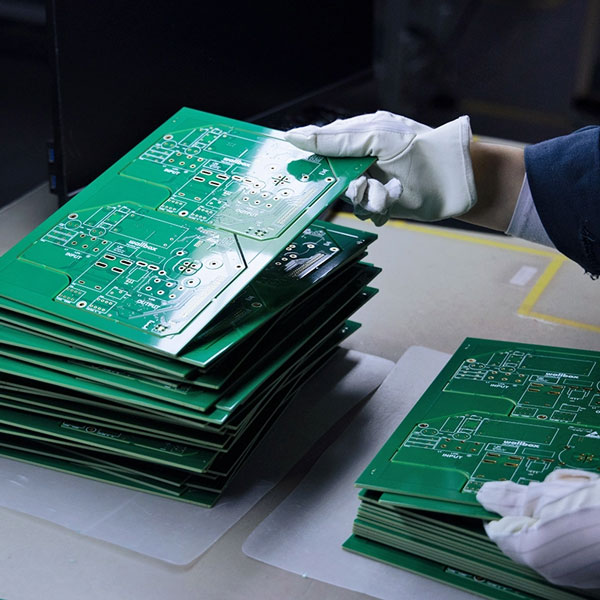
Assembly uses high precision surface mount for the smallest packages, mixed surface mount and through hole where connectors and power devices require it, automated optical inspection for the visible joints and X-ray for the area array packages. Electrostatic discharge protection and a clean environment protect the sensitive devices and reduce the risk of contamination that could affect the coating or the long term reliability of the assembly.
Every board is inspected, not sampled, and the inspection data is retained as part of the device record.
Design for Manufacture and Assembly
Reviewing the design for manufacture and assembly before the board is released is what prevents the majority of yield problems. Pad and footprint optimisation, a balanced placement that does not overload one side of the board and a component selection made with the medical requirement in mind all improve the outcome.
Engineering review also identifies the parts that should be substituted for medical qualified equivalents before the design is frozen, which is far cheaper than a change after validation.
Prototype to Volume
The development path runs from prototype boards used for design verification, through small pilot builds for clinical testing, to compliant volume production. The pilot stage is particularly important in medical work, because the process has to be validated and the test coverage has to be proved before the design is committed to production.
Volume production then holds the process stable and optimises consistency and cost without changing the validated outcome.
Cost Structure
The cost of a medical robot board reflects the layer count, the density and package mix, the cost of the components, the depth of inspection and test and the documentation required for the medical submission. Prototype and clinical quantities are expensive per unit because the engineering and validation work is spread over few boards, while volume production reduces the unit cost substantially.
The fixed compliance effort does not disappear with volume, so it should be planned for rather than treated as a surprise.
Choosing a Partner
The questions that matter are whether the manufacturer has medical electronics experience, whether it builds to IPC Class 3, whether the traceability system can support a regulatory audit and whether engineering support is available during development. A partner that can contribute at the design stage is worth more than one that only quotes a build. See our notes on PCBA testing for how the test strategy is built.
FAQ
What is precision PCB assembly in this context? Placement accuracy measured in tens of microns, with fine pitch and area array packages, supported by controlled paste printing and a developed reflow profile.
Which standards apply? ISO 13485 for the quality system, IPC Class 3 for the assembly, and the regulatory requirements of the device in each market.
How much does it cost? Prototype assemblies typically run in the hundreds of dollars each, with volume production falling substantially as the quantity rises.
Is a pilot build necessary? Yes. It validates the process and the test coverage before volume production, which is a requirement in medical work.
Conclusion
A medical robot board is a precision assembly that has to hold its accuracy for a decade. Fine pitch placement, controlled processes, thorough inspection, IPC Class 3 construction and traceable medical manufacturing are what make the machine’s precision possible, and they are worth building in from the first prototype rather than adding later.