The price of a printed circuit board is influenced by much more than its dimensions and layer count. PCB Price depends on material selection, board structure, manufacturing processes, design complexity, quality requirements, production volume, and the capabilities of the selected PCB Manufacturer.
For engineers and purchasing teams, understanding these cost drivers makes it easier to prepare accurate quotations, optimize PCB designs, and select the right manufacturing process without compromising reliability.
Below are seven major factors that influence PCB Manufacturing Cost.
1. PCB Materials Have a Direct Impact on Price
The materials selected for a PCB are one of the most important factors affecting its cost. Different substrates, copper weights, dielectric constructions, and solder mask materials have different prices and manufacturing requirements.
For standard two-layer boards, common substrate options include FR-4 and other cost-optimized materials. For demanding applications, manufacturers may use high-Tg, halogen-free, low-loss, or other specialty materials.
Board thickness and copper thickness also affect material consumption and processing requirements. A thicker PCB generally requires more laminate and may require longer or more controlled processing. Likewise, heavier copper increases material usage and can make etching and plating more difficult.
Other material-related factors include:
- PCB Materials and laminate grade
- Overall board thickness
- Copper weight
- High-Tg or halogen-free requirements
- High-frequency or low-loss dielectric materials
- Solder mask type and color
- Surface finish
- Special stiffeners or mechanical materials
Therefore, choosing the appropriate PCB Materials according to electrical, thermal, mechanical, and environmental requirements is an important way to control PCB Price.
2. Different PCB Manufacturing Processes Create Different Costs
The selected PCB Manufacturing Process also has a significant effect on the final price.
A basic double-sided PCB with conventional through-hole technology generally requires fewer manufacturing steps than a high-density multilayer PCB with microvias, sequential lamination, controlled impedance, or other advanced structures.
Surface finish is another important cost factor. Common options include HASL, lead-free HASL, OSP, immersion silver, immersion tin, and ENIG. Each process has different material costs, equipment requirements, process controls, and performance characteristics.
For example, ENIG generally requires more processing steps and tighter chemical control than conventional HASL. However, it provides a flatter surface that can be advantageous for fine-pitch components and certain SMT applications.
Other process-related cost factors include:
- Through-hole plating
- Blind and buried vias
- Microvia formation
- Sequential lamination
- Controlled-depth drilling
- Heavy copper plating
- Fine-line fabrication
- Controlled impedance
- Special surface finishes
- Additional inspection and testing
Consequently, the PCB Manufacturing Process should be selected according to the actual electrical and mechanical requirements rather than simply choosing the most advanced option.
3. PCB Design Complexity Affects Manufacturing Cost
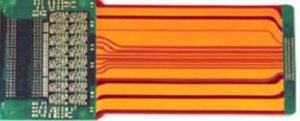
Even when two PCBs use the same material and basic manufacturing process, their prices can differ significantly because of PCB Design Complexity.
For example, a board with a large number of holes may require substantially more drilling time than a board with a simple hole structure. Small drill diameters, tight hole-to-copper spacing, high aspect ratios, and dense via arrangements can further increase manufacturing difficulty.
Trace width and spacing are also important. A conventional design with relatively generous spacing is generally easier to manufacture than a fine-line design with narrow traces and small spaces.
Design characteristics that may increase PCB Manufacturing Cost include:
- High layer counts
- Fine trace width and spacing
- Small mechanical drill diameters
- Microvias
- High-aspect-ratio holes
- Tight registration requirements
- Dense component and via placement
- Controlled impedance structures
- Heavy copper
- Complex board outlines
- Multiple lamination cycles
As manufacturing tolerances become tighter, process control becomes more demanding and the risk of yield loss may increase. For this reason, designers should consider manufacturability during the PCB layout stage.
4. Quality Requirements and Inspection Standards Influence PCB Price
Customer quality requirements can have a direct impact on PCB Price.
Different applications require different levels of quality control. A general consumer product may have different acceptance criteria from automotive, industrial, aerospace, medical, or other reliability-critical applications.
Requirements may involve dimensional tolerances, conductor quality, hole quality, solder mask appearance, surface finish, electrical testing, cleanliness, and documentation.
For example, customers may require:
- IPC-based acceptance criteria
- 100% electrical testing
- Automated optical inspection (AOI)
- X-ray inspection
- Impedance testing
- Microsection analysis
- Thermal stress testing
- Solderability testing
- Reliability testing
- Detailed inspection reports
Higher inspection coverage and stricter acceptance criteria can increase production and quality-control costs. However, these controls may be essential for applications where long-term PCB Reliability is critical.
The key is to define quality requirements according to the actual application rather than adding unnecessary inspection requirements that do not provide meaningful value.
5. PCB Manufacturer Capabilities and Production Efficiency Affect Cost
Even for the same PCB design, different manufacturers may provide different quotations. This is because each PCB Manufacturer may use different equipment, production methods, factory layouts, material purchasing channels, process controls, and quality-management systems.
Manufacturing efficiency is particularly important for complex PCBs. A factory with suitable drilling, imaging, plating, lamination, inspection, and testing capabilities may achieve better production efficiency and yield for a specific board type.
Important supplier-related factors include:
- Manufacturing equipment
- Production capacity
- Process capability
- Material sourcing
- Automation level
- Yield management
- Quality-control systems
- Engineering experience
- Production scheduling
- Testing capabilities
A lower quotation does not necessarily mean lower total cost. PCB buyers should also consider quality consistency, delivery reliability, engineering support, and the manufacturer’s ability to maintain stable production.
For complex projects, selecting a PCB Manufacturer with the appropriate process capability can help reduce engineering changes, production delays, and quality-related costs.
6. Order Quantity and Production Volume Influence PCB Price
Production volume is another important factor in determining PCB Manufacturing Cost.
Prototype and small-batch production often have a higher unit cost because engineering preparation, tooling, programming, setup, testing, and material preparation are distributed across a smaller number of boards.
As production volume increases, these fixed costs can be distributed across more units, potentially reducing the average cost per PCB.
Typical cost considerations include:
- Prototype quantities
- Small-batch production
- Medium-volume production
- High-volume production
- Panel utilization
- Material purchasing efficiency
- Tooling and setup costs
- Testing costs
Panelization is particularly important. Efficiently arranging multiple PCB units on a manufacturing panel can improve material utilization and reduce waste.
However, the cheapest unit price is not always the best purchasing strategy. Excessive inventory, long storage periods, and changes in product design can create additional costs. Production quantity should therefore be determined based on demand, product life cycle, and inventory requirements.
7. Regional Manufacturing and Supply-Chain Conditions Affect PCB Price
Geographic location can also influence PCB Price, although it should not be viewed simply as a fixed “north versus south” or “region A versus region B” pricing rule.
Manufacturing costs can vary between regions because of differences in labor costs, electricity, facility expenses, environmental-compliance requirements, logistics, local supply chains, and raw-material availability.
International orders may also involve additional factors such as:
- Freight costs
- Import duties and taxes
- Packaging requirements
- Currency fluctuations
- Lead time
- Local certification requirements
- Supply-chain stability
For this reason, buyers should compare the total procurement cost rather than looking only at the quoted PCB unit price.
Key Specifications That Commonly Affect PCB Cost
When requesting a quotation from a PCB Manufacturer, providing complete technical information helps ensure that the quotation accurately reflects the required manufacturing process.
Important specifications typically include:
| Specification | Typical Cost Impact |
|---|---|
| Number of layers | More layers generally increase material and processing costs |
| Board thickness | Thicker boards require more material and may need additional process control |
| Copper weight | Heavy copper increases material and plating/etching requirements |
| Minimum trace width/spacing | Finer geometries require tighter process control |
| Minimum drill diameter | Smaller holes generally increase drilling difficulty |
| Aspect ratio | Higher aspect ratios may require more demanding plating control |
| Via structure | Blind, buried, and microvias increase processing complexity |
| Surface finish | Different finishes have different material and process costs |
| Impedance requirements | Controlled impedance requires additional engineering and testing |
| Material type | Specialty laminates generally cost more than standard materials |
| Testing requirements | Additional testing increases manufacturing and inspection costs |
| Production quantity | Higher volumes can reduce average unit cost |
How to Optimize PCB Price Without Sacrificing Quality
Reducing PCB Price does not simply mean choosing the cheapest material or manufacturer. A better approach is to optimize the complete design and manufacturing strategy.
Choose Materials Based on Application Requirements
Use standard FR-4 when it meets the electrical, thermal, and mechanical requirements. Specialty materials should be selected when they provide a clear technical benefit.
Avoid Unnecessary Manufacturing Complexity
Do not use microvias, sequential lamination, ultra-fine traces, or other advanced technologies unless they are required by the design.
Design for Manufacturing
A PCB designed around the manufacturer’s capabilities can reduce manufacturing difficulty and improve production yield.
Before releasing the design, engineers should review:
- Trace width and spacing
- Hole sizes
- Via structures
- Copper distribution
- Board thickness
- Stackup
- Impedance requirements
- Board outline
- Component clearances
- Panelization
Select the Surface Finish According to the Application
Different surface finishes provide different combinations of cost, solderability, flatness, storage performance, and application suitability. The correct finish should be selected based on the assembly process and product requirements.
Provide Complete Gerber and Manufacturing Information
Incomplete or inconsistent manufacturing data can result in engineering clarification, revised quotations, or production delays. Providing complete fabrication data helps the PCB Manufacturer evaluate the project more efficiently.
Kingda PCB Manufacturing Capabilities
Kingda provides PCB manufacturing services covering prototypes, small-batch production, and volume manufacturing. Its capabilities can support a wide range of conventional and advanced PCB requirements.
Depending on the product and manufacturing technology, available capabilities may include:
- 2-layer and multilayer PCB production
- High-Tg and halogen-free materials
- Fine-line PCB fabrication
- Controlled-impedance PCBs
- HDI PCB manufacturing
- Blind and buried vias
- Microvia structures
- Heavy copper PCBs
- Lead-free HASL
- ENIG and other surface finishes
- Electrical testing and inspection
- PCB Assembly and SMT manufacturing
Actual capability limits, minimum geometries, material availability, and production tolerances depend on the specific PCB structure and manufacturing process. Therefore, engineers should confirm the required specifications with Kingda before production.
Conclusion
The final PCB Price is determined by a combination of material selection, manufacturing technology, PCB Design Complexity, quality requirements, production volume, supplier capabilities, and regional supply-chain conditions.
Instead of focusing only on the lowest quotation, PCB buyers should evaluate the complete balance between cost, quality, reliability, manufacturability, and delivery.
By selecting appropriate PCB Materials, simplifying unnecessary design complexity, optimizing the PCB Manufacturing Process, and working with a capable PCB Manufacturer, companies can achieve a more competitive PCB cost while maintaining the performance and reliability required by the final product.