PCB Prototyping Manufacturer: Fast, Flexible, and Reliable PCB Development
PCB prototyping is a critical stage between circuit design and volume production. Whether a startup is validating a new electronic product, an engineering team is testing a new circuit, or an established manufacturer is preparing for pilot production, high-quality prototypes provide the physical platform needed to verify electrical, mechanical, and manufacturing requirements.
Choosing the right PCB Prototyping partner can significantly influence development speed, product quality, and overall project cost. A capable PCB supplier should not only manufacture bare circuit boards but also provide engineering support, component sourcing, assembly, inspection, and testing when required.
For modern electronics development, an experienced manufacturer should be able to support the complete process from design review and PCB fabrication to assembly and prototype validation. This integrated approach reduces communication barriers and helps engineering teams move from concept to production more efficiently.
Why PCB Prototyping Is Important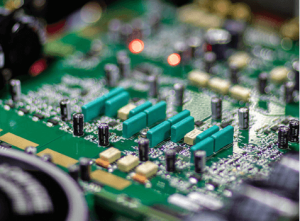
The purpose of a PCB prototype is not simply to produce a small number of circuit boards. It is an engineering validation step that helps identify design and manufacturing problems before a product enters larger-scale production.
During prototype development, engineers may need to verify:
- Circuit functionality
- Component compatibility
- Signal integrity
- Power distribution
- Thermal performance
- Mechanical dimensions
- Connector positioning
- PCB layer structure
- Manufacturing feasibility
- Assembly reliability
A prototype can reveal problems that may not be obvious during schematic simulation or PCB layout. For example, engineers may discover insufficient routing space, thermal concentration, incorrect component footprints, unexpected signal interference, or manufacturing limitations.
Finding these problems during the prototype stage is generally much less expensive than correcting them after mass production has started.
How Does the PCB Prototyping Process Work?
A professional PCB prototyping project normally involves several interconnected stages. Each stage contributes to the final quality and reliability of the prototype.
1. PCB Design and Engineering Review
The process begins with the customer’s PCB design files. Depending on the project, these may include Gerber files, drill files, BOM files, pick-and-place files, schematics, assembly drawings, and other technical documentation.
Before production, the manufacturer should review the design for manufacturing and assembly feasibility.
The engineering review may examine:
- Trace width and spacing
- Pad and via structures
- Layer count
- PCB thickness
- Copper thickness
- Drill specifications
- Component footprints
- Clearance requirements
- Board dimensions
- Surface finish
- Assembly requirements
A detailed engineering review can identify potential manufacturing problems before materials are consumed and production begins.
For projects requiring design optimization, professional PCB Design/Layout support can also help engineers improve manufacturability and reduce production risks.
2. PCB Fabrication and Material Selection
After the design has been reviewed, the PCB enters the fabrication stage.
The selected material should match the electrical, thermal, mechanical, and environmental requirements of the application. FR-4 is widely used for conventional electronics, while high-TG materials, high-frequency materials, aluminum substrates, and flexible materials may be selected for more specialized applications.
PCB fabrication may include:
- Material preparation
- Inner-layer imaging
- Etching
- Lamination
- CNC drilling
- Laser drilling
- Copper plating
- Solder mask application
- Surface finishing
- Silkscreen printing
- Electrical testing
Reliable PCB Manufacturing processes are essential because manufacturing defects can directly affect prototype testing and product validation.
3. Component Procurement
A PCB prototype is only useful when the correct electronic components are installed.
Component availability can sometimes become a major challenge during prototype development, especially for products using specialized ICs, connectors, sensors, power devices, or obsolete components.
A professional supplier can simplify this process by providing Components Procurement together with PCB fabrication and assembly.
Component sourcing typically involves:
- BOM analysis
- Part number verification
- Manufacturer identification
- Availability checking
- Alternative component evaluation
- Purchasing
- Incoming inspection
- Inventory management
Integrated procurement can reduce the amount of communication required between the engineering team, PCB manufacturer, and component suppliers.
4. PCB Assembly
After PCB fabrication and component preparation, the boards move into assembly.
Depending on the component structure and application, manufacturers may use SMT, through-hole technology, or a combination of both.
SMT PCB Assembly is particularly suitable for compact electronic products because surface-mount components allow manufacturers to achieve high component density and automated production.
The typical SMT process includes:
- Solder paste printing
- Solder paste inspection
- Pick and place
- Reflow soldering
- AOI inspection
- X-ray inspection when required
- Electrical testing
For components that require through-hole mounting, additional soldering processes may be used.
For prototype projects with mixed component structures, combining SMT and through-hole assembly can provide greater flexibility.
What Makes a Good PCB Prototyping Manufacturer?
Not every PCB manufacturer is equally suitable for prototype development. Prototype projects often require more engineering flexibility than standard high-volume production.
Fast Response and Short Lead Times
Development schedules are often tight. Engineers may need prototype boards within days rather than weeks.
A capable manufacturer should have an efficient quotation, engineering review, production scheduling, and delivery process.
Fast response is especially important when engineers need to make several design revisions during product development.
Flexible Production Quantities
Prototype requirements can vary significantly between projects.
One customer may require only a few boards for laboratory testing, while another may need dozens or hundreds of assemblies for field testing.
A flexible supplier should be able to support different quantities without forcing customers into unnecessary production volumes.
Engineering Support
Engineering expertise is one of the most important factors when selecting a PCB prototyping supplier.
A strong engineering team can help identify issues involving:
- PCB manufacturability
- Component placement
- Soldering feasibility
- Layer stack-up
- Via structures
- Impedance requirements
- Thermal management
- Assembly tolerances
This technical support can reduce design iterations and improve the transition from prototype to production.
Quality Control and Inspection
Prototype quality directly affects the accuracy of engineering validation.
If a prototype contains manufacturing or assembly defects, engineers may incorrectly conclude that the original circuit design has a problem.
Professional quality control should therefore cover both PCB fabrication and PCBA assembly.
Typical inspection methods include:
- Automated Optical Inspection (AOI)
- X-ray inspection
- Electrical testing
- Visual inspection
- Solder joint inspection
- Dimensional inspection
- Functional testing
A structured quality management system also improves traceability and consistency throughout the manufacturing process.
Prototype PCB Assembly vs. Mass Production
Prototype manufacturing and mass production have different priorities.
Prototype production focuses on speed, flexibility, engineering validation, and design iteration. Mass production places greater emphasis on process stability, manufacturing efficiency, cost optimization, and consistent output.
A typical product development path may look like:
PCB Design → Engineering Review → Prototype → Testing → Design Optimization → Pilot Production → Mass Production
This is why it is advantageous to work with a supplier capable of supporting multiple stages of the product lifecycle.
A supplier that can transition the validated prototype into low-volume and high-volume manufacturing can reduce the risks associated with changing manufacturers between development stages.
From Prototype to Turnkey Production
As a product moves toward commercialization, the manufacturing requirements become more complex.
The manufacturer may need to manage PCB fabrication, component procurement, PCB assembly, inspection, testing, packaging, and delivery.
A Turnkey PCB Assembly service integrates these activities into one manufacturing solution.
For customers, turnkey production can provide several advantages:
- One primary manufacturing partner
- Simplified project communication
- Integrated component procurement
- Coordinated PCB fabrication and assembly
- Better production scheduling
- Reduced supply-chain management workload
- Easier quality traceability
This approach is especially useful for companies that want to focus their internal resources on product development while outsourcing manufacturing operations.
PCB Prototyping for Different Industries
PCB prototypes are used across a wide range of electronic applications.
Consumer Electronics
Consumer products often require compact PCB layouts, high component density, and rapid design iterations. Prototype assembly allows engineering teams to verify functionality and mechanical integration before launching a product.
Industrial Electronics
Industrial control equipment may require reliable power distribution, robust PCB construction, and long-term operating stability. Prototypes allow engineers to validate electrical and thermal performance before production scaling.
Automotive Electronics
Automotive PCB applications often involve demanding environmental and reliability requirements. Prototype testing can help engineers evaluate thermal performance, signal integrity, component compatibility, and mechanical reliability.
Medical Electronics
Medical electronic products require careful design validation and quality control. PCB prototypes can be used to verify circuit functionality, component placement, signal performance, and manufacturing feasibility before further production stages.
Communication and High-Speed Electronics
High-speed communication systems can require controlled impedance, specialized materials, careful stack-up design, and strict routing requirements.
Prototype boards provide engineers with an opportunity to evaluate actual signal behavior and identify potential performance issues before mass production.
How to Reduce PCB Prototype Costs
The lowest initial quotation is not always the lowest total project cost.
Several factors should be considered when evaluating a PCB prototype supplier.
Optimize the Design Before Manufacturing
A thorough DFM review can identify unnecessary manufacturing complexity before production begins.
Correcting a design before fabrication is generally more efficient than modifying finished boards.
Confirm the BOM Early
Component shortages can delay assembly and increase procurement costs. Early BOM verification helps identify availability problems and potential alternatives.
Choose the Right Production Quantity
Ordering too few prototypes may require repeated production runs, while ordering too many can create unnecessary inventory.
The ideal quantity should be based on engineering validation, testing requirements, customer demonstrations, and pilot production plans.
Use an Integrated Manufacturing Partner
Combining PCB fabrication, component procurement, assembly, inspection, and testing through one supplier can simplify project management and reduce coordination costs.
Why Choose a Professional PCB Prototyping Partner?
A reliable PCB prototyping manufacturer should provide more than basic board fabrication.
The ideal partner should combine:
- Fast engineering response
- Flexible production quantities
- Stable PCB fabrication
- Reliable component sourcing
- SMT and through-hole assembly
- Professional inspection
- Electrical and functional testing
- Technical support
- Production scalability
This combination allows engineering teams to move through the development cycle with fewer manufacturing interruptions.
Conclusion
PCB prototyping is a fundamental part of modern electronic product development. It provides engineers with physical boards that can be tested, evaluated, modified, and optimized before larger production commitments are made.
A capable PCB Prototype Assembly supplier should support more than prototype board fabrication. The best manufacturing partners can provide engineering review, PCB fabrication, component sourcing, SMT assembly, inspection, testing, and production support.
By selecting a supplier with flexible manufacturing capabilities and integrated services, companies can shorten development cycles, reduce manufacturing risks, improve prototype quality, and establish a smoother transition from engineering samples to production.
For companies developing new electronic products, choosing the right PCB Prototyping partner at the beginning of the project can create significant advantages throughout the entire product lifecycle.