PCB Test Fixture: Custom Manufacturing and Design Guide
What Is a PCB Test Fixture?
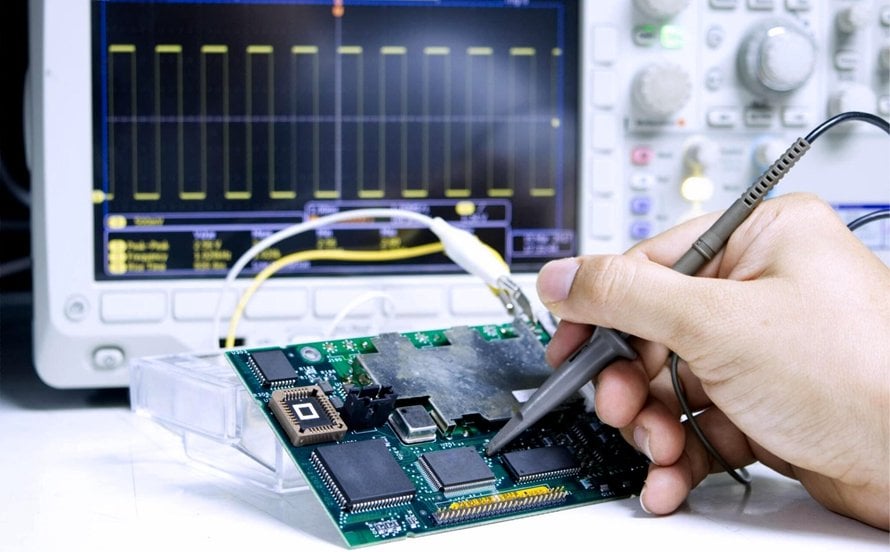
A PCB test fixture, also called a test jig or test tooling, is a custom-built device that presses spring-loaded pogo pins against the test points of a bare board or assembled PCBA so an ICT or functional tester can verify it electrically. The board is registered in the fixture, hundreds or thousands of pins make contact at once, and the connected test system checks opens, shorts, component values, voltages, communications and complete board functions in seconds.
Compared with manual probing, a fixture delivers far higher precision, speed and repeatability. It removes operator judgement from the pass or fail decision, supports automated production lines, and is the practical way to test dense boards where the test points are too many and too small for hand probing. Modern electronics manufacturing treats the PCB test fixture as essential tooling rather than an optional extra.
This guide explains the fixture types, the design and manufacturing process, the components that determine accuracy and life, and what custom fixtures cost in 2026.
Why Custom Fixtures Are Necessary
Every board has a unique outline, component layout, test point pattern and functional requirement, so a general purpose fixture cannot reach the accuracy that production testing demands. A custom fixture is built around the exact Gerber data and test point coordinates, which gives precise contact alignment, higher test accuracy and test efficiency gains of fifty to ninety percent over manual methods.
Custom fixtures also reduce human error, improve product consistency, lower rework rates and shorten production cycle time. For medium and high volume programs, the fixture investment typically pays for itself quickly through labor savings and fewer escaped defects, which is why OEM and EMS customers treat fixture design as part of the manufacturing program.
Main Types of PCB Test Fixtures
The in-circuit test fixture uses the classic bed of nails design, with hundreds or thousands of pins touching test points simultaneously to verify that every component is present, correctly placed and correctly valued. ICT runs fast, repeats reliably and pinpoints faults precisely, making it standard on SMT lines for consumer, industrial, automotive and communications boards.
Functional test fixtures verify that an assembled board actually works: power up, I-O interfaces, communication links, MCU behavior, power modules, wireless modules and sensors are exercised in a simulation of the real product. Vacuum fixtures use negative pressure to press the board evenly against the pins, which protects large, high layer count, HDI and high density boards from flexing during test. Pneumatic fixtures automate the press with air cylinders for continuous production, and manual fixtures serve prototypes, R&D and small batches at low investment.
How a Custom Fixture Is Manufactured
Fixture production follows a structured path. The engineer first reviews the Gerber files, layout, BOM, assembly drawing, test point list and board outline to confirm the test strategy. A DFM check verifies that test points are sufficient, pin spacing is practical, tall components will not interfere, the board can be supported without flexing and nothing will be damaged by contact pressure.
The mechanical design then defines pin layout, support structures, locating and guiding systems, pneumatic or vacuum actuation and the wiring plan using professional CAD tools. CNC machining produces the fixture plates from FR-4, acrylic, bakelite, engineering plastic or aluminum, pins are installed to the correct specification, and wiring, connectors, interface boards and safety mechanisms are assembled. Every fixture is then debugged and calibrated with continuity, pin pressure, repeatability and real board verification before delivery so it works on the first shift.
Components That Decide Fixture Quality
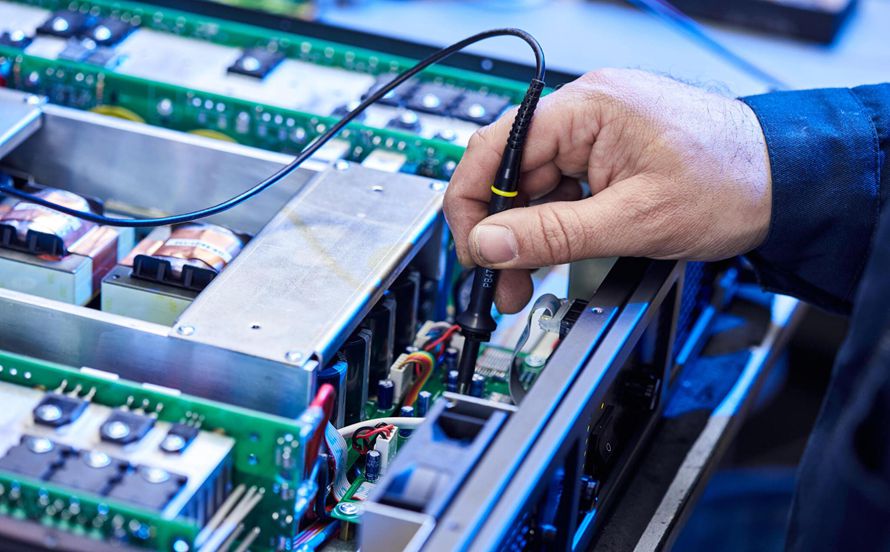
A complete fixture combines a base plate, top plate, pin plate, pogo pins, locating dowels, guidance system, vacuum or pneumatic module, wiring and an interface connector, plus safety covers. The pogo pins are the heart of the system: pin diameter, current rating, contact force, tip style and working life must match the board finish and the test current. High quality pins routinely survive more than one million test cycles, while cheap pins fail early and corrupt test data.
The fixture frame material and machining accuracy matter equally, because the pins must hit the same pads every time across thousands of insertions. Good fixture design balances pin force against board rigidity so dense boards are tested without damage.
Industries That Depend on Fixtures
Automotive electronics test ECU controllers, ADAS modules, battery management systems and vehicle control boards. Medical products test monitors, ultrasound, imaging and diagnostic devices where a false pass is unacceptable. Communications hardware tests 5G base stations, optical modules and switches, industrial automation tests PLCs, power supplies and motor drives, and consumer electronics test smart home devices, wearables, phones and tablets. In every one of these industries, the fixture is what turns manufacturing from assembly into verified product.
Design Best Practices
Reliable fixtures share the same habits. Support the board at well-chosen points so it cannot bow under pin pressure. Keep pin alignment tight against the actual test point coordinates. Choose the pressing method, vacuum, pneumatic or manual, from the board thickness and structure. Specify high life pins to minimize maintenance, lay out cabling so the fixture can be serviced, and reserve signal integrity space for high speed test points. Safety protection prevents operator injury, and modular construction lets the fixture adapt to later board revisions instead of being scrapped.
IPC Standards and Test Guidance
Fixture and test practice sit inside the IPC framework. IPC-A-610 defines assembly acceptance, IPC-2221 and IPC-2222 cover PCB design, IPC-7351 defines land patterns, IPC-9252 provides ICT guidance and IPC-TM-650 defines test methods. Manufacturing fixtures with the design for testability rules of these standards in mind improves consistency, accuracy and international acceptance of the test results.
Design for Test Tips That Save Money
The cheapest time to design for test is during PCB layout. Reserve test points on critical nets, keep test pad sizes consistent, space them so pins never interfere, keep tall components away from test areas, provide stable support zones on the board underside, add clear fiducials for registration and keep connectors and programming ports accessible. Boards designed this way produce fixtures that last longer, test faster and yield fewer false calls.
2026 Price Reference for Custom Fixtures
Custom fixture pricing depends on board size, pin count, fixture type, actuation, materials and complexity. Manual fixtures for prototypes and small batches are the least expensive and are typically quoted per project based on design effort and plate count. ICT and vacuum fixtures with hundreds or thousands of pins cost more because of the pin count, precision machining and wiring effort, while pneumatic and fully automated fixtures add actuation and control hardware.
As a reference, simple fixtures for small boards commonly start in the low hundreds of US dollars, while dense ICT fixtures for complex multilayer boards can run into the thousands. The investment is evaluated against test time savings and defect escape reduction over the production life of the product.
FAQ
What is the difference between ICT and FCT fixtures? An ICT fixture verifies the components and assembly quality of the bare or assembled board, while an FCT fixture powers the board and verifies that it performs its real function.
How long do pogo pins last? High quality pins are typically rated for over one million test cycles when matched correctly to the board finish and test current.
Can one fixture test several board revisions? A modular fixture can be adapted to minor revisions by changing the pin plate or interface, which is why modular design is recommended for evolving products.
Building Fixtures and Boards With One Partner
Test tooling works best when it is designed together with the board and the assembly process. A partner that reviews the design for testability, manufactures the board, assembles the PCBA and builds the fixture under one quality system removes the handoffs that cause misalignment and slow ramps. gopcb provides PCB testing services, custom fixture design and fabrication, ICT and FCT program development and board manufacturing under IPC Class 2 and Class 3 programs. Send your Gerber files and test point list for a free design-for-test review and a fixture quotation.