Placement Program Optimization and Cycle Time
A placement program decides the order in which the parts are placed and the nozzles that are used, and two programs for the same board can differ in cycle time without any difference in the hardware. The optimization is a scheduling problem with constraints.
What the Program Controls
The program holds the feeder positions, the nozzle assignment, the placement sequence and the vision settings for each part. The sequence and the nozzle assignment are where the time is won or lost.
The machine moves either the head or the table between placements, so the distance travelled is the quantity to minimize. Our placement capability notes describe how the positions are reproduced.
Nozzle Changes and Their Cost
A nozzle change costs a head cycle and an alignment, so a program that groups the parts by nozzle is faster than one that alternates. The grouping is done in the feeder and the program together rather than in the program alone.
The constraint is the feeder positions that are available. A nozzle grouping that requires a feeder to move is a trade between the nozzle change and the setup. Our floor zoning notes describe how the feeders are arranged around the machine.
The sequence sets the path, and the standard approach is to work in an order that minimizes the total travel rather than the travel between adjacent placements. The difference appears on a board with many parts.
A sequence that is optimized for travel can conflict with the nozzle grouping or with the vision, so the optimization is a compromise. The figures to compare are the cycle time and the accuracy rather than the travel alone.
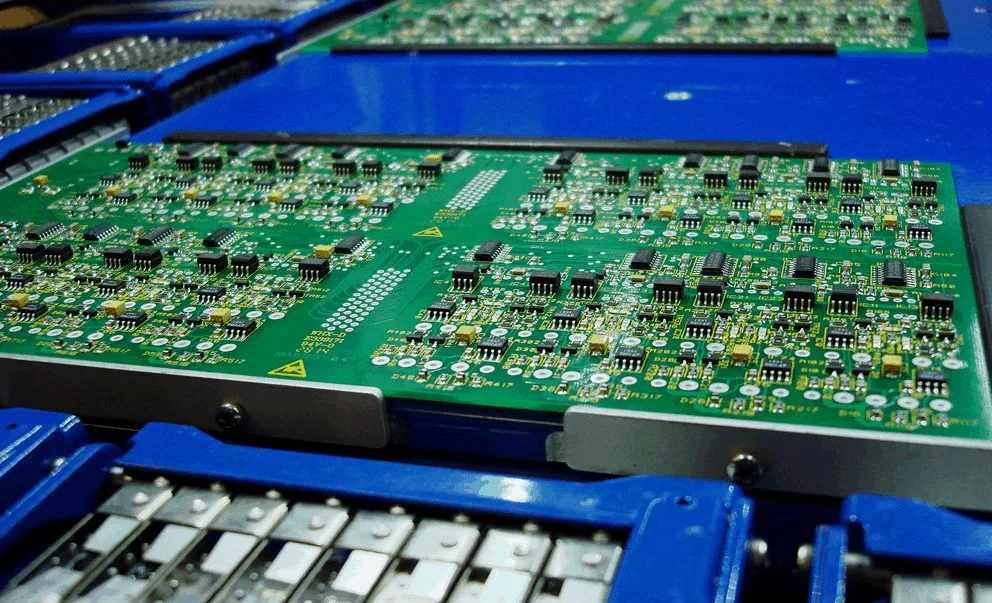
Vision alignment adds time per placement, and a program that uses vision on every part is slower than one that uses it where the tolerance requires it. The choice is a risk decision rather than a time decision.
Where the placement is critical, the time is spent. Where it is not, the machine placement accuracy may be sufficient.
A program that uses fewer feeders is faster to set up and it may be slower to run. The two costs are compared over the batch rather than per board.
That is where the batch size enters. A long run justifies a program that is slow to set up and fast to run, and a short run does the opposite. Our first pass yield notes describe how the result is measured.
A new or optimized program is verified with a first article, because the optimization can change the placement order in a way that affects the accuracy on a heavy part or on a part that needs vision.
The verification is the same as for any change, and the cycle time measured on the optimized program is compared with the previous figure. A program that is fast and less accurate is a program that moves the cost rather than reducing it.
Acceptance and Its Evidence
On a design of this kind, optimization is the item that decides how the rest of the board is arranged. The environment around the process, including temperature, humidity and cleanliness, sets limits on what the process can hold. A result that cannot be reproduced is not a result, and reproducibility should be demonstrated rather than assumed.
The tooling, the material and the profile form one system, and a change to any of them should be assessed against the other two before it is released. Handling between operations is part of the process, and the damage it causes is often attributed to the operation that preceded it.
A change that is not recorded is a change that cannot be explained when the result moves, which is why the record is part of the process. The checks that matter are the ones performed on the product rather than on a sample kept for the purpose, because a coupon that travels with the panel is the only evidence about that panel.
Where an operation cannot be verified afterwards, it has to be controlled during the operation, and that control has to be visible in the record. Consumables have a life measured in cycles, and the replacement point should come from the measurement rather than from a failure.
The sequence of operations is part of the specification, because a different order produces a different result from the same steps. Where the process window is narrow, the measurement resolution has to be better than the window, or the data cannot distinguish a good part from a marginal one.
Where two operations share a tolerance, the allocation between them should be explicit rather than left to whichever is measured first. The narrowest feature on the board usually sets the process window for the whole product, so it deserves the closest attention at review.
Where a requirement can be measured, it should be measured at the point of manufacture and recorded against the board or the lot it applies to.
Checks Before Release
On a design of this kind, optimization is the item that decides how the rest of the board is arranged. The acceptance criteria should be written before the work starts, so that the decision is made by the specification rather than by the person inspecting. Where a process is at the edge of its capability, the margin should be bought deliberately rather than discovered during production.
A measurement taken at the wrong point of the process describes the wrong thing, however carefully it is made. A record that identifies the operator, the date and the settings is worth more than a record that identifies only the result.
Where the supplier and the user both measure the same property, they should agree on the method before the first delivery. The first article confirms that the setup matches the intent, and it is the cheapest point at which a wrong setup can still be corrected.
A parameter that is set once and never re verified drifts, and the drift is usually discovered by a defect rather than by the record.
Verification and Records
On a design of this kind, optimization is the item that decides how the rest of the board is arranged. Where a decision is made by judgement, a boundary sample makes the judgement repeatable between operators and between shifts. Sampling is a compromise between cost and confidence, and the sample size should follow from the failure rate that has to be detected.
Documentation exists so that a person who was not present can reproduce the work and reach the same conclusion.
Points to Confirm at First Article
On a design of this kind, optimization is the item that decides how the rest of the board is arranged. The cost of verification is small compared with the cost of a field failure, and it is paid at a point where the product can still be corrected.
Is the fastest program the best one? It is where the accuracy is unaffected, and the two are measured together.
Does vision slow the machine? It does, and it is used where the placement tolerance requires it rather than everywhere.
What does gopcb provide for program optimization? We provide a sequence that minimizes total travel, nozzles grouped to reduce changes, vision applied where the tolerance requires it, feeder and program arranged together, setup time compared with run time over the batch, and the result verified by a first article.