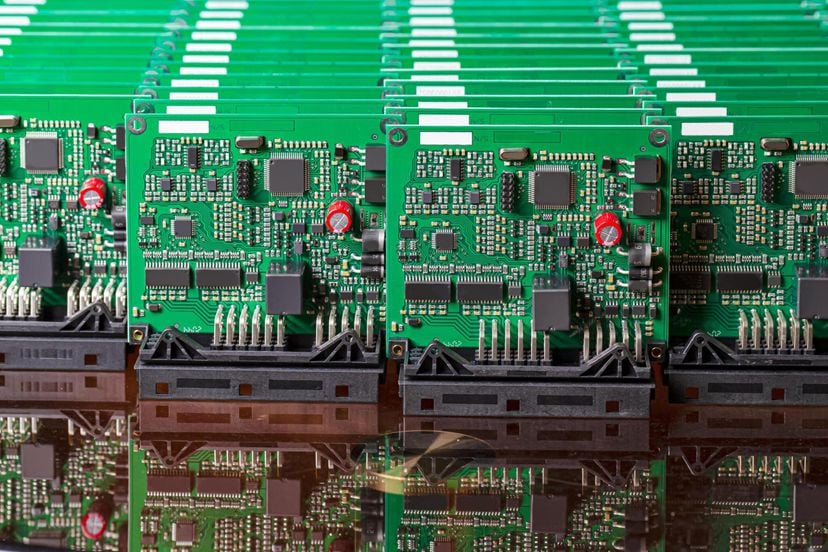
Printed circuit boards (PCBs) are widely used in consumer electronics, telecommunications, automotive systems, industrial equipment, and IoT devices. As electronic products continue to become more compact and complex, manufacturers are under increasing pressure to shorten development cycles and bring products to market faster.
PCB Assembly is the process of mounting electronic components onto a fabricated PCB and completing the required soldering, inspection, and testing operations. When these activities are completed within a significantly shorter lead time than standard production, the service is commonly referred to as Quick-Turn PCB Assembly or rapid PCB assembly.
Quick-turn production is particularly valuable for prototypes, engineering validation builds, urgent replacement boards, and low- to medium-volume production. Depending on the PCB design, component availability, assembly requirements, testing scope, and production capacity, a quick-turn project may be completed in a few days or, for highly suitable designs, within a much shorter timeframe.
What Is Quick-Turn PCB Assembly?
Quick-Turn PCB Assembly refers to an accelerated PCB assembly process designed to reduce the time between receiving manufacturing data and delivering completed assembled circuit boards.
Compared with conventional production schedules, quick-turn assembly requires closer coordination among engineering, procurement, production, quality control, and logistics teams. The objective is not simply to manufacture the boards faster, but to shorten the overall project cycle while maintaining acceptable quality and reliability.
Several factors can significantly affect the turnaround time, including:
- PCB layer count and board thickness
- Circuit and layout complexity
- Component quantity and package types
- BGA, QFN, fine-pitch, or other challenging packages
- Bill of Materials (BOM) completeness
- Component availability and sourcing requirements
- PCB fabrication lead time
- SMT Assembly and through-hole assembly requirements
- Testing and inspection requirements
- Order quantity
- Shipping and delivery requirements
Quick-turn assembly is commonly used when a project has a strict development deadline or when engineers need assembled boards quickly for functional verification.
Why Is Quick-Turn PCB Assembly Important?
Shortening the manufacturing cycle can provide significant advantages during product development and production. Instead of waiting several weeks for a conventional build, engineering teams can receive assembled boards earlier and use them to verify electrical performance, mechanical fit, firmware, thermal behavior, and overall system functionality.
A faster build cycle also allows design teams to identify problems earlier. If a prototype reveals an incorrect component, layout issue, soldering problem, or signal-integrity concern, the design can be revised before larger quantities are manufactured.
Therefore, quick-turn manufacturing is not simply about speed. It is also a way to improve development efficiency and reduce the risk associated with late-stage design changes.
Benefits of Quick-Turn PCB Assembly
1. Shorter Development Cycles
The most obvious advantage is reduced production time. Faster assembly allows engineers to obtain physical boards sooner and accelerate testing and validation.
This is especially useful for products with short development windows, engineering prototypes, product demonstrations, and urgent customer requirements.
2. Faster Design Verification
A physical PCB provides information that cannot always be obtained from simulation or schematic review alone. Engineers can evaluate component behavior, thermal performance, mechanical integration, firmware interaction, and electrical characteristics using an assembled prototype.
Early verification makes it easier to identify problems before they become expensive production issues.
3. Reduced Development Risk
Early prototype builds can expose problems in PCB layout, component selection, assembly, or manufacturing processes. Correcting these problems during the prototype stage is generally less costly than correcting them after large-scale production has started.
4. More Flexible Customization
Quick-turn assembly can support different component packages, PCB materials, board structures, and assembly technologies. Depending on the project, a build may combine SMT and through-hole components or require specialized inspection and testing.
5. Faster Time to Market
For competitive electronic products, manufacturing speed can directly influence product launch schedules. A streamlined PCB Manufacturing and assembly process can help companies move from design verification to pilot production more efficiently.
Common Challenges in Quick-Turn PCB Assembly
Although rapid manufacturing provides clear advantages, reducing production time introduces additional challenges. A successful quick-turn project requires careful preparation and coordination.
Component Availability
Component availability is one of the most important factors affecting turnaround time.
A PCB BOM may contain hundreds of active and passive components, and a single unavailable or long-lead-time component can delay the entire assembly. This is particularly important for specialized ICs, connectors, power components, sensors, and other components with limited availability.
Several strategies can help reduce procurement risks:
- Prepare a complete and accurate BOM before production.
- Identify long-lead-time components early.
- Approve alternative parts where technically appropriate.
- Use manufacturer part numbers and detailed specifications.
- Maintain approved second-source options when possible.
- Confirm component availability before committing to a production schedule.
Any substitute component should be reviewed carefully because differences in electrical characteristics, package dimensions, temperature ratings, or lifecycle status can affect PCB performance.
Strict Time Requirements
Quick-turn projects require careful scheduling because PCB fabrication, component procurement, assembly, inspection, testing, and shipping are interconnected.
A delay in one stage can affect the entire project. A detailed production schedule can therefore help identify critical activities and prevent unnecessary waiting time.
For complex projects, manufacturers may use internal production schedules or milestone tracking to coordinate engineering review, material preparation, SMT production, inspection, testing, and shipment.
Cost Control
Shorter production times do not always mean lower manufacturing costs.
Expedited procurement, priority production scheduling, special shipping, additional engineering support, or low-volume production can increase the overall cost. Repeated design revisions can also result in additional PCB fabrication and assembly expenses.
Cost control should therefore consider the complete project rather than focusing only on the assembly price. A well-prepared design and complete BOM can reduce unnecessary iterations and help control the total cost.
Quality and Defect Control
One of the biggest risks of accelerated manufacturing is allowing production speed to compromise quality.
A quick-turn project still requires appropriate inspection and testing. Manufacturing teams should verify solder joints, component placement, polarity, electrical connections, and other critical characteristics before shipment.
Design quality is equally important. A thorough DFM review can identify manufacturing risks before the board enters production.
How to Choose a Quick-Turn PCB Assembly Manufacturer
Selecting the right supplier is critical when production time is a major requirement. A manufacturer should be evaluated not only on its advertised turnaround time but also on its engineering capability, component sourcing, quality system, production equipment, and communication process.
Lead Time
Ask the manufacturer to provide a realistic production schedule covering:
- Engineering review
- PCB fabrication
- Component sourcing
- SMT setup
- Assembly
- Inspection
- Electrical testing
- Packaging
- Shipping
A reliable supplier should clearly explain what is included in the quoted lead time.
It is also important to distinguish between PCB fabrication lead time and complete assembly lead time. A fabricated bare board may be available quickly, while component procurement and assembly require additional time.
Quality Management
Fast production should never eliminate quality control.
A capable supplier should have documented procedures for incoming material inspection, solder paste control, component placement, reflow process control, AOI inspection, electrical testing, and final inspection.
Relevant industry standards and customer-specific requirements should also be considered according to the application.
Technical Capability
Advanced production equipment is an important part of quick-turn manufacturing. Modern SMT lines can automate solder paste printing, component placement, reflow soldering, and optical inspection.
However, equipment alone does not guarantee fast production. Engineering capability is equally important. A supplier should be able to review Gerber files, BOMs, component specifications, assembly drawings, and other manufacturing documentation efficiently.
Experience with fine-pitch components, BGA packages, mixed-technology assembly, high-density boards, and other complex designs can also reduce manufacturing risks.
Customer Communication
Communication can have a direct impact on turnaround time.
If the manufacturer discovers an incorrect footprint, unavailable component, incomplete BOM, or unclear assembly requirement, a delayed response can stop production. Clear communication between the customer, engineering team, procurement team, and production department helps prevent unnecessary delays.
A good supplier should communicate issues promptly and provide practical solutions instead of allowing problems to remain unresolved.
Cost Transparency
The lowest quoted price is not necessarily the lowest total project cost.
A detailed quotation should clearly identify major cost factors such as PCB fabrication, components, assembly, tooling, testing, engineering services, and shipping when applicable.
Comparing suppliers based on total project value rather than assembly price alone can help companies make better decisions.

Quick-Turn PCB Assembly Process
A streamlined production process is essential for achieving both speed and quality. The exact workflow varies according to the PCB design, but a typical quick-turn project includes the following stages.
Step 1: DFM Review
The first step is a DFM review.
The manufacturer examines PCB fabrication data, assembly drawings, BOM information, component footprints, solder-mask openings, pad dimensions, spacing, and other design details.
The purpose is to identify potential manufacturing and assembly problems before production begins.
Typical DFM issues may include:
- Insufficient component-to-component spacing
- Inadequate pad design
- Difficult-to-manufacture traces
- Incorrect footprints
- Insufficient solder-mask clearance
- Components that may interfere with assembly
- Inappropriate thermal relief
- Difficult-to-access test points
Resolving these problems before production can significantly reduce rework and schedule delays.
Step 2: Prototype Preparation
For new products, prototype assembly provides an opportunity to validate the design before moving into larger production quantities.
The prototype build may be used to verify electrical performance, component placement, soldering quality, mechanical fit, and other engineering requirements.
If problems are identified, the design can be modified before the next production stage.
Step 3: PCB Fabrication and Material Preparation
Once the design is approved, the bare PCB is fabricated according to the specified stackup, material, copper thickness, surface finish, dimensions, and other requirements.
At the same time, components should be prepared and verified against the BOM.
Material preparation is especially important for quick-turn projects because missing components can prevent an otherwise completed PCB from entering assembly.
Step 4: Solder Paste Printing
For SMT production, solder paste is applied to the PCB pads using a stencil.
Printing quality is critical because excessive, insufficient, or misaligned solder paste can lead to solder bridges, insufficient solder joints, tombstoning, and other assembly defects.
SPI may be used to verify solder paste volume and position before component placement.
Step 5: Component Placement
Automated pick-and-place equipment positions components onto the solder-pasted PCB.
The machine must correctly identify component orientation, package type, polarity, and placement coordinates.
High-speed automated placement can significantly reduce assembly time, particularly for boards containing large numbers of SMT components.
Step 6: Reflow Soldering
The populated PCB passes through a reflow oven where the solder paste is heated according to a controlled temperature profile.
The profile must be appropriate for the PCB materials, components, solder alloy, and assembly requirements. Proper thermal control helps ensure reliable solder joints while minimizing risks such as component overheating, insufficient wetting, or excessive voiding.
Step 7: Through-Hole Assembly
If the design contains through-hole components, additional assembly operations may be required.
Depending on the product, through-hole components can be soldered using wave soldering, selective soldering, or manual soldering.
For mixed-technology boards, the sequence of SMT and through-hole processes should be planned carefully to avoid component interference and soldering problems.
Step 8: Inspection and Testing
Inspection and testing are essential even when production is accelerated.
PCB Testing may include:
- Automated Optical Inspection (AOI)
- X-ray inspection
- In-Circuit Test (ICT)
- Flying-probe testing
- Functional testing
- Visual inspection
AOI can detect many visible soldering and component-placement defects. X-ray inspection is particularly useful for hidden solder joints such as BGA connections.
For prototypes and low-volume production, flying-probe testing can be useful because it generally does not require a dedicated ICT fixture.
Quick-Turn PCB Assembly vs. Standard PCB Assembly
| Factor | Quick-Turn PCB Assembly | Standard PCB Assembly |
|---|---|---|
| Production speed | Prioritized for shorter lead times | Normal production schedule |
| Typical application | Prototypes, urgent builds, low-to-medium volume | Regular production |
| Procurement | Requires early component confirmation | More flexible procurement window |
| Engineering response | Often requires faster communication | Normal engineering cycle |
| Cost | May be higher due to expedited production | Generally easier to optimize |
| Flexibility | High for urgent requirements | Better suited to planned production |
| Risk control | Requires strong preparation | More time available for planning |
Quick-turn production is therefore not necessarily a replacement for conventional manufacturing. Instead, it is most valuable when speed has a high priority.
How DFM Improves Quick-Turn PCB Assembly
DFM plays a particularly important role in rapid manufacturing because every avoidable production problem can directly affect the delivery schedule.
For example, an incorrect footprint discovered after component placement may require rework or even a PCB redesign. An unavailable component identified after production has started may stop the entire assembly.
A comprehensive DFM review can identify these risks earlier and allow the engineering team to correct them before manufacturing begins.
Designers should therefore provide complete manufacturing documentation, including:
- Gerber or other fabrication data
- BOM
- Centroid/pick-and-place files
- Assembly drawings
- Schematic documentation when required
- PCB stackup information
- Surface-finish requirements
- Special process requirements
- Testing requirements
The more complete the manufacturing package is, the easier it is for the assembly supplier to begin production without unnecessary clarification cycles.
How to Reduce Quick-Turn PCB Assembly Lead Time
Several practical measures can help shorten the overall project cycle:
- Complete the BOM before requesting production.
- Confirm component availability as early as possible.
- Provide complete Gerber, centroid, and assembly files.
- Approve DFM feedback quickly.
- Identify alternative components in advance when appropriate.
- Minimize unnecessary design revisions.
- Clearly define inspection and testing requirements.
- Use a supplier with suitable SMT equipment and engineering support.
- Coordinate shipping requirements before production is completed.
These measures help eliminate waiting time, which is often as important as reducing actual machine processing time.
Kingda Quick-Turn PCB Assembly Services
Kingda can support PCB fabrication and assembly projects that require efficient production coordination and reliable manufacturing processes.
For quick-turn projects, the manufacturing workflow should begin with a technical review of the PCB design, BOM, and assembly requirements. DFM feedback can then be used to identify potential manufacturing risks before production.
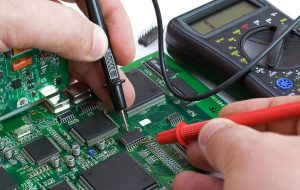
Depending on the project requirements, the assembly process may include SMT, through-hole assembly, reflow soldering, AOI, X-ray inspection, electrical testing, and other quality-control procedures.
For prototype and low- to medium-volume projects, close coordination between engineering, procurement, production, and quality teams is particularly important. This approach helps reduce avoidable delays while maintaining the required manufacturing quality.
Conclusion
Quick-Turn PCB Assembly is designed to shorten the time required to transform a PCB design into a functional assembled circuit board. It is particularly useful for prototypes, engineering validation, urgent replacement boards, and low- to medium-volume production with demanding schedules.
However, fast assembly should not be measured by production speed alone. Component availability, DFM review, engineering support, process control, inspection, PCB Testing, and logistics all influence the actual project turnaround time.
By providing complete manufacturing data, confirming component availability early, resolving DFM issues before production, and working with a technically capable supplier, companies can significantly reduce unnecessary delays.
For projects where development speed and manufacturing reliability are equally important, a well-organized quick-turn PCB assembly process can provide a practical balance between PCB Manufacturing efficiency, quality, and time-to-market.