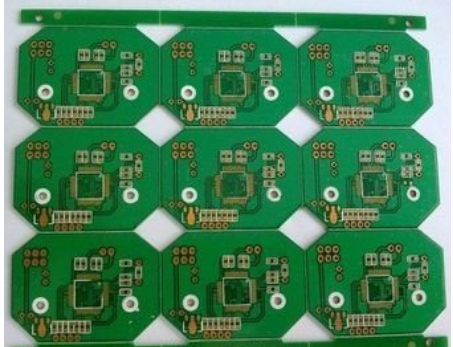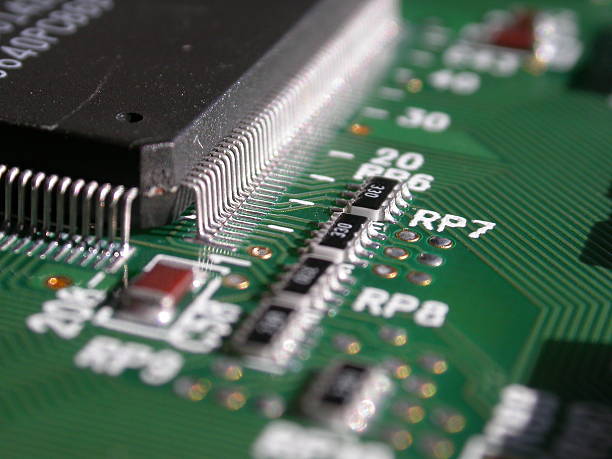
RF PCB Manufacturer for High-Performance RF Applications
In industries such as wireless communication, radar systems, satellite navigation, and advanced electronic equipment, RF PCB serves as a critical platform for high-frequency signal transmission.
The performance of an RF circuit board directly affects the efficiency, stability, and reliability of the entire electronic system. Therefore, a professional RF PCB Manufacturer must possess strong technical expertise, precise manufacturing capabilities, and comprehensive quality control systems to meet the demanding requirements of RF applications.
Compared with conventional circuit boards, RF PCBs require much stricter control over:
- Signal loss
- Impedance matching
- Electromagnetic interference
- Material performance
- Manufacturing accuracy
A reliable RF PCB supplier must combine advanced engineering knowledge with specialized production technology to deliver stable and high-performance circuit board solutions.
Advanced RF Technology Expertis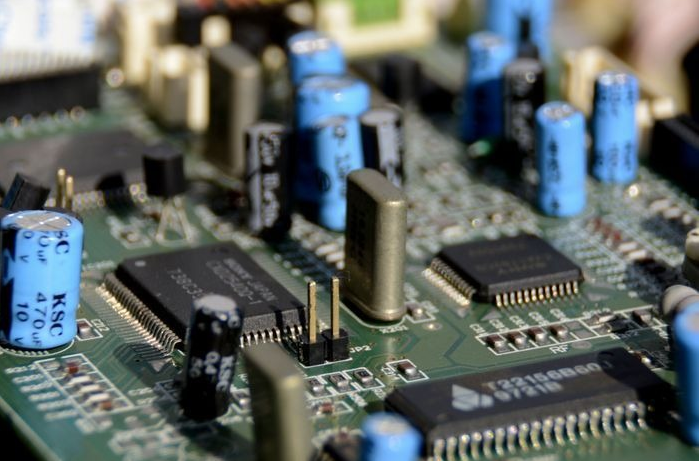
The fundamental difference between RF PCB and standard PCB lies in the ability to control high-frequency signal transmission performance.
A professional RF PCB manufacturer must have a deep understanding of electromagnetic signal behavior inside circuit structures, including factors that influence:
- Transmission loss
- Signal reflection
- Impedance consistency
- Crosstalk
- Electromagnetic compatibility
Material selection is one of the most important aspects of RF PCB design and manufacturing.
Different frequency ranges require different substrate characteristics. For example:
- Millimeter-wave RF applications require ultra-low-loss dielectric materials to minimize signal attenuation.
- Microwave applications require stable dielectric properties while balancing cost and manufacturing feasibility.
Engineering teams must also have advanced RF simulation capabilities. By using professional electromagnetic simulation tools, manufacturers can optimize:
- PCB stack-up design
- Signal routing
- Grounding structures
- Impedance control
This allows potential problems such as signal reflection and interference to be identified before production.
For advanced RF applications, professional High Frequency PCB Manufacturing capabilities help ensure excellent electrical performance and reliable signal transmission.
Precision Manufacturing Capability for RF PCB Production
RF PCB manufacturing requires extremely high process accuracy because even minor dimensional variations can affect signal performance.
During circuit fabrication, manufacturers must use high-precision imaging and pattern transfer technologies to maintain strict control over:
- Line width
- Line spacing
- Copper thickness
- Impedance accuracy
Any circuit deformation may cause impedance variation and reduce RF signal quality.
For RF PCBs with advanced via structures, including buried and blind vias, manufacturers must maintain excellent control over:
- Hole positioning accuracy
- Hole wall quality
- Plating consistency
Optimized drilling parameters and advanced hole treatment processes help reduce signal reflection and transmission loss.
Surface finishing is also critical for RF PCB performance.
Common surface treatments include:
- ENIG (Electroless Nickel Immersion Gold)
- Hard gold plating
These processes improve:
- Surface reliability
- Contact performance
- Connector compatibility
By maintaining stable manufacturing parameters throughout production, professional manufacturers can ensure consistency across different production batches.
Advanced PCB Manufacturing Services provide the process control required for high-performance RF circuit board production.
Strict Quality Testing System for RF PCB
RF PCB quality inspection must cover multiple dimensions, including electrical performance, mechanical reliability, and environmental durability.
Electrical Performance Testing
Professional RF PCB manufacturers use advanced testing equipment, including:
- Vector network analyzers
- Impedance testers
- Signal integrity testing systems
These tools evaluate critical RF parameters such as:
- Insertion loss
- Return loss
- Characteristic impedance
- Signal transmission performance
Testing ensures that finished RF PCBs meet design specifications and application requirements.
Physical Reliability Testing
Physical inspection focuses on:
- Material thickness consistency
- Copper adhesion strength
- Surface quality
- Board flatness
- Dimensional accuracy
These inspections prevent physical defects from affecting RF signal stability.
Environmental Reliability Testing
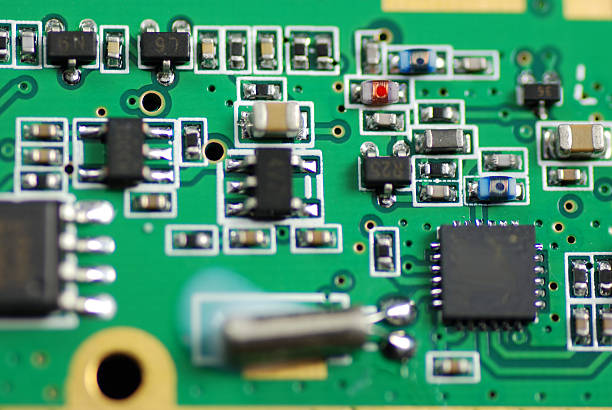
RF PCB products used in communication systems, automotive electronics, and industrial equipment must operate under challenging environments.
Manufacturers should perform environmental testing that simulates:
- Temperature changes
- Humidity variations
- Mechanical vibration
- Shock conditions
These tests verify long-term reliability and ensure stable performance during actual operation.
For customers requiring early-stage validation, PCB Prototype Services allow RF designs to be tested and optimized before mass production.
RF PCB Solutions for Different Industry Applications
Different RF applications have unique technical requirements. An experienced RF PCB manufacturer must understand industry-specific challenges and provide customized solutions.
RF PCB for 5G Communication Systems
5G communication equipment requires excellent signal integrity and multi-channel interference control.
Manufacturers must optimize:
- High-frequency materials
- Layer structures
- Antenna interfaces
- Impedance control
to support high-speed wireless communication.
RF PCB for Automotive Radar Systems
Automotive radar applications require both high-frequency performance and environmental durability.
RF PCB solutions must provide:
- High-temperature resistance
- Vibration resistance
- Stable signal transmission
- Long-term reliability
RF PCB for Satellite and Navigation Equipment
Satellite communication and navigation systems demand exceptional signal accuracy and stability.
Manufacturers must ensure:
- Low transmission loss
- Precise impedance control
- Reliable material performance
Through experience across different industries, professional manufacturers can develop optimized RF PCB solutions for complex applications.
Engineering Support and Customized RF PCB Development
A capable RF PCB manufacturer should participate in customer projects from the early design stage.
Professional engineering support includes:
- Material recommendation
- Stack-up optimization
- Signal integrity analysis
- Manufacturing feasibility evaluation
- Process improvement suggestions
Early collaboration helps customers reduce development cycles, avoid design risks, and improve final product performance.
For complex RF designs requiring high layer counts and advanced structures, experienced Multilayer PCB Manufacturing capabilities provide reliable solutions for demanding applications.
Conclusion
RF PCB manufacturing is a comprehensive combination of advanced materials, precision processes, engineering expertise, and strict quality management.
A professional RF PCB Manufacturer must have strong capabilities in:
- High-frequency material selection
- Precision circuit fabrication
- Signal integrity control
- Reliability testing
- Customized engineering support
Only manufacturers with complete technical capabilities can provide high-performance RF PCB solutions for wireless communication, radar, automotive electronics, satellite systems, and other advanced applications.
GOPCBA provides professional RF PCB manufacturing solutions with advanced production technology, strict quality control, and engineering expertise.
By combining innovation with manufacturing excellence, GOPCBA helps global customers develop reliable electronic products with superior RF performance and long-term stability.