RF PCB Price Guide: How Much Does an RF Circuit Board Cost?
RF PCBs power the 5G base stations, automotive radar, satellite links, and IoT devices that define modern connectivity, and demand for these high-frequency boards keeps climbing. If you are an engineer, purchasing manager, or product owner, the question that matters most is simple: what does an RF PCB actually cost? This RF PCB price guide breaks down real market ranges, the factors that move prices, regional differences, material trade-offs, prototype versus volume pricing, hidden fees, and practical ways to save 15 to 30 percent on a project without sacrificing signal performance.
What Is an RF PCB?
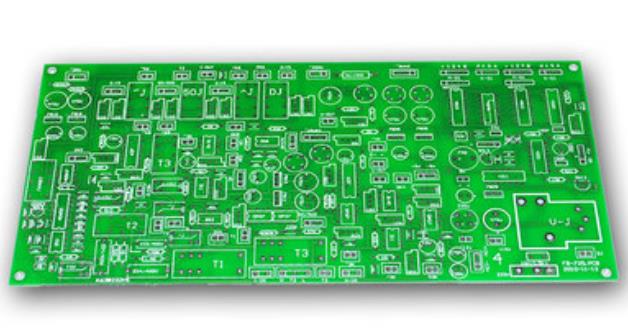
An RF PCB, or radio frequency PCB, is a circuit board engineered to transmit high-frequency electronic signals with low loss and predictable impedance. While standard FR4 boards work well for low-speed digital and analog circuits, RF boards typically operate between 100 MHz and 60 GHz, a range where ordinary substrates absorb energy and distort signals. That is why RF boards appear in 5G base stations, automotive radar, GPS modules, communication antennas, satellite systems, and industrial wireless links.
The construction of an RF PCB is different from a conventional board in three ways: the substrate material, the controlled impedance of traces, and the precision of manufacturing. Instead of plain FR4, high-frequency designs rely on materials such as Rogers 4350B, Taconic TLY, and PTFE, which keep dielectric loss low and signal speed consistent. Because both materials and process control cost more, RF boards carry a higher price tag than standard circuit boards. For buyers, understanding where that price goes is the first step toward a smarter budget.
Main Factors That Determine RF PCB Price
The cost of RF circuit boards generally falls between $0.30 and $5 per square centimeter, depending on the engineering and business decisions listed below. Material selection is usually the largest variable. An FR4 hybrid board costs roughly $0.50 to $1.20 per square centimeter, a Rogers 4350B board runs about $1.50 to $2.80, and a full PTFE construction can reach $4.50 to $5. Layer count matters as well: every additional layer adds roughly 15 to 25 percent to the price because the stack-up and lamination process becomes more demanding. Frequency and accuracy requirements push costs up too, since designs above 24 GHz need strict impedance control and thorough high-frequency testing. Copper weight and surface finish complete the picture, with thick copper of 2 oz or more and ENEPIG plating adding about $0.10 to $0.40 per square centimeter.
These variables combine to set both the total manufacturing price and the performance grade of the board. A simple Bluetooth antenna board and an 8-layer PTFE radar board live at opposite ends of the same product family, so comparing quotes without comparing specifications can be misleading. When you request pricing, always confirm the exact material grade, layer stack, copper weight, surface finish, and test requirements with your RF PCB manufacturing partner before assuming one quote is cheaper than another.
RF PCB Material Price and Performance Comparison
Choosing the substrate is the most important pricing decision on an RF project, because the material defines both performance and cost. The table below reflects typical 2026 ranges and the applications where each material shines.
FR4 sits at the low end at $0.30 to $0.80 per square centimeter and suits entry-level RF modules, short-range wireless devices, and mixed-signal boards where high-frequency performance is not critical. Rogers 4350B costs $1.50 to $2.50 per square centimeter and is the standard choice for 2 to 10 GHz communications, including 5G small cells, antennas, and base station radio boards. Taconic TLY, priced at $2.00 to $3.50, delivers lower dielectric loss for radar and satellite communication systems that need stable phase performance. PTFE, often called Teflon, commands $3.50 to $5.00 and is reserved for ultra-high-frequency systems above 24 GHz, such as automotive radar front ends and millimeter-wave test equipment.
Surface finish also deserves attention in an RF cost analysis because finishes behave differently at high frequency. ENIG and ENEPIG are favored for their flat solderability and corrosion resistance, while immersion silver offers lower insertion loss for certain designs. Discussing the finish with the factory early prevents an unpleasant surprise at the quotation stage, because the same stack-up can differ by several tenths of a dollar per square centimeter depending on the plating chosen.
A popular strategy to control budgets is a hybrid stack-up that uses Rogers on the signal layers and FR4 on the rest. This Rogers-plus-FR4 construction keeps the critical high-frequency path clean while lowering overall cost by about 30 percent compared with an all-Rogers board, and it is a routine solution for cost-sensitive products that still need certified RF performance.
Global RF PCB Price Comparison in 2026
Market data from the last twelve months shows meaningful regional differences in RF board pricing. Chinese manufacturers quote $0.30 to $2.50 per square centimeter, offering the best combination of cost and material availability, with a full ecosystem of laminates, copper foils, and specialty suppliers nearby. American fabricators range from $1.80 to $5 per square centimeter, reflecting higher labor and overhead, while European shops charge $2 to $6 for rigorous quality systems and expensive raw materials. For volume programs that ship worldwide, China-produced RF PCBs remain the most competitive option, which is why global OEMs increasingly source high-frequency boards directly from factories there. gopcb sells factory-direct with entry pricing around $0.35 per square centimeter and supports international export plus fast prototyping for overseas customers.
Prototype vs. Mass Production Pricing for RF PCBs
The unit price of an RF PCB depends heavily on order stage, because prototyping carries setup, tooling, and engineering overhead that disappears in volume. For a small prototype batch of 1 to 10 pieces, expect roughly $80 to $120 per batch, which covers material setup, engineering review, and impedance tuning. Moving to a medium batch of 50 to 200 pieces brings the price down to about $0.80 to $1.20 per square centimeter, while a large production order above 1,000 pieces can fall to $0.40 to $0.70 per square centimeter.
Many teams make the mistake of jumping straight into volume before validating the layout. A smarter route is quick-turn prototyping first, usually 3 to 5 working days, followed by design corrections and then mass production. gopcb supports this two-stage workflow, so customers confirm real signal performance on sample boards before committing tooling budget to large runs.
Design Complexity and Its Effect on RF PCB Price
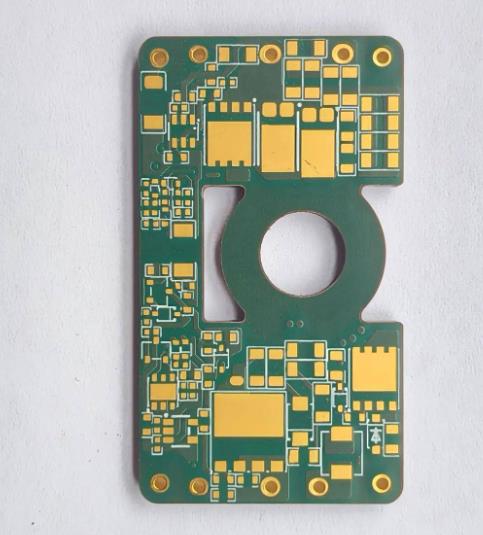
Design complexity is one of the strongest price drivers in high-frequency boards. A single-layer RF PCB is relatively simple and costs $0.30 to $0.80 per square centimeter, suitable for basic antennas and low-frequency modules. A 4-layer high-frequency board with controlled impedance runs $1.20 to $2.00, while an 8-layer PTFE radar board climbs to $3.00 to $4.50 because of tight layer registration and difficult lamination. The most demanding option, an HDI board combined with RF layers and microvias, ranges from $4.00 to $5.50 per square centimeter.
Complexity also affects yield and lead time, not just the quoted price. Boards with many blind or buried vias, mixed material stack-ups, and tight impedance windows take longer to build and fail more often in early runs. A disciplined PCB design and layout review before fabrication catches most of these issues on screen, and gopcb uses DFM optimization to help customers save 10 to 20 percent on manufacturing cost without reducing electrical performance.
Hidden Costs in RF PCB Manufacturing
Quoted board prices never tell the full story, and first-time RF buyers often underestimate four additional expenses. Impedance testing adds $20 to $50 per batch, a necessary charge because controlled impedance cannot be assumed; it must be measured. Tooling and fixture fees run $50 to $100 as a one-time first-order cost for panel design and drill tooling. Surface finishes such as ENIG or ENEPIG increase the board price by $0.10 to $0.30 per square centimeter. Expedited production adds 15 to 25 percent when a customer compresses the lead time. Reliable suppliers list every one of these charges on the quotation, and gopcb follows that policy with fully itemized quotes and no hidden fees.
2026 RF PCB Price Trends
High-frequency laminates such as Rogers and PTFE have risen 5 to 10 percent over the past year because of global raw material shortages, while automated production lines have reduced factory waste and kept overall pricing stable. Hybrid stack-ups are now the mainstream solution for balancing performance and cost, and several laminate suppliers have introduced lower-cost alternatives that replicate mid-range RF properties. The practical result for buyers is that RF PCB prices in 2026 remain broadly flat at the material level, with the biggest savings available through design optimization and direct factory sourcing rather than waiting for prices to drop.
How to Reduce RF PCB Cost Effectively
Cost reduction starts before the order is placed. First, simplify the design by removing unneeded layers and excess vias; every layer and every via adds process steps. Second, adopt a Rogers-plus-FR4 hybrid stack-up when full PTFE is not required by the frequency plan. Third, consolidate demand and order in larger batches to earn volume discounts of 15 to 25 percent. Fourth, work directly with the factory to eliminate intermediary markups, and let the manufacturer’s engineers suggest laminate grades that meet your specification at a lower price point. Applied together, these strategies typically cut total project cost by 15 to 30 percent while keeping signal integrity intact.
RF assemblies that include soldered components and connectors follow the same logic. Once the bare board is proven, pairing fabrication with SMT PCB assembly and components procurement in one supplier contract removes handling, freight, and coordination overhead from the program.
Why Choose gopcb for RF PCB Manufacturing
gopcb specializes in high-frequency boards and has supported global OEM customers with precision RF circuit boards for more than a decade. Our capabilities cover Rogers, Taconic, and PTFE fabrication, controlled impedance and insertion-loss testing, 3 to 5 day quick-turn prototyping, factory-direct pricing from $0.35 per square centimeter, and one-stop services that combine board fabrication with turnkey PCB assembly and component sourcing. Every project includes a free DFM review, engineering support during layout, and worldwide delivery, so customers move from Gerber files to validated samples with a single accountable partner.
RF PCB Price FAQ
Q1: What is the typical production cycle for an RF PCB? Prototype orders ship in 3 to 5 working days, while mass production generally takes 7 to 12 days depending on layer count and material availability.
Q2: What is the minimum order quantity? Samples can start from as few as 5 boards, which keeps early-stage validation affordable for startups and R&D teams.
Q3: Do you support hybrid material structures such as Rogers plus FR4? Yes. Hybrid stack-ups are a core process at gopcb and one of the most effective ways we help customers reduce cost without losing high-frequency performance.
Q4: How much do RF PCB test reports cost? Impedance and insertion-loss test reports are included with each production batch; standalone impedance testing for prototypes is quoted transparently at $20 to $50 per batch.
Q5: How can I get an RF PCB quote? Upload your Gerber files at gopcba.com and receive a free quotation within 24 hours, including material suggestions and DFM notes.
Conclusion
RF PCB pricing in 2026 typically ranges from $0.30 to $5 per square centimeter, shaped mainly by material grade, layer count, and design complexity. A single-layer FR4 antenna board and a multilayer PTFE radar board are different products with different budgets, so the smartest buying strategy is to define the specification first and then optimize the stack-up, simplify the layout, and consolidate volume with one factory. Whether you need quick-turn samples for a new 5G module or steady mass production for radar systems, gopcb delivers high-frequency boards at factory-direct prices with the testing and engineering support required for repeatable quality.