Scratch Prevention and Handling in PCB Fabrication
A scratch is a cosmetic defect that becomes a functional one when it crosses a conductor. It is produced by handling rather than by a machine, and it is the defect that a shop is least able to prevent with an equipment purchase because the cause is usually a person moving a panel.
Where Panels Are Scratched
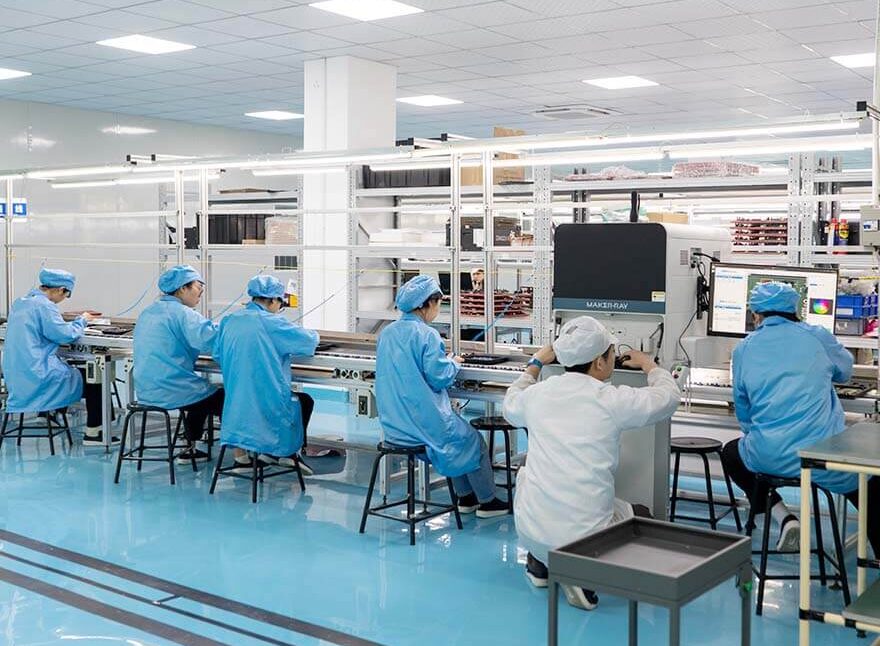
The steps that move a panel by hand are the ones that produce scratches: after lamination, after drilling, at the imaging area and at inspection. Each has a surface that can be dragged across the panel.
The commonest single cause is a panel sliding on another panel, which happens when a stack is lifted rather than separated. Sorting a stack is the activity that produces most of the damage in a shop. Our fabrication notes describe the handling rules that are normally written down.
Surface Finish and Its Sensitivity
A soft finish scratches more easily than a hard one, and a thin finish shows a scratch earlier than a thick one. Immersion silver and immersion tin mark more readily than a nickel gold, and the mark on a silver finish can also be an oxide rather than a mechanical scratch.
The distinction matters because the correction is different. A mechanical scratch is a handling problem and an oxide mark is a storage problem. Our board quality notes describe how the two are told apart.
Separation and Depanelling
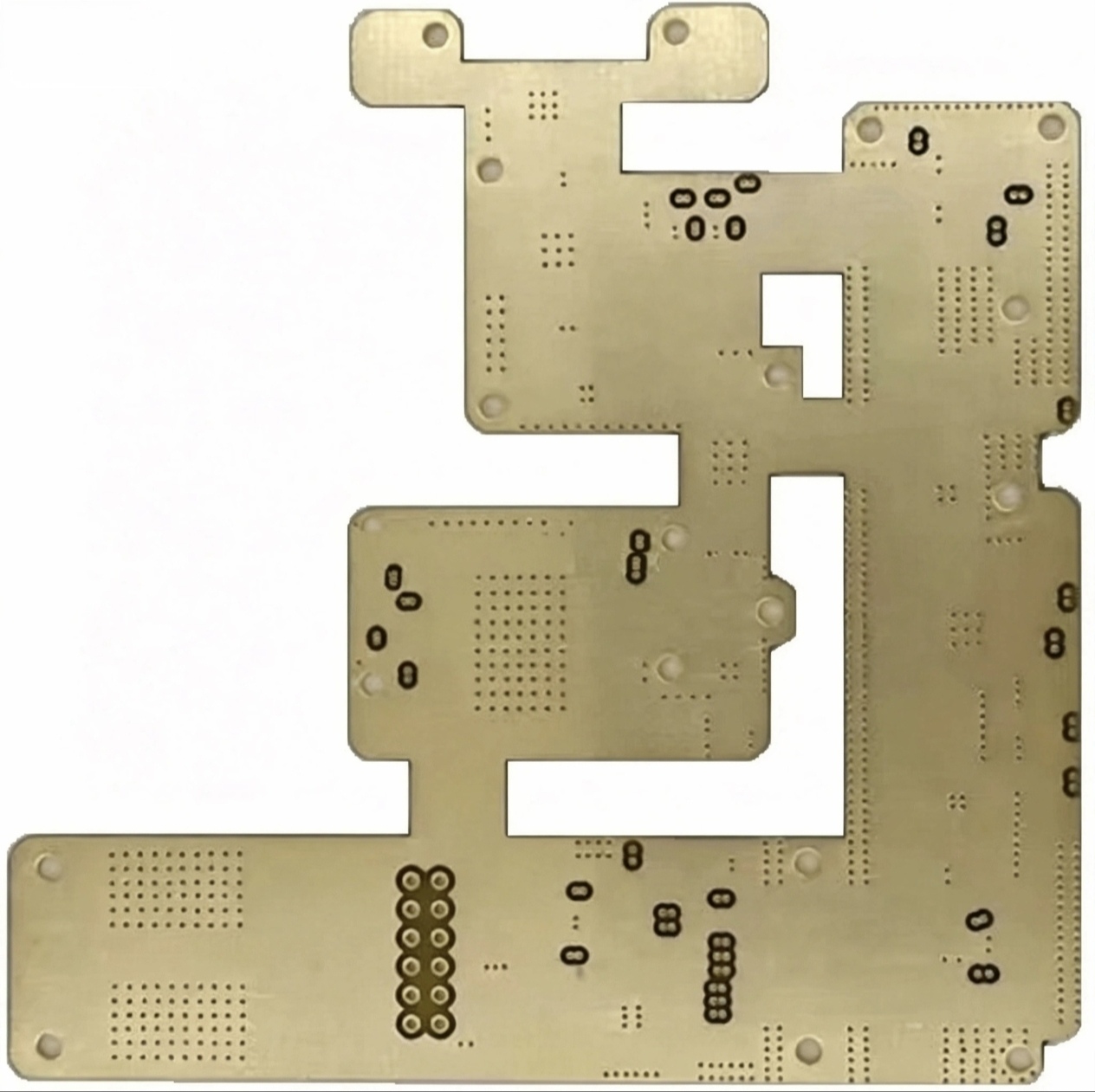
The moment a board becomes a separate part is the moment its edges become an edge that can scratch another board. A board that is separated by breaking a tab leaves a rough edge that acts as a file on the next panel.
Rounding or deburring the edge before the boards are stacked is a cheap control. Our outline tolerance notes describe the edge condition that is specified.
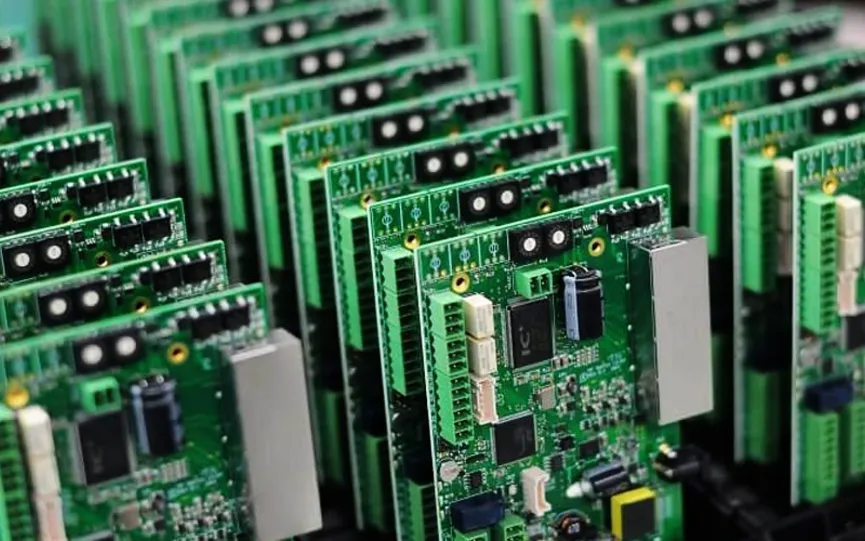
A rack that holds panels vertically keeps the surfaces apart, and it is the standard answer for a shop that handles boards by hand. Where a rack is not practical, an interleaf that does not shed fibre is used between the panels.
The interleaf has to be qualified as a source, because a paper that sheds fibre contaminates the surface as well as protecting it. That qualification is the same one the packaging material receives.
The acceptance for a scratch is written in terms of where it is rather than how it looks. A scratch on a surface with no conductor is cosmetic; a scratch that crosses a conductor or that enters a hole is a functional defect.
Where the scratch is marginal, the disposition is decided by the drawing rather than by the inspector. Writing the rule down is what makes the decision consistent between shifts. Our cleanliness notes describe the related surface defects that can be removed rather than rejected.
The controls that work are the ones that remove the opportunity: a defined place for every panel, a rule that panels are not sorted by hand, and a route through the shop that does not require lifting a stack.
Training covers the reason rather than only the rule, because a rule that is not understood is followed until the shift is busy. A short explanation of what the scratch costs is worth more than a poster.
Process Control and Verification
A stack-up that is drawn rather than described removes most of the ambiguity from a quotation, and it lets the fabricator price the board against the dielectric and copper weights that will actually be used. Where the requirement is not written down, the shop supplies its own default, and the default is chosen for the process rather than for the design.
The measurements that matter are the repeatable ones: conductor width and spacing, annular ring, finished hole size, plating thickness and surface finish are all verifiable on a coupon that travels with the panel. Running a first article through the same checks as the production panel confirms that the two agree, and that comparison is the cheapest form of process control available at prototype stage.
Keeping a sample from the panel turns a dispute into a measurement, because the same coupon can be re-examined by both parties without rebuilding the batch. Reviewing the design before the data is released is cheaper than correcting it after the panel is in the tank, because every step downstream inherits the decision made at the front end.
Can a scratch be repaired? It cannot be repaired on the conductor, and a scratch on the mask away from any copper is usually acceptable as it stands.
Does a hard finish eliminate scratches? No. It resists them, and the handling controls are still what prevents them.
What does gopcb provide for scratch prevention? We provide written handling rules for the manual steps, racks and qualified interleaves, edges deburred before stacking, a written disposition rule for scratches that distinguishes cosmetic from functional, and inspection records that identify the step where the damage occurred.
Checks Before Release
The checks that matter are the ones performed on the product rather than on a sample kept for the purpose, because a coupon that travels with the panel is the only evidence about that panel. Where a requirement can be measured, it should be measured at the point of manufacture and recorded against the board or the lot it applies to.
A parameter that is set once and never re verified drifts, and the drift is usually discovered by a defect rather than by the record. The tooling, the material and the profile form one system, and a change to any of them should be assessed against the other two before it is released.
Where the process window is narrow, the measurement resolution has to be better than the window, or the data cannot distinguish a good part from a marginal one.