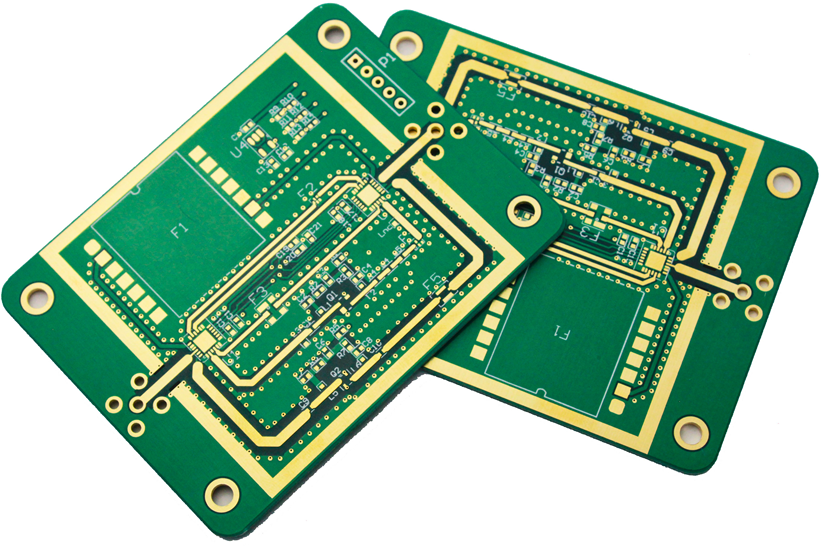
PCB Silkscreen Legibility and Print Tolerance
Silkscreen is a printed legend, and the printing process has a resolution and a registration of its own. A legend that is drawn at the limit of what the screen can resolve is a legend that is partly missing on some panels, and the component that was meant to be identified is then identified by hand.
What the Screen Can Resolve
The ink is pushed through a mesh, and the mesh count sets the smallest line that can be printed cleanly. A line that is narrower than the practical minimum prints, breaks up, or fills in between two adjacent characters.
The limit is a process figure, and it is quoted as a minimum line width and a minimum gap. Our fabrication notes describe where those figures belong on the drawing.
Process Control and Verification
Keeping a sample from the panel turns a dispute into a measurement, because the same coupon can be re-examined by both parties without rebuilding the batch. Reviewing the design before the data is released is cheaper than correcting it after the panel is in the tank, because every step downstream inherits the decision made at the front end.
Documenting the assumption is part of the design work, and a short note on the drawing prevents a question that would otherwise arrive a day later and cost a day of schedule. The process window is set by the narrowest step in the flow, so an improvement anywhere else shows up as margin rather than as yield until that step is addressed.
A short note on the drawing about handling, storage or packaging is often worth more than an extra decimal place on a tolerance. Where a value sits close to a process limit, the drawing should say so, since the shop can then open the process window rather than working to a nominal figure that carries no tolerance.
Legibility Rather Than Resolution
Resolution is what can be printed and legibility is what can be read. A character that meets the minimum line width and is set at the minimum height is printable and difficult to read on a board that has been assembled.
The practical figure for a reference designator is a height that a person can read under the light available at the station. That is a larger number than the process minimum. Our board quality notes describe how the printed legend is judged.
Registration and Pad Clearance
The legend is registered to the mask and the copper, and the registration has its own tolerance. A legend that overlaps a pad is a defect, because the ink on a solderable surface interferes with the joint.
The rule is a clearance between the legend and any opening in the mask, and it is applied at the worst case combination rather than at the nominal. A design that is drawn exactly at the clearance has some boards with ink on the pad.

Colour and Contrast
White ink on a green mask is the common combination and it has the best contrast. Other colours are used for identification and they reduce the contrast, sometimes to the point where the legend is not readable on a photograph.
Where an inspection system reads the legend, the contrast requirement is set by the camera rather than by the eye. Our inspection notes describe how the machine side is programmed.
Overlap With the Assembly Process
The legend is printed before the assembly and it has to survive it. A legend that is under a component is invisible after assembly, which is why the reference designator is usually placed beside the part rather than under it.
Where the board is dense, the designators are placed where there is room and the mapping to the components is documented, because a legend that is present and ambiguous is worse than one that is absent.
Practical Rules for a Design
The rules that avoid most problems are a designator height above the process minimum, a clearance from every mask opening, a font that is open rather than condensed, and a placement that survives assembly.
Where the design is dense and the legend cannot be complete, the board carries the essential markings and the rest is provided by a drawing. That is a decision rather than a compromise by omission. Our first pass yield notes describe how the resulting assembly problems appear in the data.
Checks Before Release
The checks that matter are the ones performed on the product rather than on a sample kept for the purpose, because a coupon that travels with the panel is the only evidence about that panel. Where a requirement can be measured, it should be measured at the point of manufacture and recorded against the board or the lot it applies to.
A parameter that is set once and never re verified drifts, and the drift is usually discovered by a defect rather than by the record. The tooling, the material and the profile form one system, and a change to any of them should be assessed against the other two before it is released.
Where the process window is narrow, the measurement resolution has to be better than the window, or the data cannot distinguish a good part from a marginal one.
FAQ
Can a legend be printed on a pad? It should not be. The ink interferes with the joint and the defect is visible after assembly rather than before.
Is a smaller font always acceptable if it prints? It prints and it becomes unreadable at the station, which defeats the purpose of the legend.
What does gopcb provide for silkscreen? We provide minimum line width and gap figures from the process, a clearance rule applied at the worst case, ink and contrast selected for the inspection in use, and a legend reviewed against the assembly so that the designators remain useful afterwards.