SMT Capacity: Lines, Floor Space and How an Order Is Scheduled
SMT capacity is usually presented as a pair of numbers, a floor area and a count of production lines, and those two numbers tell a buyer almost nothing about whether an order will be delivered on time. A large floor with three lines loaded to the limit is a slower supplier than a smaller floor with capacity reserved for new work. What actually matters is how the capacity is allocated, how quickly a line can change from one product to another, and whether the quality organisation can keep pace with the volume the lines produce. This is what the capacity figures mean in practice.
The Physical Base
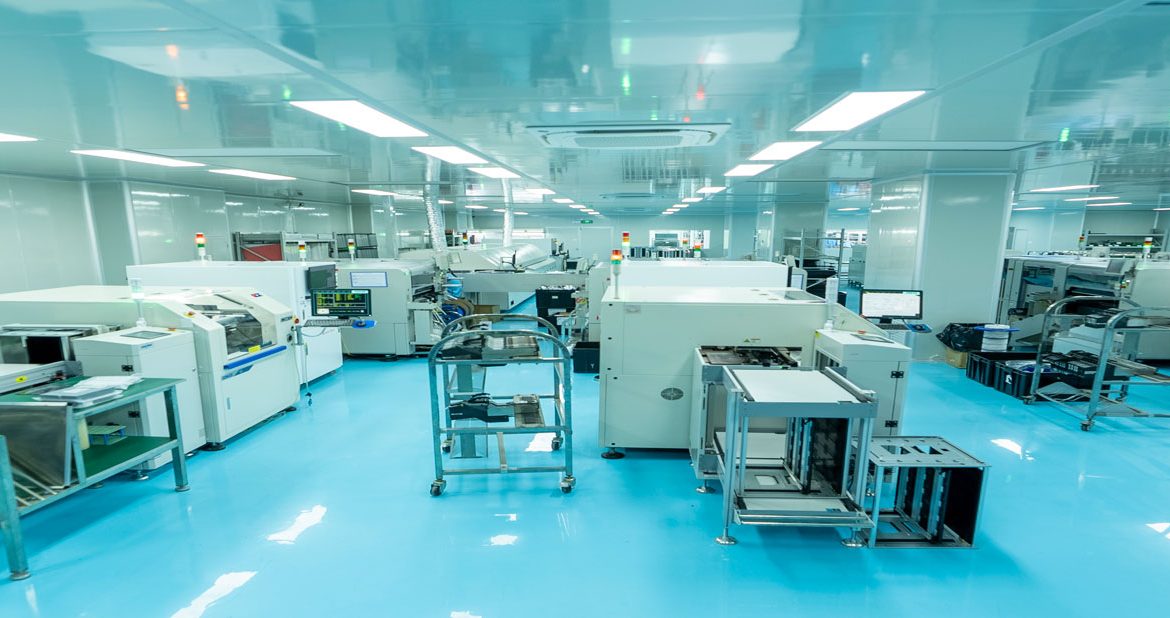
The assembly operation is housed in a floor area of fifteen thousand square metres with thirty six placement lines configured for different classes of work. The lines are not identical, and that is deliberate. A line set up for small passive components and fine pitch devices at high speed is not the same machine set as one arranged for larger boards with mixed technology content, and matching the product to the line is the first scheduling decision rather than a detail.
Around the placement lines sit the printing, the reflow, the optical inspection, the X-ray, the through hole and the test areas, together with the material store and the finished goods area. The size of those supporting areas is what determines the real throughput of the plant: a placement line that can produce faster than the printing and inspection stages can clear is a bottleneck that has simply been moved.
What Determines Real Throughput
Placement speed is quoted in components per hour, and the figure is always measured under conditions that a real product rarely reproduces. A machine reaching its rated speed on a dense array of identical small components will not reach it on a board with a mixture of package sizes, because the head has to change nozzles and the vision system has to work harder on each placement.
The realistic figure for a product comes from the placement count, the number of different packages, the panel configuration and the number of points at which the machine must slow down. A board with two hundred components in twelve package types will not run at the rate of a board with two hundred identical ones, and a quotation that ignores the difference produces a schedule that cannot be met.
Line balancing is the second factor. A production line reaches its highest output when the operations along it take a similar time, so that no single stage is idle while another forms a queue. On a flexible line, balancing is done per product rather than once for the line, and a product that has been balanced properly runs significantly faster than the same product placed without that work.
Changeover is the third factor, and it is the one that most affects a customer placing a small order. Time spent changing the stencil, the feeders, the programme and the reflow profile is time not spent producing, so a plant that does changeovers quickly can afford to run small batches, and a plant that changes slowly will either refuse them or price them accordingly. The policy applied here is to schedule similar products together, to prepare feeders offline, and to keep the standard settings on record so that a repeat order starts from a known state rather than from a fresh setup.
Scheduling a Volume Order
A volume production order is scheduled into capacity rather than inserted into the next available gap. That distinction explains an answer that customers sometimes find surprising: a large order can have a longer lead time than a small one, not because it is harder to build but because it has to be planned against every other commitment in the plant.
The planning works backwards from the delivery date. The material is confirmed first, since a component with a long lead time is the constraint that sets everything else. The production window is then allocated, the test capacity is reserved to match it, and the material is staged so that the line does not stop waiting for a reel. Where an order is large enough to run over several days, it is built in batches so that a problem found in the first batch is corrected before the remainder is produced rather than after.

Quality at Volume
Capacity without quality control is a way of producing defects faster. The inspection stages are therefore sized to the throughput they serve, which means that the paste inspection, the optical inspection and the X-ray capacity have to scale with the placement capacity. When a new product is introduced at volume, the inspection programme is written and validated for that product rather than inherited from a similar one, because the settings that suit a 0603 component will not find the faults in an 0201.
First article confirmation is carried out before a batch is released, and the results are recorded against the order. Where a defect rate begins to rise, the line is stopped and the cause is investigated rather than the rate being absorbed by additional rework, since rework capacity is itself a finite resource and consuming it hides the process problem that created the demand for it.
Matching the Order to the Plant
The most useful thing a customer can do with a capacity figure is to use it to decide how to place the order. A design that has been reviewed for manufacturability runs faster and with fewer interventions than one that has not, because the stencil, the panel and the placement data are all consistent. A product that uses the same package types across its variants can be scheduled with fewer changeovers. A forecast, even an approximate one, allows capacity to be reserved ahead of the order rather than requested after it. Our SMT assembly lines run the production, high volume PCB assembly covers the larger programmes, the small batches are handled through low volume PCB assembly, and the records are held under quality management. The material side is handled by component procurement.
Introducing a New Product to a Loaded Plant
The moment that most often decides whether a volume order is delivered on time is not the middle of the run but the introduction of the product to the line. A new product has to be fitted around the production that is already committed, and every hour spent proving its stencil, its programme and its reflow profile is an hour taken from capacity that was promised to somebody else. Managing that introduction well is a scheduling skill rather than a technical one, and it is what separates a plant that can absorb new work from one that can only repeat old work.
The preparation happens before the line stops. The stencil is ordered against the released artwork, the feeders are loaded offline, the placement programme is written and simulated from the coordinate data, and the reflow profile is predicted from a similar product rather than invented on the day. When the product reaches the line, what remains is the first article: printing, placement, reflow and inspection on a small number of boards, followed by the measurements that confirm the setup.
Where a product is an evolution of one already in production, the existing programme is copied rather than rebuilt, which is both faster and safer because it preserves the settings that were already proven. That is one practical reason why keeping a product family on a consistent set of packages pays for itself: the changeover between variants becomes a programme edit rather than a new introduction.
The test fixture follows the same logic. Building it against the released data, in parallel with the production preparation, means that the first assembled batch can be tested immediately instead of waiting in a queue for a fixture that was designed after the boards were built.
FAQ
Why is a large order sometimes slower than a small one? Because it is planned into capacity against every other commitment, while a small order can occupy a gap that already exists.
What limits output more than the placement machines? The printing, inspection and test stages around them, which have to be able to clear what the placement lines produce.
Can capacity be reserved in advance? Yes. An approximate forecast allows a production window to be held before the order is confirmed.