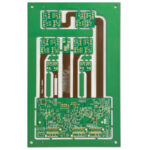
Supplier Qualification for PCB Fabrication
Qualifying a fabrication supplier is an assessment of capability, not of price or of certificates. A certificate shows that a system exists, while capability shows that the supplier can build the specific board being quoted.
The assessment should be made against the features that make the product difficult: the smallest via, the aspect ratio, the impedance requirement, the finish and the surface finish specification. A supplier who is strong on one and weak on another is not qualified for the whole board.
Capability Against the Specific Board
The first step is a written capability matrix, in which the supplier states the limits for conductor width, spacing, via size, aspect ratio, layer count and finish. Those limits are then compared with the drawing.
A supplier whose limit is exactly at the design value has no margin, and the first production batch will show it. The design or the supplier should be changed so that a margin exists.
Process Audit at the Site
An audit visits the process rather than the paperwork, and it looks at the imaging, the plating, the lamination, the drilling and the final finish. The questions that matter are about control limits and measurement rather than about the existence of a procedure.
The audit should also check how non conforming material is handled, because a supplier that discovers and contains its own problems is more valuable than one that never reports any.
Coupon and First Article
A coupon built with the panel is the evidence of process control, and it should be sectioned and measured for plating thickness, dielectric spacing and via quality. The first article should be produced on the same process as production, not on a pilot line.
The measurements should be compared with the drawing and with the capability matrix, and the comparison recorded. A first article that is accepted without numbers is an acceptance of appearance.
Impedance and Controlled Processes
Where impedance is controlled, the supplier has to demonstrate a coupon measurement and a method for adjusting the process when the result drifts. A supplier who measures but does not adjust has a record and not a control.
The same applies to other controlled parameters, such as via fill or edge plating, where the process capability is not visible from the outside.
Quality System and Traceability
The quality system requirement is set by the product and by the customer, and it usually includes traceability of the material lots and the process parameters. The audit should confirm that a finished panel can be traced back to its laminate lot.
Traceability is also the mechanism for containment, so the supplier should be able to identify every panel built from a given lot within a defined time. A test of that ability is worth more than a document review.
Yield History and Reliability Data
Historical yield on comparable products is the best available predictor of performance on a new one. The supplier should provide yield and return data for similar boards rather than a general claim about quality.
Reliability results, such as thermal cycling or CAF testing on a comparable stack up, are also relevant where the product will be used in a demanding environment.
Sample Approval and Change Control
The approved sample is the reference for the product, and it should be retained by both parties. Any change to the material, the stack up or the process should require approval, and the change control process should be tested during qualification.
A supplier that substitutes a laminate without notification creates a change that invalidates the impedance and thermal data. The agreement should state the notification requirement clearly.
Commercial and Capacity Fit
Capability includes the ability to deliver, so the assessment should cover the capacity for the forecast, the lead time and the responsiveness to a change. A technically excellent supplier who cannot fit the volume is not qualified.
The commercial terms and the escalation path should also be agreed, since a technical qualification that is undermined by a dispute about a delivery is not a stable arrangement.
Requalification
Qualification is not permanent. It should be reviewed when the design changes, when the supplier changes a material or a process, and at a fixed interval that reflects the criticality of the product.
The performance between reviews should be tracked with delivery, yield and quality data, so that the review is a confirmation of an ongoing relationship rather than a fresh assessment. This is the same measurement discipline applied to board quality internally.
Additional Considerations for This Build
Practical attention to supplier qualification pays for itself here, because it decides whether the finished board behaves as the drawing intended. Where the requirement is not stated on the fabrication drawing or in the assembly notes, the shop has to assume a default, and that default is rarely the value the design was simulated with. Stating supplier qualification explicitly, together with the tolerance that applies, removes the assumption and keeps the result predictable from batch to batch.
Process Control and Verification
On a design of this kind, capability matrix is the item that decides how the rest of the board is arranged. The process window is set by the narrowest step in the flow, so an improvement anywhere else shows up as margin rather than as yield until that step is addressed. A short note on the drawing about handling, storage or packaging is often worth more than an extra decimal place on a tolerance.
Where a value sits close to a process limit, the drawing should say so, since the shop can then open the process window rather than working to a nominal figure that carries no tolerance. A stack-up that is drawn rather than described removes most of the ambiguity from a quotation, and it lets the fabricator price the board against the dielectric and copper weights that will actually be used.
Where the requirement is not written down, the shop supplies its own default, and the default is chosen for the process rather than for the design.
Related reading: our fabrication notes, board quality and design release notes cover the same ground.
Process Control and Verification
On a design of this kind, capability matrix is the item that decides how the rest of the board is arranged. The process window is set by the narrowest step in the flow, so an improvement anywhere else shows up as margin rather than as yield until that step is addressed. A short note on the drawing about handling, storage or packaging is often worth more than an extra decimal place on a tolerance.
A first article check confirms that the process and the drawing agree on the points listed above, and that the coupon data supports the values used in the design.

Where a measurement falls outside the expected window, the sample is retained so that the cause can be established before the balance of the batch is released.
A first article check confirms that the process and the drawing agree on the points listed above, and that the coupon data supports the values used in the design.
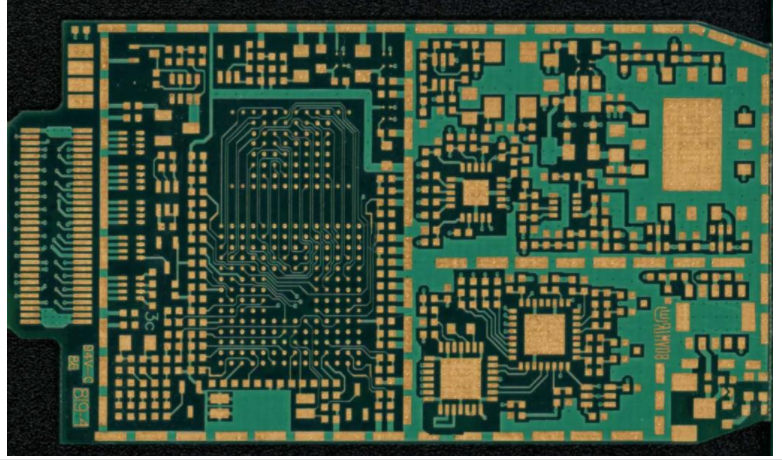
Where a measurement falls outside the expected window, the sample is retained so that the cause can be established before the balance of the batch is released.
FAQ
Is a certificate enough to qualify a supplier? No. It confirms a system and says nothing about the capability for the specific board.
Should the audit be announced? Yes, because the purpose is to see the process rather than to catch someone, and an announced audit gives access to the people who know it.
What is the strongest evidence of capability? A coupon with measured results and a first article built on the production process.
How often should a supplier be requalified? When the design, the material or the process changes, and on a fixed cycle set by the criticality of the product.