Surface Finish Selection for Fine-Pitch Assembly
The surface finish protects the copper before assembly and then becomes the surface the solder wets, which means it has to satisfy two different requirements with one layer. On fine pitch the choice narrows further, because flatness and a controlled thickness matter more than they do on a coarse board, and the differences between finishes become visible in the assembly yield.
What the Finish Has to Do
The finish has to keep the copper solderable through storage, wet completely and quickly in the reflow or wave process, and do so without introducing a compound that weakens the joint. It also has to be flat enough that paste prints consistently and that a fine-pitch part can sit on its pads without rocking.
Those requirements pull in different directions. Thicker finishes protect better but are less flat; thinner finishes are flat and cost less but have shorter storage lives and less tolerance for handling. The chosen finish is a compromise matched to the storage, assembly and cost requirements of the product.
HASL and Lead-Free HASL
Hot air solder leveled finishes coat the copper with solder and then blow it flat with air knives. The result is a robust, easily soldered surface with an excellent storage life, and a thickness that varies from a micron to tens of microns across a pad because the leveling is a mechanical process.
That variation is the reason HASL is avoided on fine pitch. A pad that is domed in the middle will hold a part off its neighbours, and the uneven surface makes paste release inconsistent. For a 0.5 mm pitch device the coplanarity matters more than the finish’s other advantages, and a flat finish is the usual choice.
ENIG and the Black Pad Question
Electroless nickel with immersion gold gives a very flat surface with a controlled nickel layer, typically 3 to 6 microns, and a thin gold layer of 0.05 to 0.1 microns. The gold protects the nickel during storage and dissolves quickly into the solder during reflow, leaving a joint to the nickel beneath.
The known risk is a condition called black pad, in which the nickel surface is corroded by an overly aggressive immersion gold bath, and the resulting joint fails at the interface. The control is the process rather than the specification: bath control, gold thickness and a section check at qualification. A supplier who can demonstrate a stable nickel and gold thickness and a good section is the practical answer to a design concern.
Immersion Silver and Immersion Tin
Immersion silver, typically 0.1 to 0.3 microns, gives a flat surface with excellent solderability and no nickel underlayer, which removes the black pad risk. Its weaknesses are tarnish and sensitivity to handling, and in humid environments with sulfur present, creep corrosion can occur on uncoated surfaces.
Immersion tin, around 0.8 to 1.2 microns, is flat and inexpensive and is used where a matte surface is acceptable. The concern is whisker growth, which is a property of the tin layer and its reflow history, so the finish is usually chosen with that risk understood and controlled through the manufacturing and assembly sequence rather than assumed away.
OSP and Its Storage Limits
An organic surface preservative is a thin, flat, inexpensive coating that protects the copper and is removed by the flux during soldering. It has no metal layer, so there is no intermetallic to form early and no nickel underlayer, which makes it attractive for fine pitch and for cost-sensitive products.
Its limits are storage and thermal cycles. The layer degrades with time, with heat and with repeated handling, and most products specify a storage period measured in months rather than years, together with a limit on the number of reflow passes. Where a board needs a long shelf life or multiple thermal cycles, an OSP is usually the wrong choice.
Finish and Fine-Pitch Coplanarity
Coplanarity is the property that decides whether a fine-pitch part can be assembled at all. A finish that builds thickness unevenly, as HASL does, changes the local height of the pad and can hold a lead or a ball away from the paste. A flat finish leaves the pad height defined by the copper and the laminate rather than by the coating.
The finish also affects the paste deposit indirectly. A rough or domed surface changes the gap between the stencil and the pad, which changes print volume in exactly the way a poor board support does. The printing process is therefore easier to control on a flat finish, which is a benefit that appears in yield rather than in the finish specification.

Storage, Shelf Life and Handling
Every finish has a storage life, and the practical requirement is that it exceeds the time between fabrication and assembly. Immersion silver and OSP are the shortest, HASL and ENIG the longest, and all of them are affected by packaging, humidity and handling.
Handling matters more than the datasheet suggests. Bare boards handled without gloves leave salts and oils on the pads, which reduce wetting even on a finish that is otherwise sound. Where a finish is sensitive, the storage and packaging method is part of the finish selection rather than an administrative detail.
Cost and Availability
Cost follows the number of process steps. HASL is the cheapest and most widely available, OSP is inexpensive but adds process constraints, immersion silver and tin sit in the middle, and ENIG costs more because it involves an electroless nickel step plus a gold bath. Gold on edge connectors is a separate cost again, applied selectively.
Availability matters as much as price when a product ramps. A finish that only one supplier can provide within the required lead time is a risk, and the choice should consider the second source as well as the first. Where a customer specifies a finish, the supplier decision should still be reviewed against the volume and lead time.
Choosing for a Specific Product
The selection starts from the assembly requirements and works backward. A fine-pitch product with a short storage period and no long-term environmental exposure may suit an OSP, while a product that must survive year-long storage and multiple reflow passes points to ENIG or HASL, and the fine pitch then decides between them.
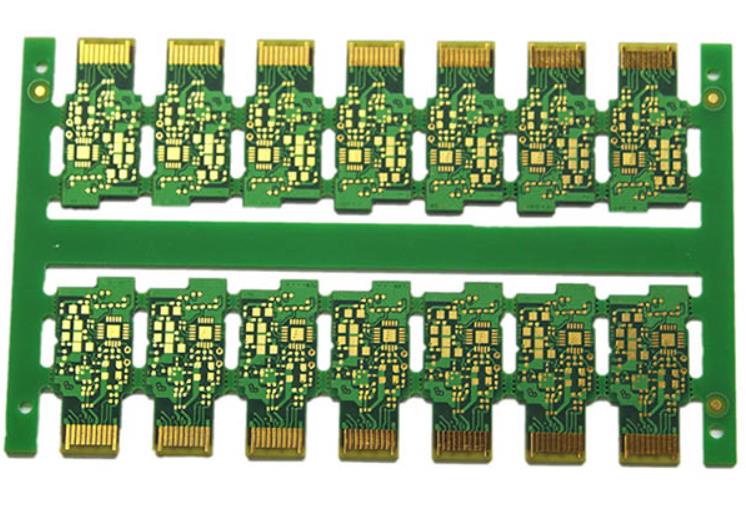
Where an edge connector is present, the connector finish is often a separate specification and is usually hard gold, which is applied selectively and does not change the finish on the rest of the board. The edge plating specification and the board finish specification are therefore read together rather than as one requirement.
Points to Confirm at First Article
Where a decision is made by judgement, a boundary sample makes the judgement repeatable between operators and between shifts. Where a process is at the edge of its capability, the margin should be bought deliberately rather than discovered during production.
Related reading: our fabrication notes, board quality and design release notes cover the same ground.
FAQ
Which finish is best for 0.4 mm pitch? A flat finish: ENIG, immersion silver, immersion tin or OSP. HASL is usually avoided because the leveling leaves an uneven pad height.
Is black pad a reason to avoid ENIG? It is a process control issue rather than an inherent property. Stable bath control, correct gold thickness and a section check at qualification are the controls.
How long can an OSP board be stored? Often a few months rather than years, and with a limit on thermal cycles. For long storage or multiple reflow passes, choose a metallic finish.