Surface Finish Selection: HASL, ENIG or OSP
The surface finish is decided at the design stage and then forgotten until something goes wrong at assembly. It is the layer of metal on the pads that protects the copper and allows solder to wet it, and the choice between the common finishes changes the price, the shelf life, the fine pitch capability and the number of times the board can be reflowed. Choosing it late, or by habit, is how a board ends up with the wrong finish for its assembly process.
Hot Air Solder Levelling
HASL is the finish most boards still receive. The board is coated with molten solder and the excess is blown off with hot air, leaving a solderable surface that is robust, easy to rework, and forgiving of storage and handling. It is also the cheapest of the finishes in common use.
Its weakness is the process itself. Blowing off the solder leaves a surface that is not flat, with peaks and troughs across a pad and a varying thickness between pads. On a coarse assembly that makes no difference. On a fine pitch device it does, because the paste deposit sits on an uneven surface and the stencil cannot form a good seal against it, so the deposit varies from pad to pad and the joint follows.
The lead-free version of the process runs at a higher temperature, which is relevant to the laminate and to any component that has already been attached on the other side. It remains the default choice for boards with through-hole parts and coarse surface mount assembly.
Electroless Nickel Immersion Gold
ENIG deposits a thin layer of gold over a nickel barrier, and the result is a surface that is flat, solderable and stable. Flatness is the reason it is chosen for fine pitch work: the paste deposit is the same on every pad, so the stencil aperture behaves as designed.
The gold also gives an extended shelf life and a surface that survives repeated handling, which matters for a board that is stocked, or for one that is assembled in more than one pass. Where the product needs wire bonding or a surface that will be probed repeatedly, ENIG is the usual answer, and it is compatible with fine pitch and with press-fit connections.
The caution with ENIG is process control at the plating stage. If the nickel layer is attacked during the immersion step, a brittle interface can form between the nickel and the solder, which is known as black pad, and it produces joints that fail after assembly rather than during it. The defect is a plating control issue rather than a material property, which is why the finish should be bought from a shop that monitors the process rather than from the cheapest quotation.

OSP
An organic solderability preservative, or OSP, is not a metal at all. It is a thin organic layer that protects the copper from oxidation and is displaced by the flux during soldering, so the joint forms directly to the copper. The surface is perfectly flat because the copper underneath is flat, which makes OSP attractive for fine pitch assembly.
The limitations are all about time and heat. The layer has a limited shelf life, and it is degraded by handling, by repeated heating and by flux chemistries that do not dissolve it properly. A board with OSP that goes through two reflow cycles and a wave solder operation may have little protection left on the pads that were heated first, so boards that need multiple passes are better served by a metal finish. Probing an OSP pad also leaves a mark that the process does not repair, which matters on a board that is tested before assembly.
In exchange, OSP is the cheapest way to get a flat surface, and on a single-pass, fine pitch, lead-free assembly built soon after fabrication, it performs very well.
Other Finishes in Brief
Immersion tin and immersion silver are flat metal finishes that sit between HASL and ENIG in cost. They are used for fine pitch assembly without a bonding requirement, and each has its own storage and handling constraints. Hard gold, electroplated and thicker, is used selectively on edge connectors and on contact pads that must survive repeated insertion, and it is not a finish for solderable surfaces because the gold dissolves into the joint.
How to Choose
The decision follows from four questions rather than from a general preference.
What is the finest pitch on the board? If there are fine pitch packages, the finish has to be flat, which rules out HASL and narrows the choice to ENIG, OSP, immersion tin or immersion silver.
How many times will the board be heated? A double-sided assembly with a selective solder step heats some pads several times, which favours a metal finish over OSP.
How long will the boards be stored, and under what conditions? A long storage period or a humid environment favours ENIG.
Does the product need wire bonding, press-fit pins or repeated probing? Wire bonding and press-fit favour ENIG. Repeated probing is a reason to avoid OSP.
The answers usually identify one finish, and the remaining argument is about price. Our PCB manufacturing team reviews the finish with the stack-up and the assembly process together, because the finish and the paste interact and the assumption has to be consistent between them.
What Belongs in the Data Package
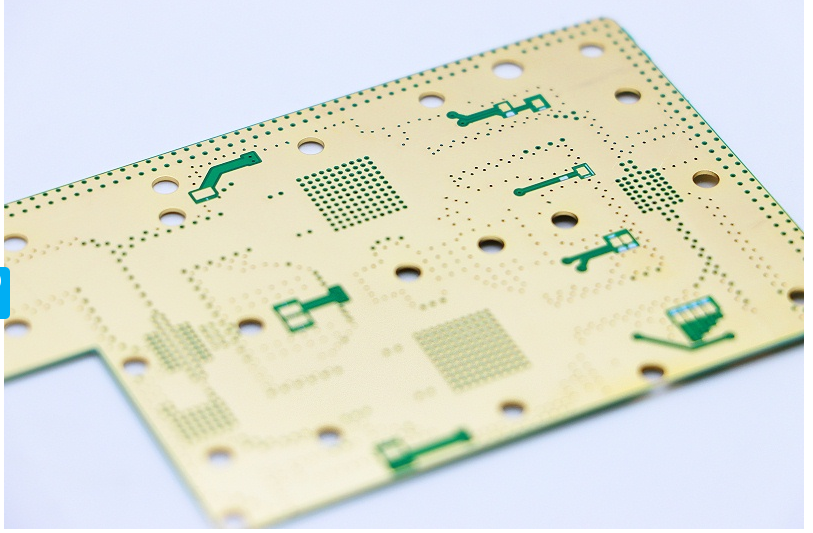
The finish should be stated explicitly in the fabrication data rather than left to the shop, because the default is not the same everywhere. The statement should name the finish, and where ENIG is specified, the thickness of the gold and the nickel layers, since those are the parameters that control the assembly behaviour.
The assembly partner needs the same information for a different reason: a finish that is specified in the data but not in the assembly instructions may be assumed to be the shop default, and the paste and the profile are chosen against that assumption. Keeping the two documents consistent is part of the review that our SMT assembly team performs on incoming projects, and the record of the finish used on each build is kept with the product documentation in our quality management system.
Storage and Handling Notes
Whichever finish is chosen, two notes belong with the drawing. The first is the storage condition: a board that will wait in a warehouse needs a sealed bag with desiccant and a humidity indicator, and a stated maximum storage period, because every finish degrades with time and humidity at a different rate. The second is handling: bare boards should be handled by the edges and kept in their packaging until they reach the line, because fingerprints and contamination affect solderability exactly where the paste is deposited. Neither note costs anything and both prevent a class of defect that is hard to attribute once it appears.
FAQ
Is ENIG always better than HASL? For fine pitch and long storage, yes. For a coarse board with through-hole parts, HASL is cheaper and entirely adequate.
Can OSP be used on a double-sided assembly? It can, but the pads that are heated in the first pass lose protection. A metal finish is a safer choice for a board with more than one heat cycle.
What causes black pad? Poor control of the nickel plating and the immersion gold step, not the choice of finish itself.