Taconic PCB Materials: PCB Design, PCB Manufacturing & High-Frequency Applications
Modern high-frequency and RF electronic systems require PCB materials with carefully controlled electrical, thermal, and mechanical properties. As operating frequencies increase, conventional PCB materials may not provide the low dielectric loss, stable dielectric constant, thermal stability, and dimensional consistency required for demanding applications. This is where advanced materials such as Taconic PCB Materials become valuable.
Taconic is widely recognized for its high-performance laminate technologies, particularly ceramic-filled PTFE materials developed for RF, microwave, and high-speed applications. These laminates are engineered to provide controlled dielectric properties, low signal loss, and reliable performance across demanding operating conditions.
Unlike conventional FR-4 materials, high-frequency Taconic laminates are designed specifically for applications where dielectric performance and signal integrity are critical. They are therefore commonly considered for RF modules, microwave circuits, radar systems, telecommunications equipment, satellite communications, automotive sensors, aerospace electronics, and other high-frequency systems.
This article explains what Taconic PCB materials are, why they are used in high-frequency PCB applications, their key properties, common laminate families, manufacturing considerations, applications, advantages, and how to select a reliable Taconic PCB manufacturing partner.
What Are Taconic PCB Materials?
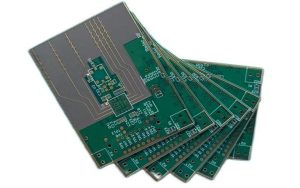
Taconic PCB Materials are high-performance PCB laminate and dielectric materials developed under the Taconic product portfolio, which is part of AGC’s advanced materials business. Taconic has long been associated with PTFE-based and other high-frequency laminate technologies used in RF and microwave circuit fabrication.
Many Taconic laminates use combinations of PTFE, ceramic fillers, and reinforcing materials such as woven fiberglass. The exact construction varies according to the specific laminate family and intended application.
These materials are designed to provide characteristics such as:
- Low and stable dielectric constant (Dk)
- Low dissipation factor (Df)
- Low dielectric loss
- Good dimensional stability
- Low moisture absorption
- Controlled thermal expansion
- High-frequency electrical consistency
- Good copper adhesion and peel strength
- Compatibility with demanding RF and microwave PCB fabrication processes
Taconic materials are available in different constructions and thicknesses, allowing engineers to select a material according to frequency, impedance, thermal requirements, mechanical constraints, and manufacturing requirements.
Because different Taconic laminates have different electrical and mechanical properties, engineers should always use the manufacturer’s datasheet for the specific material grade rather than applying one set of specifications to every Taconic PCB.
Why Are Taconic Materials Used for High-Frequency PCBs?
High-frequency PCB applications are extremely sensitive to changes in dielectric properties, conductor geometry, surface roughness, and material structure. As frequency increases, even relatively small variations can affect impedance, insertion loss, phase performance, and overall signal integrity.
This is one of the main reasons engineers consider Taconic high-frequency materials for demanding RF and microwave designs.
Low Dissipation Factor
The dissipation factor (Df) describes dielectric loss within a PCB material. A lower Df generally means less electromagnetic energy is converted into heat as a signal travels through the dielectric.
For RF and microwave circuits, minimizing dielectric loss can help improve transmission efficiency, insertion loss, and overall system performance.
Stable Dielectric Constant
The dielectric constant, or Dk, directly affects electromagnetic propagation and transmission-line impedance.
A stable Dk helps engineers achieve more predictable controlled impedance PCB designs. This is particularly important for RF transmission lines, microwave circuits, antennas, filters, and high-speed interconnects.
Thermal Stability
High-frequency circuits can generate significant heat, particularly in high-power RF applications. Advanced Taconic laminates are engineered for stable performance over defined operating temperature ranges.
Thermal stability helps maintain dimensional consistency and electrical characteristics as the PCB experiences temperature changes.
Dimensional Stability
Dimensional stability is particularly important for multilayer RF and microwave PCBs. Changes in substrate dimensions can affect trace geometry, layer registration, impedance, and antenna performance.
Taconic materials are engineered to provide controlled dimensional behavior suitable for precision RF applications.
Low Moisture Absorption
Moisture can affect dielectric properties and therefore influence RF performance. Materials with low moisture absorption can help maintain more predictable electrical characteristics in humid or environmentally demanding applications.
Key Electrical and Thermal Properties of Taconic PCB Materials
The performance of a Taconic PCB depends heavily on the specific laminate selected. Taconic offers multiple material families, and their Dk, Df, thermal properties, thickness ranges, reinforcement structures, and processing characteristics are not identical.
For this reason, engineers should select materials based on the actual datasheet values at the target frequency and test method.
Dielectric Constant (Dk)
Dk is one of the most important parameters in high-frequency PCB Design.
It influences:
- Signal propagation velocity
- Transmission-line impedance
- Trace dimensions
- Coupling behavior
- Antenna dimensions
- Phase characteristics
- Layer-stackup calculations
A stable Dk allows engineers to develop more predictable RF and microwave circuits.
Dissipation Factor (Df)
Df, also known as dielectric loss tangent, indicates the amount of electromagnetic energy dissipated by the dielectric material.
Lower Df materials are generally preferred for applications where minimizing insertion loss and maintaining signal strength are important.
Thermal Conductivity
Some high-frequency laminate constructions offer improved thermal characteristics compared with conventional materials. Thermal performance becomes especially important in RF power amplifiers, radar modules, automotive electronics, and other high-power circuits.
However, thermal conductivity varies significantly between material grades and should be evaluated using the specific manufacturer’s datasheet.
Coefficient of Thermal Expansion (CTE)
CTE describes how much a material expands or contracts as temperature changes.
For multilayer PCBs, controlling the X-Y and Z-axis expansion of the laminate helps improve dimensional stability and reliability. Z-axis CTE is particularly important during PCB lamination and thermal cycling.
Moisture Absorption
Low moisture absorption helps maintain stable dielectric performance in humid environments.
This is important because absorbed moisture can change dielectric characteristics and potentially affect impedance and RF signal behavior.
Copper Peel Strength
Copper peel strength measures the adhesion between the copper conductor and dielectric substrate.
Adequate peel strength is essential for reliable PCB manufacturing, especially when the circuit will experience thermal cycling, mechanical stress, or repeated assembly processes.
Common Taconic Laminates and Their Applications
Taconic offers multiple laminate families for RF, microwave, antenna, high-speed, and other specialized applications. The appropriate material depends on frequency, Dk, Df, thermal requirements, mechanical construction, PCB thickness, and manufacturing process.
Commonly referenced Taconic materials include TLY-5, RF-35, TSM-DS3, and TLX-8.
Taconic TLY-5
TLY-5 is a low-loss PTFE-based laminate designed for high-frequency applications. Its electrical properties make it suitable for demanding microwave and RF designs where stable dielectric performance is important.
Typical applications may include:
- High-frequency antennas
- Microwave circuits
- Radar systems
- Satellite communication
- Aerospace electronics
- Defense electronics
For applications such as automotive radar and advanced antenna systems, the actual laminate selection should be based on the target frequency, circuit architecture, and manufacturer’s validated design data.
Taconic RF-35
RF-35 is a ceramic-filled PTFE laminate designed for RF and microwave applications. It combines controlled dielectric characteristics with mechanical properties suitable for PCB manufacturing.
Typical applications include:
- Microwave circuits
- Power amplifiers
- RF modules
- Antennas
- Commercial wireless equipment
- High-frequency communication systems
Its balance between electrical performance and manufacturing considerations can make it suitable for commercial RF applications where cost and performance must both be considered.
Taconic TSM-DS3
TSM-DS3 is a high-performance laminate designed for demanding high-frequency applications where low loss and dimensional stability are important.
Potential applications include:
- 5G infrastructure
- Microwave systems
- Millimeter-wave circuits
- Antenna structures
- Aerospace electronics
- High-frequency communication equipment
The final application should always be validated against the specific material’s electrical and thermal specifications.
Taconic TLX-8
TLX-8 is a high-frequency laminate designed for applications requiring controlled electrical performance and mechanical stability.
Potential applications include:
- Microwave substrates
- RF power amplifiers
- High-frequency communication systems
- Aerospace electronics
- Radar-related systems
- Specialized microwave equipment
Engineers should evaluate Dk, Df, copper type, substrate thickness, thermal properties, and fabrication compatibility before selecting the material.
Taconic PCB vs. FR-4 vs. Rogers Materials
Taconic, FR-4, and Rogers materials are not direct substitutes in every PCB application. Their suitability depends on operating frequency, electrical performance, thermal requirements, mechanical construction, and cost targets.
FR-4 remains the standard material for a large range of general-purpose electronic products because of its availability, manufacturability, and relatively low cost. Taconic and Rogers offer specialized material families for high-frequency and high-performance applications.
| Feature | Taconic PCB Materials | FR-4 PCB | Rogers PCB Materials |
|---|---|---|---|
| Primary application | RF, microwave, antenna, high-frequency circuits | General-purpose electronics | RF, microwave, high-speed, and high-performance circuits |
| Frequency performance | Excellent for applicable high-frequency grades | Suitable for low- to moderate-frequency applications | Excellent for applicable high-frequency grades |
| Dk stability | Generally well controlled for high-frequency designs | More variable depending on grade and frequency | Generally well controlled for high-frequency designs |
| Dielectric loss | Low for applicable grades | Generally higher than specialized RF laminates | Low for many RF/high-speed grades |
| Manufacturing complexity | Requires specialized processing for some PTFE materials | Relatively straightforward | Depends on laminate family |
| Cost | Generally higher than standard FR-4 | Generally lower | Varies by material family |
| Typical applications | RF modules, microwave circuits, antennas, radar | Consumer, industrial, control, computing electronics | RF, microwave, aerospace, telecommunications, automotive |
| Design priority | High-frequency electrical performance | Cost, manufacturability, general performance | High-frequency and high-speed performance |
The most important point is that material selection should not be based solely on brand. Engineers should compare the actual Dk, Df, CTE, thermal conductivity, copper adhesion, thickness tolerance, surface roughness, and processing requirements of the specific material grades.
Taconic PCB Manufacturing Process
Manufacturing a Taconic PCB can require different process controls from conventional FR-4 fabrication. PTFE-based laminates have specific drilling, plating, lamination, and surface-treatment considerations.
A typical PCB Manufacturing workflow may include the following stages.
1. Material Selection and Preparation
The first step is selecting the appropriate Taconic laminate based on:
- Operating frequency
- Dk and Df
- PCB thickness
- Copper thickness
- Thermal requirements
- Mechanical requirements
- Impedance targets
- Layer count
- Manufacturing process
- Environmental conditions
The laminate must then be properly stored and prepared according to the manufacturer’s processing recommendations.
2. PCB Design and Stackup Engineering
Before fabrication begins, engineers develop the multilayer stackup and transmission-line geometry.
For RF and microwave circuits, the stackup must consider:
- Dielectric thickness
- Copper thickness
- Trace width
- Trace spacing
- Reference-plane location
- Dk
- Df
- Copper surface roughness
- Via geometry
- Controlled impedance requirements
A reliable PCB Design process should use material-specific data rather than generic FR-4 assumptions.
3. Imaging
During imaging, the designed circuit pattern is transferred to the copper surface using photoresist-based imaging processes.
Laser direct imaging (LDI) may be used when the required feature size, registration accuracy, and production process justify it.
4. Copper Etching
The unwanted copper is removed through controlled chemical etching, leaving the required conductive traces and copper features.
Etching accuracy is particularly important in high-frequency PCB applications because trace width and geometry directly affect impedance.
5. Drilling
Drilling Taconic PTFE-based laminates requires process parameters appropriate for the selected material construction.
Unlike standard FR-4, PTFE-based materials can require specialized drilling and desmear approaches because PTFE has different mechanical and chemical characteristics.
Depending on the laminate construction, plasma or other approved treatment methods may be used to prepare hole walls for reliable metallization.
6. Through-Hole Plating
After drilling and hole preparation, copper is deposited on the hole walls to form reliable plated through-holes.
The plating process must provide consistent copper coverage while maintaining the electrical and mechanical reliability required by the PCB design.
7. Lamination
For multilayer Taconic PCBs, individual cores, bonding materials, and other dielectric structures are assembled according to the designed stackup.
Because high-frequency materials may have different thermal and mechanical behavior from conventional FR-4, lamination parameters should follow the material manufacturer’s recommendations.
8. Surface Finish
The PCB may receive an appropriate surface finish depending on the application and assembly requirements.
Common options include:
- ENIG
- Immersion silver
- Immersion tin
- HASL, where appropriate
- Other application-specific finishes
The selected finish should consider solderability, RF requirements, environmental exposure, connector interfaces, and long-term reliability.
9. Solder Mask and Silkscreen
Depending on the RF design, solder mask coverage must be carefully considered. In some high-frequency transmission-line structures, solder mask can affect the effective dielectric environment and therefore influence impedance.
For this reason, engineers may specify controlled solder mask openings or mask-defined RF structures according to the design requirements.
10. Electrical Testing and Final Inspection
The finished PCB can undergo a combination of:
- AOI
- Electrical continuity and isolation testing
- Dimensional inspection
- X-ray inspection where applicable
- Impedance testing
- Visual inspection
- Surface-finish inspection
For high-frequency products, additional RF validation may be performed at the assembly or system level, such as insertion-loss, return-loss, S-parameter, antenna, or functional testing.
Applications of Taconic PCB Materials
Taconic PCB materials are primarily used when conventional PCB materials cannot provide the required combination of low loss, dielectric stability, frequency performance, and thermal reliability.
Telecommunications
Telecommunications is one of the major application areas for high-frequency PCB materials.
Taconic laminates can be used in:
- 5G infrastructure
- RF modules
- Wireless communication equipment
- Base-station electronics
- Antenna systems
- Power amplifiers
- Filters
- Couplers
- Microwave communication equipment
Stable dielectric properties are especially important as communication systems move toward higher frequencies and wider bandwidths.
Aerospace and Defense
Aerospace and defense electronics often require high-performance RF and microwave circuits.
Potential applications include:
- Radar systems
- Satellite communications
- Avionics
- Phased-array antennas
- Microwave communication
- Electronic warfare systems
- Defense radar
These systems may require low-loss materials and highly controlled electrical characteristics under demanding environmental conditions.
Automotive Electronics
Modern vehicles increasingly depend on high-frequency sensing and communication technologies.
Taconic-type high-frequency laminates may be considered for:
- ADAS radar
- Automotive radar sensors
- Antenna modules
- Wireless communication
- Keyless-entry systems
- Tire-pressure monitoring systems
- LiDAR-related electronics
- High-frequency vehicle communication systems
For automotive applications, material selection must also consider temperature cycling, vibration, humidity, reliability requirements, and applicable automotive qualification standards.
Medical Electronics
High-frequency PCB materials can also be used in specialized medical electronics.
Potential applications include:
- Diagnostic equipment
- Imaging systems
- RF medical equipment
- Monitoring devices
- Wireless medical equipment
- Specialized sensing systems
Material selection should consider both electrical performance and applicable medical-device reliability and regulatory requirements.
Advantages of Taconic PCB Materials
Taconic high-frequency materials offer several advantages for demanding RF and microwave applications.
Low Dielectric Loss
Low dielectric loss is one of the most important advantages of specialized high-frequency laminate materials.
Lower Df can reduce signal attenuation and improve transmission efficiency, particularly as operating frequency increases.
Stable Dielectric Properties
Stable Dk helps engineers develop predictable transmission lines and controlled-impedance structures.
This is particularly important for:
- RF filters
- Antennas
- Microwave circuits
- Radar modules
- High-speed interconnects
- RF amplifiers
Reduced Signal Attenuation
Low-loss dielectric materials can help reduce attenuation during signal transmission.
This becomes increasingly important in high-frequency systems where conventional materials may introduce greater dielectric losses.
Low Moisture Absorption
Low moisture absorption helps reduce changes in electrical performance caused by environmental humidity.
This is particularly useful for outdoor communication equipment, aerospace electronics, automotive systems, and other products exposed to changing environmental conditions.
Good Dimensional Stability
Stable dimensions help maintain consistent trace geometry and layer registration.
This can improve the repeatability of controlled-impedance and microwave structures.
Good Copper Adhesion
Adequate copper peel strength is essential for reliable circuit fabrication.
Strong adhesion helps maintain conductor integrity during PCB processing, soldering, thermal cycling, and long-term operation.
Improved Signal Integrity
The combination of controlled Dk, low Df, appropriate copper construction, and accurate PCB geometry can help maintain signal integrity in high-frequency applications.
Wide-Bandwidth Capability
High-performance RF laminates can support wide-bandwidth circuit architectures when properly designed and manufactured.
However, bandwidth performance depends on the entire RF system, including material selection, stackup, transmission-line geometry, connectors, components, and antenna design.
PCB Design Considerations for Taconic Materials
Selecting a high-performance laminate alone does not guarantee high-frequency performance. The PCB layout and manufacturing process must also be optimized.
Control Transmission-Line Geometry
Trace width, copper thickness, dielectric thickness, and reference-plane spacing all affect impedance.
For this reason, engineers should calculate transmission-line geometry using the actual material properties and stackup.
Minimize Unnecessary Signal Discontinuities
High-frequency signals can be affected by abrupt changes in trace geometry.
Designers should carefully manage:
- Via transitions
- Connector transitions
- Trace-width changes
- Layer changes
- Ground-plane discontinuities
- Pad structures
Optimize Grounding
A continuous reference plane provides a controlled return path for high-frequency signals.
Grounding problems can increase EMI, crosstalk, and signal integrity issues.
Control Via Geometry
Vias introduce parasitic capacitance and inductance.
For high-frequency designs, engineers may need to consider:
- Via diameter
- Pad size
- Anti-pad dimensions
- Via stub length
- Backdrilling
- Via placement
- Ground-via fences
Consider Copper Surface Roughness
At high frequencies, conductor losses can be influenced by copper surface roughness because of the skin effect.
Therefore, copper foil selection should be considered alongside the laminate’s Dk and Df.
Evaluate Thermal Performance
High-power RF circuits require careful thermal management.
Engineers should consider:
- Copper thickness
- Thermal vias
- Copper planes
- Heat spreaders
- Component placement
- Enclosure-level thermal design
How to Choose a Reliable Taconic PCB Manufacturer
Selecting the right Taconic PCB Manufacturer is an important part of a successful RF or microwave project.
A manufacturer should not only be capable of purchasing Taconic materials but should also understand how to process high-frequency laminates correctly.
1. Check Quality Certifications
Evaluate relevant certifications such as:
- ISO 9001
- ISO 14001
- IATF 16949 for applicable automotive projects
- ISO 13485 for applicable medical projects
- UL recognition or certification where required
The exact certification requirements should be matched to the final application.
2. Verify High-Frequency PCB Experience
A manufacturer experienced in FR-4 production is not automatically experienced in PTFE or RF PCB manufacturing.
Ask about previous experience with:
- PTFE laminates
- Ceramic-filled materials
- RF PCBs
- Microwave PCBs
- Controlled impedance
- High-frequency testing
- Multilayer RF fabrication
3. Review Manufacturing Capabilities
Important capabilities may include:
- Precision drilling
- PTFE-compatible hole preparation
- Controlled copper plating
- Fine-line fabrication
- Multilayer lamination
- Impedance control
- Advanced surface finishes
- AOI
- Electrical testing
- RF testing where required
4. Evaluate DFM Support
A capable manufacturer should review the design before production and identify potential manufacturing problems.
A professional DFM review can examine:
- Trace width and spacing
- Hole sizes
- Aspect ratios
- Layer registration
- Impedance structures
- Copper distribution
- Stackup
- Surface finish
- Solder mask
- RF-specific geometry
5. Compare Total Cost Rather Than Material Price Alone
Taconic laminates generally cost more than conventional FR-4 materials. However, the material price is only one part of the total PCB cost.
Engineers and purchasing teams should also evaluate:
- Fabrication yield
- Processing complexity
- PCB thickness
- Copper weight
- Number of layers
- Testing requirements
- Assembly requirements
- Lead time
- Engineering support
- Production scalability
Taconic PCB Manufacturing with Kingda
For projects requiring specialized RF, microwave, and high-frequency PCB fabrication, Kingda can support customers from PCB Design review through PCB Manufacturing and PCB assembly.
A professional manufacturing workflow should begin with a review of the material grade, stackup, electrical requirements, impedance targets, copper thickness, drilling specifications, and surface finish.
For Taconic-based projects, engineers should provide the exact material designation and required electrical specifications rather than simply specifying “Taconic material.” This allows the manufacturer to verify material availability, processing requirements, and manufacturing compatibility before production.
Kingda can also support engineering teams with DFM evaluation, PCB fabrication, component assembly, testing, and production coordination according to project requirements.
Conclusion
Taconic PCB materials are specialized high-frequency laminate solutions designed for applications where conventional PCB materials may not provide sufficient electrical performance. Their controlled dielectric properties, low dielectric loss, dimensional stability, low moisture absorption, and thermal performance make applicable Taconic laminate families suitable for RF, microwave, antenna, telecommunications, automotive, aerospace, defense, and other high-frequency electronics.
However, there is no single Taconic material suitable for every application. Different laminate families have different Dk, Df, thermal, mechanical, thickness, and fabrication characteristics. Therefore, material selection should always be based on the actual operating frequency, electrical requirements, thermal environment, mechanical constraints, and manufacturer’s datasheet.
For successful high-frequency PCB production, material selection must also be combined with appropriate PCB Design, controlled impedance, optimized stackup, RF-aware routing, precision fabrication, and comprehensive testing. Working with an experienced PCB Manufacturing partner can help ensure that the selected Taconic laminate performs as intended throughout the complete product lifecycle.
Article Summary
Taconic PCB materials are high-performance laminate solutions primarily used for RF, microwave, antenna, telecommunications, automotive, aerospace, and other high-frequency applications. Their low dielectric loss, controlled Dk, dimensional stability, and environmental performance make them suitable for demanding signal-integrity requirements. Selecting the correct material grade and partnering with a manufacturer experienced in high-frequency PCB fabrication are essential for achieving reliable electrical and mechanical performance.