
PCB Test Coupon Design and What It Proves
A test coupon is a small structure built on the same panel as the product, with the same materials and the same process, so that it can be measured destructively without destroying a board.
Why the Coupon Exists
The coupon answers the questions that cannot be answered from the product itself: the plating thickness inside a hole, the dielectric spacing between layers, the conductor width and the copper weight.
Because it travels with the panel, the result describes the panel rather than the process in general. Two panels built a week apart have two coupons and two results. Our plating notes describe the measurement that the coupon supports.
What a Coupon Typically Contains
The coupon carries plated holes of the same sizes as the product, conductor and space patterns at the minimum width used, a daisy chain structure through the layers and a set of pads for the finish test.
It also carries the material identification, so that the coupon can be traced to the panel it came from. Our fabrication notes notes list the attributes that should be stated.
Coupon Versus Product Features
A coupon is designed for measurement, so it can use larger features than the product. What it cannot do is prove what the product’s smallest features look like.
Where the product runs at the process limit, the coupon should include the same limit, or the result describes a comfortable structure rather than the one that matters. Our aspect ratio notes describe the limit that should be covered.

Position on the Panel
The coupon should sit where the process is least favourable. On a plating line that is usually near the centre, where the current density is lowest, rather than at the edge where the panel is gripped.
A coupon placed at the edge reports the best case and it will pass while the centre of the panel is marginal. Our etching notes describe the same variation in a wet process.
Tests Performed on It
The coupon is used for microsection, for plating thickness measurement, for dielectric thickness, for the solderability of the finish and for the impedance of a controlled structure.
Some of these tests destroy the coupon and some do not, so the coupon should carry enough separate structures for all of them. Our test coupon notes describe how the structures are arranged.
What the Coupon Cannot Prove
The coupon does not prove that the product is electrically good. It proves that the material and the process were within the specification, which is a different claim.
A fault in the artwork or in the drilling program will not appear on a coupon that was designed separately from the product. That is what the electrical test of the product is for. Our flying probe notes describe how the product itself is verified.
Records and Retention
The coupon result should be recorded against the panel identity, and the coupon itself or its microsection should be retained for the retention period.
Where a dispute arises later, the retained coupon is the only evidence that describes the material that was actually supplied.
Process Control and Verification
On a design of this kind, traceability is the item that decides how the rest of the board is arranged. Running a first article through the same checks as the production panel confirms that the two agree, and that comparison is the cheapest form of process control available at prototype stage. Keeping a sample from the panel turns a dispute into a measurement, because the same coupon can be re-examined by both parties without rebuilding the batch.
Reviewing the design before the data is released is cheaper than correcting it after the panel is in the tank, because every step downstream inherits the decision made at the front end. Documenting the assumption is part of the design work, and a short note on the drawing prevents a question that would otherwise arrive a day later and cost a day of schedule.
The process window is set by the narrowest step in the flow, so an improvement anywhere else shows up as margin rather than as yield until that step is addressed. A short note on the drawing about handling, storage or packaging is often worth more than an extra decimal place on a tolerance.
Where a value sits close to a process limit, the drawing should say so, since the shop can then open the process window rather than working to a nominal figure that carries no tolerance. A stack-up that is drawn rather than described removes most of the ambiguity from a quotation, and it lets the fabricator price the board against the dielectric and copper weights that will actually be used.
Process Control and Verification
On a design of this kind, traceability is the item that decides how the rest of the board is arranged. Running a first article through the same checks as the production panel confirms that the two agree, and that comparison is the cheapest form of process control available at prototype stage. Keeping a sample from the panel turns a dispute into a measurement, because the same coupon can be re-examined by both parties without rebuilding the batch.
Reviewing the design before the data is released is cheaper than correcting it after the panel is in the tank, because every step downstream inherits the decision made at the front end. Documenting the assumption is part of the design work, and a short note on the drawing prevents a question that would otherwise arrive a day later and cost a day of schedule.
The process window is set by the narrowest step in the flow, so an improvement anywhere else shows up as margin rather than as yield until that step is addressed.
Process Control and Verification
On a design of this kind, traceability is the item that decides how the rest of the board is arranged. Running a first article through the same checks as the production panel confirms that the two agree, and that comparison is the cheapest form of process control available at prototype stage. Keeping a sample from the panel turns a dispute into a measurement, because the same coupon can be re-examined by both parties without rebuilding the batch.
Reviewing the design before the data is released is cheaper than correcting it after the panel is in the tank, because every step downstream inherits the decision made at the front end.
A first article check confirms that the process and the drawing agree on the points listed above, and that the coupon data supports the values used in the design.
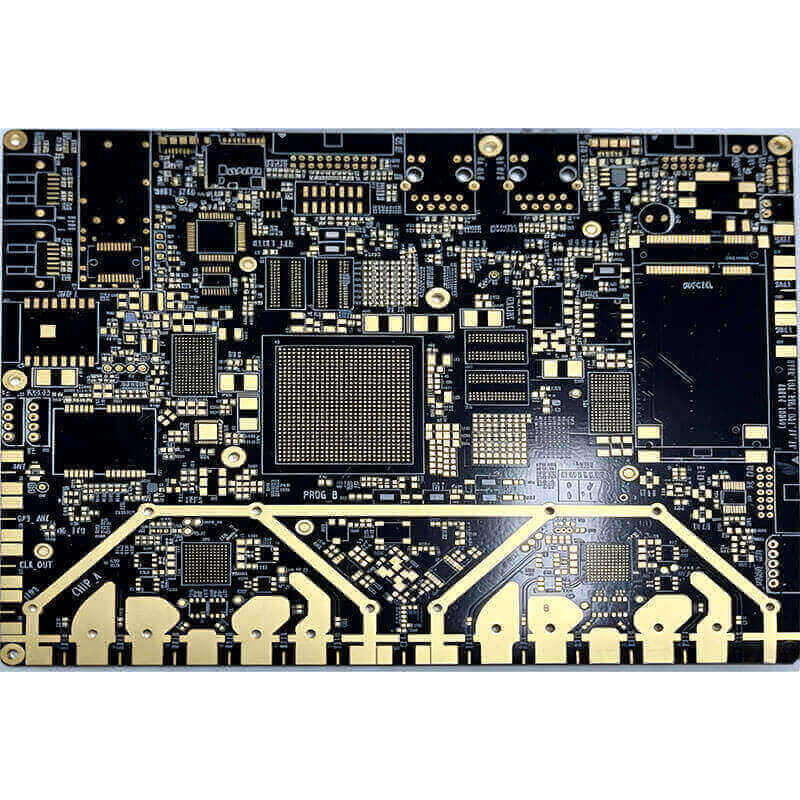
Where a measurement falls outside the expected window, the sample is retained so that the cause can be established before the balance of the batch is released.
FAQ
Is a coupon required on every panel? Not on every panel, on every panel that is tested. Where a panel is not tested, the coupon still travels with it so that the same structure is available for a later measurement.
Can one coupon serve a mixed panel? It can where the same processes are used. Where the panel carries different finishes or different hole sizes, the coupon should cover each of them.
What does gopcb provide for test coupons? We provide a coupon design that covers the smallest product features, placement at the least favourable position on the panel, structures for each test that will be performed, traceability from the coupon to the panel, recorded results and retained samples for the retention period.