Turnkey PCB Assembly: PCB Design, PCB Manufacturing & Turnkey Services Guide
When procurement teams and engineering managers search for a reliable PCB Assembly partner, they frequently encounter the term “turnkey PCB assembly.” The term is widely used across the electronics manufacturing industry, but its actual scope can vary significantly from one manufacturer to another.
Before signing a manufacturing agreement or releasing design files, it is important to understand what a genuine turnkey PCB assembly service includes. Buyers should also ask the right questions to ensure that different suppliers are being compared on an equivalent scope of work.
This guide explains what turnkey PCB assembly means, how it differs from consignment assembly, what the typical turnkey process involves, and which factors influence the final quotation.
What Is Turnkey PCB Assembly?
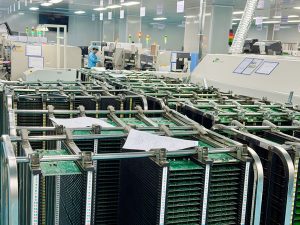
Turnkey PCB assembly is a manufacturing service in which a contract manufacturer manages most or all of the production activities required to deliver a completed PCB assembly.
Instead of separately managing PCB fabrication, component procurement, assembly, inspection, and testing suppliers, the customer works with one primary manufacturing partner.
Depending on the supplier and project agreement, a turnkey service may include:
- Reviewing design and manufacturing files before production
- Performing Design for Manufacturability (DFM) analysis
- Procuring components according to the approved BOM
- Coordinating or performing bare PCB fabrication
- Managing SMT and through-hole assembly
- Performing secondary assembly operations when required
- Conducting inspection and electrical testing
- Managing material traceability
- Packaging finished PCB assemblies
- Coordinating shipment to the customer’s facility
The exact scope should always be defined in the quotation, purchase agreement, or manufacturing contract. The term “turnkey” by itself does not guarantee that every supplier includes the same services.
What Is the Difference Between Turnkey and Consignment PCB Assembly?

Not every PCB Assembly project requires the manufacturer to purchase all components.
In a consignment assembly model, the customer provides some or all of the components, while the manufacturer is primarily responsible for assembly and associated production processes.
A partial-turnkey model is also possible. In this arrangement, the manufacturer purchases some components while the customer supplies others.
Turnkey PCB Assembly
The manufacturer typically manages:
- Component sourcing
- PCB fabrication coordination
- SMT assembly
- Through-hole assembly
- Inspection
- Testing
- Packaging and logistics
Consignment PCB Assembly
The customer typically provides some or all of the components, while the manufacturer handles:
- Component receiving
- Inventory verification
- PCB assembly
- Inspection
- Testing
- Packaging
Which Model Should You Choose?
The appropriate model depends on your supply-chain strategy.
Turnkey assembly can simplify supplier management because one manufacturing partner coordinates multiple production activities. It may also reduce the administrative workload associated with purchasing and inventory management.
Consignment assembly may be appropriate when a customer already has component inventory, requires proprietary components, has negotiated its own component pricing, or wants direct control over certain parts of the supply chain.
Understanding which model is included in a quotation is essential for comparing total project cost, lead time, inventory responsibility, and liability for material shortages.
How Does the Turnkey PCB Assembly Process Work?
A typical turnkey PCB Manufacturing and assembly project involves several interconnected stages.
1. RFQ, Design Review, and DFM Analysis
The customer typically provides a manufacturing data package containing items such as:
- Gerber or other PCB fabrication data
- Bill of Materials (BOM)
- Pick-and-place/centroid data
- Assembly drawings
- PCB specifications
- Stackup requirements
- Component specifications
- Testing requirements
Before production, the manufacturer should review the documentation for completeness and manufacturing risks.
A DFM review may identify issues such as:
- Insufficient spacing
- Incorrect or incomplete footprints
- Difficult-to-source components
- Inadequate test-point access
- Manufacturing tolerance conflicts
- PCB fabrication limitations
- Assembly process concerns
Identifying these problems before production can prevent delays, rework, and unexpected costs.
2. Component Procurement
Once the project is approved, the manufacturer sources components according to the approved BOM.
Procurement activities may include:
- Checking component availability
- Confirming pricing
- Reviewing lead times
- Verifying manufacturer part numbers
- Evaluating authorized distribution channels
- Identifying potential lifecycle or obsolescence risks
- Managing shortages and allocation conditions
- Proposing alternatives when permitted
Component substitution should not be treated as an automatic decision by the manufacturer. Any alternative component that affects electrical, mechanical, thermal, or regulatory performance should be reviewed and approved according to the customer’s requirements.
Before selecting a turnkey supplier, it is worth asking how the company handles shortages, obsolete components, allocation, counterfeit-risk controls, and customer approval for substitutions.
3. PCB Fabrication
The bare PCB is manufactured according to the approved fabrication data and specifications.
Depending on the supplier’s business model, PCB fabrication may be performed internally or through an approved manufacturing partner.
Typical fabrication activities may include:
- Material preparation
- Layer imaging
- Etching
- Lamination for multilayer PCBs
- Drilling
- Copper plating
- Solder mask application
- Surface finishing
- Silkscreen
- Electrical testing
In a turnkey project, the contract manufacturer is responsible for coordinating this portion of the supply chain even when the bare PCB is produced by a separate qualified fabricator.
4. PCB Assembly and Inspection
After the bare PCBs and components are available, the assembly process begins.
For SMT components, the process commonly includes:
- Solder paste printing
- Component placement
- Reflow soldering
- AOI
- Additional inspection or testing when required
Through-hole components may then be inserted and soldered using selective soldering, wave soldering, or manual soldering, depending on the design.
However, the exact sequence depends on the board architecture. Some mixed-technology PCBs require a different process sequence to protect previously assembled components and maintain solder-joint quality.
5. Testing
Testing is an important part of turnkey PCB assembly because a visually acceptable board is not necessarily an electrically functional board.
Depending on the product requirements, testing may include:
Flying Probe Testing
Flying probe systems use movable probes to access test points and perform electrical measurements without requiring a dedicated fixture. This can be useful for prototypes and lower-volume production.
In-Circuit Testing (ICT)
ICT uses a dedicated fixture to access designated test points and evaluate electrical characteristics. It can be highly efficient for repeat production but normally involves an upfront fixture cost.
Functional Testing
Functional testing evaluates whether the assembled PCBA performs its intended electrical or system-level functions.
The customer may provide a test procedure, test software, programming requirements, or dedicated test equipment depending on the project.
The appropriate testing strategy should be determined by product requirements, production volume, reliability expectations, and the consequences of potential field failures.
6. Final Inspection, Documentation, and Delivery
After assembly and testing, finished PCB assemblies may undergo final inspection before shipment.
Depending on the project requirements, the documentation package may include:
- Inspection records
- Test reports
- Certificates of conformance
- Material traceability records
- Component traceability information
- Production records
- Shipping documentation
Finished assemblies should also be packaged appropriately to protect them against electrostatic discharge, moisture, mechanical damage, and contamination during transportation.
What Drives Turnkey PCB Assembly Pricing?
The cost of turnkey PCB Assembly is influenced by multiple factors rather than a single manufacturing charge.
Component Cost
Components often represent a significant portion of total project cost. Quantity, availability, package type, lifecycle status, supplier, and market conditions can all affect pricing.
PCB Manufacturing Complexity
Layer count, material selection, board dimensions, copper thickness, tolerances, controlled impedance, HDI structures, microvias, and surface finish can affect bare-board cost.
Assembly Complexity
Fine-pitch components, BGAs, 0201 components, high component counts, double-sided SMT, and mixed SMT/through-hole assembly can increase process complexity.
Testing Requirements
AOI, X-ray inspection, flying probe testing, ICT, and functional testing have different equipment, programming, tooling, and labor requirements.
Production Volume
Prototype, pilot, and mass-production quantities have different cost structures. Setup and engineering costs are distributed differently depending on the number of units produced.
Lead Time
Expedited component procurement, priority production scheduling, and accelerated logistics may increase the overall project cost.
For a more detailed understanding of these factors, buyers should evaluate the complete quotation rather than focusing only on the quoted assembly price.
What Should You Ask a Turnkey PCB Assembly Supplier?
Before selecting a turnkey manufacturing partner, procurement and engineering teams should clarify the following points.
Component Procurement
- Which suppliers and distribution channels will be used?
- How are component authenticity and traceability controlled?
- What happens when a component is unavailable?
- Does the manufacturer require customer approval for substitutions?
- How are obsolete and end-of-life components handled?
PCB Fabrication
- Is PCB fabrication performed internally or by an approved partner?
- What PCB materials and stackups are supported?
- What fabrication tolerances can be achieved?
- How are bare boards tested before assembly?
PCB Assembly
- Which SMT and through-hole processes are available?
- Can mixed-technology assemblies be supported?
- How are fine-pitch and BGA components inspected?
- What production and inspection records are available?
Testing
- Is AOI included in the standard assembly process?
- Is X-ray inspection available when required?
- Can the manufacturer perform flying probe, ICT, or functional testing?
- Who supplies test fixtures and test programs?
Quality and Traceability
- How are materials and components tracked?
- What inspection standards are followed?
- How are nonconforming products handled?
- What production and testing records are retained?
Commercial Terms
- What exactly is included in the quoted price?
- Are tooling and engineering charges included?
- Are component procurement fees included?
- What are the expected lead times?
- How are excess components and unused inventory handled?
- Who is responsible for material shortages or approved substitutions?
These questions help ensure that quotations from different suppliers are actually comparable.
Turnkey PCB Assembly vs. Separate Suppliers
Using a turnkey supplier is not the only way to organize production.
A company may instead purchase bare PCBs from one manufacturer, source components through another distributor, and use a third company for assembly and testing.
This approach can provide greater direct control over individual suppliers and purchasing decisions, but it also creates additional coordination responsibilities.
A turnkey model consolidates these activities under one primary manufacturing partner. The appropriate approach depends on the customer’s purchasing strategy, internal resources, supply-chain requirements, and production volume.
Benefits of Turnkey PCB Assembly
A well-managed turnkey manufacturing model can provide several practical benefits:
- Simplified supplier management: One primary partner coordinates multiple manufacturing activities.
- Integrated production planning: PCB fabrication, component procurement, and assembly can be coordinated around the same production schedule.
- Reduced procurement workload: The manufacturer manages component purchasing according to the agreed BOM.
- Improved communication: Engineering, purchasing, and production issues can be coordinated through one manufacturing organization.
- Better production visibility: A comprehensive manufacturing partner may provide information across procurement, fabrication, assembly, and testing stages.
- Streamlined logistics: Finished PCB assemblies can be shipped directly to the customer’s facility or designated location.
However, these benefits depend on the actual scope and management capabilities of the selected supplier. Buyers should evaluate the contractual responsibilities rather than assuming that every service labeled “turnkey” includes the same activities.
How Turnkey Services Affect PCB Design
Turnkey manufacturing can influence the design process as early as the PCB Design stage.
For example, the manufacturer may identify opportunities to:
- Replace difficult-to-source components
- Improve component standardization
- Increase assembly efficiency
- Improve test-point accessibility
- Simplify PCB fabrication
- Reduce unnecessary manufacturing tolerances
- Improve panel utilization
- Reduce assembly process steps
Early DFM feedback can therefore help engineers develop a design that is easier to fabricate, assemble, inspect, and test.
The most effective turnkey projects typically involve the manufacturer early enough to identify manufacturing risks before the design is released for production.
Conclusion
Turnkey PCB Assembly is more than simply placing components on a circuit board. A comprehensive turnkey service can involve design review, DFM analysis, component procurement, PCB fabrication, SMT and through-hole assembly, inspection, testing, documentation, packaging, and logistics.
However, the definition of “turnkey” varies between manufacturers. One supplier may include PCB fabrication and component procurement, while another may provide only assembly and selected procurement services.
For this reason, engineering and procurement teams should carefully review the scope of work, component-sourcing responsibilities, testing requirements, quality controls, lead times, and additional charges before comparing quotations.
For custom PCB Manufacturing and assembly projects, Kingda can be considered as a manufacturing partner for customers seeking coordinated PCB fabrication and assembly services. Providing complete design files, BOM information, assembly requirements, and testing specifications allows the manufacturing team to evaluate the project accurately and establish a clearer production plan.