
Underfill Application and Flow Behaviour
Underfill is a polymer that flows under a package and fills the gap between the solder joints, where it reduces the strain on the balls during thermal cycling. It is applied after reflow and travels by capillary action, which means the process depends on the geometry as much as on the material.
The technique is used where the package is large, the pitch is fine or the product cycles often, and it is one of the few process steps that can make a marginal package reliable or a good one unusable.
How Capillary Flow Works
The material is dispensed along one or two edges of the package and drawn into the gap by surface tension. The flow rate depends on the gap height, the viscosity and the wetting of the surfaces.
A gap that is too small slows the flow to the point where it never reaches the opposite side, and a gap that is too large encourages the material to run out. The design of the package and the standoff therefore set the process window.
Dispense Pattern and Volume
The dispense pattern determines how evenly the material advances. A single line along one edge produces a front that reaches the far corners last, while a pattern along two adjacent edges shortens the path and reduces the risk of an incomplete fill.
The volume has to be enough to fill the gap and form a small fillet, and no more, since excess material flows onto the board and can reach neighbouring components. The volume is calculated from the package area and the gap.
Filler Content and Flow
A material with a high filler content has a low coefficient of thermal expansion and a high viscosity, so it conducts heat well and flows slowly. The two properties are linked by the filler loading.
The choice is therefore a compromise between the thermal performance the package needs and the flow the assembly can accommodate. Where the gap is small, a heavily filled material may not fill at all.
Voids and Incomplete Fill
An incomplete fill leaves a region with no support, which is the condition the underfill was meant to remove. Voids in the material are less critical but are still a sign that the flow was not uniform.
The detection is by acoustic microscopy or by a cross section, and both are used on samples rather than on every board. A visible fillet on all four sides is not proof that the material reached the centre.
Temperature and Time
The flow rate rises with temperature, so the board is usually warmed before dispensing and held warm during flow. The temperature has to be below the point where the material begins to cure, or the flow stops before it is complete.
The cure schedule that follows is part of the material specification, and it determines the final mechanical properties. A partially cured underfill has the wrong expansion and adheres poorly.
Cleanliness and Adhesion
Underfill adheres to the surfaces it touches, and those surfaces are the laminate, the package and the solder mask. Flux residue between the two reduces the adhesion and creates a path for moisture.
A cleaning step before underfill is common for that reason, and the compatibility of the cleaning chemistry with the underfill should be qualified. This is the same cleaning decision described for the cleaning process.
Neighbouring Components
The material flows where the gap and the wetting take it, and it does not stop at the package outline. Neighbouring components can be contaminated, and a connector contact that is touched by underfill may not make a reliable connection.
A keep out zone around the package, or a dam of a material the underfill does not wet, is the usual control. The layout should provide the space.
Rework After Underfill
A package that has been underfilled is difficult to remove, because the material must be cut or softened before the joints can be reflowed. The operation is possible and it is slow, and it usually ends with the site being reworked without underfill.
The decision should be considered at design time, since a product that expects rework should use a material that can be removed, or should accept the cost of the slow repair.
Process Qualification
Qualification is a cross section on a sample that shows fill under the centre of the package, together with a thermal cycling result on a daisy chained coupon. The two together demonstrate that the material is present and that it does the job.
The result should be recorded with the material lot, the dispense pattern and the cure schedule, in the same way as the process evidence described for manufacturing processes.
Process Control and Verification
On a design of this kind, capillary flow is the item that decides how the rest of the board is arranged. The measurements that matter are the repeatable ones: conductor width and spacing, annular ring, finished hole size, plating thickness and surface finish are all verifiable on a coupon that travels with the panel. Running a first article through the same checks as the production panel confirms that the two agree, and that comparison is the cheapest form of process control available at prototype stage.
Keeping a sample from the panel turns a dispute into a measurement, because the same coupon can be re-examined by both parties without rebuilding the batch. Reviewing the design before the data is released is cheaper than correcting it after the panel is in the tank, because every step downstream inherits the decision made at the front end.
Documenting the assumption is part of the design work, and a short note on the drawing prevents a question that would otherwise arrive a day later and cost a day of schedule.
Related reading: our fabrication notes, board quality and design release notes cover the same ground.
Process Control and Verification
On a design of this kind, capillary flow is the item that decides how the rest of the board is arranged. The measurements that matter are the repeatable ones: conductor width and spacing, annular ring, finished hole size, plating thickness and surface finish are all verifiable on a coupon that travels with the panel. Running a first article through the same checks as the production panel confirms that the two agree, and that comparison is the cheapest form of process control available at prototype stage.
Process Control and Verification
On a design of this kind, capillary flow is the item that decides how the rest of the board is arranged. The measurements that matter are the repeatable ones: conductor width and spacing, annular ring, finished hole size, plating thickness and surface finish are all verifiable on a coupon that travels with the panel. Running a first article through the same checks as the production panel confirms that the two agree, and that comparison is the cheapest form of process control available at prototype stage.
A first article check confirms that the process and the drawing agree on the points listed above, and that the coupon data supports the values used in the design.
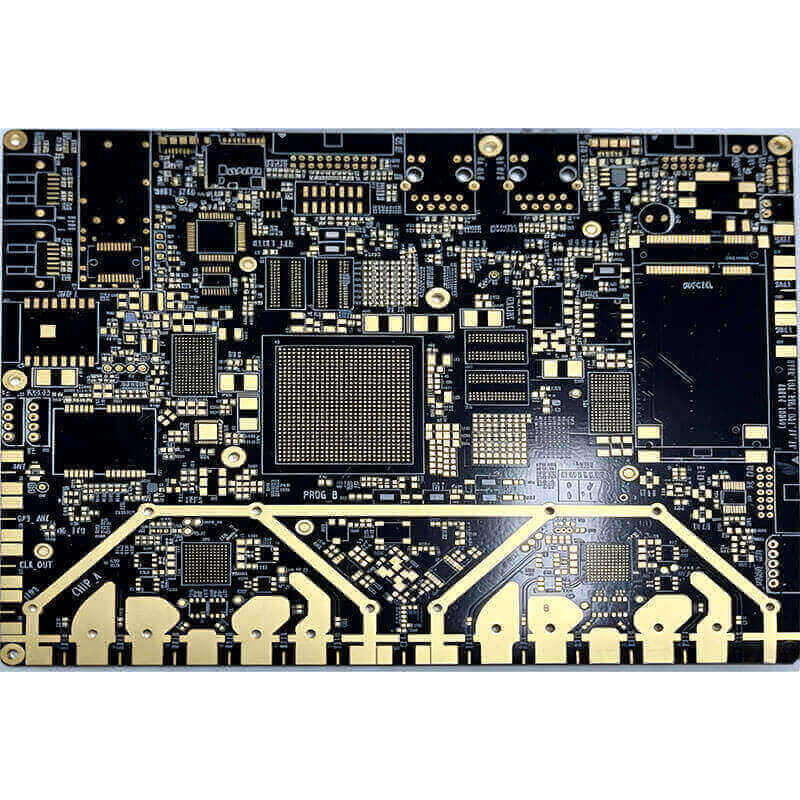
Where a measurement falls outside the expected window, the sample is retained so that the cause can be established before the balance of the batch is released.
A first article check confirms that the process and the drawing agree on the points listed above, and that the coupon data supports the values used in the design.
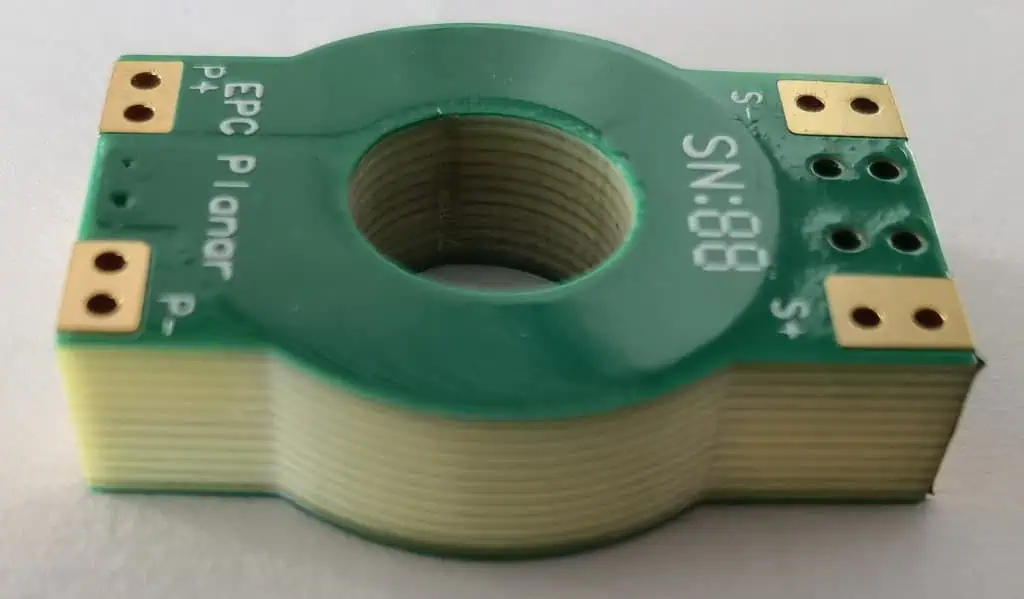
Where a measurement falls outside the expected window, the sample is retained so that the cause can be established before the balance of the batch is released.
FAQ
Does underfill allow a larger package to be used? It improves the life of a package that would otherwise be marginal, and it does not change the package’s own limits.
Can underfill be applied before reflow? A related material, the no flow underfill, is applied before reflow, while conventional underfill is applied after and flows by capillary action.
How is a complete fill confirmed? By a cross section or an acoustic image on a sample, since a fillet on the outside does not prove that the centre is filled.
What causes an incomplete fill? Usually a gap that is too small, a material that is too viscous, or a board that is too cold.