VFD Controller PCB: 2026 Cost Guide and Key Price Factors
What a VFD Controller Board Really Costs
A VFD controller pcb sits inside every variable frequency drive and modern motor controller, managing the power stage that runs industrial motors. It converts incoming AC to DC, then drives power switches to produce controlled frequency and voltage output, and its control board monitors voltage, current, temperature and faults while communicating with the rest of the machine. Because drives are high-frequency switching power systems, the vfd controller pcb demands better EMI, EMC, grounding, creepage, clearance, signal integrity, thermal and power integrity behavior than an ordinary low-power board. This guide explains 2026 pricing for VFD controller PCBs and PCBA, the factors that move the price, and how to control cost without sacrificing reliability.
What Is on a VFD Controller PCB?
A typical VFD control board carries an MCU or DSP, PWM generation circuits, motor speed control, voltage and current sensing, temperature detection, gate driver control, overcurrent and overvoltage protection, fault detection, encoder feedback, CAN, RS-485 and Ethernet interfaces, flash or EEPROM memory, DC-DC power modules and analog signal conditioning. The control board usually does not carry the motor power itself, but it orchestrates the whole power system. That mix of precision analog sensing, switching noise and industrial communication is what makes the design and fabrication more demanding than consumer electronics.
2026 Price Ranges
There is no single price for a vfd controller pcb, because size, materials, components and test requirements move quotes dramatically. As a working reference for 2026: two-layer basic control boards run USD 8-25 per board in prototype and USD 2-8 in volume; four-layer VFD boards run USD 15-45 and USD 4-15; six-layer industrial boards run USD 25-70 and USD 7-25; high-Tg four to six layer boards run USD 30-90 and USD 10-35. Fully assembled VFD control PCBA runs USD 40-150 plus per board in small volume and USD 15-80 plus in production, while high-density complex control PCBA can reach USD 80-250 plus and USD 40-120 plus. Bare boards are the low end of these ranges; complete assemblies with components, programming and testing cost substantially more.
Layer Count and Stack-Up
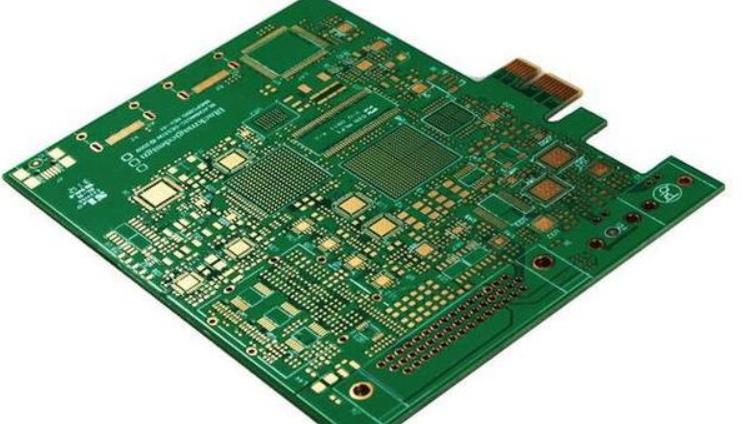
Layer count is one of the strongest price drivers. Simple inverter control boards may work with two or four layers, while industrial drives with demanding EMC often use six or more. A typical four-layer VFD stack assigns layer one to components and high-speed signals, layer two to a complete ground reference, layer three to power and control signals, and layer four to remaining signals and parts. That structure improves power integrity, signal integrity, EMI control, grounding, PWM quality and analog noise immunity. Six layers add more room to separate high-speed, analog, digital, power and ground planes, but more layers are not automatically better: if a four-layer layout meets EMC and electrical requirements, adding layers only raises cost. Choosing the right layer count is the first cost-control decision in VFD board design.
Materials, Copper and Finish
Material choice follows operating temperature and signal speed. Standard FR-4 covers most VFD control boards and is cheap, stable in supply and mature in process. High-Tg FR-4 suits drives that run hot for years, adding thermal and dimensional stability for automation, motor drive and power control products. Low-loss materials belong only where high-speed communication or special RF or high-frequency control circuits truly need them; using premium laminate across an entire board without a real requirement is a common overspend. Copper weight matters where current flows: 1 oz serves most control logic, while power-related areas may need 2 oz or more, and thick copper raises etching, plating and cost. Many drives split control and power onto separate boards precisely so the control PCB can stay cheap while the power board takes the heavy copper.
Size, Panelization and Finish
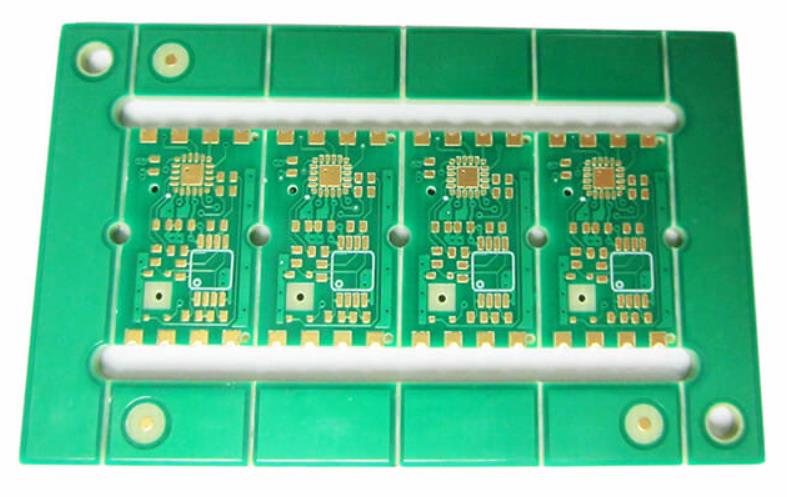
Board size and panel utilization set the material bill. A 250 by 180 mm control board costs more than a 100 by 80 mm board, but what really matters is how many boards fit on a production panel. Good panelization cuts material waste, CNC work, per-board cost and setup time, so a DFM and panelization review before volume orders pays for itself. Surface finish affects cost and reliability: HASL is mature and inexpensive, lead-free HASL covers RoHS needs, ENIG gives the flat pads that fine-pitch and high-density boards need at a higher price, and ENEPIG serves high-reliability products. The right finish depends on component pitch, pad size, connectors, environment, reliability needs and storage time, not on picking the most expensive option.
Components and PCBA Cost
For complete VFD control PCBA, the bill of materials usually costs more than the bare board. A board that costs USD 8 bare can reach USD 30, 50 or more once an MCU, gate drivers, communication chips, connectors and passives are added. Supply chain matters in 2026: tight MCU, DSP or industrial IC supply can push component prices far above fabrication cost, so designers should evaluate availability, lifecycle, lead time, second sources, alternates and anti-counterfeit verification early. Component density and packages also drive assembly price, because BGAs, QFNs and fine-pitch ICs need stricter placement and inspection, and mixed SMT plus through-hole assembly adds process steps for large connectors, relays, transformers and capacitors.
Testing Requirements
Testing is where reliability is bought. AOI catches placement and soldering defects, X-ray verifies BGA and hidden joints, ICT and flying probe test the assembled network, and functional test proves the drive logic, protection and communication work. Industrial VFD boards usually need full functional testing plus tighter quality control and traceability than consumer products. Adding each test level raises cost but prevents field failures that cost far more than the test itself, which is why serious drive manufacturers treat testing as part of the product rather than an option.
Isolation and safety geometry deserve explicit attention in VFD layout. Creepage and clearance distances between high-voltage power nets and low-voltage control logic must follow the working voltage and pollution degree of the application, and slots or insulation barriers are used where space is tight. Analog sensing circuits that measure current and voltage near switching nodes need guarded routing and filtered references, while gate drive signals need clean, low-inductance paths to the power stage. Reviewing these points during DFM prevents the arcing, noise coupling and protection misfires that appear only when a drive operates under load.
How to Reduce VFD Board Cost
Cost reduction follows a clear order. Right-size the layer count for real EMC needs, keep premium materials on the layers that need them, and split control and power boards so copper stays where it belongs. Optimize panel utilization with your manufacturer, choose the surface finish the packaging actually requires, and engineer the BOM for availability from day one. Work with a partner that provides PCB manufacturing and SMT assembly with PCBA testing, so DFM, panelization and test planning happen before quotes, not after failures.
VFD Controller PCB FAQ
Q1: How much does a vfd controller pcb cost in 2026? From about USD 8-25 for simple two-layer prototypes to USD 30-90 for high-Tg industrial boards, with assembled PCBA from USD 40 upward.
Q2: Which layers do VFD control boards use? Two and four layers are common; six layers appear in complex industrial drives with strict EMC needs.
Q3: Does the control board carry motor power? Usually not; control and power are separated, with the power board taking heavy copper and the control board staying cost-efficient.
Q4: What surface finish should a VFD board use? HASL for economical runs, lead-free HASL for RoHS, ENIG for fine-pitch high-density designs and ENEPIG for high-reliability programs.
Conclusion
The vfd controller pcb is the intelligence behind modern motor control, and its cost reflects real engineering requirements: layer count, materials, copper, finishes, components and testing. The cheapest board is not the cheapest product, because a control board that fails in the field stops a whole production line. By right-sizing the stack-up, engineering the BOM for supply and testing properly with an experienced manufacturer, drive makers get reliable VFD control electronics at a controlled price.