Video Recorder PCB Guide: Structure, Cost and Manufacturing
Video recording has moved far beyond the family camcorder. Consumer cameras, car dash cams, and professional monitoring systems all depend on a video recorder PCB that captures images, compresses them, stores the data, and connects to displays and networks. The board is the skeleton of the device, and its layout and quality decide the resolution, stability, power consumption, and lifetime of the product. This guide explains what a video recorder PCB is, its structure and materials, the different types, the manufacturing process, 2025 pricing, and how to select a manufacturer for your next recording product.
What Is a Video Recorder PCB?
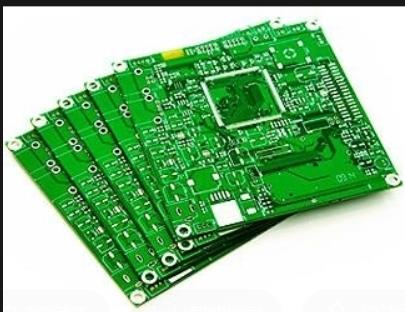
A video recorder PCB is a printed circuit board designed for video recording equipment. It carries the processor, memory, input and output interfaces, and the copper network that connects them, enabling video signal processing, data storage, and stable operation. Modern boards do far more than record: they handle video compression in H.264 and H.265, run motion detection and AI image recognition, and manage network transmission. Whether the product is a DVR for analog cameras, an NVR for IP cameras, a dash cam, or a broadcast recorder, the board layout and quality directly affect the resolution, reliability, and power budget of the final device.
Materials and Specifications
The choice of laminate and stackup depends on the product class. FR-4 is the standard material for most recorders, offering a good balance of cost and performance. High-Tg FR-4 withstands higher operating temperatures and suits devices that run continuously or live near power electronics. Rogers and hybrid materials appear in broadcast-grade systems and designs with high-frequency signal requirements. Layer counts reflect component density: DVR and NVR boards commonly use four to eight layers, with more layers supporting denser layouts and cleaner power delivery. Copper thickness is typically one ounce, increasing to two ounces where current demand is higher, and board thickness is usually 1.6 millimeters but can be customized for compact enclosures.
Core Components of a Video Recorder Board
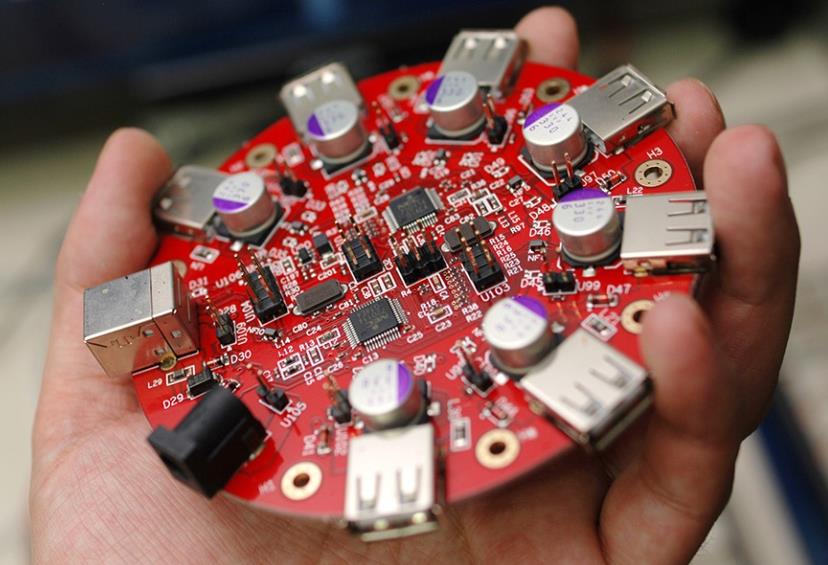
Several subsystems cooperate on the board. The main processor, often a system-on-chip or dedicated video processor, is the brain that handles encoding, compression, and control logic. Memory includes RAM for temporary processing and flash for firmware and metadata. Video input circuitry receives analog signals over BNC connectors or digital signals over HDMI and network interfaces. The power management unit uses regulators, DC-DC converters, and capacitors to keep every rail stable. Network interfaces add Ethernet ports, Wi-Fi modules, and Power-over-Ethernet capability for IP camera systems. Audio processing manages microphone inputs and speaker outputs so sound and picture stay synchronized, and storage interfaces such as SATA, SD card slots, and eMMC hold the recorded video. Each subsystem affects performance, heat, durability, and efficiency, so the layout must balance all of them.
Types of Video Recorder PCBs
Recorders split into clear categories. Analog recorder boards for simple DVR systems use two to four layers and basic storage interfaces, with prices around 10 to 15 dollars. DVR boards add digital compression and SATA interfaces on four to six layers, typically costing 18 to 25 dollars. NVR boards support IP cameras, PoE, and network transmission on six to eight layers, priced at 25 to 40 dollars. Custom HDI boards for AI processing and ultra-compact designs run eight layers or more and cost 35 to 55 dollars. There are also industrial and automotive variants built for harsh environments, with wide-temperature components and rugged connectors. Matching the board class to the product specification is the first step in any design.
Video Recorder PCB Manufacturing Process
Production follows a careful sequence. Design and layout come first, using CAD tools to turn the schematic into a manufacturable board with controlled impedance where video and network signals need it. Prototyping follows with a small trial run that validates performance, thermal behavior, and firmware before volume commitment. Board fabrication then builds the copper layers through lamination, etching, drilling, and plating. Assembly places components with surface mount and through hole processes, and testing checks electrical function, video paths, network interfaces, and thermal stability. Finally, packaging protects the boards for shipment. Each step is documented so a field failure can be traced back to its cause rather than debated.
Applications of Video Recorder PCBs
Video recorder boards appear across security, consumer, automotive, and industrial markets. Home and commercial security relies on them in CCTV DVR and NVR systems that archive footage from many cameras. Consumer electronics uses them in camcorders, action cameras, and wearable recording devices. Automotive products such as dash cams and rearview mirror recorders depend on compact boards that survive cabin heat and vibration. Industry uses them in production line monitoring and safety recording systems. In each case the board manages the same core tasks, capture, compress, store, and transmit, adapted to the environment and interfaces of the product.
Cost of Video Recorder PCBs in 2025
Pricing tracks complexity, material, and volume. Analog recorder boards in the two-to-four-layer range cost about 10 to 15 dollars per board. DVR boards with four to six layers and SATA interfaces run 18 to 25 dollars, while an NVR board at six to eight layers costs 25 to 40 dollars. High-end HDI boards with AI processing and ultra-compact design reach 35 to 55 dollars. Volume changes the numbers significantly: a standard six-layer DVR board can drop toward 18 dollars at an order of five hundred boards, and a high-performance eight-layer NVR board may land near 28 to 30 dollars in bulk. Buyers should also remember that assembly, testing, and connectors add to the bare board price, so compare quotes that cover the full specification.
Power and Thermal Design
A video recorder may run every hour of every day, so its power and thermal design are not secondary concerns. The processor draws significant current during encoding, and each camera channel adds load, so the board needs stable, well-filtered rails that do not sag when several streams start at once. Switching regulators deliver the efficiency that keeps the device cool, while low-noise linear regulators feed the sensitive analog and video sections. Heat spreads through copper planes and thermal vias toward the enclosure and any heatsink, and components that run hot are placed where airflow reaches them. PoE recorders must also handle the power delivered to cameras over the Ethernet ports, which adds another layer of thermal and electrical design. A board engineered this way stays within its temperature budget even in summer cabinets, and that longevity is built during PCB assembly with good soldering and materials matched to the thermal load.
Choosing a Video Recorder PCB Manufacturer
The right supplier keeps a recording product competitive. Verify certifications such as ISO 9001, IPC-A-600, and RoHS, because they signal that process control and quality documentation are in place. Confirm prototyping service so the design is validated before mass production, and check the factory ability to build high-layer-count boards with controlled impedance, since NVR and AI boards depend on it. Ask about customization for special layouts, thermal requirements, and interfaces, and compare the pricing structure for volume orders. A manufacturer with experience in video and network products will catch design issues during review rather than after tooling, and one that combines PCB manufacturing with assembly and testing keeps the whole chain accountable.
Maintenance and Troubleshooting
Even good boards fail eventually, and most failures are preventable. Keep the recorder ventilated, because heat is the leading cause of premature component aging in devices that run around the clock. Clean connectors periodically so signal loss does not creep into the video path. Update firmware on schedule to maintain compatibility and security. When problems appear, they usually cluster in a few areas: power module failures, cracked solder joints from thermal cycling, and damaged storage chips. Early diagnosis prevents small issues from taking a recorder offline, and a board designed with test points and accessible connectors makes service much faster.
Signal Integrity in Video Boards
Video signals are sensitive to the same noise that troubles other high-speed electronics, and recorder boards add the complication of many parallel channels. HDMI, Ethernet, USB, and memory buses all run at high data rates, so trace impedance, layer transitions, and return paths must be controlled from the start. Analog video inputs are the opposite extreme: their signals are small and must be protected from digital noise, which means careful separation, filtering, and grounding. A practical design keeps the analog input section away from the switching power supplies and the network magnetics, routes the high-speed digital buses over clean ground planes, and terminates every critical pair according to its standard. The quality of this work shows up directly in picture stability: a board with marginal signal integrity produces intermittent glitches that are almost impossible to diagnose after the product ships. These disciplines are applied during PCB design and layout, where engineers balance routing, shielding, and cost while the design is still easy to change.
Future Trends in Video Recorder PCBs
The technology is advancing on several axes. HDI construction is shrinking boards while adding performance, which matters for compact AI cameras and edge recorders. AI integration is spreading, with boards carrying accelerators for real-time face recognition and object detection. Environmental design is reducing power and moving to lead-free materials as regulations tighten. Higher-resolution formats and faster network standards will demand better signal integrity and thermal design in every new generation. Manufacturers that invest in fine-pitch assembly, HDI capability, and disciplined testing are best placed to serve these evolving products.
Reliability Testing for Recorders
Because recorders often guard security footage, testing is not optional. Functional testing runs the board with real camera input to confirm that every channel captures, compresses, stores, and plays back correctly. Burn-in testing operates the recorder continuously for hours or days to expose early failures in power and memory components. Thermal cycling verifies that solder joints and components survive the temperature swings of real installations, and network testing confirms Ethernet and PoE operation at speed. For automotive dash cams, vibration testing is added to simulate life on the road. These checks belong to a disciplined PCBA testing program supported by a documented quality management system, and they are the reason some recorders run for years while others fail within months. Buyers should ask which tests a manufacturer runs as standard and which are available as options, because the answer reveals how the factory thinks about reliability.
Frequently Asked Questions
Q1. Can DVR and NVR use the same PCB design? Not usually, because DVR and NVR boards have different signal processing and input and output configurations, so each needs its own layout.
Q2. How long does custom video recorder PCB production take? Prototypes typically take 5 to 7 days, and volume production runs 2 to 4 weeks depending on complexity.
Q3. How can I reduce video recorder PCB cost? Order in volume, use standard FR-4 material where possible, and optimize the design to reduce layer count and via density.
Q4. How long does a video recorder PCB last? With good cooling and maintenance, a quality board can run reliably for more than 5 years in continuous service.
Q5. What makes an NVR board different from a DVR board? An NVR board adds IP camera interfaces, PoE capability, and higher network bandwidth, which require more layers and stricter signal integrity.
Conclusion
The video recorder PCB is the core of every video recording product, and its design and manufacturing quality determine the resolution, stability, and cost of the device. Understanding the materials, component layout, board types, and price structure helps engineers and buyers make decisions that keep products competitive through 2025 and beyond. With a certified manufacturer that offers fast prototyping, honest pricing, and rigorous testing, a recording product can capture clear video reliably for years.