What Factors Affect PCB Pricing? A Complete Guide for PCB Buyers
What Factors Affect PCB Pricing?
PCB pricing is an important consideration for electronics manufacturers, product developers, and procurement teams. Whether you are ordering prototypes, low-volume production, or large quantities, the price of a PCB is rarely determined by a single factor.
The final PCB quotation is typically influenced by the board’s physical specifications, material selection, manufacturing requirements, order quantity, production schedule, and current supply-chain conditions.
Understanding these cost drivers can help buyers compare quotations more effectively and make better decisions when selecting a PCB supplier.
1. Board Size, Layer Count, and Material
The basic physical characteristics of a PCB are among the first factors that influence PCB pricing.
Board Size
Larger PCBs generally require more laminate, copper, solder mask, and other production materials. They may also occupy more manufacturing panel space and affect panel utilization.
However, the relationship between board size and price is not simply linear. Manufacturing efficiency, panelization, order quantity, and the number of boards that can be produced from a standard production panel can all affect the final unit cost.
Therefore, when evaluating a PCB quotation, buyers should consider both the individual board dimensions and the manufacturer’s panel utilization strategy.
Layer Count
Layer count is another major cost driver.
A simple single-sided or double-sided PCB generally requires fewer manufacturing steps than a multilayer PCB. As layer count increases, additional processes such as inner-layer fabrication, lamination, drilling, registration, plating, and inspection become necessary.
A multilayer board may therefore have a higher PCB manufacturing cost because of:
- Additional laminate and copper materials
- More complex lamination processes
- Increased layer-registration requirements
- Additional drilling and plating requirements
- Longer manufacturing cycles
- More extensive process inspection
For products requiring dense routing, controlled impedance, power distribution, or better electromagnetic performance, however, the additional cost of multilayer construction may be justified by the design requirements.
GOPCBA supports PCB production for different board structures and complexity levels through its PCB Manufacturing capabilities.
Material Selection
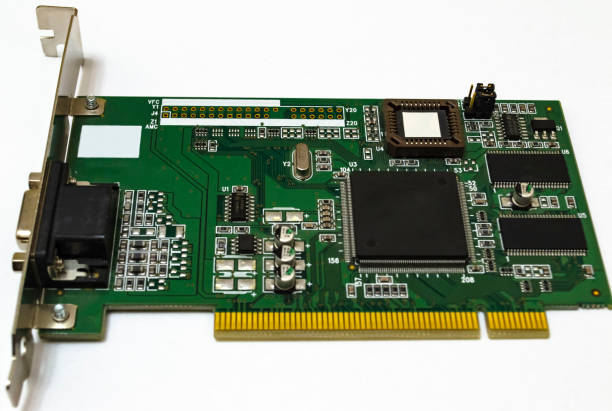
The PCB substrate also has a significant influence on cost.
FR-4 is widely used because it provides a practical balance of electrical performance, mechanical properties, thermal performance, availability, and cost.
More specialized applications may require high-frequency, high-Tg, low-loss, metal-core, or other engineered materials. These materials can increase material costs and may also require specialized processing conditions.
Material selection should therefore be based on the electrical, thermal, mechanical, and environmental requirements of the final product rather than choosing the lowest-cost laminate by default.
2. Manufacturing Process and Precision Requirements
The required manufacturing technology can have a substantial effect on PCB manufacturing cost.
Two PCBs with similar dimensions and layer counts may have very different prices if their fabrication requirements differ significantly.
Surface Finish
Surface finish is one example.
Common options include:
- HASL
- Lead-free HASL
- ENIG
- Immersion silver
- OSP
Each finish has different characteristics in terms of solderability, surface flatness, oxidation resistance, compatibility with fine-pitch components, and cost.
For example, ENIG is often selected for applications requiring a relatively flat surface and good compatibility with fine-pitch packages. HASL may be a more economical option for designs where extremely flat surfaces are not essential.
The appropriate finish depends on the assembly process, component package, reliability requirements, and budget.
Manufacturing Precision
Tighter dimensional tolerances can also increase PCB cost.
Requirements involving fine traces and spaces, small holes, tight registration tolerances, microvias, controlled impedance, or complex multilayer structures may require more sophisticated fabrication and inspection processes.
For advanced designs, manufacturers may need to invest additional engineering time in:
- DFM analysis
- Precision imaging
- Laser drilling
- Registration control
- Plating control
- Electrical testing
- Process inspection
As a result, a high-density PCB generally cannot be compared with a conventional board based solely on dimensions and layer count.
For designs requiring early manufacturability evaluation, PCB Design & Layout can help identify potential fabrication constraints before production.
3. Order Quantity and Production Scale
Order quantity is another important factor in PCB pricing.
PCB manufacturing involves both variable costs and setup-related costs. Engineering preparation, tooling, programming, material preparation, and production setup may represent a larger proportion of the unit price when only a small number of boards are ordered.
As production volume increases, these costs can often be distributed across more units.
Prototype Production
Prototype orders are typically small, but they are important for design verification.
At this stage, buyers may prioritize:
- Fast turnaround
- Engineering support
- Design validation
- Manufacturing feedback
- Flexible quantities
The unit price may be higher than a large production order because the setup and engineering costs are distributed across fewer boards.
GOPCBA provides Prototype PCB Assembly to support electronics development from prototype validation toward production.
Low-Volume Production
Low-volume production sits between prototypes and mass production.
It can be useful when manufacturers need to:
- Validate a revised design
- Conduct field testing
- Produce pilot units
- Verify assembly processes
- Prepare for larger production
For these requirements, Low Volume PCB Assembly provides a practical production stage before committing to high-volume manufacturing.
Mass Production
Large production orders can benefit from better material purchasing efficiency, optimized production scheduling, and reduced setup costs per unit.
However, the lowest unit price is not necessarily the best purchasing decision. Buyers should also evaluate yield, quality consistency, lead time, engineering support, and supply reliability.
4. Customization and Engineering Complexity
Customization can significantly affect a PCB quotation.
A standard board with conventional materials and manufacturing parameters is generally easier to produce than a highly customized PCB requiring unusual materials, complex stackups, special mechanical features, or advanced interconnect technologies.
Customized requirements may include:
- Unusual board dimensions
- Complex multilayer stackups
- Heavy copper
- HDI structures
- Blind and buried vias
- Rigid-flex construction
- High-frequency materials
- Controlled impedance
- Tight dimensional tolerances
- Special surface finishes
Each additional requirement can introduce engineering, processing, inspection, or material costs.
This is why two PCBs with similar sizes may receive very different quotations.
A detailed design review is therefore important before comparing supplier prices.
5. Copper Thickness and Other Electrical Requirements
Copper weight is another factor that can influence PCB cost.
Standard copper thickness may be sufficient for many digital and control applications. High-current designs may require heavier copper to accommodate greater current capacity and thermal requirements.
Heavy-copper construction can increase material consumption and may require adjustments to etching, plating, lamination, and other manufacturing processes.
At the same time, simply increasing copper thickness is not always the best solution. Trace width, board thickness, thermal design, current density, and the complete power architecture should be evaluated together.
For power electronics, EV charging systems, industrial equipment, and other high-current applications, the PCB specification should be developed around the actual electrical requirements.
6. Supply and Market Conditions
Not every factor affecting PCB pricing is controlled by the PCB manufacturer.
The broader supply chain can influence production costs through changes in:
- Copper prices
- Copper foil availability
- Laminate costs
- Resin prices
- Electronic manufacturing demand
- Energy costs
- Transportation costs
- Exchange rates
- Production capacity
When demand increases rapidly while available manufacturing capacity becomes constrained, prices for certain materials or PCB technologies may rise.
Conversely, weaker demand and greater production capacity can create more competitive market conditions.
This means that PCB quotations can change over time even when the board design itself remains unchanged.
For procurement teams, establishing a stable supplier relationship and understanding quotation validity periods can help manage these fluctuations.
7. Lead Time Can Also Affect PCB Cost
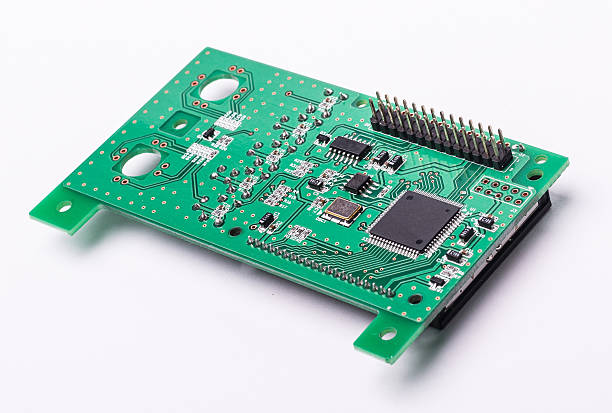
Production schedule is another factor that buyers should consider.
Standard production lead times allow manufacturers to optimize material preparation and production scheduling. Rush orders may require priority production, expedited material procurement, additional engineering coordination, or special logistics arrangements.
As a result, a very short lead time can increase the total purchasing cost.
When possible, buyers should provide complete Gerber files, stackup information, material requirements, fabrication notes, and quantity forecasts early in the purchasing process.
This allows the manufacturer to evaluate the project more efficiently and provide a more accurate PCB quotation.
8. Why the Cheapest PCB Quotation Is Not Always the Best
Comparing PCB suppliers based only on unit price can create unnecessary risks.
A lower quotation may result from differences in:
- Material grade
- Copper thickness
- Surface finish
- Testing scope
- Manufacturing tolerances
- Quality requirements
- Production yield
- Lead time
- Engineering support
A more useful purchasing comparison considers the total value delivered by the supplier.
For example, a slightly higher initial price may be justified if it provides better process control, more reliable delivery, stronger engineering support, or fewer quality-related production interruptions.
When selecting a PCB supplier, buyers should therefore compare the complete specification rather than looking only at the final number on a quotation.
9. How to Get a More Accurate PCB Quotation
To reduce quotation discrepancies, provide the manufacturer with as much technical information as possible.
A complete RFQ package may include:
- Gerber or other fabrication data
- Board dimensions
- Layer count
- Material requirements
- Copper thickness
- Surface finish
- Minimum trace and spacing requirements
- Minimum hole size
- Controlled impedance requirements
- Quantity
- Required delivery schedule
- Special testing or inspection requirements
For PCB assembly projects, the package should also include the BOM, component specifications, placement files, and assembly drawings where applicable.
Providing complete information enables manufacturers to evaluate the same technical requirements and helps buyers make more meaningful supplier comparisons.
PCB Pricing: Key Factors at a Glance
| Cost Factor | Typical Impact on PCB Cost |
|---|---|
| Board size | More material and panel-space consumption |
| Layer count | More fabrication and lamination steps |
| PCB material | Specialized materials generally cost more |
| Copper thickness | Higher copper usage and potentially more complex processing |
| Surface finish | Different finishes have different material and process costs |
| Trace/spacing requirements | Higher precision can require more advanced fabrication |
| Hole/via technology | Small holes, microvias, blind/buried vias can increase complexity |
| Order quantity | Larger volumes can distribute setup costs across more units |
| Customization | Special requirements increase engineering and processing effort |
| Lead time | Rush production may add cost |
| Market conditions | Raw materials, capacity, logistics, and demand affect pricing |
Conclusion
PCB pricing is the result of multiple interconnected factors rather than a single manufacturing parameter. Board size, layer count, material, copper thickness, surface finish, manufacturing precision, order quantity, customization, lead time, and supply-chain conditions can all influence the final PCB quotation.
For buyers, the best approach is to evaluate the complete technical specification and total purchasing value instead of choosing a supplier solely on the lowest price.
By working with an experienced PCB supplier and providing complete design and production requirements, companies can obtain more transparent quotations, reduce unexpected cost changes, and establish a more reliable path from prototype development to production.
For projects that require both bare-board fabrication and component assembly, combining PCB manufacturing with professional PCB assembly can further simplify the electronics production process.
:::