What Is Fast Turn PCB Manufacturing?
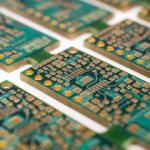
Fast Turn PCB manufacturing is a PCB production service designed for electronics projects that require shorter manufacturing lead times than standard PCB production. It is commonly used for engineering prototypes, product validation, design verification, pilot production, and urgent replacement boards.
The actual turnaround time depends on factors such as PCB layer count, board size, material, copper thickness, surface finish, drilling requirements, quantity, and whether assembly is required. Simple two-layer boards can generally be manufactured faster than complex multilayer or HDI designs.
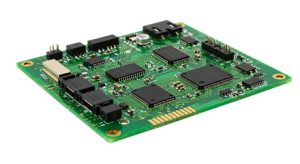
For projects where time-to-market is critical, Quick Turn PCB Manufacturing allows engineers and product developers to move from PCB design to physical prototypes more efficiently. By combining PCB fabrication with assembly and engineering support, manufacturers can reduce waiting time between design iterations and accelerate product development.
GOPCBA provides integrated PCB manufacturing and assembly services for prototype, low-volume, and production requirements. Its manufacturing services cover a broad range of PCB technologies and materials, allowing customers to work with one manufacturing partner throughout different stages of product development.
For more information about PCB fabrication capabilities, visit PCB Manufacturing: PCB Manufacturing
Key Benefits of Fast Turn PCB Services
Faster Product Development
The primary advantage of Fast Turn PCB services is shorter production time. Faster fabrication allows engineering teams to receive prototype boards sooner, assemble components, perform functional testing, and identify design problems before moving into larger production runs.
A shorter prototype cycle is particularly valuable when several design revisions are expected. Instead of waiting through long manufacturing cycles, engineers can validate each revision and make improvements more efficiently.
Greater Production Flexibility
Rapid PCB manufacturing is suitable for a wide range of order quantities. Customers may need only a few prototype boards for initial testing, a small batch for field evaluation, or a larger pilot production run before mass manufacturing.
This flexibility makes Rapid PCB Prototyping suitable for startups, R&D teams, electronic product developers, industrial equipment manufacturers, and established companies introducing new products.
Reduced Time to Market
Electronic products often require multiple design, fabrication, assembly, and testing cycles before entering production. Faster PCB turnaround can shorten the time between these stages and help companies bring validated products to market sooner.
A responsive manufacturing partner can also help identify potential manufacturing issues during engineering review, reducing unnecessary redesigns and production delays.
Suitable for Prototype and Low-Volume Production
Low Volume PCB Assembly and rapid PCB fabrication are particularly useful when a product has not yet reached mass production. Small quantities allow customers to verify electrical performance, mechanical compatibility, component placement, thermal behavior, and overall product reliability without committing to a large production volume.
Fast Turn PCB Manufacturing Capabilities
PCB Materials and Technologies
Fast-turn PCB production can support different board structures depending on the project requirements. Standard FR-4 boards are widely used for general electronic applications, while high-TG, high-frequency, RF, aluminum-backed, and other specialty materials may be selected for demanding applications.
GOPCBA provides PCB fabrication capabilities covering standard and advanced PCB technologies, including multilayer, HDI, RF, rigid-flex, flexible, metal-base, and controlled-impedance PCB solutions.
Multilayer PCB Production
As layer count increases, PCB manufacturing becomes more complex because of additional lamination, drilling, registration, impedance, and inspection requirements. A fast-turn service must therefore balance production speed with process control and dimensional accuracy.
For high-density electronic designs, multilayer PCB manufacturing can provide the routing space required for complex circuits while maintaining a compact board size.
PCB Assembly Integration
Fast PCB fabrication is even more valuable when it can be combined with assembly. Instead of coordinating separate PCB and PCBA suppliers, customers can use an integrated manufacturing workflow for fabrication, component sourcing, assembly, inspection, and testing.
GOPCBA supports turnkey, partial turnkey, and consigned PCB assembly, as well as prototype, low-volume, and mass-production requirements.
For complete assembly information, see PCB Assembly: PCB Assembly
Rapid PCB Prototyping and Assembly
Prototype PCB Assembly
Prototype PCB Assembly is an important part of the product development process. Once fabricated PCBs are available, components can be mounted and soldered so engineers can evaluate the complete electronic assembly rather than testing the bare board alone.
GOPCBA offers prototype assembly with flexible quantities and rapid turnaround options. Its published prototype assembly service includes standard turnaround times of approximately 3–4 days and expedited 24-hour assembly for urgent projects, subject to project requirements and manufacturing review.
See the dedicated Prototype PCB Assembly service: Prototype PCB Assembly
SMT, Through-Hole, and Mixed Technology Assembly
Different electronic products require different component mounting technologies. SMT assembly is widely used for compact and high-density electronic designs, while through-hole technology can provide strong mechanical connections for specific components and applications.
For products requiring both technologies, mixed technology PCB assembly combines SMT and through-hole components within the same manufacturing process. GOPCBA supports rapid prototyping as well as low- and high-volume production for mixed technology PCB projects.
Learn more about Mixed Technology PCB Assembly: Mixed Technology PCB Assembly
Fast Turn PCB Production Process
1. Submit Design Files
Customers typically provide Gerber files, drill files, PCB specifications, BOM files, pick-and-place data, and other relevant manufacturing documentation. Complete and accurate documentation helps engineers review the project quickly.
2. Engineering Review and Quotation
The manufacturing team evaluates the board structure, materials, layer count, component requirements, manufacturing processes, and delivery requirements. Engineering review can identify potential manufacturing risks before production begins.
3. PCB Fabrication
After design approval, the PCB moves into fabrication. Depending on the board structure, production may include imaging, etching, lamination, drilling, plating, solder mask application, surface finishing, routing, and electrical testing.
4. Component Procurement and PCB Assembly
When assembly is required, components can be supplied by the customer or sourced as part of a turnkey manufacturing service. Automated assembly equipment can place surface-mount components, followed by reflow soldering and additional through-hole or selective soldering processes when required.
5. Inspection and Testing
Quality control is essential even when a project requires an expedited turnaround. Inspection may include visual inspection, automated inspection, electrical testing, X-ray inspection, and functional testing depending on the product and customer requirements.
GOPCBA states that its PCB assembly services include multiple inspection stages and testing options to help verify assembly quality before delivery.
For detailed manufacturing specifications and technical limits, see PCB Capabilities: PCB Capabilities
What Determines Fast Turn PCB Lead Time?
The lead time for a Quick Turn PCB Manufacturing project is not determined by quantity alone. Several technical and production factors can influence the final schedule.
Board Complexity
A simple single- or double-sided PCB generally requires fewer manufacturing processes than a high-layer-count board. HDI, microvia, controlled-impedance, rigid-flex, and other advanced designs may require additional processing and inspection.
Material Selection
Standard FR-4 materials are generally easier to process than specialized high-frequency, RF, high-TG, or other advanced materials. Material availability can also affect the production schedule.
Quantity
Small prototype orders may be processed rapidly because they require less production capacity. Larger quantities may require additional fabrication time, especially when complex processes or special materials are involved.
Assembly Requirements
If PCB fabrication is combined with assembly, the total project schedule also depends on component availability, BOM complexity, package types, soldering requirements, programming, inspection, and functional testing.
Documentation Accuracy
Complete Gerber files, BOMs, drawings, and assembly data help reduce engineering clarification time. Clear documentation is therefore an important factor in achieving a fast production cycle.
When Should You Use Fast Turn PCB Services?
Rapid PCB Prototyping is especially useful when:
- A new electronic design needs physical validation.
- Multiple PCB revisions are expected.
- A product must reach testing quickly.
- Engineering teams need prototype boards for functional verification.
- A small pilot production run is required.
- A replacement PCB is needed urgently.
- A product is moving from prototype to low-volume production.
- PCB fabrication and assembly need to be coordinated through one supplier.
For customers requiring both fabrication and assembly, an integrated manufacturing model can simplify communication, reduce supplier coordination, and improve project continuity.
Why Choose GOPCBA for Fast Turn PCB Projects?
GOPCBA provides a one-stop electronics manufacturing service covering PCB fabrication, PCB assembly, component procurement, rapid PCBA prototyping, testing, and related manufacturing services.
The company supports prototype, low-volume, and higher-volume production requirements, giving customers the flexibility to scale a project after successful prototype validation.
For projects that require short lead times, the most effective approach is to provide complete design and manufacturing information at the beginning of the project. This allows the engineering team to review the design, confirm manufacturing requirements, and establish the most appropriate production schedule.
Request a Fast Turn PCB Quote
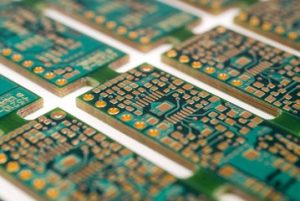
Whether you need a few prototype boards, a small production batch, or a complete PCB and PCBA solution, GOPCBA can support your project from PCB fabrication through assembly and testing.
To start a project, submit your Gerber files, BOM, assembly files, quantity requirements, and target delivery schedule for engineering review and quotation.
Contact GOPCBA through Contact Us: Contact GOPCBA
With the right combination of engineering review, PCB fabrication, component sourcing, assembly, and inspection, Fast Turn PCB manufacturing can help reduce development cycles, accelerate product validation, and shorten time to market.