In modern electronics and electrical systems, reliable connectivity is just as important as the performance of the components being connected. Custom Cable Assemblies provide a purpose-built solution for applications where standard off-the-shelf cables cannot meet specific electrical, mechanical, dimensional, or environmental requirements.
A properly engineered Custom Cable Assembly can be designed around a product’s exact cable length, conductor size, insulation, shielding, connector type, pin configuration, routing path, and operating environment. This makes custom cabling especially valuable in automotive, medical, telecommunications, industrial automation, aerospace, renewable energy, consumer electronics, and other demanding applications.
For OEMs, choosing the right Custom Cable Assembly Manufacturer can improve product reliability, simplify integration, reduce wiring complexity, and support long-term production scalability.
What Is a Custom Cable Assembly?
A Custom Cable Assembly is a manufactured cable solution designed and built according to a customer’s specific electrical, mechanical, and application requirements.
Unlike standard cables, custom assemblies can be engineered with specific:
- Cable length
- Wire gauge
- Conductor material
- Insulation
- Shielding
- Connector type
- Pin configuration
- Terminal type
- Jacket material
- Branching structure
- Labeling
- Overmolding
- Strain relief
The result is a cable that is specifically adapted to the physical and functional requirements of the final product.
A custom cable assembly may range from a relatively simple two-wire connection to a complex multi-branch Wire Harness Assembly containing dozens or hundreds of individual conductors.
Custom Cable Assembly vs. Standard Cable
| Feature | Standard Cable | Custom Cable Assembly |
|---|---|---|
| Cable length | Fixed or limited options | Application-specific |
| Connector | Standard configuration | Customized |
| Wire gauge | Predefined | Selected for current requirements |
| Pinout | Standard | Customer-specific |
| Shielding | Limited options | Customized |
| Form factor | Standard | Optimized for the product |
| Environmental protection | General-purpose | Application-specific |
| Labeling | Limited | Customizable |
| Strain relief | Standard | Custom-designed |
| Overmolding | Limited | Available where required |
| System integration | General | Designed for the specific product |
The main advantage of Custom Cabling is that the cable becomes part of the product design rather than an afterthought.
Why Are Custom Cable Assemblies Important?
Modern products increasingly contain tightly packed electronic modules, sensors, processors, power supplies, and communication interfaces.
A standard cable may be:
- Too long
- Too short
- Too rigid
- Too bulky
- Electrically incompatible
- Poorly shielded
- Difficult to route
- Unsuitable for the operating environment
A custom cable assembly addresses these limitations at the design stage.
Properly designed cables can help improve:
Electrical Performance + Mechanical Reliability + Space Utilization + Assembly Efficiency + Product Service Life
Key Components of a Custom Cable Assembly
A complete Custom Wire Harness Assembly may contain several different elements.
Conductors
Conductors carry electrical power or signals.
Common conductor materials include:
- Copper
- Tin-plated copper
- Other application-specific conductive materials
The conductor size should be selected according to:
- Current
- Voltage
- Length
- Temperature
- Voltage drop
- Flexibility requirements
Insulation
Insulation prevents unintended electrical contact and protects conductors from environmental exposure.
Common materials include:
- PVC
- XLPE
- Silicone
- TPE
- PTFE
- Other engineering polymers
Material selection depends on temperature, chemical exposure, flexibility, voltage, and application requirements.
Connectors
Connectors provide detachable or permanent electrical interfaces.
A custom cable may use:
- Board-to-wire connectors
- Wire-to-wire connectors
- Circular connectors
- D-sub connectors
- USB connectors
- Automotive connectors
- Coaxial connectors
- Industrial connectors
- Waterproof connectors
Connector selection should consider current rating, voltage rating, mating cycles, environmental exposure, and mechanical requirements.
Terminals
Terminals connect conductors to connectors or other electrical interfaces.
Common operations include:
- Crimping
- Soldering
- Press-fit connections
- Terminal insertion
Shielding
Cable Shielding can help reduce electromagnetic interference and improve signal integrity.
Shielding may use:
- Copper braid
- Aluminum foil
- Spiral shielding
- Combination shielding
Shield design becomes particularly important for:
- High-speed signals
- RF systems
- Industrial automation
- Medical electronics
- Automotive communication
- Sensitive measurement systems
Strain Relief
Strain Relief protects the cable termination from excessive mechanical stress.
It helps reduce the likelihood of:
- Conductor fatigue
- Terminal damage
- Insulation cracking
- Connector failure
Overmolding
Cable Overmolding surrounds the cable and connector interface with a protective material.
Advantages may include:
- Improved mechanical protection
- Strain relief
- Environmental sealing
- Better appearance
- Improved connector durability
Types of Custom Cable Assemblies
1. Custom Wire Harness
A Custom Wire Harness combines multiple wires, terminals, and connectors into an organized assembly.
Typical applications include:
- Automotive
- Industrial controls
- Medical equipment
- Robotics
- Power systems
2. Overmolded Cable Assembly
An Overmolded Cable Assembly uses molded material around the cable-connector interface.
It is particularly useful when the connector must be protected against:
- Moisture
- Dust
- Mechanical stress
- Vibration
3. Shielded Cable Assembly
A Shielded Cable Assembly is designed to reduce electromagnetic interference.
It is commonly used for:
- High-speed communication
- Industrial controls
- Medical devices
- RF systems
- Automotive electronics
4. Coaxial Cable Assembly
Coaxial Cable Assemblies are designed for high-frequency signal transmission and impedance-controlled applications.
Applications may include:
- RF equipment
- Wireless communication
- Test equipment
- Antenna systems
- Radar systems
5. Power Cable Assembly
Power Cable Assemblies are designed to carry electrical power between components or modules.
Design considerations include:
- Current capacity
- Voltage rating
- Temperature rise
- Conductor size
- Insulation
- Connector rating
6. High-Speed Cable Assembly
Modern data systems often require carefully designed High-Speed Cable Assemblies.
Important factors include:
- Impedance
- Differential-pair geometry
- Crosstalk
- Insertion loss
- Return loss
- Shielding
- Connector performance
Applications of Custom Cable Assemblies
Telecommunications
Custom Cable Assemblies are used in:
- Data centers
- Network equipment
- Optical communication systems
- Communication towers
- Routers
- Switches
- Wireless systems
The cable design must support reliable signal transmission and appropriate mechanical routing.
Automotive Electronics
Automotive applications require cables that can withstand:
- Vibration
- Temperature cycling
- Moisture
- Chemicals
- Mechanical stress
Custom harnesses can be found in:
- Battery systems
- Electronic control units
- Infotainment
- ADAS
- Sensors
- Lighting
- Charging systems
Medical Electronics
Medical equipment may require specialized cables for:
- Patient monitoring
- Diagnostic systems
- Imaging equipment
- Laboratory equipment
- Portable medical devices
Cable materials and manufacturing processes should be selected according to the applicable medical-device requirements.
Aerospace
Aerospace cable assemblies may require:
- Low weight
- High reliability
- Strong vibration resistance
- Temperature resistance
- Secure connections
- Controlled electromagnetic performance
Applications include:
- Avionics
- Navigation
- Communication
- Flight-control electronics
- Instrumentation
Industrial Automation
Industrial cable assemblies are often exposed to:
- Oil
- Chemicals
- Dust
- Continuous motion
- Vibration
- High temperatures
Custom designs can incorporate flexible jackets, shielding, abrasion-resistant materials, and specific connector systems.
Renewable Energy
Custom cables are used in:
- Solar equipment
- Wind turbines
- Energy-storage systems
- Power converters
- Battery systems
The design may need to withstand UV exposure, moisture, temperature cycling, and mechanical stress.
Consumer Electronics
Compact cable assemblies can help manufacturers reduce:
- Internal wiring
- Product size
- Assembly time
- Connector count
Applications include:
- Smartphones
- Laptops
- Smart-home products
- Wearable electronics
- Gaming equipment
Custom Cable Assembly Design Considerations
A reliable Custom Cable Assembly Design should start before manufacturing.
1. Electrical Requirements
Designers should define:
- Voltage
- Current
- Frequency
- Signal type
- Impedance
- Voltage drop
- Insulation requirements
2. Mechanical Requirements
Consider:
- Cable length
- Bend radius
- Routing path
- Connector orientation
- Mounting location
- Flex cycles
- Strain relief
3. Environmental Requirements
The cable may need to withstand:
- High or low temperatures
- Moisture
- Chemicals
- UV exposure
- Oil
- Dust
- Vibration
- Shock
4. EMC and Signal Integrity
For sensitive systems, cable design should consider:
- Shielding
- Twisted pairs
- Grounding
- Differential signaling
- Crosstalk
- EMI
5. Space Constraints
Modern products often have limited internal space.
Custom cables can be designed to:
- Follow specific routing paths
- Reduce unnecessary cable length
- Minimize connector height
- Improve internal packaging
- Simplify installation
Custom Cable Assembly Manufacturing Process
A professional Custom Cable Assembly Manufacturer should use a controlled manufacturing process.
Step 1: Engineering Review
The manufacturer reviews:
- Cable drawings
- Wiring diagrams
- BOM
- Connector specifications
- Electrical requirements
- Mechanical drawings
- Environmental requirements
Engineering teams may recommend changes that improve manufacturability or reliability.
Step 2: Material Preparation
Materials are prepared according to the approved BOM.
Typical materials include:
- Wires
- Cables
- Connectors
- Terminals
- Heat-shrink tubing
- Braids
- Labels
- Overmolding materials
Step 3: Wire Cutting and Stripping
Automated equipment cuts cables to the specified lengths and removes insulation at defined locations.
Precision is important because incorrect stripping can affect:
- Crimp quality
- Electrical reliability
- Mechanical strength
Step 4: Crimping and Terminal Installation
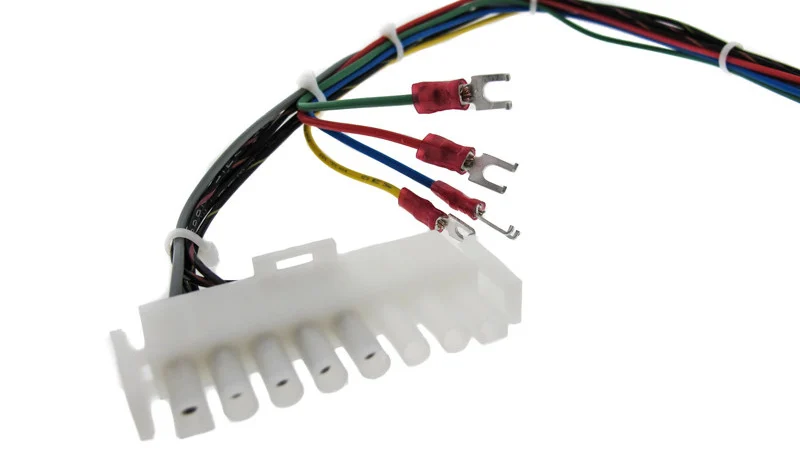
Terminals are crimped onto conductors according to defined parameters.
A proper crimp provides both:
Electrical Connection + Mechanical Retention
Crimp quality may be verified through:
- Pull-force testing
- Crimp-height measurement
- Visual inspection
- Cross-section analysis where required
Step 5: Connector Assembly
Terminals are inserted into connectors according to the approved pinout.
The manufacturer should verify:
- Pin position
- Terminal locking
- Connector orientation
- Polarity
Step 6: Shielding and Sleeving
Where necessary, cables receive:
- Foil shielding
- Braid shielding
- Sleeving
- Heat-shrink
- Protective tubing
Step 7: Overmolding
For applicable assemblies, overmolding creates a protective structure around the connector interface.
Step 8: Electrical Testing
Testing may include:
- Continuity
- Open-circuit detection
- Short-circuit detection
- Insulation resistance
- Hi-pot testing where applicable
- Pinout verification
Step 9: Final Inspection
Final inspection verifies:
- Cable length
- Connector orientation
- Labels
- Appearance
- Crimp quality
- Overmolding
- Packaging
Custom Cable Assembly Quality Control
Quality control is one of the most important factors when selecting a Custom Cable Assembly Supplier.
Incoming Inspection
Materials are checked against approved specifications.
Crimp Quality
Crimping is inspected through:
- Pull testing
- Dimensional inspection
- Visual inspection
Electrical Testing
The completed cable can be tested for:
- Continuity
- Pinout
- Short circuit
- Open circuit
- Insulation
Mechanical Testing
Depending on the application, testing may include:
- Pull force
- Bend testing
- Flex-cycle testing
- Connector retention
Environmental Testing
Advanced cable assemblies may require:
- Temperature cycling
- Humidity testing
- Vibration
- Chemical resistance
- UV exposure
The exact testing program should be defined by the product specification and applicable industry requirements.
Important Standards for Custom Cable Assemblies
Standards depend on the application and market.
IPC/WHMA-A-620
IPC/WHMA-A-620 provides requirements and acceptance criteria for cable, wire, and harness assemblies. It is one of the most important industry references for professional wire-harness manufacturing.
ISO 9001
ISO 9001 addresses quality-management systems and process consistency.
ISO 13485
For medical-device manufacturing, ISO 13485 provides a quality-management framework specifically applicable to medical devices.
IATF 16949
For automotive applications, IATF 16949 is a major quality-management standard for the automotive supply chain.
UL and Other Requirements
Depending on the product, customers may also require:
- UL-recognized materials
- RoHS
- REACH
- CE-related requirements
- Industry-specific safety standards
The specific requirements should be confirmed during product development.
How to Choose a Custom Cable Assembly Manufacturer
Selecting the right Custom Cable Assembly Manufacturer is critical to product reliability.
Manufacturing Experience
Look for experience with:
- Wire harnesses
- Power cables
- Signal cables
- High-speed cables
- Coaxial assemblies
- Overmolded assemblies
Engineering Capability
A good supplier should provide support for:
- Cable drawings
- Connector selection
- Wire gauge
- Shielding
- Crimp design
- DFM/DFA
- Prototype development
Quality Control
Check whether the supplier has:
- Incoming inspection
- Crimp testing
- Continuity testing
- Hi-pot testing where needed
- Visual inspection
- Traceability
Supply Chain Management
Cable assemblies can contain many components, so supply-chain capability is important.
The supplier should be able to manage:
- Wire
- Terminals
- Connectors
- Sleeves
- Overmolding materials
- Labels
- Mechanical components
Production Scalability
A strong partner should support:
Prototype → Low Volume → Pilot Production → Mass Production
This avoids the need to change suppliers when production volume increases.
Kingda Custom Cable and Wire Harness Solutions
For customers looking for an integrated Custom Cable Assembly Manufacturer, Kingda provides wire and cable harness assembly as part of its broader one-stop PCB and PCBA manufacturing services. Kingda’s published capabilities include PCB fabrication, component procurement, SMT/THT assembly, wire harnesses, cable assemblies, box build assembly, testing, and final product integration. (GoPCBA)
One-Stop PCB + Cable + Box Build Manufacturing
One major advantage of working with an integrated supplier is that the PCB and cable assembly can be developed as part of the same manufacturing workflow:
PCB Design → PCB Fabrication → Component Procurement → SMT/THT Assembly → Cable & Harness Assembly → Box Build → Testing → Final Delivery
Kingda explicitly lists Box Build Assembly and Wire & Cable Harness Assembly among its services. (GoPCBA)
Wire Harness and Cable Assembly
Kingda’s mixed-technology manufacturing capabilities include wire harnesses and cable assemblies, supporting applications where PCBAs must be connected with other electronic or electromechanical modules. (GoPCBA)
This integrated model is particularly useful for:
- Industrial control systems
- Automotive electronics
- Medical equipment
- Communication systems
- IoT devices
- Smart-home equipment
Component Procurement
Custom cable and PCBA projects often require multiple electronic and electromechanical components.
Kingda provides component procurement and inventory management, with an ERP-based system intended to provide real-time inventory information and improve sourcing efficiency. The company states that its sourcing team includes more than 20 purchasing specialists and supports BOM-based procurement. (GoPCBA)
PCB Assembly Integration
Kingda combines cable assembly with advanced SMT, THT, and mixed-technology PCB Assembly.
Its published capabilities include:
- 01005 components
- Fine-pitch BGA
- QFN
- CSP
- LGA
- Wave soldering
- Selective soldering
- Press-fit assembly
- Cable and wire harness integration (GoPCBA)
This allows customers to manage the PCB and cable interface as one manufacturing project.
Testing and Quality Assurance
Kingda’s published manufacturing process includes:
IQC → SPI → SMT/THT → AOI → X-Ray → ICT/FCT → OQC
The company also lists functional testing, wire harness and cable assembly, customized testing, and final product integration among its capabilities. (GoPCBA)
For cable assemblies, the appropriate electrical and mechanical tests can be defined according to the customer’s product requirements.
Quality Certifications
Kingda reports certifications including:
- IATF 16949:2016
- ISO 13485:2016
- ISO 9001:2015
- ISO 14001:2015
- UL
The company also states that it is an IPC member. (GoPCBA)
These certifications provide a quality-management foundation for automotive, medical, industrial, and other demanding electronics projects.
Traceability
Kingda states that its ERP-based manufacturing system supports whole-product process traceability. This can be important when cable assemblies, PCBAs, mechanical parts, and final products all need to be tracked together. (GoPCBA)
Prototype to Production
Kingda supports a broad PCB manufacturing and assembly range from rapid prototyping and low-volume production to high-volume manufacturing. This allows cable assemblies and PCBAs to move through development and production with a common manufacturing partner. (GoPCBA)
Applications Supported by Kingda
Kingda serves customers across industries including:
- Automotive electronics
- Medical electronics
- Industrial automation
- Artificial intelligence
- Smart home
- Security systems
- Electric power
- Communication equipment
Its integrated services can be used when a product requires both PCB Assembly and Custom Cable/Wire Harness Assembly, followed by box-build or final system integration. (GoPCBA)
Why Choose a Custom Cable Assembly Instead of a Standard Cable?
A custom solution is especially valuable when the product has unusual electrical or mechanical requirements.
Custom Cable Assemblies Provide:
Better Fit
Cable length, connector position, and routing can be designed around the actual product.
Better Electrical Performance
Conductor size, shielding, impedance, and connector selection can be optimized for the application.
Better Mechanical Reliability
Strain relief, bend radius, jacket material, and connector retention can be customized.
Simplified Installation
Preassembled cable harnesses can reduce wiring labor during final product assembly.
Reduced Wiring Errors
Correct pinouts and connectors reduce manual wiring mistakes.
Improved Product Integration
The cable becomes part of the overall system design rather than an independent off-the-shelf component.
Conclusion
Custom Cable Assemblies are essential for electronic products that require reliable, application-specific connections. By customizing cable length, conductor size, insulation, shielding, connectors, terminals, overmolding, and mechanical structure, manufacturers can create cable solutions optimized for the actual product environment.
The most important factors in a successful cable project include:
Electrical Design + Mechanical Design + Material Selection + Connector Selection + Manufacturing Precision + Quality Testing + Traceability
A capable Custom Cable Assembly Manufacturer should also provide engineering support, component sourcing, production scalability, and system-level integration.
Kingda combines PCB manufacturing, PCB assembly, component procurement, wire harness and cable assembly, box build assembly, inspection, testing, and final system integration within a one-stop electronics manufacturing model. (GoPCBA)
For OEMs developing automotive, medical, industrial, communication, AI, IoT, and other electronic products, this integrated approach can simplify supply-chain management and provide a more coordinated path from prototype to mass production.