Modern electronic products are rarely limited to a single assembled circuit board. A finished product may combine multiple PCBAs, power supplies, wire harnesses, cable assemblies, mechanical structures, displays, sensors, cooling systems, firmware, and an enclosure.
This is where Box Build Assembly becomes important.
While PCB Assembly (PCBA) focuses primarily on mounting and soldering electronic components onto a printed circuit board, Box Build Assembly integrates the completed PCBA with the mechanical, electrical, and system-level elements required to create a functional product or subsystem.
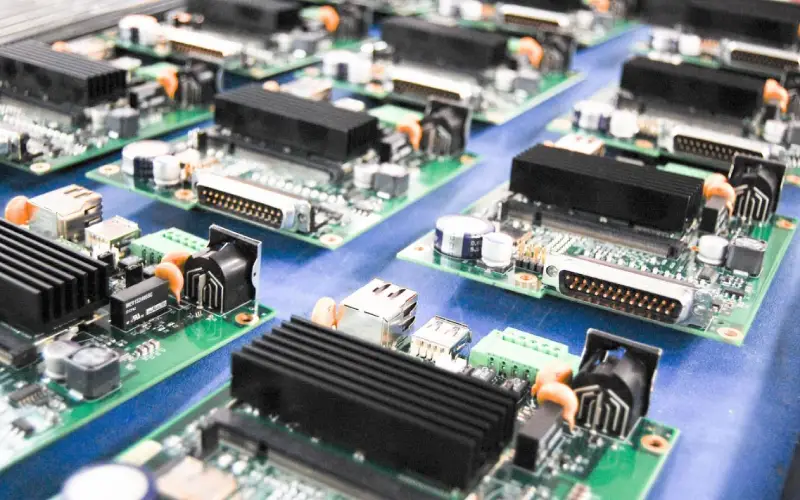
For OEMs, this makes box build manufacturing an important bridge between board-level production and final product delivery. A well-managed Box Build Assembly Process can simplify supplier management, improve traceability, accelerate production, and reduce the risks associated with coordinating multiple manufacturing vendors.
What Is Box Build Assembly?
Box Build Assembly, also known as system integration assembly or full product assembly, is the process of integrating a completed PCBA with electronic, mechanical, electromechanical, and software-related components inside a defined enclosure or product structure.
A typical Box Build Assembly may include:
- PCB Assembly
- Power supplies
- Wire harnesses
- Cable assemblies
- Connectors
- Enclosures
- Displays
- Keypads
- Switches
- Sensors
- Fans
- Heat sinks
- Brackets
- Fasteners
- Motors
- Relays
- Firmware or software
- Labels and packaging
The process extends electronics manufacturing from a functional circuit board to a complete system-ready product.
A simplified workflow is:
Engineering Review → BOM Management → Component Procurement → PCB Assembly → Cable/Harness Assembly → Mechanical Integration → System Integration → Firmware Loading → Functional Testing → Packaging
Unlike simple PCBA production, Box Build Manufacturing requires coordination between electrical engineering, mechanical engineering, supply-chain management, assembly operations, testing, and quality assurance.
PCBA vs. Box Build Assembly
Understanding the difference between PCBA and Box Build Assembly is important when selecting a manufacturing partner.
| Feature | PCB Assembly (PCBA) | Box Build Assembly |
|---|---|---|
| Main output | Functional assembled PCB | Complete electronic product or subsystem |
| SMT/THT | Core process | Included where required |
| PCB fabrication | Often coordinated | Usually coordinated |
| Cable assembly | Optional | Commonly required |
| Wire harness | Optional | Commonly integrated |
| Mechanical assembly | Limited | Major part of the process |
| Enclosure | Usually not included | Integrated |
| Firmware | Sometimes | Often included |
| Testing | Board-level | System-level |
| Packaging | PCB packaging | Finished-product packaging |
| Main objective | Build a reliable PCBA | Build a complete functional system |
A PCB Assembly Manufacturer focuses on electronic board production, while a Box Build Assembly Manufacturer takes responsibility for integrating the board into a complete system.
Core Components of a Box Build Assembly
A successful Box Build Assembly requires careful integration of electrical, mechanical, and electromechanical components.
1. PCB and PCBA
The PCBA is often the electronic core of the product.
Depending on the application, the box build may contain:
- Rigid PCBs
- Flexible PCBs
- Rigid-flex PCBs
- HDI PCBs
- High-speed PCBs
- High-frequency PCBs
- Multilayer PCBAs
The quality of the PCBA directly affects the reliability of the complete system.
2. Power Supply
A power supply provides the voltage and current required by the system.
It may include:
- AC/DC power supplies
- DC/DC converters
- Battery systems
- Power-management circuits
- Protection circuits
Power design must be coordinated with the PCB, enclosure, thermal system, and safety requirements.
3. Enclosure
The enclosure protects internal components while also providing mechanical mounting and environmental protection.
Typical materials include:
- Aluminum
- Steel
- Stainless steel
- Engineering plastics
- Custom molded materials
An enclosure may also provide:
- EMI shielding
- Heat dissipation
- Waterproofing
- Dust protection
- Mechanical protection
4. Wire Harnesses and Cable Assemblies
Wire Harness Assembly provides connections between PCBAs, power supplies, displays, sensors, motors, connectors, and other system components.
A professional harness process may include:
- Wire cutting
- Stripping
- Crimping
- Terminal insertion
- Connector assembly
- Continuity testing
- Labeling
- Strain relief
IPC/WHMA-A-620 is a widely used industry standard covering requirements and acceptance for cable and wire harness assemblies; IPC currently lists Revision E as the current revision. (electronics.org)
5. Electromechanical Components
Box builds may integrate components that combine electrical and mechanical functions, such as:
- Fans
- Motors
- Relays
- Solenoids
- Switches
- Pumps
- Actuators
These components require both electrical and mechanical verification.
The Box Build Assembly Process
Step 1: Engineering Review and Pre-Planning
The first stage of the Box Build Assembly Process is engineering preparation.
The manufacturer reviews:
- BOM
- PCB files
- Assembly drawings
- Mechanical drawings
- Enclosure specifications
- Cable drawings
- Harness documentation
- Test procedures
- Firmware requirements
- Packaging requirements
At this stage, engineers should also conduct DFM (Design for Manufacturability) and DFA (Design for Assembly) reviews.
Important questions include:
- Can components be assembled efficiently?
- Is there sufficient clearance around the PCB?
- Can cables be routed safely?
- Are connectors accessible?
- Is heat dissipation adequate?
- Can the enclosure be assembled without damaging the PCB?
- Are test points accessible?
Early engineering review can prevent expensive modifications later in production.
Step 2: BOM Management and Component Procurement
The Bill of Materials (BOM) is one of the most important documents in a box build project.
A complete BOM may include:
- Electronic components
- PCBAs
- Cables
- Connectors
- Mechanical parts
- Enclosures
- Fasteners
- Labels
- Packaging materials
The BOM should ideally contain:
- Manufacturer part number
- Quantity
- Approved manufacturer
- Revision
- Component description
- Alternate parts
- Procurement information
A missing or inaccurate BOM can cause:
- Component shortages
- Procurement delays
- Assembly interruptions
- Cost increases
- Engineering changes
Kingda provides component procurement and inventory management, using an ERP-based system to manage component information and inventory for PCBA projects. (GoPCBA)
Step 3: PCB Assembly
The PCB is normally assembled before it enters final box-build integration.
Kingda supports:
- SMT PCB Assembly
- THT/DIP assembly
- Mixed-technology assembly
- BGA
- QFN
- CSP
- LGA
- Fine-pitch components
Its published SMT capabilities include components down to 01005 and BGA packages with 0.35 mm pitch. (GoPCBA)
The PCB assembly process may include:
Solder Paste Printing → SPI → Pick-and-Place → Reflow → THT → AOI → X-Ray → ICT/FCT
This ensures the electronic foundation is validated before the final product is assembled.
Step 4: Cable and Wire Harness Assembly
Once the PCBAs and harnesses are prepared, the wiring system is integrated.
The process may involve:
Wire Preparation → Crimping → Terminal Insertion → Connector Assembly → Continuity Testing → Labeling
Cable routing should be carefully controlled.
Important considerations include:
- Minimum bend radius
- Strain relief
- Connector orientation
- Mechanical interference
- Heat exposure
- Electromagnetic interference
- Serviceability
Kingda’s published mixed-technology capabilities include wire harnesses and cable assemblies as part of its broader electronic manufacturing services. (GoPCBA)
Step 5: Mechanical Integration
The next stage is installing the PCBA, power supply, cables, and other components into the enclosure.
Typical activities include:
- PCB mounting
- Connector installation
- Bracket installation
- Heat-sink installation
- Fan installation
- Display installation
- Switch installation
- Cable routing
- Screw fastening
- Enclosure closure
Mechanical tolerances must be carefully controlled.
For example, excessive mechanical pressure on a PCB may cause:
- PCB warpage
- Component damage
- Solder-joint stress
- Connector misalignment
Step 6: Firmware Loading and Configuration
Modern box-build products may require firmware or software to be loaded before final testing.
This may include:
- Microcontroller programming
- FPGA programming
- Calibration data
- Device configuration
- Serial-number programming
- Communication settings
Firmware loading should be traceable so that the exact software version installed on each unit can be recorded.
Step 7: System Integration
During System Integration, all electronic and mechanical subsystems are connected.
The manufacturer verifies:
- Power connections
- Data communication
- Signal connections
- Sensor connections
- Display connections
- Motor operation
- Cooling systems
- User interfaces
At this stage, the PCBA transitions from a standalone electronic assembly into a complete functional product.
Step 8: Testing and Validation
Box build testing is broader than PCB-level inspection.
Electrical Testing
Electrical testing may verify:
- Voltage
- Current
- Grounding
- Continuity
- Insulation
- Leakage
- Power consumption
Functional Testing
Functional Testing (FCT) verifies whether the complete system performs according to its design requirements.
Depending on the application, this may include:
- Display operation
- Button operation
- Sensor readings
- Motor control
- Ethernet
- USB
- CAN
- RS-485
- Wireless communication
- Data acquisition
- Alarm functions
Thermal Testing
Thermal testing may be necessary for products containing:
- Power electronics
- CPUs
- GPUs
- LED modules
- Motors
- High-current circuits
Testing can evaluate:
- Temperature rise
- Heat-sink performance
- Fan operation
- Internal airflow
- Thermal stability
Calibration
Equipment containing measurement functions may require calibration.
Examples include:
- Industrial measurement equipment
- Medical instruments
- Power-monitoring systems
- Sensors
- Test equipment
Step 9: Final Inspection and Packaging
Before shipment, each finished Box Build Assembly should be checked against approved requirements.
Final inspection may cover:
- Product appearance
- Mechanical assembly
- Connector installation
- Cable routing
- Labels
- Serial number
- Firmware version
- Functional status
- Accessories
Packaging should protect the system against:
- ESD
- Shock
- Vibration
- Moisture
- Scratches
- Transportation damage
Quality Standards for Box Build Assembly
Because box-build manufacturing combines PCBA, cables, mechanical components, and final systems, several standards may be relevant.
IPC-A-610
IPC-A-610 defines acceptability criteria for electronic assemblies. IPC currently lists IPC-A-610J as the current revision. (electronics.org)
It is relevant to the electronic assembly portion of a box-build product.
IPC J-STD-001
IPC J-STD-001 addresses materials, methods, and process requirements for soldered electrical and electronic assemblies. IPC currently lists Revision J. (electronics.org)
IPC/WHMA-A-620
For cable and wire harness manufacturing, IPC/WHMA-A-620E establishes requirements and acceptance criteria for cable and harness assemblies. (electronics.org)
IPC-A-630
IPC-A-630 addresses manufacturing, inspection, and testing of electronic enclosures. IPC maintains this standard specifically for electronic enclosure workmanship and acceptance. (electronics.org)
This illustrates an important point: Box Build Assembly requires a broader quality system than PCBA alone, because electronic, cable, and enclosure workmanship all have to be controlled.
ISO Certifications
Depending on the market, additional management-system or product requirements may apply, such as:
- ISO 9001
- ISO 13485
- IATF 16949
- ISO 14001
- UL requirements
- RoHS
- CE-related requirements
The applicable certification or regulatory requirement should be determined according to the product and target market.
PCBA vs. Box Build Assembly Standards
| Area | PCBA | Box Build Assembly |
|---|---|---|
| PCB assembly | Core requirement | Included |
| Soldering | Critical | Critical |
| PCB inspection | AOI/X-ray/ICT | Included |
| Cable assembly | Limited/optional | Often required |
| Mechanical integration | Limited | Core requirement |
| Enclosure | Usually outside scope | Integrated |
| System testing | Partial | Core requirement |
| Firmware | Optional | Often required |
| Packaging | PCB-level | Finished-product level |
Why OEMs Choose Box Build Assembly
1. One-Stop Manufacturing
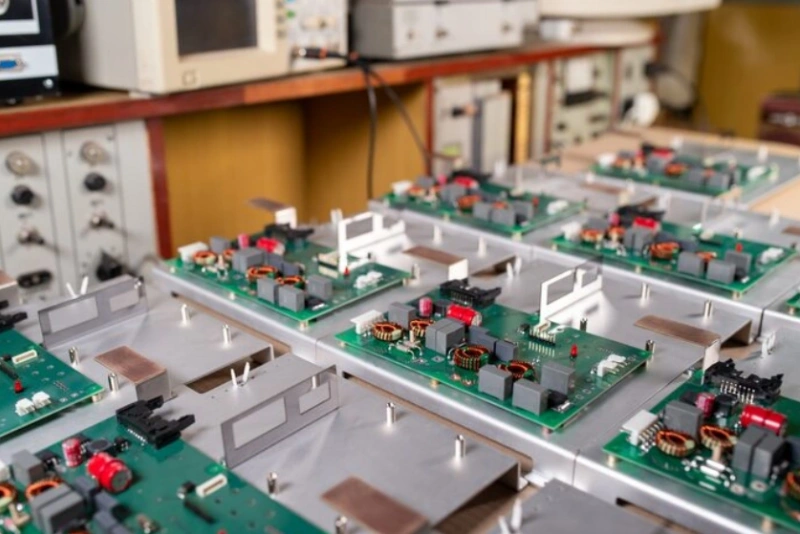
One of the biggest advantages of Box Build Assembly is that it combines multiple manufacturing operations under one supplier.
Instead of managing:
PCB Supplier + PCBA Supplier + Cable Supplier + Mechanical Supplier + System Integrator + Testing Supplier
an OEM can use a single integrated manufacturing partner.
This can significantly simplify project management.
2. Reduced Supplier Complexity
Managing multiple suppliers can lead to:
- Communication problems
- Schedule conflicts
- Different quality systems
- Shipping delays
- Inventory duplication
- Responsibility gaps
A Turnkey Box Build Assembly provider can centralize these operations.
3. Reduced Capital Expenditure
OEMs do not necessarily need to establish their own:
- SMT lines
- Testing laboratories
- Cable assembly stations
- Mechanical assembly lines
- Warehouse systems
- Packaging operations
This allows businesses to focus more resources on:
- Product development
- Software
- R&D
- Marketing
- Customer support
4. Faster Time to Market
An experienced Box Build Manufacturer already has established:
- Procurement systems
- Manufacturing equipment
- Assembly processes
- Quality systems
- Testing procedures
- Logistics channels
This can reduce the time required to move from PCBA to complete product.
5. Improved Traceability
A single manufacturing partner can track:
Components → PCBA → Cable Assembly → Mechanical Assembly → Testing → Packaging
This is particularly important for regulated and high-reliability applications.
6. Easier Production Scaling
Box-build suppliers can support different production stages:
Prototype → Low Volume → Pilot Run → Mass Production
This allows OEMs to scale production according to demand without building an entirely new internal manufacturing infrastructure.
Applications of Box Build Assembly
Medical Electronics
Medical products may include:
- Diagnostic equipment
- Patient monitoring systems
- Laboratory instruments
- Respiratory equipment
- Medical controllers
Kingda states that it holds ISO 13485 certification and provides manufacturing services for medical electronics. (GoPCBA)
Automotive Electronics
Applications can include:
- Vehicle controllers
- Battery-management systems
- Automotive displays
- Charging equipment
- Electronic control systems
Kingda reports IATF 16949 certification and provides automotive electronics manufacturing services. (GoPCBA)
Industrial Automation
Box-build applications include:
- Industrial controllers
- Machine vision systems
- Data acquisition equipment
- Robotics
- Motion-control systems
- Industrial networking equipment
Kingda provides box build assembly, cable and wire harness assembly, and turnkey assembly for industrial applications. (GoPCBA)
Communication Equipment
Typical systems include:
- Network switches
- Routers
- Communication gateways
- Wireless systems
- IoT gateways
Kingda’s product portfolio includes network-switch and communication-related PCB assemblies. (GoPCBA)
AI and Intelligent Electronics
Advanced products may integrate:
- Computing boards
- AI accelerators
- Sensors
- Cooling systems
- Communication interfaces
- Storage
Kingda lists applications including AI edge computing, machine vision, robotics, GPU accelerator boards, and intelligent automation. (GoPCBA)
How Kingda Supports Box Build Assembly
Kingda provides Box Build Assembly as part of its one-stop electronics manufacturing services.
Its published capabilities include PCB fabrication, component sourcing, SMT/THT assembly, wire harnesses, cable assemblies, mechanical integration, box build, testing, labeling, packaging, and final product assembly. (GoPCBA)
1. Integrated PCB + Box Build Manufacturing
Kingda’s manufacturing model covers:
PCB Design → PCB Manufacturing → Component Procurement → PCBA → Cable/Harness Assembly → Box Build → Testing → Final Delivery
This integrated approach reduces the need to coordinate multiple production suppliers. (GoPCBA)
2. Advanced PCB Assembly
Kingda supports:
- SMT
- THT/DIP
- Mixed technology
- BGA
- QFN
- CSP
- LGA
- 01005 components
- Fine-pitch devices
Its published PCBA capabilities extend from prototypes and low-volume production to high-volume manufacturing. (GoPCBA)
3. Wire Harness and Cable Assembly
Kingda provides wire harness and cable assembly, allowing the wiring portion of a box-build system to be managed together with PCB production and final integration. (GoPCBA)
4. Component Procurement
Kingda supports turnkey procurement and inventory management.
Customers can provide:
- Complete BOM
- Partial component list
- Procurement requirements
Kingda’s ERP-based procurement process provides inventory information and helps coordinate component sourcing. (GoPCBA)
5. Comprehensive Inspection and Testing
Kingda’s published PCBA quality process includes:
IQC → SPI → SMT/THT → AOI → X-Ray → ICT/FCT → OQC
Its capabilities include 3D SPI, AOI, X-ray inspection, First Article Inspection, ICT, FCT, and customized testing. (GoPCBA)
For box-build products, system-level functional testing can be incorporated according to customer requirements.
6. DFM/DFA Engineering
Kingda provides DFM/DFA engineering support, including PCB design review, manufacturing analysis, component review, and production optimization. (GoPCBA)
This is especially valuable for box builds because the manufacturing design needs to account for both electrical and mechanical integration.
7. Quality Management
Kingda reports IATF 16949, ISO 13485, and ISO 9001 quality-management certifications. (GoPCBA)
Its manufacturing systems also emphasize traceability, process monitoring, and inspection throughout production. (GoPCBA)
Box Build Assembly vs. Multiple-Supplier Manufacturing
| Factor | Multiple Suppliers | Integrated Box Build Partner |
|---|---|---|
| PCB fabrication | Separate | Integrated |
| Component procurement | Multiple suppliers | Centralized |
| PCBA | Separate | Integrated |
| Cable assembly | Separate | Integrated |
| Mechanical assembly | Separate | Integrated |
| System integration | Separate | Integrated |
| Testing | Multiple locations | Centralized |
| Packaging | Separate | Integrated |
| Traceability | Fragmented | Centralized |
| Project management | More complex | Simplified |
The key benefit is not simply lower assembly cost. The larger advantage is manufacturing integration.
How to Select a Box Build Assembly Manufacturer
Before selecting a Box Build Assembly Manufacturer, evaluate the entire manufacturing ecosystem.
PCB Capabilities
Check whether the supplier supports:
- Rigid PCB
- Flex PCB
- Rigid-flex PCB
- HDI
- Multilayer PCB
- High-speed PCB
- High-frequency PCB
PCBA Capabilities
Look for:
- SMT
- THT
- Mixed technology
- BGA
- Fine-pitch assembly
- Reflow
- Wave soldering
- Selective soldering
Cable and Harness Capabilities
Verify:
- Cable cutting
- Crimping
- Connector assembly
- Harness testing
- Labeling
- Continuity testing
Mechanical Capabilities
Check whether the supplier can handle:
- Enclosure assembly
- Brackets
- Heat sinks
- Fans
- Displays
- Fasteners
- Mechanical fixtures
Testing Capabilities
A capable supplier should be able to provide:
- AOI
- X-ray
- ICT
- FCT
- Electrical testing
- Functional testing
- Thermal testing
- Calibration when required
Supply-Chain Capabilities
Evaluate:
- Component procurement
- Mechanical-part sourcing
- Cable sourcing
- Enclosure sourcing
- Inventory control
- Alternative component management
Conclusion
Box Build Assembly represents the transition from board-level electronics manufacturing to complete system integration.
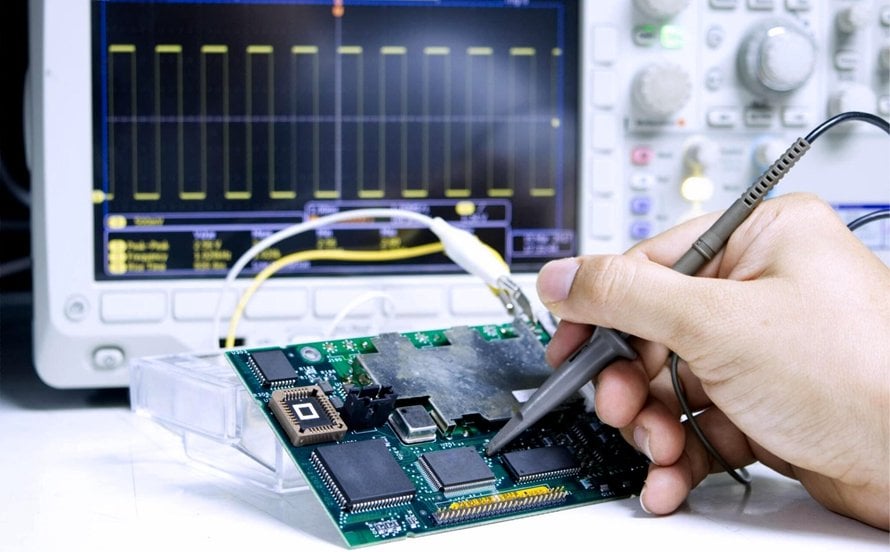
While PCB Assembly creates the electronic foundation, Box Build Assembly integrates the PCBA with power supplies, cable assemblies, wire harnesses, enclosures, displays, sensors, mechanical parts, firmware, testing, and packaging to create a complete product or functional subsystem.
A successful box-build project depends on a coordinated manufacturing process:
Engineering Review → BOM Management → Component Procurement → PCB Assembly → Cable/Harness Assembly → Mechanical Integration → Firmware → System Testing → Final Inspection → Packaging
For OEMs, the major advantages include simplified supplier management, centralized quality control, improved traceability, reduced internal manufacturing investment, faster product integration, and flexible production scaling.
Kingda provides a one-stop PCB Manufacturing and Box Build Assembly solution that combines PCB fabrication, component procurement, SMT/THT assembly, wire harness and cable assembly, system integration, testing, packaging, and final product assembly. (GoPCBA)
With DFM/DFA engineering support, component sourcing, advanced PCB assembly, SPI/AOI/X-ray inspection, ICT/FCT testing, and quality-management certifications including IATF 16949, ISO 13485, and ISO 9001, Kingda can support box-build projects across medical, automotive, industrial automation, communication, AI, IoT, and other demanding electronics applications. (GoPCBA)