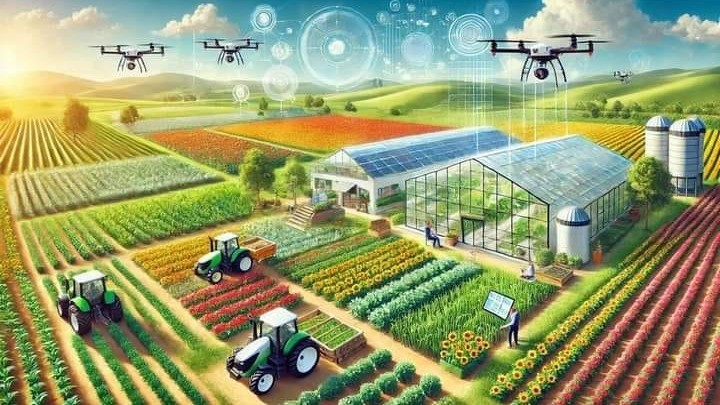
Modern agriculture is becoming increasingly intelligent, connected, and automated. Today’s farms can use drones to monitor crops, soil sensors to measure moisture and nutrients, automated irrigation systems to control water delivery, and autonomous machines to improve productivity.
Behind many of these technologies is a critical electronic component: the Printed Circuit Board (PCB).
A well-designed Agricultural PCB connects sensors, microcontrollers, communication modules, power-management circuits, and actuators, allowing agricultural equipment to collect data, process information, communicate with other systems, and execute commands.
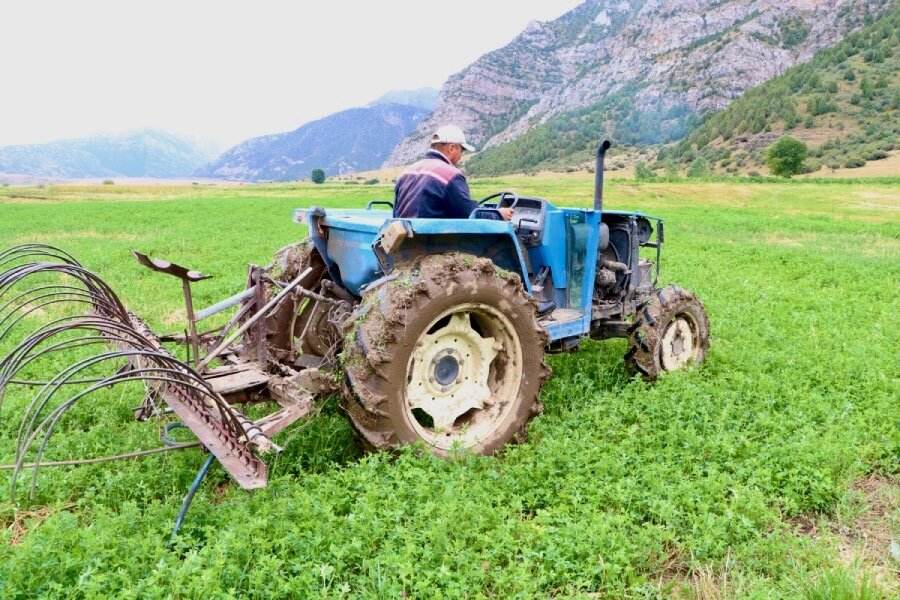
However, PCB Manufacturing for Smart Agriculture presents unique challenges. Agricultural electronics may operate outdoors or in industrial environments where they are exposed to humidity, dust, vibration, temperature changes, fertilizers, pesticides, and other contaminants.
This makes reliability, material selection, SMT PCB Assembly, component management, environmental protection, testing, and traceability essential parts of agricultural electronics manufacturing.
What Is an Agricultural PCB?
An Agricultural PCB is a printed circuit board designed for electronic equipment used in farming, livestock management, irrigation, agricultural machinery, and precision agriculture.
Agricultural PCBs can be found in:
- Smart irrigation systems
- Soil monitoring equipment
- Agricultural drones
- Autonomous tractors
- Crop-monitoring systems
- Greenhouse controllers
- Livestock monitoring equipment
- Fertilizer management systems
- Grain storage monitoring systems
- Agricultural robots
- Weather monitoring stations
The PCB acts as the electronic foundation of these systems.
For example, a smart irrigation controller may receive information from soil-moisture sensors, process that information through a microcontroller, communicate with a wireless network, and activate a water pump or valve.
The complete process can be represented as:
Sensor → PCB → Data Processing → Communication → Control → Actuator
Why PCBs Are Important for Smart Agriculture
Smart Agriculture relies on the integration of electronics, sensors, connectivity, automation, and data analysis.
PCBs provide the physical and electrical infrastructure that connects these technologies.
A modern agricultural control board may integrate:
Sensors + Microcontrollers + Memory + Communication Modules + Power Management + Actuators
This integration enables farms to automate repetitive operations and make decisions based on real-time information.
For example:
Soil Monitoring
A PCB can connect soil sensors that measure:
- Moisture
- Temperature
- pH
- Conductivity
- Nutrient-related parameters
Smart Irrigation
A control PCB can receive sensor information and operate:
- Pumps
- Solenoid valves
- Flow meters
- Pressure sensors
Agricultural Drones
Drone electronics may include:
- Flight controllers
- GPS/GNSS
- Camera interfaces
- Motor controllers
- Wireless communication
- Battery-management systems
Autonomous Agricultural Machinery
Advanced agricultural machines can use PCBs for:
- Navigation
- Machine vision
- Motor control
- Sensor fusion
- Communication
- Safety monitoring
Key Challenges in Agricultural PCB Manufacturing
Agricultural electronics often operate in environments that are significantly more demanding than offices or consumer electronics.
A PCB installed in agricultural equipment may be exposed to:
Moisture + Dust + Vibration + Temperature Changes + Chemicals + UV Exposure + Mechanical Stress
Therefore, Agricultural PCB Design should consider the operating environment from the beginning.
The PCB Board Making Process for Smart Agriculture
The fundamental PCB Board Making Process is similar to other electronics applications, but agricultural products may require additional material and reliability considerations.
1. Substrate Selection
The substrate provides the mechanical and electrical foundation of the PCB.
For general agricultural electronics, standard FR-4 may be appropriate. More demanding applications can require:
- High-Tg FR-4
- Polyimide
- Aluminum substrates
- Ceramic substrates
- High-frequency laminates
Material selection should consider:
- Operating temperature
- Moisture
- Mechanical stress
- Thermal management
- Electrical performance
- Cost
For outdoor agricultural sensors and control equipment, environmental exposure should be considered during material selection.
2. Copper Layer and Circuit Formation
Copper provides conductive paths for power and signals.
The appropriate copper thickness depends on the current requirements of the application.
For high-current agricultural equipment such as motor controllers, pump controllers, and power-management modules, heavy copper PCB technology may be considered.
The circuit pattern is transferred to the copper layer through imaging and then formed using etching processes.
3. Drilling and Plating
Multilayer PCBs require electrical connections between individual copper layers.
These connections are created using plated through-holes and vias.
For agricultural equipment exposed to vibration, reliable hole-wall plating and mechanical construction are important for long-term interconnection reliability.
For compact agricultural electronics, HDI PCB technology can be used to increase routing density.
4. Solder Mask
The Solder Mask protects exposed copper and helps prevent unintended electrical connections.
For equipment operating in challenging environments, the PCB protection strategy may also incorporate appropriate conformal coating and enclosure protection.
5. Silkscreen and Identification
Silkscreen can provide:
- Component reference designators
- Polarity indicators
- Test-point information
- Maintenance instructions
- Product identification
This can make field maintenance easier, especially for agricultural equipment deployed over large areas.
SMT PCB Assembly for Smart Agriculture
Once the bare PCB has been manufactured, electronic components must be mounted and soldered.
SMT PCB Assembly is widely used because it enables compact, automated, and high-density electronic assemblies.
The typical SMT process includes:
Solder Paste Printing → SPI → Pick-and-Place → Reflow Soldering → AOI → Testing
Compact and Lightweight Design
Agricultural drones, wireless sensors, and portable monitoring equipment benefit from compact electronics.
SMT allows designers to use:
- Small passive components
- Fine-pitch ICs
- Compact sensors
- High-density layouts
This can reduce the overall footprint of the electronic module.
High Placement Accuracy
Modern SMT equipment can place components with very high precision.
This is particularly important for:
- Sensor modules
- Wireless communication systems
- Imaging electronics
- Compact control boards
Accurate component placement contributes to consistent electrical and mechanical performance.
Production Consistency
Automation reduces variation between individual boards and helps manufacturers achieve repeatable placement and soldering quality.
This becomes increasingly important when agricultural electronics move from prototype production into higher-volume manufacturing.
Low Volume SMT Assembly for Agricultural Technology
Agricultural technology is highly diverse. A company developing a new crop-monitoring device may only require several dozen prototypes before entering pilot production.
Low Volume SMT Assembly provides an effective way to support this development cycle.
Typical applications include:
- Prototype soil sensors
- Agricultural drone controllers
- Greenhouse controllers
- Smart irrigation boards
- Livestock monitoring devices
A well-managed development path is:
Prototype → Testing → Design Revision → Pilot Production → Mass Production
This allows manufacturers to identify electrical, mechanical, thermal, or environmental problems before committing to larger quantities.
PCB Types Used in Smart Agriculture
Different agricultural applications require different PCB constructions.
| PCB Type | Typical Application | Primary Advantage |
|---|---|---|
| Single-Layer PCB | Basic sensors and indicators | Low cost |
| Double-Layer PCB | Controllers and monitoring devices | Better routing flexibility |
| Multilayer PCB | Smart irrigation and central controllers | Higher circuit density |
| HDI PCB | Compact drones and advanced controllers | High routing density |
| Flexible PCB | Wearable and compact sensors | Bendability |
| Rigid-Flex PCB | Robotics and complex equipment | Mechanical integration |
| Metal-Core PCB | High-power systems | Improved thermal management |
| High-Frequency PCB | Wireless and RF systems | Controlled high-frequency performance |
Choosing the correct PCB structure should be based on actual electrical, mechanical, thermal, and environmental requirements.
Electronic Component Management in Agricultural PCB Manufacturing
A smart agricultural system can require hundreds of electronic components.
These may include:
- Microcontrollers
- Sensors
- ICs
- Resistors
- Capacitors
- Connectors
- Power devices
- Communication modules
Managing these components effectively is essential for stable production.
Component Availability
A professional component-management system can track:
- Inventory
- Supplier
- Manufacturer
- Part number
- Lead time
- Production requirements
- Alternative components
This reduces the risk that a single missing component will interrupt production.
Component Obsolescence
Agricultural equipment can remain in service for many years, while electronic components can have much shorter product lifecycles.
Manufacturers should therefore monitor:
- End-of-life components
- Long-lead components
- Single-source parts
- Recommended alternatives
Early identification of lifecycle risks can reduce future redesign costs.
Counterfeit Component Prevention
Counterfeit components can create serious reliability problems.
A robust procurement process should include:
Supplier Verification + Incoming Inspection + Lot Tracking + Component Traceability
This gives manufacturers greater confidence in the authenticity and consistency of the parts used in agricultural PCB assembly.
Environmental Protection for Agricultural PCBs
Moisture Protection
Outdoor agricultural electronics may be exposed to:
- Rain
- Condensation
- High humidity
- Irrigation water
Moisture can contribute to:
- Corrosion
- Leakage current
- Electrical shorts
- Insulation degradation
Depending on the application, protection can include:
- Conformal coating
- Sealed enclosures
- Waterproof connectors
- Appropriate PCB materials
Dust Protection
Agricultural machinery can operate in dusty environments, particularly during planting and harvesting.
System-level protection may include:
- Enclosures
- Seals
- Filters
- Appropriate ventilation
- Protective coatings
Chemical Resistance
Agricultural equipment may come into contact with:
- Fertilizers
- Pesticides
- Cleaning agents
- Oils
- Fuels
Material and coating selection should therefore consider the expected chemical environment.
Vibration Resistance
Tractors, harvesters, pumps, and agricultural robots can generate continuous mechanical vibration.
PCB reliability can be improved through:
- Appropriate PCB mounting
- Component placement
- Connector retention
- Mechanical reinforcement
- Reliable solder-joint design
Why RoHS-Compliant SMT Assembly Matters
RoHS-Compliant SMT Assembly can be important for agricultural equipment intended for markets where RoHS requirements apply.
RoHS restricts certain hazardous substances in electrical and electronic equipment.
For smart-agriculture products, RoHS compliance can support:
- Environmental goals
- Customer requirements
- International market access
- Responsible electronics manufacturing
However, RoHS compliance does not replace environmental qualification. Agricultural electronics may still require application-specific testing for temperature, moisture, vibration, chemicals, and other environmental factors.
PCB Testing for Smart Agriculture
Quality testing should be designed around the operating conditions of the actual agricultural product.
AOI
Automated Optical Inspection (AOI) can detect:
- Missing components
- Incorrect component orientation
- Component displacement
- Solder defects
X-Ray Inspection
X-Ray Inspection can be used to inspect hidden solder joints such as BGA connections.
Electrical Testing
Testing may include:
- Continuity
- Insulation resistance
- Open-circuit detection
- Short-circuit detection
- Voltage testing
- Current testing
Functional Testing
A complete Functional Test verifies whether the assembled PCB performs its intended functions.
For an irrigation controller, for example, testing may verify:
- Sensor inputs
- Communication
- Pump control
- Valve control
- Power management
- Alarm functions
Environmental Testing
Depending on product requirements, testing can include:
- Temperature cycling
- Humidity
- Vibration
- Thermal shock
- Chemical exposure
- Long-duration operation
PCB Applications in Smart Agriculture
Smart Irrigation Systems
PCBs connect moisture sensors, flow meters, pumps, valves, wireless modules, and control processors.
The system can automatically adjust irrigation according to real-time field conditions.
Agricultural Drones
Drone PCBs can support:
- Flight control
- GPS/GNSS
- Cameras
- Motor control
- Wireless communication
- Battery management
Because drones have strict weight and power limitations, compact SMT and HDI PCB designs can be valuable.
Soil Monitoring Systems
Soil-monitoring electronics can measure:
- Moisture
- Temperature
- pH
- Conductivity
- Nutrient-related information
These systems require stable sensor interfaces and reliable analog/digital signal processing.
Greenhouse Automation
A greenhouse controller can combine:
- Temperature sensors
- Humidity sensors
- Lighting control
- Ventilation control
- Irrigation
- CO₂ monitoring
A multilayer PCB can provide sufficient routing and power/signal separation for more advanced systems.
Agricultural Robots
Autonomous farming robots may require:
Vision + Sensors + AI Processing + Motor Control + Wireless Communication
This creates demand for high-performance Agricultural PCB Assembly and increasingly sophisticated electronics.
The Future of PCB Technology in Smart Agriculture
Smart agriculture is moving toward greater automation, connectivity, and edge intelligence.
HDI PCB Technology
HDI PCBs can provide increased routing density for compact agricultural controllers and sensors.
Flexible PCB Technology
Flexible PCBs can enable electronics to conform to unusual shapes or moving structures.
Potential applications include:
- Wearable livestock sensors
- Compact crop sensors
- Flexible lighting
- Robotic systems
Edge AI
Instead of sending all sensor data to the cloud, some agricultural equipment can process information locally.
This increases demand for:
- AI processors
- High-speed memory
- High-speed PCB design
- Advanced power delivery
- Thermal management
Wireless Connectivity
Smart agricultural devices may incorporate different communication technologies depending on deployment conditions.
The PCB must support appropriate:
- RF layout
- Antenna integration
- Power integrity
- Shielding
- EMC
Kingda PCB Solutions for Smart Agriculture
For companies developing Smart Agriculture Electronics, Kingda provides a one-stop electronics manufacturing model covering PCB fabrication, component sourcing, SMT/DIP assembly, testing, finished-product assembly, and system integration. Kingda states that it serves customers in industrial automation, AI, communication, automotive, medical, smart-home, and other electronic industries. (Kingda)
Advanced PCB Manufacturing
Kingda’s published PCB capabilities include multilayer boards, HDI PCBs, high-frequency PCBs, high-speed PCBs, flexible PCBs, rigid-flex PCBs, thick-copper PCBs, and metal-core PCBs. Its listed fabrication capabilities extend up to 48 layers in advanced production, with HDI structures including microvias, stacked microvias, copper-filled microvias, and buried filled vias. (Kingda)
These capabilities can support different types of smart-agriculture equipment, from simple sensor boards to compact, high-density agricultural controllers.
SMT and THT Assembly
Kingda provides integrated SMT and THT assembly and supports prototype, low-volume, and higher-volume manufacturing. Its published assembly capabilities include 01005 components and advanced packages such as BGA, QFN, CSP, and LGA. (Kingda)
This makes Kingda suitable for agricultural products that require compact sensor electronics, control boards, communication modules, or more complex computing hardware.
Component Procurement
Kingda provides component procurement and supply-chain management, with supplier relationships and inventory-management capabilities designed to support component availability, cost control, and production scheduling. (Kingda)
This can help agricultural electronics developers manage component lifecycle risks and production continuity.
Full Quality Inspection
Kingda’s published PCB assembly quality flow includes:
IQC → SPI → SMT/THT Assembly → AOI → X-Ray → ICT/FCT → OQC
Its inspection capabilities include 3D SPI, AOI, X-Ray, First Article Inspection, ICT, FCT, and customized testing. (Kingda)
For smart-agriculture electronics, testing can be adapted to specific requirements such as sensor accuracy, communication interfaces, power management, and system functionality.
Full Product Traceability
Kingda states that its manufacturing system provides full production traceability throughout the product lifecycle, with manufacturing records and production data maintained from incoming materials through final shipment. (Kingda)
This is particularly valuable when agricultural products require long-term field service or when component and production history needs to be reviewed after a failure.
One-Stop Finished Product Assembly
In addition to PCB assembly, Kingda offers Box Build Assembly and final system integration, including mechanical assembly, cable assembly, labeling, packaging, and final product assembly. (Kingda)
This allows an agricultural technology company to move from:
PCB → PCBA → Cable/Harness → Box Build → Testing → Finished Product
through one integrated manufacturing partner.
Quality Certifications
Kingda reports certifications including:
- IATF 16949:2016
- ISO 13485:2016
- ISO 9001:2015
- ISO 14001:2015
- UL
The company also states that it is an IPC member. (Kingda)
These quality systems provide a foundation for controlled production across different electronics applications.
Why Choose Kingda for Smart Agriculture PCB Projects?
Kingda’s strengths are particularly relevant to agricultural technology companies that need flexible manufacturing and an integrated supply chain.
One-Stop Manufacturing
PCB fabrication, component procurement, SMT/THT assembly, testing, and box-build integration can be managed through one supplier. (Kingda)
Advanced PCB Technology
Kingda supports HDI, high-speed, high-frequency, flexible, rigid-flex, thick-copper, and metal-core PCBs for different product architectures. (Kingda)
Flexible Production
Kingda supports production from rapid prototypes and low-volume manufacturing through higher-volume production. (Kingda)
Advanced Inspection
SPI, AOI, X-ray, ICT, and FCT provide multiple quality-control points throughout the manufacturing process. (Kingda)
Traceable Manufacturing
ERP-supported production management provides full-process product traceability, helping customers maintain visibility from material sourcing to shipment. (Kingda)
Automotive and Industrial Quality Experience
Kingda reports IATF 16949, ISO 9001, ISO 13485, ISO 14001, and UL qualifications and serves industrial automation, AI, automotive, medical, communication, and other markets. (Kingda)
Conclusion
PCBs are the hidden backbone of smart agriculture.
From soil sensors and irrigation controllers to agricultural drones, greenhouse automation, autonomous machinery, and farming robots, PCBs connect the electronic systems that make modern agriculture more intelligent and efficient.
Successful Agricultural PCB Manufacturing requires more than basic circuit fabrication. Manufacturers must consider:
Material Selection + Environmental Protection + SMT Assembly + Component Management + Electrical Testing + Reliability + Traceability + Production Scalability
As agriculture continues to adopt IoT, AI, robotics, wireless connectivity, and autonomous equipment, demand will grow for HDI PCBs, flexible PCBs, high-speed PCBs, multilayer PCBs, and advanced PCB assemblies.
Kingda combines PCB manufacturing, component sourcing, SMT/THT assembly, advanced inspection, testing, cable and wire harness assembly, box build, and full product traceability in a one-stop electronics manufacturing model. (Kingda)
For developers of smart irrigation systems, agricultural drones, soil-monitoring equipment, greenhouse controllers, autonomous agricultural machinery, and agricultural robotics, this integrated approach can help shorten development cycles, control production risks, and move products from prototype to scalable production more efficiently.