As Autonomous Vehicles (AVs) continue to evolve, the electronic systems controlling perception, communication, computation, and vehicle actuation are becoming increasingly complex. At the foundation of these systems are automotive PCBs, which connect processors, sensors, communication modules, power-management circuits, memory, and other electronic components.
Future Autonomous Vehicle Control PCBs must support high-speed data transmission, increasingly dense electronics, advanced thermal management, functional safety, electromagnetic compatibility, and long-term reliability under demanding automotive conditions.
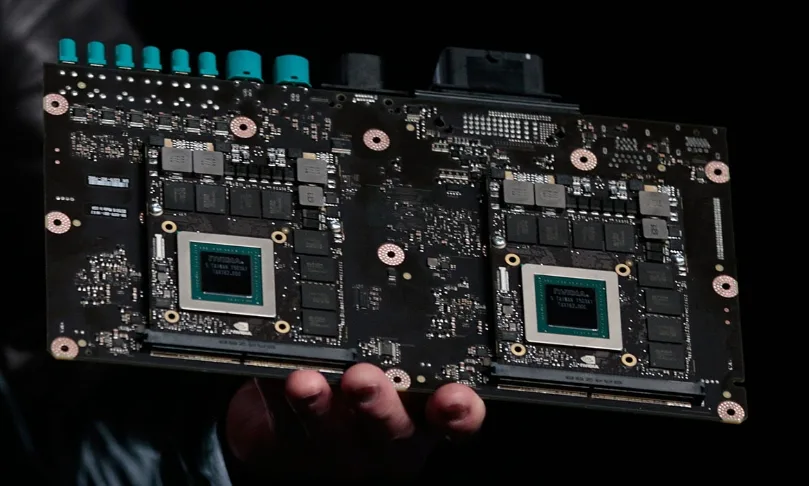
Key developments include AI-optimized PCB hardware, 5G V2X PCB technology, sustainable PCB materials, automotive functional-safety requirements, embedded passive components, and advanced HDI and high-speed PCB technologies.
This article explores these trends and explains how they are influencing PCB design and manufacturing for autonomous driving systems, as well as how Kingda can support automotive and high-reliability PCB projects.
Why Are PCBs Critical to Autonomous Vehicles?
An autonomous vehicle depends on a large network of electronic systems that continuously collect, process, communicate, and act on information.
Typical AV electronics may include:
- Cameras
- LiDAR
- Radar
- Ultrasonic sensors
- GNSS modules
- Vehicle communication interfaces
- AI computing platforms
- ADAS controllers
- Battery-management systems
- Automotive Ethernet
- CAN/CAN FD networks
- Power-management systems
The PCB provides the physical platform connecting these technologies.
Unlike a conventional consumer PCB, an Autonomous Vehicle PCB must often address several requirements simultaneously:
High-Speed Signal Integrity + Power Integrity + Thermal Management + EMI/EMC + Miniaturization + Reliability + Functional Safety
This makes AV PCB design a multidisciplinary engineering challenge.
Trend 1: AI-Optimized PCB Hardware for Autonomous Driving
AI-Optimized PCB Hardware is becoming increasingly important as autonomous-driving systems require greater computational capability.
AI-based perception systems analyze data from multiple sensors and may perform tasks such as:
- Object detection
- Lane recognition
- Pedestrian detection
- Traffic-sign recognition
- Path planning
- Sensor fusion
- Driver monitoring
These workloads require high-performance processors, GPUs, NPUs, memory, and high-speed interfaces.
High-Speed Signal Design
AI computing boards can include high-speed interfaces between:
- Processor and memory
- Processor and accelerator
- Processor and storage
- Network interfaces
- Sensor interfaces
As data rates increase, the PCB must control:
- Characteristic impedance
- Trace geometry
- Crosstalk
- Reflections
- Insertion loss
- Return loss
- Via discontinuities
High-Speed PCB Design therefore becomes a fundamental part of AI automotive hardware.
Thermal Management
AI processors generate substantial heat, making PCB Thermal Management critical.
Designers may use:
- Thermal vias
- Copper planes
- Heavy copper
- Heat spreaders
- Metal-core structures where appropriate
- Heat sinks
- Optimized layer stacks
The thermal design must be evaluated together with the mechanical enclosure and vehicle cooling system.
Compact PCB Architecture
Autonomous-driving controllers are often installed in space-constrained areas.
This increases the demand for:
- HDI PCBs
- Microvias
- Fine-pitch components
- High-density routing
- Embedded components
- Rigid-flex PCB technology
The objective is not simply to make the board smaller. The board must become smaller while retaining signal integrity, thermal performance, and reliability.
Trend 2: 5G V2X PCB Technology
Vehicle-to-Everything (V2X) communication allows vehicles to exchange information with other vehicles, infrastructure, networks, and other road users.
The broader deployment of advanced cellular and wireless communication technologies is increasing demand for sophisticated V2X PCB Design.
Applications can include:
- Traffic information
- Road-hazard communication
- Vehicle coordination
- Infrastructure communication
- Cloud connectivity
- Fleet management
High-Frequency PCB Requirements
Wireless and RF sections require careful control of:
- Dielectric properties
- Transmission-line impedance
- Loss tangent
- Copper roughness
- Trace geometry
- Antenna interfaces
- Via structures
For high-frequency designs, material selection becomes especially important.
Low-loss laminates may be selected when standard FR-4 materials cannot provide the required electrical performance.
EMI and Shielding
V2X systems operate in environments filled with electronic noise.
PCB designers must therefore consider:
- Ground planes
- RF shielding
- Controlled return paths
- Signal separation
- Filter networks
- Power-domain isolation
A strong EMI/EMC PCB Design strategy is essential for reliable communication.
Trend 3: Sustainable PCB Materials
Environmental considerations are becoming increasingly important throughout the automotive supply chain.
This is encouraging development of Sustainable PCB Materials and more environmentally responsible PCB manufacturing processes.
Potential approaches include:
- Halogen-free laminates
- Lead-free assembly
- Lower-impact materials
- Improved chemical management
- Material recovery
- PCB recycling
- Reduced manufacturing waste
However, sustainability cannot come at the expense of automotive reliability.
Materials must still meet the required:
- Thermal performance
- Mechanical stability
- Electrical properties
- Moisture resistance
- Reliability requirements
Therefore, the future of sustainable PCB manufacturing will require a balance between environmental performance and engineering performance.
Trend 4: Automotive Safety and Reliability Standards
Autonomous vehicles introduce additional safety considerations because failures in electronic systems can potentially influence vehicle behavior.
ISO 26262 provides a framework for the functional safety of safety-related electrical and electronic systems in road vehicles. It covers the safety lifecycle and includes hardware-level development requirements as well as Automotive Safety Integrity Levels (ASIL). (ISO)
For PCB engineers, functional-safety considerations can influence:
- Architecture
- Component selection
- Redundancy
- Power distribution
- Signal routing
- Diagnostics
- Failure detection
- Verification
- Validation
- Production controls
ISO 26262 is not simply a PCB manufacturing standard; it is a broader automotive functional-safety framework. Its requirements can therefore influence PCB design, hardware development, production, and verification. (ISO)
The standard continues to evolve, with additional revisions under development as automotive electronics become more sophisticated. (ISO)
Automotive PCB Qualification
Automotive PCB manufacturing can also involve IPC requirements specific to automotive applications. IPC’s revision table currently lists IPC-6012xA, the Automotive Applications Addendum to IPC-6012, with Revision EA published in March 2022. (electronics.org)
For automotive PCB suppliers, quality management, process control, traceability, inspection, and reliability testing must therefore be considered as part of the broader automotive manufacturing ecosystem.
Trend 5: Embedded Passive Components
Embedded Passive Components are another important technology for future automotive PCB miniaturization.
Instead of placing every resistor or capacitor on the external PCB surface, selected passive functions can be integrated into the PCB structure.
Potential benefits include:
- Reduced component count
- Reduced PCB area
- Shorter electrical paths
- Lower parasitic effects
- Improved routing efficiency
- Reduced external solder joints
Embedded components can be especially valuable beneath high-density processors or other space-constrained devices.
However, embedded-component technology also creates new manufacturing and reliability challenges, including:
- Material compatibility
- Process control
- Repair difficulty
- Thermal behavior
- Inspection requirements
The technology is therefore most valuable when its electrical and packaging benefits justify the additional manufacturing complexity.
Trend 6: HDI and Any-Layer Interconnect
As autonomous-driving controllers integrate more functions into smaller spaces, HDI PCB Technology is becoming increasingly important.
HDI structures can use:
- Blind vias
- Buried vias
- Microvias
- Via-in-pad
- Sequential lamination
- Fine-line routing
- High-density interconnect structures
These technologies allow designers to route more signals within a smaller footprint.
HDI can also shorten signal paths and reduce unnecessary via structures, which can benefit high-speed designs.
Trend 7: High-Speed Automotive PCB Design
Autonomous vehicles increasingly rely on high-speed data transmission.
Examples include:
- Automotive Ethernet
- High-speed memory
- Camera interfaces
- Radar processing
- Sensor fusion
- High-performance computing
A High-Speed Automotive PCB requires careful control of:
Signal Integrity
Designers need to manage:
- Reflections
- Crosstalk
- Insertion loss
- Timing
- Differential-pair skew
Power Integrity
The PCB must provide stable power to processors and high-speed devices.
This involves:
- Power planes
- Decoupling capacitors
- Low-inductance power paths
- PDN analysis
Return Paths
High-speed signals need properly controlled return-current paths.
Interrupting a return path with gaps, splits, or poor layer transitions can increase EMI and signal-integrity problems.
Challenges in Autonomous Vehicle PCB Development
The future of AV PCBs is promising, but several challenges remain.
Massive Data Processing
Autonomous vehicles continuously process large volumes of sensor data.
This increases demands on:
- Processor performance
- Memory bandwidth
- PCB routing density
- Power delivery
- Thermal management
Thermal Constraints
Higher computing performance means higher heat generation.
PCB and mechanical engineers must work together to create an effective thermal path.
EMI/EMC
Autonomous vehicles contain many wireless and electronic systems operating close together.
Design teams must prevent interference between:
- RF systems
- Radar
- Cameras
- Computing platforms
- Power electronics
- Vehicle communication networks
Reliability
Automotive electronics must survive harsh conditions such as:
- Temperature cycling
- Vibration
- Mechanical shock
- Humidity
- Electrical transients
The exact environmental requirements vary according to vehicle location and application.
Cost
Advanced materials, HDI structures, embedded components, RF laminates, and sophisticated testing can increase manufacturing costs.
The challenge is to select advanced technologies only where they deliver a measurable engineering benefit.
How These Trends Affect PCB Engineers
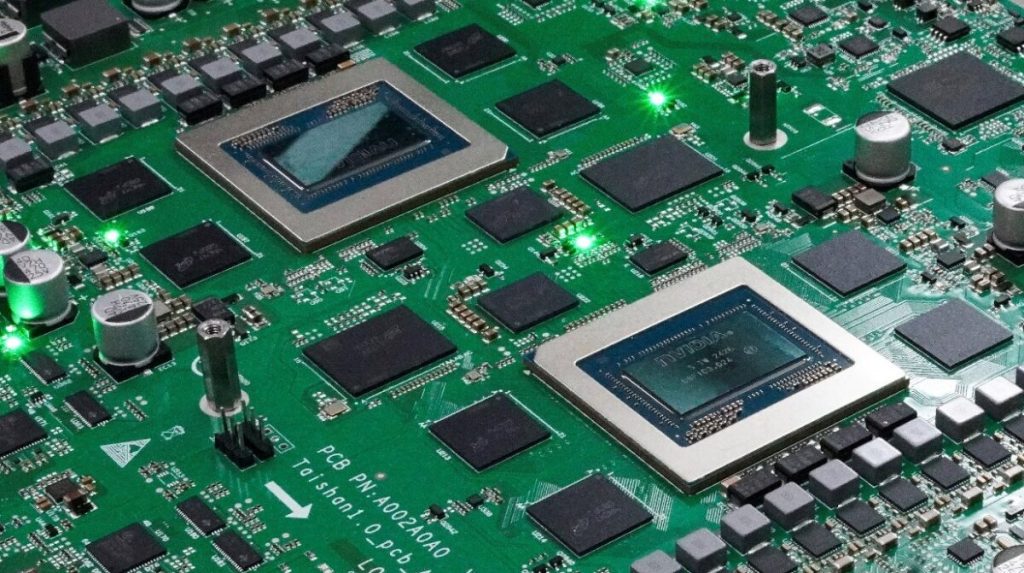
PCB designers working on autonomous-vehicle systems increasingly need knowledge across multiple disciplines.
Important skills include:
- High-Speed PCB Design
- SI/PI analysis
- RF PCB design
- Thermal simulation
- HDI layout
- Automotive EMC
- Functional-safety concepts
- DFM/DFA
- Reliability engineering
Simulation and analysis tools are increasingly important because many high-speed and thermal problems can be identified before physical prototypes are manufactured.
Designers should also involve the PCB manufacturer early in development.
A manufacturer can provide valuable feedback on:
- Stack-up
- Material selection
- Trace width and spacing
- Via structures
- Copper thickness
- Manufacturing tolerances
- Panelization
- Testing
How These Trends Affect PCB Manufacturers
For manufacturers, supporting next-generation AV PCB projects requires more than conventional PCB fabrication.
A capable automotive PCB manufacturing partner should have expertise in:
HDI + High-Speed PCB + High-Frequency PCB + SMT Assembly + Fine-Pitch Assembly + Advanced Inspection + Automotive Quality Management
Manufacturing equipment may also need to support:
- Fine-line fabrication
- Microvia processing
- Laser drilling
- Controlled impedance
- High-precision SMT
- 3D SPI
- AOI
- X-ray inspection
- ICT
- Functional testing
Process traceability is also becoming increasingly important as automotive electronics become more safety-critical.
Kingda Automotive PCB Solutions
For customers developing Autonomous Vehicle PCBs, ADAS PCB Assemblies, automotive control boards, and high-speed automotive electronics, Kingda provides integrated PCB manufacturing and assembly capabilities.
Kingda’s published manufacturing services include:
- PCB fabrication
- SMT Assembly
- THT/DIP assembly
- Mixed-technology assembly
- Component procurement
- HDI PCB
- High-speed PCB
- High-frequency PCB
- Wire harnesses
- Cable assemblies
- Box build
- ICT
- FCT
- AOI
- X-ray inspection (gopcba.com)
Advanced PCB Assembly
Kingda supports advanced component packages and high-density SMT production, including:
- 01005 components
- BGA
- QFN
- CSP
- LGA
- Fine-pitch components
Its published capabilities include BGA packages down to 0.35 mm pitch and fine-pitch components down to 0.38 mm pitch. (gopcba.com)
These capabilities can support the dense electronic architectures required for modern automotive control systems.
HDI and High-Speed PCB Capability
Autonomous-driving systems often require compact, high-density, high-speed boards.
Kingda’s product portfolio includes:
- HDI PCB
- High-speed PCB
- High-frequency PCB
- Rigid-flex PCB
- Multilayer PCB
These technologies can support high-density computing, communication, sensing, and control applications. (gopcba.com)
Advanced Inspection and Testing
Kingda’s published PCB assembly inspection flow includes:
IQC → SPI → SMT/THT → AOI → X-Ray → ICT/FCT → OQC
Available inspection and testing technologies include:
- 3D SPI
- AOI
- X-ray
- ICT
- FCT
- First Article Inspection
- Customized functional testing (gopcba.com)
These processes help support consistent assembly quality and early defect detection.
Component Procurement and Traceability
Kingda provides component sourcing and inventory management as part of its turnkey manufacturing services.
Its published information describes an ERP-based procurement and production-management system designed to improve component visibility and manufacturing traceability. (gopcba.com)
For automotive projects, this can be particularly valuable because PCBA, component, inspection, and final-product records may need to remain connected throughout production.
Automotive Quality Management
Kingda reports IATF 16949:2016 certification, alongside ISO 9001, ISO 13485, ISO 14001, and UL qualifications. (gopcba.com)
IATF 16949 is particularly relevant when manufacturing for automotive supply chains.
One-Stop Automotive Electronics Manufacturing
Kingda can integrate:
PCB Design → PCB Fabrication → Component Procurement → SMT/THT Assembly → Inspection → Testing → Cable/Harness → Box Build → Final Product
This integrated model can reduce the complexity of managing separate PCB, PCBA, cable, and final-assembly suppliers.
The Future of Autonomous Vehicle Control PCBs
The next generation of autonomous-driving electronics will increasingly depend on the combination of:
AI Computing + High-Speed PCB + HDI + 5G/V2X + Advanced Thermal Management + Embedded Components + Automotive Functional Safety
These technologies will not develop independently.
A high-performance autonomous-driving controller, for example, may simultaneously require:
- High-speed interfaces
- AI processors
- RF communication
- Dense HDI routing
- Advanced cooling
- Safety monitoring
- Extensive functional testing
This means future automotive PCB design will increasingly be a system-level engineering discipline rather than simply a board-layout task.
Conclusion
The future of Autonomous Vehicle Control PCBs is being driven by several interconnected trends, including AI-optimized hardware, V2X connectivity, sustainable materials, automotive functional-safety requirements, embedded passive components, HDI technology, and high-speed signal design.
These technologies can help automotive electronics become:
- Smaller
- Faster
- More connected
- More energy-efficient
- More reliable
- Easier to integrate
However, the development of autonomous-driving PCBs also requires strict attention to signal integrity, thermal management, EMI/EMC, manufacturing precision, reliability, traceability, and automotive quality requirements.
For automotive electronics developers, the best results come from involving an experienced PCB Manufacturer and PCB Assembly Partner early in the design process.
Kingda combines PCB fabrication, HDI, high-speed PCB, high-frequency PCB, SMT/THT assembly, component sourcing, AOI, X-ray, ICT/FCT, cable assembly, box build, and automotive-oriented quality management in an integrated manufacturing platform. (gopcba.com)
With IATF 16949, ISO 9001, ISO 13485, ISO 14001, and UL certifications reported by Kingda, the company is positioned to support high-reliability electronics projects across automotive, industrial, AI, communication, medical, and other demanding applications. (gopcba.com)
Note: ISO 26262 is a functional-safety framework for automotive electrical/electronic systems, not a standalone PCB manufacturing certification. PCB suppliers typically support the hardware-development and production controls required by an automotive program rather than independently claiming vehicle-level ISO 26262 compliance. (ISO)