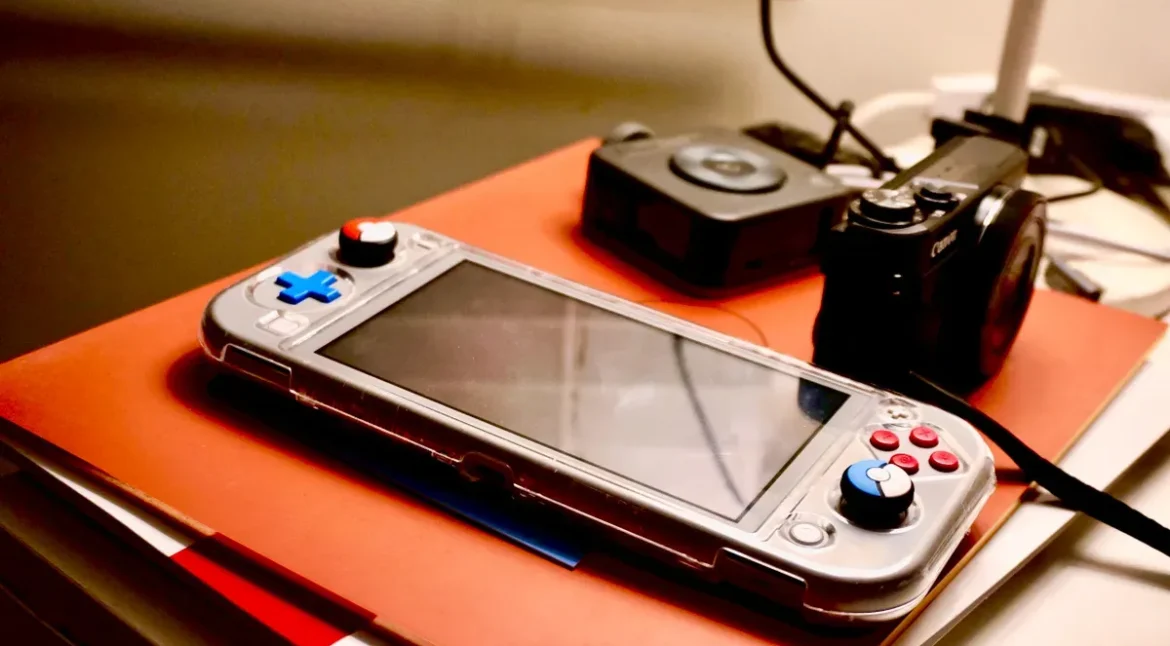
Handheld vs. Home Consoles: Which Gaming Platform Is Right for You?
Choosing the right gaming system is not always easy. As gaming hardware continues to evolve, the debate between handheld gaming consoles and home gaming consoles has become increasingly relevant. Handheld systems prioritize portability and flexibility, while home consoles generally deliver higher performance, larger displays, stronger audio, and a more immersive gaming environment.
Hybrid systems add another dimension to the discussion. The Nintendo Switch family demonstrated how a single platform can support handheld, tabletop, and TV gaming, while newer devices such as the Nintendo Switch 2 continue to blur the traditional boundary between portable and home gaming. Nintendo officially supports handheld, tabletop, and TV modes on compatible Switch systems, although the Switch Lite is designed exclusively for handheld play.
The best choice ultimately depends on how you play, which games you want to access, how much performance you need, and how important portability is to you.
Key Takeaways
- Handheld gaming consoles provide excellent portability and allow users to play without a dedicated television.
- Home gaming consoles generally provide stronger graphics performance, larger-screen gaming, advanced audio, and a more immersive experience.
- Battery life is one of the most important considerations when purchasing a handheld device.
- A console’s game library and platform-exclusive titles can be more important than hardware specifications.
- The total cost includes not only the console but also games, controllers, storage cards, protective cases, chargers, and other accessories.
- Hybrid systems such as the Nintendo Switch and Nintendo Switch 2 provide greater flexibility by supporting both portable and TV-based gaming.
- From a hardware perspective, display technology, battery management, thermal design, processors, memory, and PCB design all contribute to the final gaming experience.
Handheld vs. Home Consoles: Portability
Play Anywhere
The biggest advantage of a handheld console is simple: portability.
A handheld gaming system integrates the display, controls, processor, memory, battery, wireless connectivity, and other essential electronics into one compact device. You can play while traveling, during a break, or in another room without requiring a television.
By contrast, a traditional home console normally remains connected to a TV or monitor and an external power source. It is therefore better suited to a dedicated gaming setup.
However, portability does not necessarily mean that every handheld device is pocket-sized. High-performance handheld PCs can be relatively large and heavy, and many users prefer carrying cases, chargers, or power banks. Therefore, when evaluating portability, consider the complete travel setup rather than the console alone.
Handheld and Home Console Comparison
| Feature | Handheld Console | Home Console |
|---|---|---|
| Portability | Excellent | Limited |
| Display | Built-in display | TV or monitor required |
| Power source | Internal battery or USB-C | AC power |
| Performance | Usually optimized for efficiency | Generally optimized for performance |
| Screen size | Usually smaller | Can use very large displays |
| Audio | Integrated speakers or headphones | TV, headset, or surround sound |
| Best use | Travel and flexible gaming | Dedicated home gaming |
| Setup | Minimal | TV, power, network, and accessories may be required |
The Nintendo Switch OLED Model illustrates the flexibility of a hybrid design. It features a 7-inch OLED touchscreen, 64 GB of internal storage, and support for handheld, tabletop, and TV modes.
The Nintendo Switch Lite, however, should not be confused with a hybrid console. Nintendo specifies that Switch Lite does not support TV mode and is designed for handheld gaming.
Battery Life and Power Efficiency
Battery life is one of the most important factors when choosing a portable gaming device.
Unlike a home console that can remain connected to AC power, a handheld device must balance performance with energy consumption. More powerful processors, brighter displays, higher refresh rates, wireless connectivity, and demanding games can all increase power consumption.
For example, Nintendo lists approximately 4.5–9 hours of battery life for the Switch OLED Model, depending on the game and usage conditions. Nintendo Switch 2 is officially rated for approximately 2–6.5 hours, again depending on the game and operating conditions.
| Device | Approximate Battery Life | Key Consideration |
|---|---|---|
| Nintendo Switch OLED | 4.5–9 hours | Depends strongly on the game |
| Nintendo Switch 2 | 2–6.5 hours | Higher performance can increase power demand |
| High-performance handheld PCs | Highly variable | Performance mode significantly affects battery life |
| Home consoles | Continuous AC power | Battery life is not a primary concern |
Actual battery life can vary considerably. A lightweight 2D game may consume far less power than a demanding 3D title.
For travelers, it is therefore useful to consider:
- Battery capacity
- Actual gaming runtime
- USB-C charging support
- Charging speed
- Charger size and weight
- Power-bank compatibility
- Whether performance can be adjusted to reduce power consumption
A well-designed power management system is essential because the battery, processor, display, charging circuit, and thermal system must work together efficiently.
Performance: Graphics and Frame Rates
Graphics Performance
Performance is where home consoles generally maintain an advantage.
Modern home consoles are designed around relatively generous power and cooling budgets. Their larger enclosures allow manufacturers to use more substantial cooling systems and provide sustained performance.
This can result in higher graphics settings, higher resolutions, more stable frame rates, improved lighting effects, and more detailed game worlds.
Handheld systems face a much stricter balance between performance, heat, size, and battery consumption. A compact device cannot dissipate heat as easily as a large console, while its battery limits how much power can be consumed over an extended period.
Nevertheless, the performance gap has narrowed considerably.
Modern handheld gaming PCs can run many demanding PC games, while hybrid consoles provide access to sophisticated first-party and third-party titles in portable form. The trade-off is that handheld systems may use lower resolutions, reduced graphical settings, dynamic resolution scaling, or lower frame rates to maintain acceptable power consumption and thermal performance.
Display Technology
The display is another major difference.
Home consoles can take advantage of televisions ranging from standard monitors to very large 4K displays. This creates a highly immersive viewing experience, particularly when combined with HDR, high refresh rates, and surround sound.
Handheld consoles rely on much smaller integrated screens, but modern display technology has substantially improved their visual quality.
OLED displays, for example, can provide:
- High contrast
- Deep blacks
- Vibrant colors
- Fast response characteristics
- Excellent viewing quality in a compact form factor
The Switch OLED Model uses a 7-inch OLED touchscreen and offers improved visual presentation compared with the standard LCD model.
Immersive Gaming Experience
Home consoles are generally better suited to players seeking a dedicated entertainment environment.
A large television, powerful speakers or headphones, a comfortable gaming chair, and a full-size controller can create a highly immersive setup. Modern controllers can also provide advanced vibration, adaptive triggers, motion controls, and other feedback mechanisms.
Handheld systems provide a different type of immersion.
Instead of creating a large entertainment environment, they allow the game to remain immediately accessible. You can pick up the device and continue playing almost anywhere.
Developers must also optimize games for smaller screens. Text, menus, icons, control layouts, and user interfaces must remain readable and usable on compact displays.
This creates several important design considerations:
| Design Factor | Impact on Handheld Gaming |
|---|---|
| Screen optimization | Text and interface elements must remain readable |
| Control layout | Buttons and joysticks must be comfortable in a compact enclosure |
| Thermal design | Heat must be dissipated without making the device uncomfortable |
| Power management | Performance must be balanced against battery life |
| Audio | Small speakers require careful acoustic design |
| Connectivity | Wi-Fi and Bluetooth performance must remain reliable |
| PCB design | Compact electronics require efficient component placement and routing |
From a hardware-manufacturing perspective, compact gaming systems require careful integration of the processor, memory, storage, power-management ICs, wireless modules, charging circuits, sensors, display interfaces, and other components onto highly optimized printed circuit boards (PCBs).
For companies involved in electronics and PCB manufacturing, this type of compact consumer electronics illustrates the importance of miniaturization, signal integrity, thermal management, and manufacturing reliability.
Game Library
Game Variety
Hardware specifications are only one part of the purchasing decision. The games available on a platform can be even more important.
Common game categories include:
- Action games
- Role-playing games
- Racing games
- Sports games
- Adventure games
- Puzzle games
- Strategy games
- Multiplayer games
- Simulation games
Handheld systems can be especially convenient for shorter gaming sessions. A player may complete a few levels while commuting or during a break.
Home consoles are often more suitable for long gaming sessions, especially when playing cinematic adventure games, competitive games, or titles designed around large-screen presentation.
Exclusive Games
Platform-exclusive games can strongly influence purchasing decisions.
Nintendo platforms are known for franchises such as Super Mario, Pokémon, The Legend of Zelda, and Animal Crossing. PlayStation and Xbox platforms also offer distinctive first-party ecosystems and exclusive or platform-focused titles.
Therefore, instead of asking only which console is more powerful, ask:
Which games do I actually want to play?
A technically weaker console may provide greater value if it offers the games you enjoy most.
Price and Overall Value
Console Price
The purchase price of a console is only the starting point.
Your actual gaming budget may include:
- Console
- Games
- Additional controllers
- Storage cards or SSDs
- Protective case
- Screen protector
- Charging accessories
- Headset
- Dock
- Online subscription
The Nintendo Switch 2 is currently listed by Nintendo at a U.S. MSRP of $449.99, although actual retail pricing can vary by market and package.
This illustrates why buyers should compare the complete ownership cost rather than looking only at the hardware price.
Games and Accessories
Accessories can significantly increase the total cost of ownership.
For a handheld system, a protective case and high-quality charger may be particularly useful. Users who download many games may also need additional storage.
For a home console, additional controllers, headsets, charging docks, and storage expansion can increase the overall investment.
A practical approach is to establish your complete budget before choosing the platform.
Value for Money
The best-value console is not necessarily the cheapest one.
Consider:
- How frequently you will use it.
- Which games you want to play.
- Whether you need portability.
- Whether you already own a suitable TV or monitor.
- How much you expect to spend on games and accessories.
- How long you expect to keep the device.
If you play primarily at home and prioritize high-end graphics, a home console may provide better value.
If you frequently travel or have limited access to a TV, a handheld device may be the better investment.
Multiplayer Gaming
Online Multiplayer
Both handheld and home consoles can support online multiplayer, although the exact experience depends on the platform and game.
Home consoles often provide a stronger environment for competitive gaming because they can be paired with large displays, wired network connections, dedicated controllers, and gaming headsets.
Handheld systems emphasize flexibility. Wireless connectivity allows players to connect to online services without requiring a fixed gaming station.
| Feature | Handheld Console | Home Console |
|---|---|---|
| Online gaming | Supported on many platforms | Widely supported |
| Local multiplayer | Excellent on supported systems | Excellent |
| Voice chat | Platform dependent | Generally well supported |
| Competitive gaming | Suitable for many games | Often better for dedicated competitive setups |
| Portability | Excellent | Limited |
Local Multiplayer
Local multiplayer remains one of the strongest advantages of gaming consoles.
A handheld or hybrid system can be particularly convenient for spontaneous multiplayer sessions. Compatible wireless controllers can allow multiple players to participate without requiring a permanent gaming setup.
Home consoles, meanwhile, remain excellent for traditional couch multiplayer. Connect multiple controllers to a large television and several people can play together comfortably.
For families and groups, this can be more important than raw processing performance.
Hybrid Consoles: The Best of Both Worlds?
Hybrid gaming systems have changed the traditional distinction between handheld and home consoles.
The Nintendo Switch family is a well-known example. Compatible Switch systems can be used in handheld, tabletop, and TV modes.
The Nintendo Switch OLED Model supports TV, tabletop, and handheld play and includes detachable Joy-Con controllers.
Nintendo Switch 2 continues this hybrid approach while offering significantly upgraded hardware. Nintendo currently lists the Switch 2 with a 5220 mAh lithium-ion battery and approximately 2–6.5 hours of battery life.
However, not every Switch-family product is hybrid. Nintendo Switch Lite does not support TV output and is intended primarily for handheld gaming.
This distinction is important when comparing devices.
How to Choose the Best Handheld Console
When selecting a handheld gaming device, consider more than processing power.
1. Battery Life
Check real-world gaming runtime rather than relying solely on battery capacity.
A larger battery does not automatically guarantee longer gaming time because processor efficiency, display power consumption, software optimization, and thermal management also matter.
2. Display Quality
Consider:
- Resolution
- Panel technology
- Refresh rate
- Brightness
- HDR support
- Touch capability
- Screen size
OLED can be particularly attractive for players who prioritize contrast and color quality.
3. Ergonomics
A handheld may look compact but still feel uncomfortable after an hour of gaming.
Check:
- Controller placement
- Joystick position
- Button size
- Trigger design
- Weight distribution
- Grip shape
4. Storage
Modern games can require substantial storage.
Check whether the device supports expandable storage and which storage standard it uses. For example, Nintendo Switch 2 supports microSD Express cards for expanded game storage.
5. Connectivity
Important interfaces may include:
- Wi-Fi
- Bluetooth
- USB-C
- HDMI
- 3.5 mm audio
- Wired Ethernet through a dock or adapter
6. Thermal Performance
High-performance handheld devices generate significant heat.
A good thermal system needs to move heat away from the processor and other high-power components while keeping the external surface comfortable.
This requires cooperation between the processor, heat spreader, heat pipe or vapor chamber, fan, enclosure, and PCB layout.
7. Build Quality
Durability is particularly important for portable systems because they are exposed to movement, drops, vibration, and repeated charging.
A robust design requires reliable connectors, mechanical reinforcement, durable buttons, appropriate materials, and high-quality electronic components.
Which Console Is Best for Different Players?
Casual Players
Casual gamers often benefit from handheld systems because they are easy to access and require minimal setup.
If you want to play for short periods rather than spending several hours at a dedicated gaming station, portability can be more valuable than maximum performance.
Hardcore Gamers
Players who prioritize graphics, frame rates, competitive gaming, and immersive presentation may prefer home consoles or high-performance handheld PCs.
A home console can provide a more stable power and thermal environment, making it easier to sustain high performance.
Families and Groups
Families should pay particular attention to:
- Family-friendly game libraries
- Local multiplayer
- Controller availability
- Parental controls
- Ease of use
- Total ownership cost
Nintendo’s ecosystem can be particularly appealing to family users because of its broad selection of accessible multiplayer and family-oriented games.
Travelers
For frequent travelers, portability becomes the highest priority.
Consider the total travel package rather than only the console:
Console + case + charger + accessories + games = actual travel weight.
A powerful handheld that requires a large charger and heavy case may be considerably less convenient than its specifications suggest.
Handheld vs. Home Console: Quick Comparison
| Category | Handheld Console | Home Console |
|---|---|---|
| Portability | ★★★★★ | ★ |
| Graphics performance | ★★★ | ★★★★★ |
| Battery dependence | High | Low |
| Large-screen experience | Limited | Excellent |
| Setup convenience | Excellent | Moderate |
| Travel suitability | Excellent | Poor |
| Long gaming sessions | Good | Excellent |
| Local multiplayer | Excellent | Excellent |
| Upgrade flexibility | Limited | Moderate |
| Immersion | Good | Excellent |
| Best for | Travelers and flexible gamers | Dedicated gamers and families |
Frequently Asked Questions
What is the main difference between a handheld and a home console?
A handheld console integrates its screen and controls into a portable device and normally includes a rechargeable battery. A home console generally connects to an external television or monitor and uses AC power.
Home consoles typically have greater thermal and power budgets, while handheld systems prioritize portability and energy efficiency.
Can handheld and home consoles play the same games?
Sometimes.
Some games are available across multiple platforms, while others are exclusive to a particular console ecosystem. Hybrid platforms may also provide versions specifically optimized for portable hardware.
Always check platform compatibility before purchasing a game.
Do handheld consoles support multiplayer gaming?
Yes. Many modern handheld and hybrid systems support local wireless multiplayer and online gaming.
The exact multiplayer features depend on the hardware, software, network services, and compatible accessories.
Is a hybrid console better than a handheld console?
Not necessarily.
A hybrid console is more flexible because it can support multiple gaming modes. However, a dedicated handheld may be smaller, lighter, or less expensive.
The best choice depends on whether you need TV connectivity.
Is Nintendo Switch Lite a hybrid console?
No.
Nintendo Switch Lite is designed specifically for handheld gaming and does not support TV mode. Nintendo explicitly states that Switch Lite cannot output video to a television.
How important is battery life?
Battery life is extremely important for portable gaming.
A device with excellent performance but poor battery life may be inconvenient during travel. Conversely, a more efficient device can provide longer gaming sessions even if its peak performance is lower.
Which is better for graphics: handheld or home console?
In general, home consoles have the advantage because they can use more power and larger cooling systems.
However, modern handheld systems have become significantly more capable and can deliver impressive graphics in a compact form factor.
Final Thoughts
There is no universal winner in the handheld-versus-home-console debate.
Choose a handheld gaming console if portability, flexibility, short gaming sessions, and playing away from home are your highest priorities.
Choose a home gaming console if you care most about graphics performance, large-screen gaming, immersive audio, stable performance, and long gaming sessions.
Choose a hybrid console if you want greater flexibility and the ability to switch between portable and TV-based gaming.
The most important factors are not simply processor speed or screen resolution. A successful gaming device depends on the complete hardware ecosystem, including the display, battery, thermal system, connectivity, storage, controller design, power-management circuitry, and PCB manufacturing quality.
For electronics manufacturers and suppliers such as Kingda, these compact gaming devices also demonstrate how increasingly sophisticated consumer electronics require high-quality PCB assembly, reliable component integration, efficient thermal management, and precise manufacturing processes.
Ultimately, the best gaming console is the one that matches your lifestyle, gaming library, budget, and preferred way of playing.