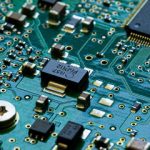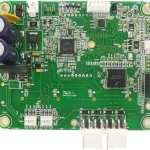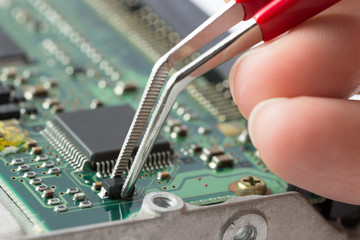
What Is a Power Lighting PCB?
A Power Lighting PCB is a printed circuit board specifically designed to support LED lighting systems by providing electrical interconnection, power distribution, component mounting, and thermal management. Unlike a conventional PCB used primarily for signal routing, an LED lighting board may need to handle relatively high current and efficiently dissipate the heat generated by high-power LEDs.
The choice of substrate, copper thickness, dielectric structure, trace geometry, and surface finish all influence the electrical and thermal performance of the finished board. For applications requiring reliable production from prototypes through volume manufacturing, professional LED PCB Manufacturing helps ensure that the board meets both electrical and mechanical requirements.
Modern lighting products increasingly demand compact dimensions, high luminous efficiency, long service life, and stable operation. As a result, PCB technology has become an important part of LED lighting system design.
Benefits of Power Lighting PCBs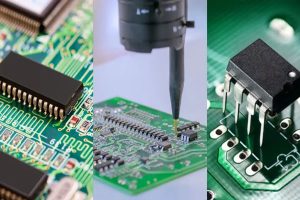
Enhanced Thermal Management
Heat management is one of the most important considerations in high-power LED applications. Excessive junction temperature can reduce LED efficiency and shorten component life.
An Aluminum PCB or other metal-core construction can provide a more effective thermal path between LED components and the heat-dissipation structure. By transferring heat away from the LED more efficiently, the PCB can contribute to stable operating temperatures and improved system reliability.
High Electrical Efficiency
A properly designed LED Lighting PCB provides controlled current paths and optimized electrical connections between LEDs, drivers, connectors, and other components.
Trace width, copper thickness, impedance requirements, and power distribution should be considered according to the application’s electrical load. For more demanding electronic products, professional PCB fabrication can also integrate multilayer structures, controlled impedance, heavy copper, and other advanced technologies.
Improved Durability
Lighting products may operate continuously and can be exposed to vibration, temperature changes, humidity, dust, or other environmental conditions.
A properly selected PCB material and manufacturing process can improve mechanical stability and electrical reliability. Depending on the application, rigid, flexible, rigid-flex, metal-core, or specialized PCB constructions may be selected.
Flexible Design Options
Power lighting PCBs can be customized in terms of board dimensions, shape, layer structure, copper weight, component layout, and thermal architecture.
This design flexibility allows manufacturers to develop PCB solutions for compact consumer products as well as high-power industrial and outdoor lighting equipment.
Types of Power Lighting PCBs
Aluminum PCB
Aluminum PCBs are widely used for high-power LED lighting because their metal substrate provides an effective thermal path.
They are particularly suitable for LED bulbs, street lighting, floodlights, automotive lighting, industrial luminaires, and other products where heat dissipation is a major design requirement.
Flexible PCB
Flexible PCBs use flexible substrates that allow the circuit to bend or conform to irregular product structures. They are useful when a lighting system requires lightweight construction, compact packaging, or installation around curved surfaces.
For applications requiring flexible or rigid-flex construction, Flex PCB Assembly can integrate flexible circuits with SMT and other assembly technologies.
Rigid PCB
Rigid PCBs provide mechanical stability and are suitable for lighting products where the circuit does not need to bend during operation.
They are commonly used in LED drivers, lighting control systems, commercial luminaires, industrial lighting equipment, and other fixed installations.
Rigid-Flex PCB
Rigid-flex PCBs combine rigid sections with flexible circuit areas in a single integrated structure. This can reduce the need for separate cables and connectors while allowing the circuit to fit complex mechanical structures.
The technology is useful for compact lighting systems and electronic products where both structural support and flexibility are required.
Applications of Power Lighting PCBs
Automotive Lighting
Automotive lighting systems require reliable electronics capable of operating under vibration, temperature changes, and limited installation space.
Power lighting PCBs can be used in headlights, daytime running lights, interior lighting, signaling systems, and other automotive LED applications. Depending on the mechanical and thermal requirements, rigid, aluminum, or flexible PCB structures may be selected.
Consumer Electronics
LED technology is widely integrated into consumer products for displays, indicators, decorative lighting, backlighting, and user interfaces.
Compact PCB designs allow manufacturers to integrate LED components and control electronics into increasingly small products while maintaining reliable electrical connections.
Medical Equipment
Medical lighting applications require stable illumination and dependable electronic performance. PCB-based LED systems can be used in examination lights, surgical lighting equipment, diagnostic devices, and other specialized medical products.
For critical applications, PCB material selection, manufacturing consistency, inspection, and electrical testing should be considered from the beginning of the design process.
Industrial Lighting
Industrial environments often require lighting systems capable of operating continuously and reliably.
High-bay lighting, machine lighting, factory illumination, emergency lighting, and industrial control equipment can benefit from PCB designs optimized for thermal performance, electrical reliability, and mechanical durability.
Industrial PCB Assembly can support different PCB structures and production volumes while incorporating inspection and testing procedures appropriate to the application.
Outdoor and Street Lighting
Outdoor LED lighting systems are exposed to temperature variation, moisture, vibration, and other environmental stresses.
A suitable PCB construction, protective surface finish, thermal design, and enclosure can help improve the long-term reliability of these products.
Power Lighting PCB Design Considerations
Thermal Design
Thermal performance should be considered during the PCB layout stage rather than after the circuit has already been designed.
Important factors include:
- LED power consumption
- Copper thickness
- Thermal vias
- Metal-core substrate selection
- Thermal pad design
- Heat-sink interface
- Component spacing
- Ambient operating temperature
For high-power LED applications, the PCB should provide an efficient thermal path from the LED package to the heat-dissipation structure.
Current-Carrying Capacity
The PCB traces must be sized according to the expected current and temperature rise.
Higher current applications may require wider traces, heavier copper, additional copper layers, or specialized heavy-copper PCB construction. The appropriate design should be determined according to the electrical load and manufacturer’s validated production capabilities.
Material Selection
FR-4, aluminum, flexible polyimide, and other PCB materials can be selected according to the electrical, thermal, mechanical, and environmental requirements of the lighting product.
For example, aluminum is often advantageous for high-power LED applications because of its thermal characteristics, while flexible materials are useful where the circuit must bend or conform to a particular shape.
Surface Finish
Surface finish affects solderability, oxidation resistance, component assembly, and long-term reliability.
Common options include ENIG, HASL, OSP, ENEPIG, immersion silver, and immersion tin. The appropriate finish depends on the component package, assembly process, operating environment, and product requirements.
PCB Manufacturing and Assembly for Lighting Products
Reliable LED PCB Manufacturing requires control over the complete production process, from engineering review through fabrication and final inspection.
Typical manufacturing stages include engineering and DFM review, material preparation, circuit imaging, etching, lamination, drilling, copper plating, surface finishing, electrical testing, and final inspection. Advanced PCB manufacturing can support technologies such as multilayer PCB, HDI, high-TG PCB, high-frequency PCB, rigid-flex PCB, heavy copper PCB, and metal-core PCB.
After PCB fabrication, components can be installed through SMT, through-hole, or mixed-technology assembly. Modern PCB assembly services can support rigid, flexible, rigid-flex, multilayer, HDI, heavy-copper, metal-core, and controlled-impedance PCB assemblies.
For projects that require both bare-board fabrication and component sourcing, Turnkey PCB Assembly can simplify procurement, assembly, testing, and delivery through a single manufacturing partner.
Quality Control for Power Lighting PCBs
Quality control is essential because lighting products may operate continuously for long periods and failure can affect both product performance and customer safety.
A comprehensive production process may include:
- Incoming material inspection
- Engineering and DFM review
- PCB dimensional inspection
- Copper thickness verification
- AOI inspection
- Electrical testing
- Solderability testing
- Component inspection
- X-ray inspection where required
- Functional testing
- Final inspection
For prototype and low-volume projects, a controlled manufacturing process can also help identify design and production issues before products enter mass production. Professional suppliers may provide DFM review and inspection support to reduce unexpected manufacturing problems.
The Future of Power Lighting PCBs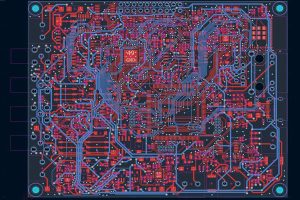
The future of power lighting PCBs will continue to be influenced by improvements in LED efficiency, thermal materials, power electronics, miniaturization, and intelligent lighting control.
As lighting systems become smarter, PCBs increasingly need to accommodate sensors, wireless communication modules, microcontrollers, power-management circuits, and other control electronics. This creates demand for more compact and functionally integrated PCB designs.
At the same time, energy efficiency and product longevity remain important considerations. Advanced thermal structures, improved materials, high-density interconnection technologies, and optimized assembly processes can help manufacturers develop smaller and more reliable lighting products.
For complex electronic products requiring fabrication, assembly, testing, and engineering support, a one-stop PCB/PCBA manufacturing approach can simplify development and production.
Conclusion
A Power Lighting PCB is a critical component of modern LED lighting systems. Its role extends beyond electrical connection to include power distribution, thermal management, mechanical integration, and long-term reliability.
Depending on the application, manufacturers can select aluminum PCBs, rigid PCBs, flexible PCBs, rigid-flex PCBs, or other specialized constructions. Careful consideration of thermal performance, current capacity, materials, surface finish, component assembly, and quality control is essential for achieving reliable results.
As LED lighting continues to become more efficient, compact, intelligent, and application-specific, advanced PCB manufacturing and assembly technologies will remain an important foundation for the next generation of lighting products.
For PCB fabrication, assembly, prototyping, or production requirements, GOPCBA provides integrated PCB manufacturing and assembly solutions for projects ranging from prototypes to production.
Frequently Asked Questions
What is a power lighting PCB?
A power lighting PCB is a printed circuit board designed for LED lighting systems. It provides electrical connections, supports components, distributes power, and may also provide a thermal path for dissipating heat from high-power LEDs.
What type of PCB is best for LED lighting?
The best PCB depends on the application. Aluminum PCBs are often suitable for high-power LED applications because of their thermal performance, while rigid PCBs are suitable for fixed designs and flexible or rigid-flex PCBs are useful where space, weight, or mechanical flexibility are important.
Why is thermal management important for LED PCBs?
LED efficiency and service life can be affected by excessive heat. Effective PCB thermal design helps transfer heat away from LED components and can improve operating stability and reliability.
Can power lighting PCBs be assembled with SMT components?
Yes. Power lighting PCBs can be assembled using SMT, through-hole, or mixed-technology processes depending on the components and product requirements. Modern assembly facilities can support small components, BGA packages, fine-pitch devices, and different PCB structures.
What files are required for PCB manufacturing?
Typical production documentation includes Gerber files, drill files, PCB drawings, layer stack-up information, BOM files for assembly, Pick-and-Place files, material specifications, surface-finish requirements, and special electrical or mechanical requirements.
Can I order PCB prototypes before mass production?
Yes. PCB manufacturers can support rapid prototyping and low-volume production before customers transition to larger production quantities. Prototype assembly can include SMT, through-hole, mixed assembly, component procurement, inspection, and functional testing.