Ceramic PCB: Everything You Need to Know
Introduction
As electronic devices become more powerful, compact, and thermally demanding, conventional FR-4 circuit boards are not always sufficient for advanced applications. Engineers increasingly require PCB materials that can provide excellent thermal conductivity, electrical insulation, dimensional stability, and reliability under demanding operating conditions.
A Ceramic PCB is one of the advanced circuit board technologies developed to address these requirements. Ceramic substrates combine strong electrical insulation with excellent thermal performance, making them suitable for power electronics, LED lighting, laser systems, automotive electronics, aerospace equipment, and other high-temperature applications.
Ceramic PCBs are also an important category of special PCB technology. Depending on the application, ceramic circuit boards can use materials such as aluminum oxide, aluminum nitride, or other engineered ceramic substrates to achieve different combinations of thermal, electrical, mechanical, and reliability performance.
For projects requiring other advanced PCB structures, engineers can also evaluate GOPCBA’s PCB Manufacturing capabilities, which cover multilayer, HDI, high-TG, high-speed, high-frequency, heavy-copper, metal-core, flexible, and rigid-flex circuit boards.
What Is a Ceramic PCB?
A Ceramic PCB is a printed circuit board that uses a ceramic material as its insulating substrate instead of a conventional organic laminate such as FR-4.
The ceramic substrate provides excellent electrical insulation while allowing heat to move more efficiently away from high-power components. Copper circuitry is bonded or deposited onto the ceramic substrate and patterned according to the electrical design.
Common ceramic PCB substrate materials include:
- Aluminum oxide (Al₂O₃)
- Aluminum nitride (AlN)
- Silicon nitride (Si₃N₄)
- Beryllium oxide (BeO), for specialized applications
Among these materials, aluminum oxide is widely used because it provides a practical balance between cost, electrical insulation, mechanical strength, and thermal performance. Aluminum nitride offers significantly higher thermal conductivity and is particularly useful for demanding power-electronic applications.
Unlike conventional PCB materials, ceramic substrates can maintain their performance at elevated temperatures and under demanding thermal cycling conditions. This makes high-temperature PCB technology especially valuable where conventional organic substrates may experience thermal limitations.
What Are Special PCBs?
A special PCB is designed to meet application requirements that cannot be adequately addressed by standard circuit boards.
Specialized PCB technologies may use advanced materials, unusual layer structures, specialized copper thicknesses, advanced via technologies, or unique manufacturing processes.
Typical examples include:
- High-frequency RF PCBs
- High-speed PCBs
- Heavy copper PCBs
- HDI PCBs
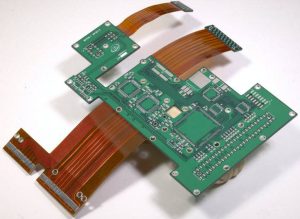
- Flexible PCBs
- Rigid-flex PCBs
- Metal-core PCBs
- Ceramic PCBs
- High-TG PCBs
- High-layer-count PCBs
Each technology addresses a different engineering challenge.
For example, high-frequency PCBs focus on signal integrity and low dielectric loss, while heavy-copper boards are designed for high-current applications. Flexible PCBs address mechanical flexibility, and ceramic substrates primarily provide excellent thermal performance and high-temperature stability.
GOPCBA also provides flexible and rigid-flex solutions for applications requiring compact mechanical integration. Its Flex and Rigid-Flex PCB Assembly service supports single-sided, double-sided, multilayer, HDI flexible, and rigid-flex PCB assemblies.
Types of Special PCB Technologies and Their Applications
High-Frequency PCB
High-frequency PCBs are designed for RF, microwave, radar, telecommunications, and wireless applications. They commonly use low-loss materials to minimize signal attenuation and maintain stable electrical performance.
Heavy Copper PCB
Heavy copper PCBs use thicker copper layers to support higher current loads and improve thermal performance. They are commonly used in power supplies, industrial controls, automotive electronics, battery systems, and power conversion equipment.
HDI PCB
HDI PCBs use microvias, blind vias, buried vias, and fine-line structures to achieve higher wiring density in compact electronic products.
They are widely used in smartphones, wearable electronics, medical devices, automotive electronics, and other space-constrained products.
Flexible and Rigid-Flex PCB
Flexible PCBs use flexible substrates to allow bending and three-dimensional installation. Rigid-flex PCBs combine rigid sections with flexible interconnections to reduce connectors, cables, and wiring.
Ceramic PCB
Ceramic PCBs are designed primarily for applications requiring excellent thermal conductivity, electrical insulation, dimensional stability, and resistance to elevated temperatures.
Typical applications include LED lighting, power modules, laser systems, automotive electronics, aerospace equipment, and high-power semiconductor devices.
Advantages of Ceramic PCBs
Excellent Thermal Management
One of the primary advantages of ceramic substrates is their ability to transfer heat efficiently.
In high-power electronic systems, excessive heat can reduce component lifetime and cause electrical instability. A ceramic substrate can provide a shorter and more efficient thermal path between the component and heat dissipation structure.
This makes a thermal management PCB particularly valuable for high-power LEDs, power semiconductors, laser diodes, and other heat-generating components.
High Electrical Insulation
Ceramic materials provide excellent electrical insulation while supporting efficient thermal transfer.
This combination is particularly important in power electronics, where electrical isolation and thermal dissipation must be achieved simultaneously.
Excellent High-Temperature Performance
Ceramic materials can withstand higher operating temperatures than many conventional organic PCB substrates.
This makes ceramic boards suitable for applications exposed to high thermal loads, repeated temperature cycling, or elevated ambient temperatures.
Low Thermal Expansion
Ceramic materials generally have a relatively low coefficient of thermal expansion.
A lower thermal expansion coefficient can help reduce mechanical stress caused by temperature changes and improve reliability between the PCB substrate and semiconductor components.
High Mechanical Stability
Ceramic substrates provide excellent dimensional stability and mechanical rigidity.
This characteristic can be beneficial for precision electronics, semiconductor packaging, sensors, laser systems, and other applications where dimensional accuracy is important.
Long-Term Reliability
When the ceramic material, copper structure, thermal design, and manufacturing process are properly matched to the application, ceramic PCBs can provide excellent long-term reliability.
They are particularly useful in applications where thermal stress and environmental conditions make conventional organic substrates unsuitable.
Understanding Ceramic PCB Materials
Material selection has a major influence on ceramic PCB performance.
Aluminum Oxide
Aluminum oxide, commonly referred to as alumina or Al₂O₃, is one of the most widely used ceramic PCB materials.
Its main advantages include:
- Good thermal conductivity
- Excellent electrical insulation
- Good mechanical strength
- Good chemical stability
- Relatively low material cost
Alumina is suitable for many general-purpose ceramic PCB applications.
Aluminum Nitride
Aluminum nitride, or AlN, provides substantially higher thermal conductivity than conventional alumina.
It is particularly suitable for high-power semiconductor modules, LED systems, RF power devices, laser equipment, and demanding thermal applications.
AlN is often selected when thermal performance is a primary design requirement.
Silicon Nitride
Silicon nitride provides excellent mechanical strength, fracture toughness, and thermal-cycle reliability.
It can be considered for applications exposed to significant mechanical and thermal stress.
Ceramic-Based Specialized Materials
Some advanced applications require ceramic materials engineered for specific electrical, thermal, or mechanical characteristics.
Material selection should therefore consider thermal conductivity, dielectric properties, coefficient of thermal expansion, mechanical strength, operating temperature, and total system cost.
Ceramic PCB Design Considerations
Designing a ceramic circuit board requires more than simply replacing an FR-4 substrate with ceramic.
Material Selection
The ceramic material should be selected according to the required thermal conductivity, electrical insulation, mechanical properties, coefficient of thermal expansion, operating temperature, and cost.
Thermal Management
Thermal design should be considered from the beginning of the PCB layout.
Engineers should evaluate:
- Component power dissipation
- Heat flow direction
- Copper thickness
- Thermal interfaces
- Heat sinks
- Thermal vias where applicable
- Mounting structures
- Ambient operating temperature
For advanced electronics, ceramic substrate selection and thermal design should be evaluated together rather than independently.
Signal Integrity
High-speed and RF ceramic PCBs require careful control of trace geometry, dielectric characteristics, impedance, grounding, and electromagnetic coupling.
Controlled impedance structures should be defined during stack-up and layout development.
Copper Configuration
The copper thickness and copper pattern influence current carrying capacity, thermal performance, mechanical stress, and manufacturing feasibility.
High-power applications may require thicker copper structures to handle current and dissipate heat effectively.
Mechanical Design
Although ceramic substrates offer excellent rigidity and dimensional stability, ceramic materials can be more brittle than conventional organic PCB materials.
Mechanical mounting, screw-hole design, handling, assembly pressure, and thermal expansion differences should therefore be carefully evaluated.
Manufacturing Compatibility
The PCB design must be compatible with the selected ceramic fabrication process.
Important factors include:
- Minimum trace width and spacing
- Copper thickness
- Substrate thickness
- Hole structures
- Pad geometry
- Component placement
- Surface finish
- Dimensional tolerances
- Thermal requirements
Early engineering review can significantly reduce manufacturing risks.
Ceramic PCB Manufacturing Technologies
The manufacturing process depends on the ceramic material, copper structure, circuit density, and application requirements.
Ceramic Substrate Preparation
The first step is selecting and preparing the ceramic substrate.
The substrate thickness and material grade are determined according to the electrical, thermal, and mechanical requirements of the application.
Circuit Pattern Formation
The required copper circuit pattern is formed on the ceramic substrate using an appropriate processing method.
Depending on the ceramic PCB technology, processes may include direct bonding, thick-film processing, thin-film processing, or other specialized metallization techniques.
Copper Bonding and Metallization
Reliable bonding between copper and ceramic is critical.
The manufacturing process must provide sufficient adhesion and thermal-mechanical reliability while maintaining the required electrical performance.
Drilling and Hole Formation
Depending on the design, mechanical or laser-based processing may be used to create holes and other required structures.
Advanced processing technology allows manufacturers to produce increasingly complex ceramic circuit structures.
Circuit Etching
Unwanted copper is removed to create the final circuit pattern.
Precise etching control is necessary to maintain trace width, spacing, pad dimensions, and electrical performance.
Surface Treatment
Exposed copper surfaces may receive an appropriate surface finish to improve solderability and protect the conductive material against oxidation.
The surface finish should be selected according to component type, assembly process, environmental conditions, and reliability requirements.
Inspection and Testing
Quality control is essential for ceramic PCB manufacturing.
Depending on the application, inspection may include:
- Visual inspection
- Dimensional inspection
- Copper thickness measurement
- Electrical testing
- Adhesion testing
- Thermal performance evaluation
- X-ray inspection
- Automated optical inspection
- Reliability testing
For projects requiring both fabrication and component assembly, GOPCBA provides PCB Assembly Services covering rigid, flexible, rigid-flex, multilayer, HDI, heavy-copper, metal-core, high-TG, and high-frequency PCB assembly.
Ceramic PCB Manufacturing Process
A typical ceramic PCB manufacturing workflow includes the following stages:
1. Engineering Review
The manufacturer reviews Gerber files, drawings, stack-up information, material requirements, copper thickness, tolerances, and application requirements.
2. Material Selection
The appropriate ceramic substrate is selected based on thermal conductivity, electrical insulation, mechanical requirements, operating temperature, and cost.
3. Substrate Preparation
The ceramic material is prepared to the required dimensions and thickness.
4. Metallization
Copper or another conductive material is applied or bonded to the ceramic substrate according to the selected manufacturing technology.
5. Circuit Pattern Formation
The required circuit geometry is transferred onto the conductive layer.
6. Etching or Pattern Processing
Unwanted conductive material is removed or processed to create the final circuit pattern.
7. Drilling or Hole Formation
Required holes, vias, and mechanical features are produced according to the design.
8. Surface Finishing
The exposed conductive areas receive the specified surface finish to improve solderability and long-term protection.
9. Inspection and Electrical Testing
The finished board is inspected for dimensional accuracy, circuit integrity, surface quality, and other specified characteristics.
10. PCB Assembly
If components are required, the ceramic PCB can proceed to SMT, through-hole, or mixed-technology assembly according to the product requirements.
For customers developing early-stage products, Rapid PCBA Prototyping can help accelerate prototype development, with support for rigid, flex, and rigid-flex boards, SMT and through-hole assembly, component procurement, AOI, X-ray, and functional testing.
Ceramic PCB Applications
LED Lighting
Ceramic PCBs are widely used in high-power LED applications because thermal management is critical to LED efficiency, performance, and service life.
The ceramic substrate can help transfer heat away from the LED package and reduce thermal resistance within the system.
Power Electronics
Power semiconductor devices generate substantial heat during operation.
Ceramic substrates can provide an efficient thermal path while maintaining electrical insulation, making them suitable for power modules, converters, inverters, and power management systems.
Automotive Electronics
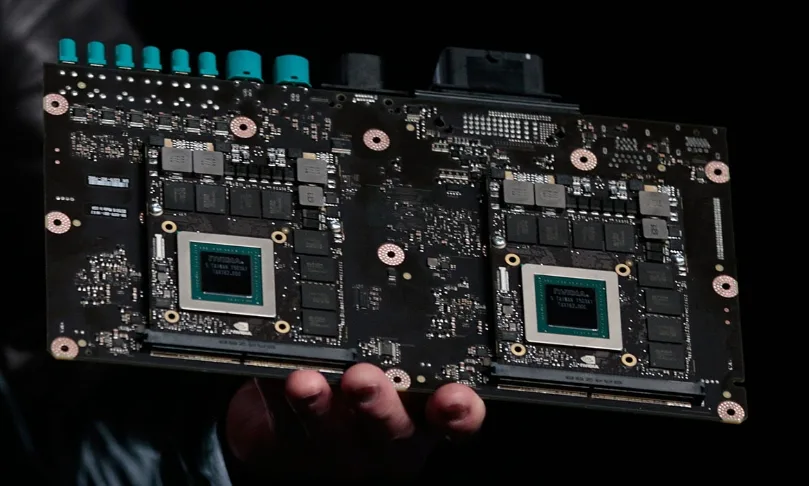
Modern vehicles increasingly use high-power electronic systems for power management, lighting, motor control, sensing, and electric propulsion.
These systems can require PCB materials capable of handling thermal cycling, vibration, and elevated temperatures.
Aerospace and Defense
Aerospace and defense electronics often operate under demanding environmental conditions.
Ceramic circuit boards can be considered for applications requiring high thermal stability, electrical insulation, dimensional stability, and long-term reliability.
Laser and Photonics
Laser diodes and optical systems can generate significant localized heat.
Ceramic substrates provide a stable platform for thermal management and precision electronic integration.
RF and Microwave Electronics
Certain ceramic materials offer useful dielectric and thermal properties for RF and microwave applications.
They can be used in specialized communication, radar, sensor, and high-frequency electronic systems.
Medical Electronics
Medical equipment may require compact, reliable, and thermally stable electronics.
Ceramic substrates can be useful in specialized medical electronics where thermal performance and electrical insulation are important.
Industrial Electronics
Industrial equipment often operates continuously under elevated temperatures and demanding environmental conditions.
Ceramic circuit technology can provide a reliable solution for power control, sensors, motor drives, industrial automation, and other specialized applications.
Ceramic PCB vs. Conventional FR-4 PCB
The choice between ceramic and FR-4 depends on the application’s electrical, thermal, mechanical, and cost requirements.
| Feature | Ceramic PCB | Conventional FR-4 PCB |
|---|---|---|
| Thermal conductivity | Excellent | Moderate |
| High-temperature capability | Excellent | Limited compared with ceramic |
| Electrical insulation | Excellent | Excellent |
| Dimensional stability | Excellent | Good |
| Thermal expansion | Low | Higher |
| Mechanical flexibility | Low | Moderate |
| Thermal management | Excellent | Moderate |
| Material cost | Higher | Lower |
| Typical applications | Power, LED, laser, high-temperature electronics | General electronics |
Ceramic PCBs are therefore not intended to replace FR-4 boards in every application. Instead, they provide a specialized solution when thermal performance, high-temperature stability, or dimensional stability becomes a major engineering requirement.
Ceramic PCB Quality Control
Quality control should cover both the ceramic substrate and the conductive circuit structure.
Important quality-control procedures may include:
- Incoming material inspection
- Ceramic substrate dimensional inspection
- Copper thickness verification
- Circuit pattern inspection
- Hole and via inspection
- Surface-finish inspection
- Electrical testing
- Thermal performance testing
- Adhesion testing
- Dimensional inspection
- Final visual inspection
Manufacturing documentation should clearly define the ceramic material, substrate thickness, copper thickness, tolerances, surface finish, thermal requirements, and testing criteria.
For more demanding production requirements, GOPCBA also supports engineering review and DFM analysis as part of its PCB manufacturing services.
How to Choose a Ceramic PCB Manufacturer
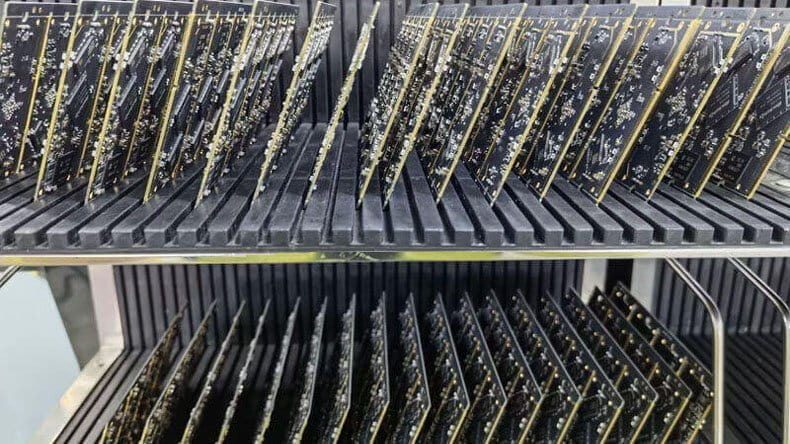
Choosing a qualified ceramic PCB manufacturer is critical because ceramic circuit boards require specialized materials, processing technologies, and quality controls.
When evaluating a supplier, consider:
- Ceramic material options
- Thermal conductivity capability
- Copper thickness range
- Circuit density
- Manufacturing tolerances
- Thermal cycling capability
- Electrical testing
- Quality management
- Engineering support
- Prototype capability
- Production capacity
- PCB assembly integration
A manufacturer that can provide both fabrication and assembly can simplify supplier management and reduce communication problems between PCB production and electronic assembly.
For low-volume product development, Low Volume PCB Assembly provides support for complex PCB types including flexible, rigid-flex, aluminum, HDI, and multilayer boards, together with SMT and DIP assembly.
Frequently Asked Questions
What is a Ceramic PCB?
A Ceramic PCB is a printed circuit board that uses a ceramic substrate instead of a conventional organic PCB material. Ceramic substrates provide excellent thermal conductivity, electrical insulation, dimensional stability, and high-temperature performance.
What materials are used for Ceramic PCBs?
Common materials include aluminum oxide, aluminum nitride, and silicon nitride. The appropriate material depends on the required thermal conductivity, mechanical strength, electrical characteristics, operating temperature, and cost.
What are Ceramic PCBs used for?
Typical applications include LED lighting, power electronics, automotive electronics, aerospace systems, laser equipment, RF electronics, medical electronics, and industrial equipment.
Are Ceramic PCBs better than FR-4?
Neither material is universally better. FR-4 is more economical and suitable for many general electronic products, while ceramic substrates are preferred when high thermal conductivity, high-temperature performance, dimensional stability, or specialized reliability is required.
Are Ceramic PCBs suitable for high-power electronics?
Yes. Ceramic substrates are particularly suitable for high-power electronics because they combine electrical insulation with efficient heat dissipation.
What is the main advantage of a Ceramic PCB?
The primary advantage is excellent thermal management combined with electrical insulation and high-temperature stability. These characteristics make ceramic boards valuable for power electronics and other thermally demanding applications.
Are Ceramic PCBs expensive?
Ceramic PCBs generally cost more than conventional FR-4 PCBs because ceramic materials and manufacturing processes are more specialized. However, the higher initial cost can be justified when thermal performance and long-term reliability are critical.
Conclusion
Ceramic PCBs provide an advanced solution for electronic systems where conventional PCB materials cannot provide sufficient thermal or high-temperature performance.
With excellent thermal conductivity, electrical insulation, dimensional stability, and resistance to elevated temperatures, ceramic substrates are particularly suitable for power electronics, LED lighting, automotive electronics, aerospace systems, laser equipment, industrial electronics, and other demanding applications.
Successful ceramic PCB manufacturing requires careful material selection, thermal design, copper configuration, mechanical design, specialized fabrication processes, and comprehensive quality control.
As electronic systems continue to become smaller and more powerful, the demand for thermal management PCB solutions and reliable high-temperature PCB technologies is expected to increase.
For projects involving advanced circuit board fabrication, PCB assembly, prototyping, or production, choosing an experienced manufacturing partner can help ensure that the final PCB meets its electrical, thermal, mechanical, and reliability requirements.
GOPCBA provides PCB manufacturing and PCBA solutions from prototype development through production, supporting a broad range of conventional and advanced circuit board technologies.