Consignment PCB Assembly: A Complete Guide
Printed circuit board assemblies (PCBAs) have become the foundation of modern electronic products across consumer electronics, automotive systems, industrial automation, telecommunications, medical equipment, aerospace, and many other industries.
A PCB assembly (PCBA) is created by mounting electronic components onto a printed circuit board (PCB) and connecting them through controlled soldering and assembly processes. As electronic products become increasingly complex, manufacturers can choose from several production models, including turnkey PCB assembly, custom PCB assembly, consignment PCB assembly, and other contract manufacturing solutions.
Among these options, consignment PCB assembly remains an attractive model for customers that want greater control over component sourcing, material quality, supplier relationships, and procurement costs.
In a consignment model, the customer purchases and supplies the required components and materials, while the PCB assembly manufacturer focuses primarily on manufacturing, assembly, inspection, testing, and delivery.
This guide explains what consignment PCB assembly is, how the process works, its benefits and challenges, key PCB design considerations, commonly used technologies, major applications, the difference between consignment and turnkey PCB assembly, and how to select a reliable consignment PCB assembly service provider.
What Is Consignment PCB Assembly?
Consignment PCB assembly is a manufacturing model in which the customer is responsible for sourcing and supplying the PCB components, materials, and production data required for assembly.
The PCB assembly service provider then performs the manufacturing operations, which may include:
- Solder paste printing
- Surface-mount technology (SMT) assembly
- Through-hole (THT/PTH) assembly
- Component placement
- Reflow soldering
- Wave or selective soldering
- Inspection
- Electrical testing
- Functional testing
- Final assembly
- Packaging and delivery
Under this model, the customer typically maintains control over the bill of materials (BOM), component suppliers, purchasing prices, approved vendors, and material availability.
The assembly manufacturer is responsible for converting the customer-supplied materials and production data into a finished PCBA according to agreed specifications.
This model is particularly suitable for customers that already have established supply chains or need strict control over component authenticity, quality, cost, and sourcing.
How Does Consignment PCB Assembly Work?
A successful consignment PCB assembly project requires clearly defined responsibilities between the customer and the manufacturing partner.
1. PCB Design Finalization
The process begins with the completion and verification of the PCB design.
The customer may develop the design internally or work with an external PCB design engineering team. Once the design is finalized, the required manufacturing documentation is prepared.
Typical production files include:
- Gerber or ODB++ files
- Bill of materials (BOM)
- Pick-and-place files
- Assembly drawings
- Schematic files
- PCB fabrication drawings
- Component specifications
- Test requirements
- Special manufacturing instructions
The PCB assembly service provider reviews the supplied documentation to identify potential manufacturing issues before production begins.
2. Component and Material Procurement
In a consignment model, the customer is generally responsible for purchasing the required components and materials.
Components may be sourced from:
- Original component manufacturers
- Authorized distributors
- Approved suppliers
- Existing customer inventory
- Specialized component vendors
For customized or difficult-to-source components, the customer may also need to coordinate directly with the relevant supplier.
Component authenticity is especially important for high-reliability applications. Purchasing through approved channels can reduce the risk of counterfeit, obsolete, or incorrectly specified components.
3. Material Delivery
After procurement, the customer delivers the components and materials to the PCB assembly facility.
Proper packaging, labeling, moisture protection, electrostatic discharge (ESD) protection, and transportation conditions are important during material delivery.
Materials may be delivered as a complete batch or in multiple shipments depending on:
- Production volume
- Component availability
- Manufacturing schedule
- Storage requirements
- Supply-chain constraints
The customer and assembly manufacturer should establish clear material-receiving procedures before production.
4. Incoming Material Inspection
Before assembly, the manufacturer verifies the received materials.
Typical checks include:
- Part number
- Manufacturer information
- Quantity
- Package type
- Lot number
- Physical condition
- Date code when applicable
- Moisture sensitivity
- ESD protection
- Packaging condition
Any discrepancy should be reported before production begins.
This step is particularly important in consignment manufacturing because the customer controls procurement while the manufacturer controls the assembly process.
5. PCB Assembly
After material verification, the manufacturer begins the PCBA production process.
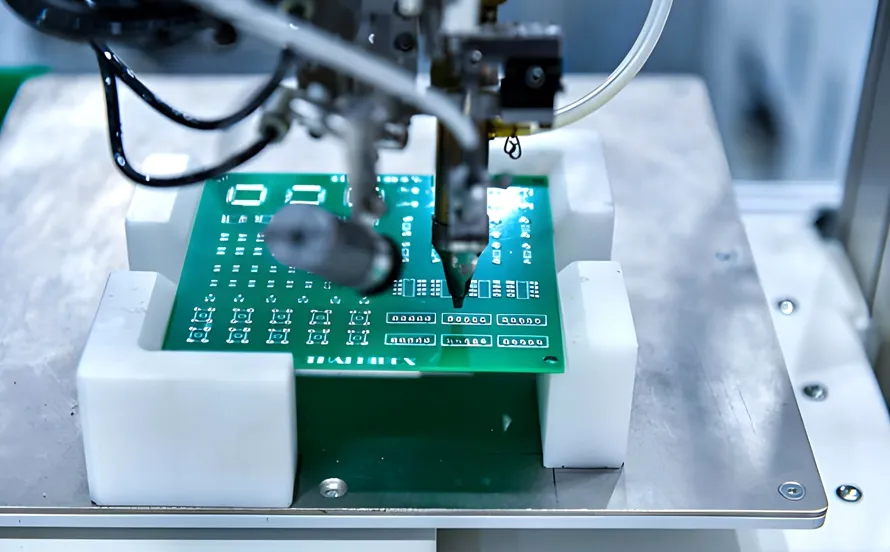
For SMT production, solder paste is printed onto the PCB using a stencil. Automated pick-and-place equipment then places components onto their designated pads.
The boards subsequently pass through a controlled reflow soldering process to form reliable solder joints.
Through-hole components may be installed using manual insertion, wave soldering, selective soldering, or other appropriate methods.
The exact process depends on the PCB design, component package types, production volume, and reliability requirements.
6. Inspection and Testing
Inspection and testing are critical parts of PCB assembly manufacturing.
Common inspection methods include:
- Automated optical inspection (AOI)
- X-ray inspection
- In-circuit testing (ICT)
- Flying-probe testing
- Functional testing (FCT)
- Continuity testing
- Insulation testing
- Programming and firmware verification
For specialized applications, additional testing may include environmental testing, high-voltage testing, thermal cycling, vibration testing, or EMI/EMC testing.
7. Final Delivery
After assembly, inspection, and testing, finished PCBAs are packaged according to the customer’s requirements.
Packaging should protect assemblies from:
- Electrostatic discharge
- Moisture
- Dust
- Mechanical shock
- Vibration
- Contamination
The customer and manufacturer should also define shipping responsibilities, delivery schedules, documentation requirements, and traceability procedures.
Benefits of Consignment PCB Assembly
Consignment manufacturing provides customers with greater control over procurement while allowing an experienced manufacturer to handle production.
Greater Control Over Components and Materials
One of the primary advantages of consignment PCB assembly is direct control over component procurement.
Customers can select:
- Approved suppliers
- Authorized distributors
- Component manufacturers
- Preferred brands
- Alternative components
- Purchasing quantities
This approach is valuable when component authenticity, regulatory compliance, or specific technical specifications are critical.
Greater Supply Chain Transparency
Because the customer manages component sourcing, the customer has greater visibility into the supply chain.
This can make it easier to track:
- Component availability
- Procurement costs
- Lead times
- Supplier performance
- Obsolescence risks
- Special or customized components
Improved visibility can help customers develop more accurate production and delivery schedules.
Better Cost Control
Customers that have established purchasing channels may be able to negotiate component prices directly.
Instead of paying the assembly provider to source all materials, customers can manage procurement themselves and potentially optimize purchasing costs.
However, the total cost should also include procurement management, inventory, transportation, inspection, and storage expenses.
Control Over Sensitive or Specialized Components
Some products require specific components that must be sourced from approved suppliers.
Consignment manufacturing allows the customer to maintain direct control over these materials rather than relying entirely on the assembly provider’s purchasing network.
Challenges of Consignment PCB Assembly
Despite its benefits, consignment manufacturing also introduces additional responsibilities for the customer.
Increased Procurement Responsibility
The customer must ensure that all components are:
- Correct
- Available
- Authentic
- Properly packaged
- Delivered on time
- Compatible with the approved BOM
A single missing or incorrect component can delay an entire production batch.
Inventory and Storage Management
Customers may need to purchase components in quantities that exceed immediate production requirements.
This creates additional considerations involving:
- Inventory management
- Storage space
- Moisture-sensitive components
- ESD protection
- Shelf life
- Component traceability
- Obsolescence
Some components require controlled storage conditions, so the customer should establish appropriate storage and handling procedures.
Material Shortages Can Delay Production
Because the customer controls component procurement, production may be delayed when a critical component is unavailable.
For this reason, material readiness should be reviewed before the production schedule is finalized.
Responsibility for Component Quality
If a supplied component is defective, counterfeit, damaged, or incorrectly specified, determining responsibility can become complicated.
A clear agreement should define:
- Material acceptance criteria
- Component authenticity requirements
- Incoming inspection responsibilities
- Defect handling
- Replacement procedures
- Cost responsibility
Manufacturing Quality Still Matters
Consignment does not eliminate normal PCB assembly manufacturing risks.
The quality of the final PCBA still depends on:
- SMT process control
- Solder paste printing
- Component placement accuracy
- Reflow profile
- Solder joint quality
- THT processing
- Inspection
- Testing
- Operator competency
Therefore, selecting a qualified assembly manufacturer remains essential.
PCB Design Considerations for Consignment Assembly
A good PCB design establishes the foundation for efficient manufacturing and reliable assembly.
Create an Accurate Bill of Materials
A complete and accurate BOM should include essential information such as:
- Manufacturer part number
- Internal part number
- Component description
- Package type
- Quantity
- Reference designators
- Approved alternatives
- Manufacturer name
- Lifecycle status
BOM accuracy is especially important in consignment projects because the customer is responsible for sourcing the components.
Even a small discrepancy between the BOM and the PCB design can cause procurement and assembly problems.
Design for Assembly
Design for Assembly (DFA) principles should be incorporated into the PCB design process.
Important considerations include:
- Appropriate component spacing
- Standard package selection
- Adequate solder pad design
- Accessible test points
- Correct component orientation
- Sufficient board-edge clearance
- Thermal considerations
- Manufacturable PCB dimensions
A well-designed board can improve production yield and reduce assembly costs.
Provide Complete Manufacturing Documentation
The assembly manufacturer should receive all necessary production information.
Depending on the project, this may include:
- Gerber files
- Pick-and-place files
- BOM
- Assembly drawings
- Schematic
- Test-point information
- Reflow requirements
- Programming instructions
- Special process requirements
Complete documentation reduces ambiguity and improves communication between the customer and manufacturer.
Define Test Requirements
The customer should clearly identify required inspection and testing procedures before production begins.
For example:
- AOI requirements
- X-ray inspection
- ICT
- FCT
- Programming
- Functional verification
- High-voltage testing
- EMI/EMC testing
Clear test specifications make it easier to verify that every production batch meets the required quality level.
Technologies Used in Consignment PCB Assembly
The manufacturing technologies used in consignment assembly are generally similar to those used in turnkey or other PCBA manufacturing models.
Surface-Mount Technology (SMT)
SMT assembly is widely used for modern high-density PCBs.
The typical process includes:
- Solder paste printing
- Solder paste inspection
- Component placement
- Reflow soldering
- AOI inspection
- Additional testing
SMT enables manufacturers to place a large number of components in a relatively small area and is suitable for complex electronic products.
Through-Hole Technology
Through-hole technology uses component leads inserted through PCB holes.
THT is commonly used for components that require strong mechanical connections, larger connectors, transformers, switches, or components that are not suitable for SMT.
Depending on the design, soldering may be performed using wave soldering, selective soldering, or manual soldering.
Automated Optical Inspection
AOI systems use cameras and image-processing technology to identify potential assembly defects.
AOI can detect issues such as:
- Missing components
- Incorrect components
- Component misalignment
- Polarity errors
- Solder bridging
- Insufficient solder
- Excess solder
X-Ray Inspection
X-ray inspection can identify hidden solder joints and internal structures that cannot be reliably inspected using optical methods.
It is particularly useful for packages such as BGA, QFN, and other bottom-terminated components.
ICT and Functional Testing
In-circuit testing evaluates electrical characteristics and selected circuit functions.
Functional testing evaluates whether the completed PCBA performs according to its intended operating requirements.
Depending on the product, functional testing may verify:
- Power consumption
- Communication interfaces
- Sensor functions
- Output signals
- Control functions
- System response
Third-Party Testing
Some applications require specialized laboratory testing that may not be available within a standard PCB assembly facility.
Depending on regulatory and customer requirements, third-party testing may include:
- EMI/EMC testing
- Safety testing
- Environmental testing
- IP protection testing
- Material compliance
- Reliability testing
The scope and responsibility for third-party testing should be defined in the project agreement.
Applications of Consignment PCB Assembly
Consignment PCB assembly is suitable for customers that want to maintain direct control over components while outsourcing PCB assembly production.
1. Automotive Electronics
Modern vehicles contain increasingly sophisticated electronic systems.
Consignment PCB assembly can be used for products involving:
- Engine control
- Battery management
- Sensors
- Lighting
- Infotainment
- Thermal management
- Vehicle control modules
- Advanced driver assistance systems
- Electric powertrain systems
Automotive electronics often require strict component traceability and quality control, making supply-chain visibility particularly valuable.
2. Industrial Automation
Industrial automation systems use PCBAs to control sensors, motors, actuators, controllers, communication interfaces, and machine-control equipment.
Manufacturers may choose consignment assembly when they need direct control over specialized components or long-term component availability.
Reliable component sourcing is especially important for industrial equipment because unexpected component shortages can lead to production downtime.
3. Aerospace and Defense
Aerospace and defense electronics typically require high reliability, strict traceability, specialized testing, and controlled component sourcing.
Consignment assembly can provide customers with greater control over approved components and procurement channels while allowing specialized manufacturers to perform PCB assembly and testing.
4. Telecommunications
Telecommunications equipment often requires high-performance PCBAs for networking, communication, signal processing, power management, and infrastructure systems.
Customers may use consignment manufacturing to control critical communication components while outsourcing production to an experienced assembly provider.
5. Medical Electronics
Medical equipment requires reliable electronic assemblies and carefully controlled components.
Depending on the product, consignment PCB assembly can provide better visibility into component sourcing and traceability while allowing the manufacturing partner to handle controlled assembly and testing.
Consignment PCB Assembly vs. Turnkey PCB Assembly
Both consignment PCB assembly and turnkey PCB assembly are widely used outsourcing models, but their responsibilities are different.
| Feature | Consignment PCB Assembly | Turnkey PCB Assembly |
|---|---|---|
| Component sourcing | Customer manages procurement | Manufacturer manages procurement |
| Supply-chain control | High customer control | Greater manufacturer responsibility |
| Procurement workload | Higher for customer | Lower for customer |
| Cost visibility | Direct visibility into component purchasing | Manufacturer provides an integrated quotation |
| Inventory responsibility | Primarily customer | Primarily manufacturer |
| Production responsibility | Assembly manufacturer | Assembly manufacturer |
| PCB fabrication | Depends on the agreed scope | Often included in the manufacturer’s service |
| Best suited for | Customers with established supply chains | Customers seeking a single-source manufacturing solution |
Neither model is universally better.
Consignment assembly is often suitable when the customer has strong procurement capabilities, preferred suppliers, or strict component-control requirements.
Turnkey assembly may be more convenient when the customer wants one manufacturing partner to manage procurement, PCB fabrication, assembly, testing, and logistics.
How to Choose a Consignment PCB Assembly Manufacturer
Choosing the right PCB assembly manufacturer is essential for achieving stable quality, predictable delivery, and efficient production.
1. Industry Experience
Evaluate whether the manufacturer has experience with the relevant application and PCB complexity.
Experience in automotive, industrial, medical, telecommunications, aerospace, or consumer electronics can be valuable depending on the project.
A capable manufacturer should understand not only assembly processes but also the customer’s specific reliability and compliance requirements.
2. Quality Management System
A professional manufacturer should have standardized quality processes covering the entire production cycle.
Important capabilities include:
- Incoming inspection
- Process inspection
- AOI
- X-ray inspection
- Electrical testing
- Functional testing
- Final inspection
- Traceability
- Defect analysis
- Corrective action
A documented quality management system can help ensure consistent production results.
3. Manufacturing Technology
Evaluate the manufacturer’s equipment and process capabilities.
Important considerations include:
- SMT placement accuracy
- Fine-pitch component capability
- BGA assembly
- THT assembly
- Reflow soldering
- Selective soldering
- Automated inspection
- X-ray inspection
- Programming
- Functional testing
The manufacturer should have the equipment required for the specific PCB design rather than relying on generic production capabilities.
4. Production Lead Time
Production schedules depend heavily on material availability, assembly complexity, testing requirements, and production capacity.
Because the customer supplies the components in a consignment model, material readiness should be closely coordinated with the manufacturer’s production schedule.
A reliable supplier should communicate potential production risks early rather than waiting until the scheduled delivery date.
5. Communication and Technical Support
Strong communication is essential in consignment manufacturing.
The manufacturer should be able to communicate clearly about:
- Material shortages
- BOM discrepancies
- Manufacturing defects
- Process changes
- Test results
- Production schedules
- Quality issues
- Engineering changes
Good technical communication helps prevent small issues from becoming major production problems.
6. Confidentiality and Data Protection
PCB designs, BOMs, schematics, Gerber files, firmware, and production specifications may contain valuable intellectual property.
Customers should ensure that appropriate confidentiality agreements and information-security procedures are established before transferring sensitive design data.
Why Choose Kingda for Consignment PCB Assembly?
Kingda provides professional consignment PCB assembly solutions for customers that want greater control over component sourcing while outsourcing PCB assembly production.
A capable manufacturing partner can support customers throughout the assembly process, including engineering review, material receiving, SMT assembly, THT assembly, inspection, testing, packaging, and delivery.
Kingda can also support customized PCB assembly requirements and help customers optimize manufacturing processes based on PCB design, component selection, production volume, testing requirements, and application environment.
For customers with established component supply chains, consignment manufacturing can provide a practical balance between procurement control and outsourced manufacturing efficiency.
Conclusion
Consignment PCB assembly is an effective manufacturing model for customers that want to maintain direct control over component procurement, supplier selection, material quality, and purchasing costs while outsourcing PCB assembly operations to a specialized manufacturer.
The model provides several advantages, including supply-chain transparency, greater control over components, and potentially improved procurement efficiency. However, it also places greater responsibility on the customer for material sourcing, inventory management, component authenticity, and delivery coordination.
Successful consignment PCB assembly depends on accurate design documentation, a complete BOM, effective Design for Assembly practices, reliable component sourcing, strong communication, standardized manufacturing processes, and comprehensive testing.
As electronic products continue to become smaller, smarter, and more complex, advanced PCB assembly manufacturing will increasingly rely on automated SMT equipment, high-precision inspection, intelligent production management, digital traceability, and more sophisticated testing technologies.
For companies with established supply chains and strict requirements for component control, consignment PCB assembly can remain a practical and scalable manufacturing strategy. By partnering with an experienced PCB assembly manufacturer such as Kingda, customers can improve production efficiency, maintain better control over critical materials, and achieve consistent PCBA quality from prototype development to volume production.