Top 15 Rigid PCB Manufacturers in the World in 2026
The global electronics industry continues to rely heavily on rigid printed circuit boards (PCBs) across consumer electronics, automotive systems, industrial equipment, medical devices, telecommunications, aerospace, and many other applications. As electronic products become smaller, faster, more powerful, and increasingly integrated, demand for high-quality rigid PCB manufacturing and assembly services continues to grow.
Selecting the right rigid PCB manufacturer is essential for achieving consistent product quality, electrical performance, mechanical reliability, regulatory compliance, and long-term supply stability. The right manufacturing partner can also reduce engineering risks, shorten development cycles, improve production yields, and support a smoother transition from prototype to mass production.
This guide introduces 15 leading rigid PCB manufacturers and suppliers to consider in 2026. It also explains what rigid PCBs are, why they remain widely used, what capabilities leading manufacturers offer, and how to select the best PCB manufacturer for your project.
What Is a Rigid PCB?
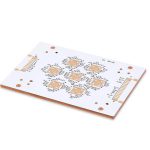
A rigid PCB is a printed circuit board manufactured with a solid substrate that maintains its predefined shape during normal operation. Unlike flexible PCBs and rigid-flex PCBs, rigid circuit boards are not designed to bend or flex repeatedly.
The rigid structure provides a stable platform for mounting electronic components, connectors, and other electrical devices. Because rigid PCBs offer excellent mechanical stability, mature manufacturing processes, predictable electrical characteristics, and competitive production costs, they remain the most widely used PCB technology in the electronics industry.
Rigid PCB Design
Most conventional rigid PCBs use FR-4 glass-fiber-reinforced epoxy laminate as the primary dielectric material, combined with copper conductive layers. During PCB fabrication, individual layers are aligned and laminated under controlled temperature and pressure to create a mechanically stable multilayer structure.
Depending on application requirements, rigid PCBs can range from simple single-sided boards to highly complex multilayer designs containing dozens of copper layers. Advanced designs may incorporate controlled impedance, blind and buried vias, microvias, fine-pitch routing, high-speed signal structures, and high-density interconnect technology.
For high-frequency or high-speed applications, manufacturers may also use specialized low-loss laminate materials instead of conventional FR-4 to achieve better dielectric stability and lower signal loss.
Types of Rigid PCBs
Rigid PCBs can generally be divided into three basic structural categories:
- Single-sided PCBs – Copper circuitry is primarily located on one side of the substrate and is commonly used in cost-sensitive and relatively simple electronic products.
- Double-sided PCBs – Copper layers are present on both sides and are interconnected through plated through-holes or vias, providing greater routing flexibility.
- Multilayer PCBs – Multiple copper and dielectric layers are laminated together to accommodate complex circuits, high component density, power distribution, and high-speed signal routing.
Multilayer rigid PCBs are widely used in telecommunications equipment, automotive electronics, industrial automation, aerospace systems, medical devices, servers, networking equipment, and high-performance computing platforms.
Why Rigid PCB Manufacturing Matters
Reliable rigid PCB manufacturing is a foundation of modern electronics production because PCB quality directly affects electrical performance, thermal behavior, mechanical reliability, and product lifetime.
Leading rigid PCB suppliers now support advanced technologies such as HDI, high-speed digital routing, controlled impedance, fine-line circuitry, microvias, sequential lamination, and fine-pitch component assembly.
These capabilities enable manufacturers to support increasingly compact and sophisticated electronic products while maintaining manufacturability and production consistency.
Why Are Rigid PCBs So Widely Used?
Rigid PCBs remain dominant because they provide an excellent balance of performance, reliability, manufacturability, and cost.
Their mature architecture allows engineers to develop stable electronic systems that can operate reliably across a wide range of environments. As modern products increasingly depend on compact and highly integrated electronic circuits, rigid PCBs continue to serve as the primary platform for mounting and interconnecting electronic components.
High Mechanical Stability
A rigid PCB provides a solid structural foundation for electronic components, connectors, heat sinks, and mechanical interfaces. Its stable construction helps minimize mechanical movement and reduces stress on solder joints and electrical connections.
This makes rigid circuit boards particularly suitable for automotive electronics, industrial controls, networking equipment, and other applications exposed to vibration, shock, transportation, or frequent handling.
Cost-Effective Manufacturing
The manufacturing process for rigid PCBs is highly mature and optimized for both prototyping and high-volume production. Standard materials such as FR-4 are widely available, and established fabrication processes help manufacturers achieve competitive costs.
Compared with specialized PCB technologies, conventional rigid PCB production can provide an attractive combination of performance and manufacturing economics.
Excellent Electrical Performance
Modern rigid PCB manufacturers can produce boards with controlled impedance, precise layer structures, low transmission loss, and reliable electrical connections.
These characteristics are especially important in high-speed digital systems, telecommunications equipment, networking hardware, automotive electronics, and computing platforms.
Advanced laminate materials, optimized stackups, carefully controlled trace geometry, and appropriate grounding strategies can further improve signal integrity and electromagnetic compatibility.
Compatibility With Automated Assembly
Rigid circuit boards are highly compatible with automated SMT assembly and through-hole technology. Their stable structure allows automated equipment to accurately position and solder components.
This compatibility supports high production repeatability while reducing manual labor, assembly errors, and overall manufacturing costs.
Top 15 Rigid PCB Manufacturers in the World in 2026
The global PCB industry includes manufacturers with different strengths in high-volume production, advanced HDI technology, automotive electronics, aerospace applications, high-frequency circuits, and quick-turn prototyping.
The following companies are among the major rigid PCB manufacturers and suppliers serving global electronics markets.
1. Zhen Ding Tech Group
Zhen Ding Tech Group is one of the world’s largest PCB manufacturers and a major supplier of advanced rigid PCB solutions. The Taiwan-based company manufactures multilayer PCBs, HDI boards, substrate-related technologies, and other advanced interconnect products.
Its products support consumer electronics, telecommunications, networking, automotive electronics, and other high-volume applications.
Key capabilities:
- High-volume rigid PCB manufacturing
- HDI and multilayer PCB production
- Advanced interconnect technologies
- Automotive-grade manufacturing capabilities
- Large-scale global manufacturing operations
2. Unimicron Technology
Unimicron Technology is a major Taiwan-based PCB manufacturer specializing in HDI PCBs, multilayer boards, IC substrates, and advanced interconnect technologies.
The company serves a broad range of applications, including consumer electronics, automotive electronics, networking equipment, computing systems, and data-center hardware.
Key capabilities:
- Advanced HDI manufacturing
- Multilayer PCB production
- High-speed PCB technologies
- Semiconductor packaging substrate technologies
- Strong research and development capabilities
- Global manufacturing network
3. TTM Technologies
TTM Technologies is a major North American PCB manufacturer serving markets where reliability, performance, and engineering expertise are critical.
The company provides advanced PCB manufacturing and related services for aerospace and defense, medical, industrial, telecommunications, automotive, and other demanding applications.
TTM is particularly recognized for high-reliability multilayer, RF, microwave, and advanced PCB technologies.
Key capabilities:
- Aerospace and defense expertise
- High-reliability multilayer PCBs
- RF and microwave PCB technologies
- Advanced engineering support
- AS9100 and ISO-based quality systems
- High-performance PCB solutions
4. AT&S
AT&S is one of Europe’s leading PCB manufacturers and a major supplier of advanced interconnect solutions.
Headquartered in Austria, AT&S provides high-performance PCBs and advanced substrate technologies for automotive, industrial, telecommunications, medical, and computing applications.
The company places strong emphasis on research, advanced manufacturing technologies, miniaturization, and high-density interconnection.
Key capabilities:
- Advanced multilayer PCB manufacturing
- HDI technology
- High-speed PCB solutions
- Automotive PCB expertise
- Advanced substrate technologies
- Global manufacturing operations
5. Nippon Mektron
Nippon Mektron, a subsidiary of NOK Corporation, is one of Japan’s major electronic circuit manufacturers and has extensive experience serving the automotive and electronics industries.
The company is particularly well known for flexible circuit technologies, while its broader manufacturing capabilities support demanding electronic applications and automotive systems.
Key capabilities:
- Extensive manufacturing experience
- Automotive electronics expertise
- Advanced circuit technologies
- Strong quality management
- Global manufacturing capabilities
6. Compeq Manufacturing
Compeq Manufacturing is a Taiwan-based PCB manufacturer known for producing high-density multilayer PCBs and other advanced circuit board technologies.
The company serves networking, telecommunications, automotive, computing, and consumer electronics markets.
Key capabilities:
- High-density multilayer PCB manufacturing
- HDI technology
- High-volume production
- Telecommunications experience
- Advanced quality management systems
7. Tripod Technology
Tripod Technology is an established Taiwan-based PCB manufacturer specializing in high-volume production of multilayer and high-density circuit boards.
Its products serve consumer electronics, automotive electronics, networking, telecommunications, and other applications requiring consistent manufacturing quality.
Key capabilities:
- High-volume PCB production
- Multilayer PCB manufacturing
- High-density circuit technologies
- Consumer electronics expertise
- Strong production and supply-chain management
8. Shengyi Technology
Shengyi Technology is a major Chinese supplier of copper-clad laminates and electronic materials, with extensive capabilities supporting PCB manufacturing.
Its materials are used in telecommunications, automotive electronics, industrial control systems, consumer electronics, and other electronic applications.
The company’s vertically integrated material expertise can contribute to improved material consistency and electrical performance across demanding PCB applications.
Key capabilities:
- High-performance PCB laminate materials
- Advanced material research
- High-frequency and high-speed material technologies
- Automotive and telecommunications applications
- Large-scale manufacturing capability
9. Kinwong Electronic
Kinwong Electronic is a major Chinese PCB manufacturer serving automotive, industrial, telecommunications, consumer electronics, and other markets.
The company provides multilayer PCBs, HDI boards, flexible circuits, and other specialized PCB solutions.
Key capabilities:
- Advanced PCB manufacturing
- Automotive electronics expertise
- HDI manufacturing
- Multilayer PCB production
- Engineering and technical support
- Global customer base
10. WUS Printed Circuit
WUS Printed Circuit is an established PCB manufacturer serving demanding electronic applications.
Its capabilities include multilayer PCB manufacturing and high-reliability circuit board production for automotive electronics, telecommunications, industrial automation, medical equipment, and other sectors.
Key capabilities:
- Multilayer PCB manufacturing
- High-reliability PCB production
- Automotive applications
- Industrial and medical applications
- Comprehensive quality assurance
11. PCBWay
PCBWay is a globally recognized PCB manufacturing service provider offering PCB prototyping, custom PCB fabrication, PCB assembly, and volume production.
Its manufacturing platform supports engineers, startups, research institutions, OEMs, and electronics companies that require rapid prototyping and scalable production.
For customers seeking an integrated PCB assembly partner, services can include SMT assembly, through-hole assembly, component sourcing, testing, and related manufacturing support.
Key capabilities:
- Rapid PCB prototyping
- Multilayer PCB manufacturing
- HDI PCB capabilities
- Custom rigid PCB production
- PCB assembly services
- Global customer support
12. JLCPCB
JLCPCB is a widely used PCB manufacturing service provider known for automated production, competitive pricing, rapid prototyping, and global shipping.
The company serves engineers and businesses requiring both prototype and production quantities.
Its services can support standard rigid PCBs, multilayer boards, PCB assembly, and related electronics manufacturing requirements.
Key capabilities:
- Cost-effective PCB manufacturing
- Rapid prototyping
- Automated production
- PCB assembly support
- Prototype-to-production services
- Global logistics
13. Advanced Circuits
Advanced Circuits is a well-established North American PCB manufacturer serving aerospace, medical, industrial, telecommunications, and other demanding markets.
The company is known for quick-turn PCB manufacturing, engineering support, and production services designed to help customers accelerate product development.
Key capabilities:
- Quick-turn PCB manufacturing
- High-quality rigid PCB production
- Engineering support
- Prototyping services
- North American manufacturing
14. Sierra Circuits
Sierra Circuits is a US-based PCB manufacturer and engineering services provider focused on complex and high-reliability electronics.
The company works with customers to improve PCB designs, manufacturability, signal integrity, and production readiness.
Its experience includes aerospace, medical, defense, industrial, and other demanding applications.
Key capabilities:
- Advanced engineering support
- High-reliability PCB manufacturing
- PCB design and DFM support
- Aerospace and medical experience
- Advanced testing capabilities
- High-speed PCB expertise
15. NCAB Group
NCAB Group is a global PCB supplier headquartered in Sweden. Rather than operating solely as a conventional PCB fabrication company, NCAB focuses strongly on supplier management, quality control, sourcing, logistics, and technical support.
The company works with selected PCB manufacturing partners to provide customers with reliable multilayer and rigid PCB solutions.
Key capabilities:
- Global PCB supply-chain management
- Supplier quality control
- Technical and engineering support
- Logistics management
- Industrial and telecommunications applications
Key Capabilities of Leading Rigid PCB Manufacturers
The world’s leading rigid PCB manufacturers generally share several important capabilities. These capabilities influence product quality, production efficiency, reliability, scalability, and long-term supply performance.
HDI and Fine-Line Technology
HDI PCB technology allows manufacturers to achieve greater wiring density within smaller board dimensions.
Microvias, laser drilling, fine-line traces, smaller pads, and sequential lamination enable designers to route more complex circuits within limited PCB space.
HDI is particularly valuable in smartphones, automotive electronics, networking equipment, medical devices, and compact industrial systems.
Multilayer PCB Manufacturing
Advanced multilayer PCB manufacturing allows manufacturers to integrate power, ground, high-speed signal, and functional circuit layers within a single board.
A well-designed multilayer stackup can improve signal integrity, power distribution, electromagnetic compatibility, and overall system density.
High-Speed and Controlled-Impedance PCB Technology
High-speed electronics require carefully controlled trace geometry, dielectric properties, layer stackups, and reference planes.
Leading manufacturers can support controlled-impedance PCB production to help maintain signal integrity in high-speed digital and RF applications.
Manufacturing accuracy is especially important for PCIe, Ethernet, high-speed memory, telecommunications, networking, automotive radar, and other high-frequency applications.
Rigid PCB Assembly Services
Many modern manufacturers offer more than bare-board fabrication. They also provide integrated rigid PCB assembly services, including:
- SMT component placement
- Through-hole assembly
- Component sourcing
- Solder paste printing
- Reflow soldering
- Wave or selective soldering
- Automated optical inspection
- X-ray inspection
- Electrical testing
- Functional testing
Combining PCB fabrication and assembly can simplify supply-chain management and reduce the number of external suppliers involved in a project.
Quality Assurance and Testing
Quality control is one of the most important factors when selecting a PCB manufacturer.
Leading manufacturers typically use automated optical inspection, automated electrical testing, X-ray inspection, dimensional inspection, material verification, process monitoring, and reliability testing where appropriate.
A robust quality management system helps identify defects early and improves manufacturing consistency.
Common industry certifications and standards may include ISO 9001, ISO 14001, IATF 16949, AS9100, IPC standards, RoHS, and other application-specific requirements.
How to Choose the Best Rigid PCB Manufacturer
Choosing the right rigid PCB manufacturer is one of the most important decisions in any electronics development project.
PCB quality affects electrical performance, mechanical reliability, regulatory compliance, assembly yield, production cost, and time to market. Although many suppliers offer similar basic PCB services, their technical capabilities, quality systems, production capacity, engineering support, and supply-chain reliability can differ significantly.
Evaluate Technical Capabilities
First, determine whether the manufacturer can meet your technical requirements.
Consider:
- Number of PCB layers
- Board thickness
- Copper thickness
- Minimum trace and spacing
- Minimum drill size
- Material requirements
- Surface finish
- Controlled impedance
- HDI and microvia requirements
- High-frequency materials
- Thermal requirements
- Special reliability requirements
The manufacturer should have sufficient technical capability not only for the current project but also for future product revisions and volume expansion.
Verify Certifications and Compliance
Certifications provide important evidence of a manufacturer’s quality management and process control capabilities.
Depending on the application, customers may need manufacturers with ISO 9001, ISO 14001, IATF 16949, AS9100, IPC compliance, RoHS compliance, or other industry-specific qualifications.
For automotive, aerospace, medical, and defense applications, additional documentation, traceability, testing, and regulatory requirements may apply.
Evaluate Production Capacity
Production capacity should match both current demand and projected future growth.
A supplier that can produce prototypes but cannot support volume production may create significant supply-chain problems later.
Ask about:
- Monthly production capacity
- Prototype capability
- Mass-production capability
- Equipment availability
- Capacity utilization
- Lead times
- Backup production capacity
- Global logistics
A scalable manufacturing partner can help support a product throughout its entire lifecycle.
Consider Engineering and Customer Support
Engineering support can be particularly important for complex PCB projects.
A capable supplier should be able to review PCB files, identify potential manufacturing problems, provide DFM recommendations, and help resolve technical issues before production.
Strong communication between the customer and manufacturer can reduce redesign cycles and prevent expensive manufacturing delays.
Compare Cost and Lead Time
Price should never be evaluated independently of quality and delivery performance.
The lowest PCB quotation may result in higher total costs if it causes poor yields, delayed deliveries, quality failures, or repeated engineering changes.
Instead, evaluate the total cost of ownership, including:
- PCB unit price
- Tooling costs
- Engineering charges
- Assembly costs
- Testing costs
- Shipping
- Defect and rework costs
- Lead-time impact
The best supplier is generally the one that provides the right balance between cost, quality, reliability, engineering support, and delivery performance.
Why Choose Kingda for Rigid PCB Manufacturing?
For companies looking for a reliable partner for custom rigid PCB production, Kingda can provide a practical combination of engineering support, manufacturing expertise, quality management, and flexible production services.
Kingda can support customers throughout different stages of the electronics manufacturing process, from PCB design review and prototyping to rigid PCB manufacturing, assembly, testing, and production scaling.
A professional manufacturing partner should not simply manufacture the Gerber files provided by a customer. It should also understand manufacturability, material selection, stackup design, signal integrity, component assembly, testing, and production requirements.
For demanding electronic applications, this integrated approach can help reduce engineering risks and improve overall product reliability.
Conclusion
From consumer electronics and automotive systems to industrial automation, telecommunications, medical devices, aerospace, and high-performance computing, rigid PCBs remain a fundamental building block of modern electronic products.
Their combination of mechanical stability, electrical performance, manufacturing maturity, scalability, and cost efficiency makes them suitable for a broad range of applications.
Leading PCB manufacturers continue to invest in HDI, multilayer fabrication, high-speed PCB technology, fine-line processing, advanced materials, automated inspection, and integrated assembly services. Companies such as Zhen Ding Tech, Unimicron, TTM Technologies, AT&S, Compeq, Kinwong, Advanced Circuits, Sierra Circuits, and other major suppliers demonstrate the diversity of capabilities available in the global PCB industry.
However, the largest manufacturer is not necessarily the best manufacturer for every project. When selecting a custom rigid PCB supplier, companies should evaluate technical capabilities, certifications, quality systems, manufacturing capacity, engineering support, lead times, communication, and total cost.
Choosing the right rigid PCB manufacturer can improve product reliability, reduce production risks, accelerate time to market, and provide a stronger foundation for long-term manufacturing growth.
For your next electronics project, consider working with an experienced partner such as Kingda that can support both PCB fabrication and assembly while adapting manufacturing capabilities to your technical and production requirements.