Top 15 Metal Core PCB Manufacturers in 2026: Global MCPCB Suppliers Compared
Choosing the right Metal Core PCB manufacturer is critical when developing electronic products that generate significant amounts of heat. Unlike conventional FR-4 circuit boards, metal core printed circuit boards use a thermally conductive metal substrate to improve heat dissipation, reduce operating temperatures, and enhance long-term product reliability.
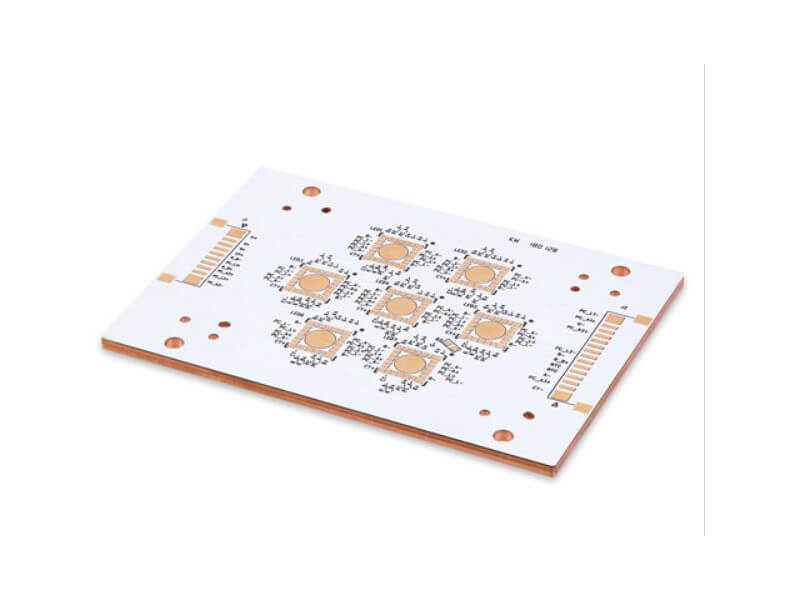
MCPCB technology is widely used in LED lighting, automotive electronics, power supplies, industrial control systems, telecommunications equipment, renewable energy systems, and other high-power electronic applications.
However, not every PCB manufacturer has the same level of expertise in metal-core technology. Material selection, dielectric thermal conductivity, copper thickness, thermal resistance, drilling, lamination, surface finish, and dimensional control can all affect the final performance of an MCPCB.
This guide introduces 15 notable MCPCB manufacturers and explains how metal core PCB technology works, its major advantages, key manufacturing capabilities, and the factors engineers and purchasing teams should consider when selecting a manufacturing partner.
What Is a Metal Core PCB?
A Metal Core PCB is a printed circuit board that uses a thermally conductive metal substrate instead of a conventional fiberglass-based substrate as its primary heat-spreading structure.
The metal substrate is typically aluminum or copper. It provides a low-resistance thermal path that transfers heat away from power components and distributes it toward a heatsink or surrounding environment.
Compared with conventional FR-4, metal core technology can significantly improve thermal management in applications where component temperature is a major reliability concern.
Metal Core PCB Structure
A typical MCPCB consists of three primary functional layers:
- Copper circuit layer
- Thermally conductive dielectric layer
- Metal substrate
The copper layer provides electrical connectivity, while the dielectric layer provides electrical isolation between the copper circuit and the conductive metal core.
At the same time, the dielectric must provide sufficient thermal conductivity to transfer heat from the copper circuit into the metal substrate.
This combination of electrical insulation and thermal conductivity is one of the defining characteristics of metal core PCB technology.
Common Metal Core Materials
Aluminum is the most widely used metal-core material because it offers a good balance of thermal performance, weight, mechanical strength, availability, and cost.
Copper provides higher thermal conductivity and is suitable for applications requiring extremely efficient heat spreading. However, copper is considerably heavier and more expensive than aluminum.
Other configurations, including hybrid metal structures, may be used for applications requiring additional mechanical strength or specialized thermal characteristics.
Single-Layer, Double-Layer, and Multilayer MCPCB
Single-layer MCPCBs are commonly used in LED lighting and relatively simple power applications where thermal dissipation is the primary design objective.
Double-layer and multilayer metal core boards provide greater routing density and design flexibility. These structures are useful for more complex power electronics and applications that require both high thermal performance and sophisticated electrical routing.
Multilayer MCPCB manufacturing is more demanding because the manufacturer must carefully control layer registration, dielectric thickness, thermal paths, copper distribution, and lamination parameters.
Typical Metal Core PCB Manufacturing Process
The manufacturing process begins with substrate preparation and material inspection.
Depending on the board structure, the process may include:
- Metal substrate preparation
- Dielectric application or lamination
- Copper foil bonding
- Circuit imaging
- Etching
- Drilling
- Plating
- Solder mask application
- Surface finishing
- Electrical testing
- Dimensional inspection
- Final quality inspection
For high-reliability applications, manufacturers may also perform thermal testing, cross-section analysis, solderability testing, and other reliability verification procedures.
Applications of Metal Core PCBs
Metal-core circuit boards are widely used in applications where thermal management is critical, including:
- LED lighting systems
- Automotive electronics
- Electric vehicles
- Power supplies
- Motor drives
- Industrial automation
- Telecommunications equipment
- Renewable energy systems
- Medical electronics
- Consumer electronics
- Aerospace electronics
They are particularly valuable for high-power components that generate substantial heat during operation.
Advantages of Metal Core PCB Technology
Metal Core PCB technology provides several important advantages over conventional FR-4 boards.
Excellent Thermal Performance
The primary advantage of an MCPCB is its improved heat dissipation capability.
The metal substrate creates an efficient thermal path from the component through the copper and dielectric layers to the metal core. This helps reduce component operating temperatures and improves overall thermal stability.
Improved Product Reliability
Excessive temperature can accelerate component aging, solder fatigue, dielectric degradation, and other failure mechanisms.
By lowering operating temperatures, metal core technology can reduce thermal stress and contribute to longer product life, particularly in demanding industrial and automotive applications.
Higher Power-Handling Capability
Metal core boards are well suited to high-current and high-power circuits.
They are frequently used for:
- Power converters
- Motor controllers
- LED arrays
- Battery systems
- Automotive power electronics
- Industrial power supplies
The combination of thermal management and robust copper circuitry enables these boards to handle demanding electrical loads.
Better Mechanical Strength
Metal substrates generally provide greater structural rigidity than conventional fiberglass-based PCB materials.
This can be beneficial in applications exposed to vibration, mechanical shock, thermal cycling, or other environmental stresses.
More Compact Product Designs
Improved thermal performance can reduce dependence on oversized external heatsinks in some applications.
This may allow engineers to create smaller and more compact electronic products without compromising thermal reliability.
Lower Total System Cost
An MCPCB may have a higher initial board cost than a conventional FR-4 PCB, but the overall system cost can be lower in certain applications.
Improved thermal performance can reduce cooling requirements, simplify mechanical design, decrease maintenance requirements, and extend product service life.
Top 15 Metal Core PCB Manufacturers in 2026
The following companies represent a capability-oriented selection of notable PCB manufacturers with experience in metal-core, thermal-management, high-reliability, or advanced PCB technologies.
This is an editorial ranking based on manufacturing capabilities, technology expertise, engineering resources, quality systems, industry experience, and service coverage rather than a claim of an official global ranking.
1. PCBWay — China
PCBWay is a large PCB manufacturing platform providing prototype and production services for a wide range of circuit-board technologies.
Its capabilities include aluminum PCB and copper-core PCB manufacturing, PCB assembly, rapid prototyping, and customized engineering support.
The company’s services cover consumer electronics, industrial automation, automotive electronics, medical electronics, and other applications.
Key capabilities include:
- Aluminum PCB manufacturing
- Copper-core PCB solutions
- Multilayer PCB production
- PCB prototyping
- PCB assembly
- Custom engineering support
- Rapid-turn production
- Volume manufacturing
2. JLCPCB — China
JLCPCB provides online PCB fabrication and assembly services, with highly automated manufacturing processes designed for prototypes and production volumes.
Its PCB technologies include aluminum-based boards for LED lighting, power electronics, industrial products, and other thermally demanding applications.
Key capabilities include:
- Aluminum PCB manufacturing
- PCB prototyping
- Multilayer PCB production
- PCB assembly
- Automated manufacturing
- Online ordering
- Rapid production
- Global logistics support
3. Kingford PCB — China
Kingford PCB is a PCB manufacturer offering customized circuit-board solutions for demanding applications.
Its capabilities include metal-core structures using aluminum and copper substrates, as well as advanced multilayer PCB technologies.
The company’s products can support automotive electronics, telecommunications, aerospace, medical electronics, and industrial applications.
Key capabilities include:
- Aluminum-core PCB
- Copper-core PCB
- Multilayer PCB
- Custom PCB manufacturing
- Thermal-management solutions
- Engineering support
- High-reliability manufacturing
4. Victory Giant Technology — China
Victory Giant Technology is an advanced PCB manufacturer serving automotive electronics, communications, industrial control, computing, and other high-performance applications.
Its manufacturing capabilities include advanced multilayer PCB technologies and specialized thermal-management solutions.
Key capabilities include:
- Advanced multilayer PCB manufacturing
- Automotive electronics
- Communications equipment
- Industrial control
- High-density circuit technology
- Automated inspection
- High-volume manufacturing
5. RayMing Technology — China
RayMing Technology provides PCB fabrication and assembly services, including aluminum and copper-core PCB solutions.
The company serves applications such as LED lighting, renewable energy, industrial electronics, and automotive electronics.
Key capabilities include:
- Aluminum MCPCB
- Copper-core PCB
- PCB prototyping
- PCB assembly
- Turnkey manufacturing
- Engineering support
- Flexible production volumes
6. NCAB Group — Sweden
NCAB Group is a global PCB supplier headquartered in Sweden and works with manufacturing partners across Asia and Europe.
Its business model focuses on PCB sourcing, engineering support, quality assurance, supplier management, and global logistics.
For metal-core applications, its engineering-oriented approach can help customers identify suitable manufacturing technologies and suppliers.
Key capabilities include:
- Customized PCB sourcing
- Metal-core PCB solutions
- Engineering support
- Supplier quality management
- Quality assurance
- Global logistics
- Industrial electronics applications
7. Sierra Circuits — United States
Sierra Circuits is a U.S.-based PCB manufacturer serving high-reliability applications in aerospace, defense, medical, and industrial markets.
The company offers advanced PCB manufacturing and engineering services, including thermal-management-oriented PCB technologies.
Key capabilities include:
- High-reliability PCB manufacturing
- Aluminum PCB solutions
- Advanced PCB prototyping
- Rigid-flex PCB technology
- HDI manufacturing
- DFM engineering
- Aerospace and medical applications
8. Advanced Circuits — United States
Advanced Circuits provides PCB prototyping and production services for engineers, OEMs, and electronics developers.
Its manufacturing portfolio includes metal-core boards suitable for LED lighting, power electronics, industrial products, and commercial equipment.
Key capabilities include:
- Metal-core PCB manufacturing
- PCB prototyping
- Quick-turn production
- Multilayer PCB manufacturing
- Engineering assistance
- PCB assembly
- Production services
9. TTM Technologies — United States
TTM Technologies is a major global PCB manufacturer serving aerospace, defense, automotive, networking, communications, and industrial markets.
Its broad technology portfolio includes advanced high-reliability circuit boards and thermal-management-oriented solutions for demanding electronic systems.
Key capabilities include:
- Advanced PCB manufacturing
- High-reliability circuits
- Thermal-management PCB solutions
- Multilayer PCB manufacturing
- RF and microwave PCB technology
- Aerospace and defense applications
- Automotive electronics
10. AT&S — Austria
AT&S is an advanced PCB and substrate manufacturer headquartered in Austria.
The company is particularly well known for HDI, advanced interconnect technologies, IC substrates, and high-performance PCB solutions serving automotive, medical, industrial, and semiconductor-related applications.
Its advanced manufacturing expertise makes it a relevant supplier for applications requiring sophisticated thermal and electrical performance.
Key capabilities include:
- Advanced HDI technology
- High-density interconnects
- Automotive electronics
- Medical electronics
- Advanced substrate technologies
- High-reliability manufacturing
- Engineering expertise
11. Unimicron Technology — Taiwan
Unimicron Technology is a major PCB and IC substrate manufacturer serving global electronics markets.
Its technology portfolio includes multilayer PCBs, HDI, IC substrates, and advanced solutions for high-density and high-performance electronics.
Key capabilities include:
- Multilayer PCB manufacturing
- HDI PCB technology
- Thermal-management PCB solutions
- IC substrates
- Advanced packaging
- High-volume manufacturing
- Automotive and consumer electronics
12. Meiko Electronics — Japan
Meiko Electronics is a Japanese electronics manufacturer serving automotive, communications, industrial, and other demanding applications.
The company provides advanced PCB technologies supported by extensive engineering capabilities and controlled manufacturing processes.
Key capabilities include:
- Automotive PCB manufacturing
- Multilayer PCB technology
- High-reliability PCB solutions
- Industrial electronics
- Advanced manufacturing
- Engineering and development support
- Quality management
13. Chin-Poon Industrial — Taiwan
Chin-Poon Industrial is a Taiwan-based PCB manufacturer serving automotive, telecommunications, industrial control, and power-related applications.
The company provides multilayer and specialized PCB technologies designed for demanding electronic products.
Key capabilities include:
- Automotive PCB manufacturing
- Multilayer PCB production
- Aluminum-core PCB solutions
- Industrial control applications
- Power electronics
- Telecommunications
- High-reliability manufacturing
14. Kinwong Electronic — China
Kinwong Electronic is a major PCB manufacturer serving automotive, industrial, communications, energy-storage, and consumer electronics markets.
Its advanced manufacturing infrastructure supports multilayer and HDI technologies, as well as customized PCB solutions for demanding applications.
Key capabilities include:
- Aluminum-core PCB
- Copper-core PCB
- Automotive PCB manufacturing
- HDI PCB
- Multilayer PCB
- Industrial electronics
- Energy-storage applications
- High-volume manufacturing
15. Venture Corporation — Singapore
Venture Corporation provides integrated electronics manufacturing services and supports complex electronic products through engineering, manufacturing, assembly, testing, and supply-chain management.
Its capabilities can support customers requiring integrated PCB and electronic manufacturing solutions for medical, industrial, communications, and advanced technology applications.
Key capabilities include:
- Integrated electronics manufacturing
- PCB assembly
- Engineering services
- Precision manufacturing
- Industrial electronics
- Medical technology
- Communications equipment
- Global supply-chain management
Key Capabilities of Leading MCPCB Manufacturers
The best MCPCB manufacturers combine specialized materials expertise, thermal engineering, precision PCB fabrication, quality control, and production scalability.
Advanced MCPCB Manufacturing
Experienced manufacturers can process aluminum, copper, and other specialized substrates while maintaining tight dimensional and electrical tolerances.
Important manufacturing parameters include:
- Metal substrate thickness
- Copper thickness
- Dielectric thickness
- Thermal conductivity
- Dielectric breakdown strength
- Surface finish
- Flatness
- Hole size
- Registration accuracy
Customized Engineering Support
A professional Metal Core PCB manufacturer should provide engineering support throughout the product-development process.
Engineering services may include:
- Material selection
- Thermal analysis
- Stack-up design
- DFM analysis
- Copper distribution optimization
- Thermal-via design
- Impedance analysis
- Reliability recommendations
Early engineering involvement can identify thermal and manufacturing problems before they become expensive production issues.
PCB Assembly Services
Some manufacturers can provide integrated PCB fabrication and assembly.
These services may include:
- SMT assembly
- Through-hole assembly
- Component sourcing
- Reflow soldering
- Selective soldering
- Functional testing
- AOI inspection
- X-ray inspection
- Final product assembly
An integrated manufacturing model can reduce supplier coordination and simplify supply-chain management.
Thermal Management Expertise
Thermal management is the defining feature of an MCPCB.
Manufacturers should understand the relationship between:
- Dielectric thermal conductivity
- Copper thickness
- Metal-core material
- Thermal resistance
- Component power density
- Heat-spreading area
- Heatsink interface
For high-power products, thermal simulation and prototype validation can help determine whether the selected board structure can meet the required operating temperature.
Prototype and Mass Production
A strong supplier should be able to support both prototype development and production scaling.
This allows customers to validate:
- Thermal performance
- Electrical characteristics
- Mechanical dimensions
- Solderability
- Component assembly
- Reliability
before transitioning to mass production.
How to Choose the Best Metal Core PCB Manufacturer
Selecting the right MCPCB manufacturer requires evaluating more than unit price.
Evaluate Technical Expertise
Choose a manufacturer with proven experience in aluminum-core, copper-core, and specialized multilayer MCPCB production.
Ask whether the supplier has experience with your required:
- Power level
- Operating temperature
- Metal thickness
- Dielectric thermal conductivity
- Copper thickness
- Board dimensions
- Layer structure
Verify Quality Certifications
Review the manufacturer’s current certificates and confirm that they apply to the actual production facility.
Depending on the application, relevant quality systems may include:
- ISO 9001
- IATF 16949
- ISO 13485
- AS9100
- UL recognition
- Applicable IPC standards
Certification should be treated as one part of the supplier evaluation rather than the only indicator of quality.
Evaluate Production Capacity
Make sure the manufacturer can support your entire product lifecycle.
The supplier should ideally be capable of handling:
- Engineering samples
- Prototypes
- Small-batch production
- Pilot production
- Medium-volume manufacturing
- High-volume production
This reduces the need to switch suppliers when demand increases.
Review Quality-Control Procedures
Ask about inspection and testing capabilities, including:
- AOI
- X-ray inspection
- Electrical testing
- Microsection analysis
- Dimensional inspection
- Thermal testing
- Solderability testing
- Material traceability
A comprehensive quality system can significantly reduce manufacturing defects.
Evaluate Engineering Support
Strong technical communication is especially important for MCPCB projects because thermal performance depends on the interaction between electrical design, material selection, mechanical structure, and cooling conditions.
A capable engineering team can help identify potential problems early and recommend a more suitable board structure.
Balance Cost and Total Value
The lowest PCB quotation is not necessarily the most economical option.
When comparing suppliers, consider:
- PCB unit cost
- Tooling cost
- Prototype cost
- Assembly cost
- Shipping
- Engineering support
- Quality performance
- Scrap rate
- Delivery reliability
- Long-term product life
The best supplier is usually the one that provides the strongest overall value rather than simply the lowest initial price.
Metal Core PCB Applications by Industry
LED Lighting
LED applications are among the most common uses of Aluminum PCB technology.
High-power LEDs generate considerable heat, and excessive junction temperatures can reduce luminous efficiency and shorten component life.
An aluminum MCPCB provides an efficient thermal path from the LED package into the board and heatsink.
Automotive Electronics
Automotive applications increasingly use MCPCBs for:
- LED headlights
- Automotive lighting
- Power electronics
- Battery systems
- Motor controllers
- ADAS electronics
- EV power systems
Automotive environments require strong resistance to thermal cycling, vibration, humidity, and mechanical stress.
Power Electronics
Power converters, inverters, motor drives, and battery systems often generate substantial heat.
A Copper Core PCB can provide extremely efficient heat spreading where aluminum may not provide sufficient thermal performance.
Industrial Automation
Industrial controllers, power supplies, motor drives, and automation systems can benefit from metal-core technology when high power density and thermal stability are important.
Renewable Energy
Solar inverters, battery energy-storage systems, power converters, and charging equipment increasingly require efficient thermal management.
Telecommunications
High-power RF and communications equipment can benefit from specialized PCB structures designed to manage both electrical performance and thermal loads.
Kingda: Customized Metal Core PCB Manufacturing
For companies looking for a reliable Metal Core PCB manufacturer, Kingda can provide customized PCB manufacturing solutions based on specific electrical, thermal, mechanical, and production requirements.
Kingda can support projects involving aluminum-core and other specialized PCB structures, with engineering assistance available for material selection, PCB design optimization, manufacturing preparation, and production requirements.
Depending on the project, services can cover:
- Metal Core PCB Manufacturing
- Aluminum PCB
- Copper-core PCB
- Multilayer PCB
- High-power PCB
- Thermal-management PCB
- PCB prototyping
- PCB assembly
- DFM engineering support
- Quality inspection and testing
A project-specific approach allows the PCB structure to be optimized according to power density, operating temperature, mechanical constraints, board size, and production volume.
Conclusion
Modern electronic products increasingly require efficient thermal management, compact mechanical designs, and long-term reliability. Metal Core PCB technology provides an effective solution for applications where conventional FR-4 boards cannot adequately manage heat.
The manufacturers discussed in this guide represent a range of capabilities across aluminum PCB, copper-core PCB, multilayer PCB, high-reliability manufacturing, thermal-management solutions, prototyping, and volume production.
However, there is no universal best MCPCB manufacturer for every application.
The right supplier depends on your specific technical requirements, including thermal conductivity, substrate material, copper thickness, dielectric characteristics, power density, operating temperature, mechanical requirements, production volume, quality standards, and delivery expectations.
When selecting an MCPCB manufacturer, look beyond the initial quotation. Evaluate technical expertise, material compatibility, thermal engineering, manufacturing equipment, quality-control systems, certifications, engineering support, prototype performance, production scalability, and delivery reliability.
For customized projects requiring reliable thermal performance and scalable manufacturing, Kingda can serve as a manufacturing partner for metal-core PCB development, prototyping, and production.