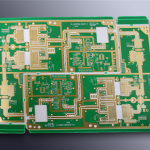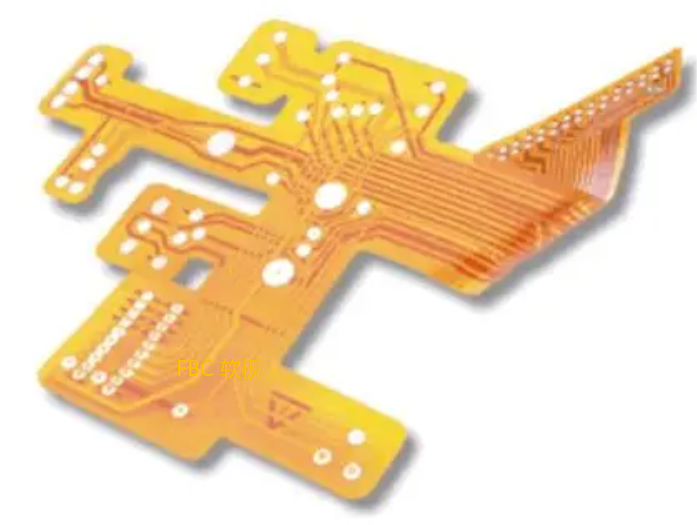
A Flexible Printed Circuit, commonly known as an FPC or flexible circuit board, is a highly reliable and bendable type of printed circuit designed for applications where space, weight, and flexibility are critical.
Flexible Printed Circuit (FPC) technology typically uses a thin and flexible polymer film, such as polyimide, as the primary substrate. Conductive copper traces are formed on the flexible substrate to create electrical circuits. Because the finished circuit can bend, fold, or be shaped into three-dimensional structures, FPCs can be installed in compact and irregular spaces where conventional rigid PCBs are difficult to use.
By integrating precise circuit patterns into a lightweight and flexible substrate, an FPC enables a large number of electronic components and electrical connections to be arranged within a limited space. This makes flexible circuit technology particularly suitable for modern electronic products that require miniaturization, lightweight construction, high component density, and three-dimensional assembly.
What Is a Flexible Printed Circuit?
A flexible circuit board is a type of printed circuit board that can bend or flex during installation and, depending on the material and design, may also withstand repeated dynamic movement.
Unlike conventional rigid PCBs, which generally use rigid substrates such as FR-4, an FPC uses flexible dielectric materials. Polyimide is one of the most widely used substrate materials because it offers excellent thermal stability, dimensional stability, electrical insulation, and mechanical flexibility.
The basic structure of an FPC generally consists of a flexible dielectric substrate, copper conductor layers, coverlay, adhesive or bonding materials, and other protective structures.
The copper conductors provide electrical connections, while the coverlay protects the circuit traces from mechanical damage, contamination, moisture, and electrical contact with surrounding components.
Depending on the circuit design and application requirements, an FPC can be manufactured as a single-sided, double-sided, or multilayer flexible PCB.
Applications of Flexible Circuit Boards
Flexible PCB technology is widely used in communication equipment, computers, consumer electronics, cameras, automotive electronics, medical devices, industrial equipment, and other advanced electronic products.
The functions of an FPC can include electrical interconnection, signal transmission, component mounting, circuit integration, and connection between different electronic modules.
As electronic products continue to become smaller and more integrated, conventional rigid circuit boards may face limitations in terms of installation space and mechanical flexibility.
An FPC can overcome many of these limitations because it can be bent and folded according to the product’s internal structure. This allows designers to reduce the required installation space while maintaining reliable electrical connections.
FPCs are particularly useful for connecting components that are located at different angles or positions within a product. Instead of using multiple rigid PCBs and separate cables or connectors, a single flexible circuit can sometimes perform the same interconnection function.
This can simplify the overall assembly structure, reduce the number of components, and improve product reliability.
Advantages of Flexible PCBs
1. Compact Size and Lightweight Design
One of the most significant advantages of an FPC is its ability to reduce the size and weight of electronic assemblies.
Because flexible circuits use thin substrate materials and do not require bulky rigid board structures, they can occupy significantly less space than conventional wiring or rigid PCBs.
This makes flexible PCB technology particularly valuable for high-density and miniaturized electronic products.
FPCs are widely used in applications such as aerospace equipment, mobile communication devices, laptops, computer peripherals, cameras, automotive electronics, and portable electronic products.
For products where every millimeter of internal space matters, an FPC can provide designers with significantly greater freedom in component arrangement and cable routing.
2. Excellent Flexibility and Three-Dimensional Routing
The ability to bend and fold is the defining feature of an FPC.
A flexible circuit can be routed around mechanical structures, folded into compact spaces, or shaped to match the internal geometry of a product.
This makes it possible to create three-dimensional electrical interconnection structures without relying on multiple rigid boards and conventional wiring harnesses.
Compared with traditional cable assemblies, FPCs can reduce the number of connectors and wires required in certain applications. Fewer connection points can help simplify assembly and potentially improve long-term reliability.
However, the bending radius and bending frequency must be carefully considered during FPC design. Excessive bending or bending below the recommended minimum radius may damage copper traces or reduce the service life of the flexible circuit.
3. Good Thermal Performance and Solderability
Flexible circuits can provide good thermal performance because of their thin material structure and efficient heat dissipation characteristics.
The actual thermal performance depends on the substrate material, copper thickness, circuit density, copper distribution, and application environment.
FPCs can also be designed with exposed pads or stiffened areas to support component mounting and soldering processes.
For applications requiring components to be mounted directly onto the flexible circuit, appropriate reinforcement materials can be added to improve mechanical support in the component mounting area.
4. High Integration and Simplified Assembly
Another important advantage of an FPC is its ability to integrate multiple electrical connections into a single flexible assembly.
Traditional electronic products may require cables, connectors, wires, and rigid PCBs to establish connections between different modules. An FPC can integrate many of these functions into one compact circuit structure.
This can reduce the number of connectors and mechanical interfaces required and may simplify the assembly process.
In addition, the flexible structure allows the circuit to be folded into the final product, helping engineers optimize internal space utilization.
FPC Material Structure
The main substrate material used in FPC manufacturing is polyimide-based flexible material. Polyimide offers excellent thermal resistance, dimensional stability, mechanical flexibility, and electrical insulation properties.
Another important material is flexible copper-clad laminate (FCCL).
FCCL generally consists of a flexible dielectric substrate and a copper foil layer. The copper foil is processed to form the required circuit pattern through processes such as photolithography, etching, and other PCB manufacturing technologies.
After the conductive pattern has been formed, a coverlay is applied to protect the circuit.
The coverlay provides mechanical protection and electrical insulation while also helping protect the copper traces from environmental contamination.
For specific applications, additional stiffeners may be added to areas such as connectors, component mounting regions, or insertion interfaces. These stiffeners increase local mechanical strength without compromising the flexibility of the main circuit area.
Single-Sided, Double-Sided and Multilayer FPCs
Flexible circuits can be manufactured in different structural configurations depending on electrical and mechanical requirements.
Single-Sided FPC
A single-sided FPC contains one primary conductive copper layer. It has a relatively simple structure and is commonly used for basic signal transmission and electrical interconnection applications.
Double-Sided FPC
A double-sided FPC contains conductive copper layers on both sides of the flexible dielectric substrate. Through-hole or other interconnection technologies can be used to establish electrical connections between the two conductive layers.
This structure provides greater routing flexibility and can accommodate more complex circuits within a limited area.
Multilayer Flexible PCB
A multilayer flexible PCB contains multiple conductive layers separated by dielectric materials.
Multilayer structures can significantly increase circuit density and routing capacity while maintaining a relatively compact physical form.
The inner and outer conductive layers can be electrically interconnected through plated vias and other metallization technologies.
Because multilayer FPCs have a more complex structure, manufacturing requires strict control over lamination, registration, drilling, plating, etching, and material thickness.
Rigid-Flex PCB Technology
In addition to conventional flexible circuits, rigid-flex PCB technology combines rigid PCB sections with flexible circuit sections in a single integrated structure.
The rigid areas provide mechanical support for components and connectors, while the flexible sections provide the bending and interconnection capability required for three-dimensional assembly.
This hybrid structure can reduce the number of separate PCBs, cables, and connectors required in a product.
Rigid-flex technology is particularly suitable for applications where high reliability, compact packaging, and complex three-dimensional assembly are required.
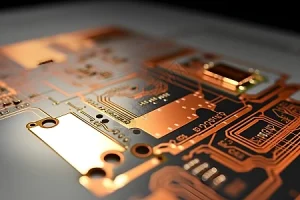
FPC Manufacturing Considerations
The manufacturing quality of an FPC depends on several critical factors, including substrate material, copper thickness, line width and spacing, dielectric thickness, coverlay structure, bending requirements, via design, and dimensional tolerances.
During FPC manufacturing, precise control of material alignment and circuit dimensions is essential. Because flexible substrates are thinner and more susceptible to dimensional changes than conventional rigid PCB materials, manufacturing processes must account for material expansion, contraction, and deformation.
The copper circuit pattern must also be carefully controlled to prevent defects such as open circuits, short circuits, insufficient copper, or excessive etching.
For applications involving repeated bending, the copper trace design is particularly important. Engineers should avoid unnecessary sharp corners and ensure that the bending area has an appropriate structure and radius.
Conclusion
As electronic products continue to evolve toward miniaturization, lightweight construction, high-density integration, and three-dimensional packaging, Flexible Printed Circuit (FPC) technology has become increasingly important.
Compared with conventional rigid PCBs, flexible circuit board technology offers significant advantages in flexibility, space utilization, weight reduction, and circuit integration.
With materials such as polyimide and flexible copper-clad laminate (FCCL), FPCs can be manufactured in single-sided, double-sided, and multilayer flexible PCB configurations to meet different electrical and mechanical requirements.
For more complex applications, rigid-flex PCB technology combines the advantages of rigid and flexible structures, providing designers with greater freedom for compact and high-density electronic products.
Kingda can provide professional FPC and PCB manufacturing solutions based on customer-specific circuit structures, material requirements, dimensional specifications, and application conditions. Through precise manufacturing processes and strict quality control, Kingda is committed to delivering reliable flexible circuit solutions for modern electronic products.