Multilayer PCB Material Selection Guide
A Multilayer PCB is a critical platform for advanced electronic systems, and material selection directly affects electrical stability, thermal performance, structural reliability, and service life. Compared with single- and double-sided boards, multilayer structures must maintain compatibility between multiple dielectric layers, copper layers, and bonding materials.
A reliable material selection strategy should consider the operating environment, signal frequency, thermal load, mechanical requirements, and manufacturing process. This guide explains the key material parameters, major material categories, auxiliary material selection, application-specific solutions, and common selection mistakes.
For a broader overview of available board structures and manufacturing technologies, see our PCB Manufacturing Services.
1. Key Material Parameters for Multilayer PCB Selection
The selection of PCB Materials should begin with the electrical, thermal, and mechanical requirements of the final application. Four parameters are particularly important: glass transition temperature, coefficient of thermal expansion, dielectric properties, and thermal conductivity.
Glass Transition Temperature (Tg)
Tg indicates the temperature at which the resin system transitions from a rigid state toward a softer state. When the operating temperature approaches or exceeds the material’s Tg, dimensional stability and mechanical reliability can deteriorate.
Standard FR-4 materials with Tg around 130°C are suitable for many general-purpose applications where thermal stress is moderate. Materials around Tg 150°C provide improved thermal stability for industrial electronics, while High-Tg PCB materials, typically around 170°C or higher, are better suited to demanding applications involving elevated temperatures and repeated thermal cycling.
Coefficient of Thermal Expansion (CTE)
CTE determines how much a material expands or contracts as temperature changes. A multilayer PCB contains copper, resin, glass fiber, and other materials with different thermal expansion characteristics.
Large differences in CTE can increase mechanical stress during thermal cycling and may contribute to via fatigue, delamination, warpage, or interlayer reliability problems. Material combinations should therefore be evaluated as a complete stack-up rather than individually.
Dielectric Constant and Dissipation Factor
Dielectric constant (Dk) and dissipation factor (Df) strongly influence signal transmission.
A stable Dk helps maintain predictable impedance, while a low Df reduces dielectric loss during high-speed signal transmission. Standard FR-4 is generally suitable for lower-frequency applications, but high-speed digital, RF, and microwave designs may require specialized low-loss materials.
Our PCB Capabilities include advanced PCB structures and material options for demanding multilayer and high-density designs.
Thermal Conductivity
Thermal conductivity becomes increasingly important as electronic power density rises. Heat generated by power devices can accumulate within a multilayer structure if the material system does not provide an effective thermal path.
For high-power applications, engineers may consider thermally enhanced dielectric systems, metal-core structures, heavy copper, or other thermal-management technologies depending on the board architecture.
2. Major Multilayer PCB Material Categories
Different applications require different material systems. In general, multilayer PCB materials can be divided into general-purpose FR-4, high-frequency/high-speed materials, and thermally enhanced materials.
2.1 Standard FR-4 Materials
FR-4 PCB materials are among the most widely used substrates for multilayer circuit boards. They typically combine epoxy resin with woven glass fiber and functional fillers to provide a balance of electrical insulation, mechanical strength, chemical resistance, manufacturability, and cost.
Standard FR-4 is suitable for consumer electronics, industrial controls, general-purpose digital systems, and many conventional multilayer boards.
Higher-Tg FR-4 formulations provide improved thermal stability and dimensional control while retaining much of the manufacturing familiarity of conventional FR-4. They are often a practical choice for industrial electronics and applications exposed to higher operating temperatures.
However, conventional FR-4 may not provide sufficiently low dielectric loss or tightly controlled electrical properties for demanding high-frequency applications.Multilayer PCB
2.2 High-Frequency and High-Speed Materials
High-frequency and high-speed applications require materials with more stable dielectric characteristics and lower signal loss than conventional FR-4 can provide.
Specialized laminates may use PTFE, ceramic-filled resin systems, modified epoxy systems, or other low-loss dielectric technologies. Rogers materials are one well-known example used in RF, microwave, radar, telecommunications, and other demanding applications.
Important selection parameters include:
- Low and stable Dk
- Low Df
- Controlled dielectric thickness
- Low moisture sensitivity
- Stable electrical properties over temperature
- Compatible thermal expansion characteristics
For additional information about material selection and stack-up engineering for high-speed designs, see our High-Speed PCB Manufacturing Guide.
2.3 Thermally Enhanced Materials
High-power multilayer boards require more effective thermal management. Thermally enhanced dielectric systems can improve heat transfer compared with conventional resin systems.
Depending on the application, designers may consider thermally conductive dielectric materials, ceramic-based substrates, metal-core PCB structures, or heavy copper constructions.
These technologies can be particularly useful for power supplies, industrial power conversion, motor control, automotive electronics, and energy systems where continuous heat generation can accelerate material aging and reduce component reliability.
3. Auxiliary Material Selection for Multilayer PCBs
The core laminate is only one part of a multilayer PCB. Copper foil and prepreg also have a direct influence on electrical performance, lamination quality, dimensional stability, and long-term reliability.
3.1 Copper Foil Selection
Multilayer PCBs commonly use electrolytic copper foil and rolled copper foil.
Electrolytic copper foil is widely used because it provides a practical balance of conductivity, adhesion, manufacturability, and cost. It is suitable for most conventional power and signal layers.
Rolled copper foil generally provides a smoother surface and lower surface roughness. This can be beneficial for high-frequency signal transmission because conductor surface roughness can contribute to high-frequency loss.
Copper thickness should also be selected according to the electrical function of each layer. Thicker copper is more appropriate for high-current and power distribution layers, while thinner copper can be advantageous for fine-line signal routing.
3.2 Prepreg Selection
Prepreg is used as the bonding and insulating material between PCB layers during lamination.
Key parameters include:
- Resin content
- Resin flow
- Tg
- Dielectric thickness after lamination
- Thermal characteristics
- Compatibility with the core material
The prepreg must provide sufficient resin flow to fill the required spaces without creating excessive resin squeeze-out or voids. Its Tg and thermal characteristics should also be compatible with the rest of the stack-up.
For high-frequency multilayer designs, specialized low-loss prepregs may be required to maintain predictable dielectric performance throughout the finished board.
4. Application-Specific Multilayer PCB Material Selection
Material selection should be based on the actual operating environment rather than simply choosing the most expensive material available.
4.1 Consumer and General-Purpose Electronics
Consumer electronics, smart-home products, conventional control modules, and other low-to-moderate power systems typically operate within relatively moderate temperature and frequency ranges.
A standard FR-4 system with appropriate copper foil and conventional prepreg can provide a good balance of performance, manufacturability, and cost.
For these applications, unnecessarily selecting high-frequency or highly thermally conductive materials may increase cost without providing meaningful performance benefits.
4.2 Industrial and High-Temperature Applications
Industrial controllers, automotive electronics, outdoor equipment, and other demanding systems may experience temperature fluctuations, continuous operation, vibration, and environmental stress.
These applications can benefit from higher-Tg FR-4 materials with improved dimensional stability and thermal resistance. The copper thickness and prepreg system should also be selected according to current requirements and the expected thermal cycling conditions.
4.3 High-Frequency and High-Speed Applications
5G communication equipment, RF systems, radar, networking hardware, and precision measurement equipment require tight control of signal integrity.
A suitable High-Frequency PCB material should provide low dielectric loss, stable Dk, controlled dielectric thickness, and predictable impedance characteristics.
The material selection must also be coordinated with copper roughness, trace geometry, layer spacing, via structures, and stack-up design. Material selection alone cannot guarantee high-speed signal integrity.
4.4 High-Power and Thermal Applications
Power supplies, industrial inverters, motor controllers, battery systems, and automotive power electronics generate substantial heat during operation.
For these designs, thermal performance should be evaluated together with copper thickness, thermal vias, copper distribution, heat sinks, and the overall mechanical structure.
A thermally enhanced material system or heavy-copper construction may be appropriate when conventional multilayer materials cannot provide sufficient thermal performance.
5. Common Multilayer PCB Material Selection Mistakes
Correct material selection requires more than comparing individual datasheet values. The complete material stack-up must be considered.
Avoid Incompatible Material Combinations
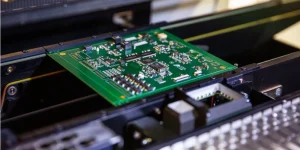
Different materials should not be mixed without considering their Tg, CTE, dielectric characteristics, resin behavior, and lamination compatibility.
Large differences in thermal expansion can increase mechanical stress and potentially contribute to warpage, delamination, or interconnection reliability problems.
Avoid Over-Specification
Not every multilayer PCB requires premium high-frequency or high-Tg materials.
For a conventional low-frequency consumer product, standard FR-4 may provide all the necessary performance. Selecting a specialized material without a technical requirement can unnecessarily increase material and manufacturing costs.
Avoid Under-Specification
The opposite problem is using standard materials in applications where they cannot meet the electrical or thermal requirements.
High-speed, high-frequency, high-temperature, and high-power applications should be evaluated carefully before selecting a conventional material system.
Consider Material Consistency
Material specifications should remain consistent from prototype to production whenever possible. Consistent laminate, copper foil, prepreg, and process parameters help maintain predictable electrical and mechanical performance across production batches.
Materials should also comply with applicable PCB industry requirements and customer specifications.
6. How GOPCBA Supports Multilayer PCB Manufacturing
A successful multilayer PCB requires coordinated material selection, stack-up design, fabrication, inspection, and electrical testing. GOPCBA provides PCB manufacturing and assembly services covering conventional and advanced board technologies.
Our manufacturing capabilities support rigid, flexible, rigid-flex, HDI, high-frequency, high-Tg, heavy-copper, metal-core, and multilayer PCB requirements.
For projects combining rigid and flexible sections, our Rigid-Flex PCB Manufacturing capabilities can support applications requiring compact structures, mechanical flexibility, and integrated electrical connections.
From prototype development to production, material selection should be evaluated together with Gerber data, stack-up requirements, impedance targets, copper thickness, operating temperature, and application conditions.
If you are developing a new multilayer board and need engineering or manufacturing support, contact GOPCBA with your Gerber files, stack-up information, BOM, drawings, and technical requirements for evaluation.
The core principle of Multilayer PCB material selection is simple: match the material system to the application’s electrical, thermal, mechanical, and environmental requirements. Standard FR-4 remains an economical solution for many general-purpose boards, while high-Tg, low-loss, high-frequency, and thermally enhanced materials provide additional performance for demanding applications.
By evaluating Tg, CTE, Dk, Df, thermal conductivity, copper foil, prepreg, and stack-up compatibility as a complete system, engineers can achieve reliable performance while avoiding unnecessary material costs.