2026 DIP PCB Assembly Price: Complete Cost Guide & Global Comparison
In the rapidly evolving electronics manufacturing industry, DIP PCB assembly pricing has become a key concern for OEM companies, electronics developers, and procurement engineers. For global OEM customers, understanding DIP PCB assembly costs not only helps control manufacturing budgets but also enables procurement teams to select the most suitable PCB assembly partner.
So, what is the DIP PCB assembly price in 2026? This guide provides a comprehensive analysis from global cost perspectives, quoting factors, and methods to reduce assembly costs.
1. What Is DIP PCB Assembly and Why Do Prices Vary?
1.1 Basic Definition of DIP PCB Assembly
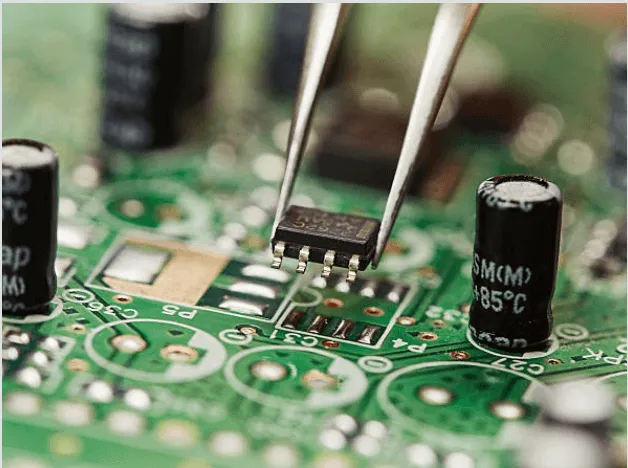
DIP PCB assembly refers to the manufacturing process of mounting electronic components in dual in-line package (DIP) form onto a printed circuit board through plated through-holes.
Unlike SMT surface mount technology, DIP components require:
- Component leads inserted through PCB plated through-holes;
- Soldering on the back side of the PCB;
- Inspection and testing after assembly.
Common DIP components include:
- DIP IC chips
- DIP switches
- Relays
- Connectors
- Capacitors and resistors
- Power devices
1.2 Main Application Areas of DIP PCB Assembly
DIP PCB assembly is still widely used in:
- Industrial control equipment – PLC systems, automation equipment, industrial instruments
- Automotive electronics – control modules, power management systems, sensor control boards
- Medical devices – diagnostic instruments, medical control systems
- Power electronics – power supply modules, UPS systems, charging equipment
For professional through-hole PCB assembly services, gopcb offers comprehensive support for DIP projects of any scale.
1.3 Why DIP Assembly Pricing Differs from SMT
DIP and SMT use different manufacturing processes, resulting in distinct cost structures.
SMT advantages: highly automated production, high-speed placement, suitable for large-volume manufacturing.
DIP cost characteristics: some processes require manual labor, complex insertion, wave soldering required, higher inspection costs.
Thus, DIP PCB assembly unit prices are generally higher than high-volume SMT production, but for specialty applications, DIP still offers significant cost advantages.
2. 2026 DIP PCB Assembly Price Overview
2.1 DIP PCB Prototype Assembly Price
Applicable for: product R&D phase, engineering verification, small-batch testing.
2026 market price:
- Engineering fee: approx. $50–$300
- Per-component insertion cost: approx. $0.05–$0.50 per component
- Overall project cost: approx. $100–$1,000
2.2 Small-Batch DIP PCB Assembly Price
Applicable for: startup products, industrial equipment production, product market validation.
For orders of 100–1,000 pieces, the price typically ranges from $2–$15 per PCB.
For reliable low-volume PCB assembly, gopcb provides flexible and cost-effective solutions.
2.3 High-Volume DIP PCB Assembly Price
When order volumes exceed 10,000 pieces, the unit price drops significantly.
Typical per-board assembly cost: $0.50–$5 per PCB.
For large-scale production, explore high-volume PCB assembly options at gopcb to maximize cost efficiency.
3. Global DIP PCB Assembly Price Comparison (2026)
3.1 DIP PCB Assembly Price in China
China remains a global hub for PCB manufacturing and electronics assembly.
2026 China DIP PCB assembly price reference:
- Prototype: $100–$800 per project
- Small-batch: $2–$10 per PCB
- High-volume: $0.50–$3 per PCB
Advantages of Chinese PCB assembly: complete electronics supply chain, abundant component supply, mature PCB manufacturing capabilities, competitive production costs. Compared to the US and Europe, Chinese DIP PCB assembly can reduce manufacturing costs by 30%–60%.
3.2 DIP PCB Assembly Price in the United States
US manufacturing advantages: convenient local communication, short delivery distances, suitable for domestic supply chain needs.
Price range:
- Prototype: $300–$1,500
- Small-batch: $5–$25 per PCB
- High-volume: $2–$8 per PCB
Main reasons: higher labor costs, higher factory operating costs, higher component procurement prices.
3.3 DIP PCB Assembly Price in Europe
European market prices are typically higher.
- Prototype: $500–$2,000
- Small-batch: $8–$30 per PCB
- High-volume: $3–$10 per PCB
European customers usually focus more on product certification, environmental standards, and high-reliability requirements.
3.4 DIP PCB Assembly Price in Southeast Asia
In recent years, Vietnam, Thailand, and Malaysia have emerged as new electronics manufacturing regions.
- Prototype: $200–$1,000
- Small-batch: $3–$15 per PCB
- High-volume: $1–$5 per PCB
Advantages: lower labor costs, increasing manufacturing investment, gradually improving supply chains. However, China still maintains clear advantages in component supply, PCB industry scale, and engineering support.
4. Complete DIP PCB Assembly Cost Breakdown
4.1 PCB Manufacturing Cost Factors
Effect of PCB layer count on price:
- 2-layer PCB: lower cost, shorter lead time, suitable for basic control circuits.
- 4-layer PCB: better signal integrity, enhanced routing capability, commonly used in industrial control equipment.
- 6+ layer PCB: complex design, higher manufacturing cost, used for high-performance electronics.
For most DIP PCB assembly projects, common choices include FR-4 double-layer boards, FR-4 four-layer boards, and high-Tg PCBs.
Learn more about PCB manufacturing capabilities at gopcb for your specific layer and material requirements.
4.2 PCB Size and Panel Utilization Impact
Larger PCB sizes mean more material consumption, longer processing times, and higher shipping costs. Panel design also affects cost. Reasonable panel design can reduce material waste, improve production efficiency, and lower per-unit PCB cost. Professional PCB manufacturers use DFM analysis to help customers optimize design.
4.3 PCB Surface Finish Impact on Price
HASL (Hot Air Solder Leveling): lower cost, good solderability, suitable for most DIP products. Applicable for industrial control boards and general electronic devices.
ENIG (Electroless Nickel Immersion Gold): better surface flatness, longer shelf life, higher reliability. Higher cost than HASL. Suitable for medical devices and high-reliability electronics.
Choosing the right PCB surface finish helps effectively control through-hole PCB assembly prices.
5. DIP Components and BOM Cost Analysis
BOM (Bill of Materials) cost typically accounts for a significant portion of the overall project. Influencing factors include component models, quantities, brand choices, supply channels, and market inventory.
DIP package type affects price: common DIP packages include DIP-4, DIP-8, DIP-14, DIP-16, DIP-28, and DIP-40. Different package sizes affect insertion time, soldering difficulty, and inspection requirements. Larger DIP chips require more manual handling time compared to smaller DIP components.
Component supply chain impact: some specialty DIP components may drive up costs, including obsolete ICs, long-lead-time components, custom parts, and small-batch procurement items. Choosing a PCB assembly manufacturer with strong supply chain management capabilities can reduce procurement risks, material shortages, and project delays.
6. DIP PCB Assembly Labor Cost Analysis
Compared to highly automated SMT production, DIP assembly typically involves more manual operations. Key labor-intensive steps include component sorting, insertion, lead processing, wave soldering operation, solder joint inspection, and rework. Therefore, in low-volume DIP PCB assembly projects, labor costs account for a larger share.
7. Wave Soldering Process Cost Analysis
DIP PCB assembly typically employs wave soldering. Main process steps include:
- Flux application: improves wetting and enhances solder joint reliability.
- PCB preheating: reduces thermal shock, prevents PCB deformation, improves soldering quality.
- Wave soldering: the PCB passes over a molten solder wave to achieve component lead soldering and electrical connections.
- Cleaning and inspection: removes residues and checks solder joint quality.
Wave soldering cost is mainly affected by production quantity, PCB size, and process complexity.
8. DIP PCB Testing and Quality Control Costs
- Visual inspection: checks component orientation, insertion position, and solder joint quality.
- AOI (Automated Optical Inspection): detects missing components, wrong components, and soldering anomalies.
- ICT (In-Circuit Test): verifies circuit connections, component parameters, and electrical performance.
- Functional test: validates actual product operation and system functionality.
Medical, automotive, and industrial control applications typically require more stringent testing, resulting in higher costs.
9. Hidden Fees in DIP PCB Assembly Quotes
Engineering and setup fees: typically $50–$300 for standard projects, $300–$1,000 for complex projects. Includes file review, process design, production program creation, and first-article approval.
Tooling and fixture costs: some projects require wave soldering pallets, test fixtures, or positioning jigs. Costs range from $100–$300 for simple fixtures to $500–$2,000 for complex test fixtures.
MOQ (Minimum Order Quantity) impact: some manufacturers set MOQs due to equipment setup costs, material purchase constraints, and production efficiency requirements. Professional PCB manufacturers typically support PCB prototyping, small-batch DIP assembly, and volume OEM production.
10. DIP PCB Assembly Cost Optimization Methods (2026)
DFM design to reduce costs: minimize unnecessary components, standardize component specifications, optimize PCB layout, and improve panel utilization to reduce manufacturing errors, rework costs, and production time.
BOM optimization: use standard components, avoid obsolete part numbers, choose reliable suppliers, and plan procurement in advance.
Choose the right production quantity: production volume directly affects unit price. Sample stage has highest unit cost, small-batch is moderate, and high-volume offers the lowest unit price. Companies should choose order quantities based on market demand, inventory planning, and product lifecycle.
11. DIP vs. SMT vs. Mixed Assembly Cost Comparison
DIP assembly cost advantages: suitable for high-power components, products requiring high mechanical strength, and equipment needing maintenance. Advantages include easy component replacement, robust structure, and suitability for industrial products.
SMT assembly cost advantages: ideal for compact electronics, high-density boards, and large-volume manufacturing. Benefits include high automation, fast production speed, and low unit cost.
SMT+DIP mixed assembly advantages: modern electronics increasingly adopt mixed processes – SMT for small ICs and DIP for connectors and power components. This balances cost and performance, improves product reliability, and meets complex design requirements.
Explore SMT PCB assembly and mixed technology PCB assembly options at gopcb for the best fit for your project.
12. How to Choose a Cost-Effective DIP PCB Assembly Manufacturer?
Manufacturing capability: PCB production capacity, DIP insertion capability, SMT capability, testing capability.
Quality certifications: ISO9001 quality system, UL certification, RoHS environmental standards.
Supply chain capability: stable component procurement channels, fast response, global customer service experience.
13. Why Choose gopcb for DIP PCB Assembly?
gopcb provides professional PCB manufacturing and assembly services to global customers.
Services include: PCB manufacturing, DIP PCB assembly, SMT placement, mixed assembly, component procurement, functional testing, and final product assembly.
Global supply chain advantages: leveraging a mature electronics manufacturing ecosystem, gopcb helps customers achieve competitive USD pricing, stable component supply, flexible production capacity, and fast delivery.
We support PCB prototyping, small-batch production, and large-scale OEM manufacturing.
14. DIP PCB Assembly Price Trends Beyond 2026
Increased automation: advancing automation equipment will reduce labor dependence, manufacturing errors, and production time.
Global supply chain optimization: companies are focusing more on multi-region supply chains, component substitution solutions, and inventory management.
Growth of SMT+DIP hybrid technology: while SMT continues to grow, DIP will maintain an important role in industrial electronics, high-power devices, and long-lifecycle products.
15. DIP PCB Assembly Price FAQ
1. How much does DIP PCB assembly cost in 2026?
- Small-batch: $2–$15 per PCB
- High-volume: $0.50–$5 per PCB
2. Is DIP assembly cheaper than SMT?
Not necessarily. In high-volume production, SMT is generally more cost-effective. However, for industrial equipment, high-power products, and small-batch projects, DIP may be more economical.
3. Why is DIP PCB assembly pricing more competitive in China?
Main reasons: complete electronics supply chain, large PCB industry scale, convenient component procurement, and manufacturing cost advantages.
4. How can I get a lower DIP PCB assembly quote?
- Provide complete Gerber and BOM files
- Optimize PCB design
- Choose a reasonable production quantity
- Build a long-term partnership with a professional PCB manufacturer
16. Conclusion: How to Get the Best DIP PCB Assembly Price?
DIP PCB assembly pricing is not determined solely by insertion costs. It is influenced by multiple factors including PCB manufacturing costs, component pricing, production volume, process complexity, testing requirements, and supplier location.
For global OEM customers, choosing a PCB assembly manufacturer with strong manufacturing capabilities, supply chain advantages, and a robust quality management system is key to reducing costs and ensuring product reliability.
Contact gopcb today for a 2026 DIP PCB assembly quote and professional engineering support.