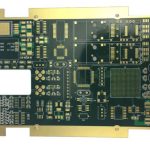
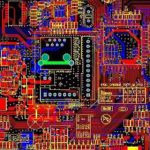
Today, almost every electronic product depends on one or more Printed Circuit Boards (PCBs) to provide electrical connections and support the operation of electronic components. From smartphones, automotive electronics, communication equipment, and industrial control systems to medical devices and intelligent wearable products, PCBs have become an essential foundation of modern electronic manufacturing.
With the rapid development of electronic technology, PCB designs are becoming increasingly smaller, thinner, and more integrated. Designers continue to push the limits of conductive materials by developing finer traces, higher layer counts, smaller components, and more complex circuit structures to meet the requirements of advanced integrated circuits.
As PCB technology advances, the challenges faced by PCB Assembly manufacturers are also increasing. High-density components, fine-pitch packages, microvias, and complex circuit designs require manufacturers to establish strict quality management systems. Any defect related to component placement, soldering quality, electrical performance, or dimensional accuracy may affect the reliability of the entire electronic product.
For large-scale production, even a small percentage of defects can lead to increased manufacturing costs, delayed delivery schedules, and potential failures in final applications. Therefore, professional PCBA Manufacturing suppliers must implement comprehensive inspection procedures to ensure every PCB assembly meets industry standards and customer requirements.
Kingda integrates advanced production equipment, professional engineering experience, and strict PCB Quality Control systems to provide reliable PCB manufacturing and assembly solutions for customers worldwide.
The Importance of PCB Quality Inspection
The purpose of PCB Quality Inspection is to identify manufacturing defects before products enter the market. A complete inspection system can effectively improve product reliability, reduce production risks, and ensure stable performance throughout the product lifecycle.
Modern PCB inspection is no longer limited to simple appearance checks. It includes multiple stages, such as:
- Incoming material inspection
- PCB fabrication inspection
- Component verification
- SMT assembly inspection
- Solder joint analysis
- Electrical performance testing
- Final functional verification
Through these inspection processes, manufacturers can detect problems at an early stage and prevent defective products from entering the next production stage.
For high-performance applications such as automotive electronics, telecommunications equipment, aerospace systems, and medical devices, strict PCB Manufacturing quality control is especially important because reliability and long-term stability are critical requirements.
Common PCB Defects During Manufacturing
During PCB production and assembly, several types of defects may occur due to material problems, process variations, or equipment limitations.
Common PCB assembly defects include:
Component Placement Errors
Incorrect component orientation, missing components, or inaccurate placement positions can affect circuit functionality.
Soldering Defects
Poor solder connections may cause:
- Cold solder joints
- Solder bridges
- Insufficient solder
- Excess solder
- Voids inside solder joints
These problems can reduce electrical reliability and may cause product failure.
PCB Surface Defects
Surface contamination, scratches, oxidation, and damaged solder mask areas can influence solderability and product durability.
Electrical Connection Problems
Open circuits, short circuits, incorrect resistance values, and signal integrity issues must be identified before final shipment.
A professional PCB Quality Control system helps manufacturers detect these problems efficiently and maintain consistent production quality.
Visual Inspection for PCB Assembly
Visual inspection remains one of the basic methods used in PCB Assembly quality verification, especially during prototype production and small-volume manufacturing.
Experienced inspectors examine PCB assemblies under suitable lighting conditions to identify visible issues, including:
- Incorrect component installation
- Damaged components
- Poor solder joints
- Surface contamination
- Mechanical defects
However, as PCB designs become smaller and more complex, human vision alone is no longer sufficient for detecting microscopic defects.
To improve inspection accuracy, manufacturers often use magnification equipment such as:
- Optical magnifiers
- Digital microscopes
- High-resolution inspection cameras
These tools allow engineers to observe small solder joints and fine-pitch component connections more clearly.
AOI Inspection Technology
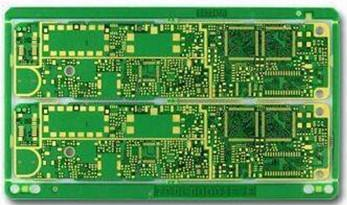
AOI Inspection (Automated Optical Inspection) is one of the most widely used inspection technologies in modern PCB Manufacturing.
AOI systems use high-resolution cameras and advanced image-processing algorithms to compare the actual PCB assembly with a predefined reference model.
AOI can automatically detect:
- Missing components
- Incorrect component positions
- Wrong polarity
- Solder bridging
- Insufficient solder
- Excess solder
- PCB surface abnormalities
Compared with manual inspection, AOI provides several advantages:
- Faster inspection speed
- Higher consistency
- Reduced human error
- Improved production efficiency
For mass production environments, AOI Inspection plays an important role in maintaining stable product quality.
Kingda applies advanced inspection methods throughout the manufacturing process to improve production reliability and ensure that every assembled PCB meets customer expectations.
X-Ray Inspection for Hidden Solder Joint Analysis
As electronic components become smaller and more integrated, many solder connections are located underneath components and cannot be inspected using traditional optical methods.
X-Ray Inspection provides a non-destructive method for analyzing hidden structures inside PCB assemblies.
It is especially suitable for:
- BGA packages
- QFN components
- High-density PCB assemblies
- Multi-layer circuit connections
X-ray inspection can identify:
- Solder voids
- Poor solder filling
- Internal cracks
- Hidden connection failures
Although X-ray equipment requires higher investment, it provides valuable information for improving assembly reliability and preventing hidden defects.
Electrical Testing Methods
Electrical testing is an essential part of PCB Quality Inspection because it verifies whether the circuit performs according to design requirements.
The most common electrical testing methods include:
In-Circuit Testing (ICT)
ICT uses multiple test probes to contact specific points on the PCB and measure electrical parameters.
It can verify:
- Resistance values
- Capacitance
- Circuit continuity
- Component performance
ICT is widely used in high-volume production because it provides fast and accurate testing results.
Flying Probe Testing
Flying probe testing uses computer-controlled probes to test PCB circuits without requiring a dedicated fixture.
Advantages include:
- Flexible testing capability
- Lower preparation cost
- Suitable for prototypes and small-batch production
Kingda selects appropriate Electrical Testing methods according to product requirements, ensuring stable and reliable PCB performance.
Functional Testing After PCB Assembly
Functional testing is the final verification stage of PCBA Manufacturing.
During this process, the assembled PCB is powered on and operated according to actual application requirements.
Functional testing verifies:
- System operation
- Communication performance
- Signal transmission
- Power stability
- Product functions
Unlike basic electrical testing, functional testing evaluates whether the completed PCB assembly performs correctly in real operating conditions.
This process helps manufacturers identify potential issues before products are delivered to customers.
Quality Control Management in PCBA Manufacturing
In addition to inspection equipment, professional manufacturers use quality management indicators to monitor production performance.
Two commonly used quality measurements include:
Defects Per Unit (DPU)
DPU measures the average number of defects found in each manufactured unit.
It helps manufacturers understand overall production quality.
Defects Per Million Opportunities (DPMO)
DPMO measures defects based on one million possible defect opportunities, allowing manufacturers to compare quality performance across different production processes.
By continuously analyzing these quality indicators, manufacturers can improve processes, reduce defect rates, and increase production efficiency.
PCB Design Review and Final Inspection
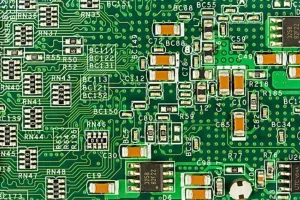
Before final shipment, engineers perform detailed reviews of PCB design and assembly quality.
Important inspection points include:
- PCB layout accuracy
- Trace routing quality
- Signal integrity
- Grounding design
- Solder mask coverage
- Component labeling
- Connector reliability
Engineers also verify that:
- No unnecessary electrical interference exists
- Pads and vias have proper protection
- Component information is clearly marked
- The PCB meets customer specifications
These final checks ensure that the completed product provides reliable performance in practical applications.
Conclusion
With the continuous development of electronic products toward higher integration, smaller size, and greater performance, the importance of PCB Quality Inspection continues to increase.
Reliable PCBA Manufacturing requires advanced inspection technologies, professional engineering knowledge, and strict quality management throughout the entire production process.
Methods such as AOI Inspection, X-Ray Inspection, Electrical Testing, and functional verification allow manufacturers to identify defects, improve reliability, and ensure consistent product performance.
As an experienced PCB manufacturer, Kingda focuses on providing high-quality PCB Assembly and PCB Manufacturing solutions supported by advanced inspection systems and professional quality control processes. Through continuous improvement and strict manufacturing standards, Kingda helps customers develop reliable electronic products for various industries worldwide.