Rail Transit Control Board PCB
In modern rail transit systems, control boards function as a central nervous system, managing train operation, signal transmission, equipment monitoring, and system coordination. The PCB inside these control boards provides the fundamental electrical and mechanical platform that enables these functions to operate reliably.
A Rail Transit Control Board PCB must maintain stable performance under complex operating conditions, including continuous vibration, mechanical shock, temperature fluctuations, electromagnetic interference, humidity, and long operating cycles. Reliable PCB design and manufacturing are therefore essential for supporting the safety, efficiency, and availability of railway transportation systems.
Special Requirements for Rail Transit Control Board PCBs
Vibration and Mechanical Shock Resistance
Railway equipment is continuously exposed to mechanical vibration and shock. Track joints, acceleration, braking, switching operations, and other mechanical events can place repeated stress on electronic assemblies.
A Railway PCB must therefore provide sufficient mechanical strength and reliable electrical connections throughout its service life. PCB material selection, board thickness, copper structure, via design, component attachment, and assembly processes should all be evaluated according to the actual operating environment.
For high-reliability applications, the PCB structure should be designed to minimize the risk of cracked solder joints, damaged vias, delamination, and other failures caused by repeated mechanical stress.
Thermal Stability
Rail transit equipment can operate across a wide range of temperatures. Outdoor trackside equipment may experience strong solar heating and cold conditions, while onboard electronic systems can also generate substantial internal heat.
Temperature changes cause materials to expand and contract. If the PCB structure is not properly designed, repeated thermal cycling can create mechanical stress and affect interconnections.
Using appropriate high-Tg materials, controlling the PCB stack-up, and providing an effective thermal-management strategy can improve stability under temperature fluctuations.
GOPCBA supports High-TG PCB Manufacturing for applications where thermal stability and long-term reliability are important design considerations.
Electromagnetic Compatibility
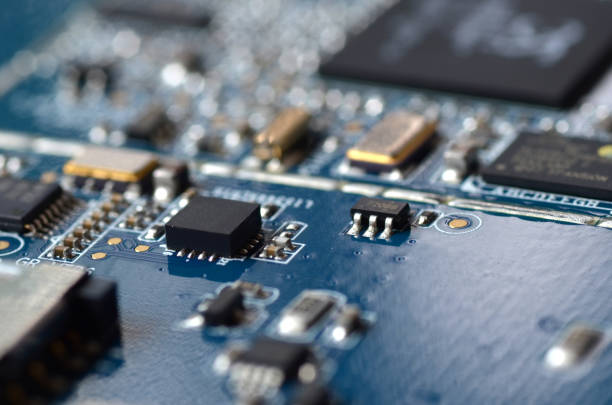
Electromagnetic compatibility is another critical requirement for railway control electronics.
Rail transit systems contain motors, traction equipment, power electronics, signaling systems, communication equipment, and other potential sources of electromagnetic interference. A control PCB must be designed to minimize susceptibility to external interference while also limiting unwanted emissions from its own circuits.
PCB layout plays an important role in EMC performance. Grounding, signal routing, power distribution, return-current paths, shielding structures, filtering, and layer-stack configuration should be considered together.
For sensitive control and communication circuits, a carefully engineered multilayer structure can provide dedicated signal, power, and ground layers while helping establish more predictable current-return paths.
Control Board PCB Applications Across Rail Transit Systems
Different rail transit applications place different electrical, mechanical, and environmental requirements on their control PCBs.
Onboard Train Control Boards
Onboard control boards support important functions such as traction control, braking, door control, passenger information, communication, and equipment monitoring.
Because these systems are installed directly on moving trains, the PCB must tolerate continuous vibration and mechanical shock while maintaining reliable electrical performance.
Traction Control Electronics
Traction control systems can involve relatively high currents and significant heat generation. Their PCBs therefore require appropriate current-carrying capacity and thermal management.
Heavy copper structures may be considered when the electrical design requires higher current capacity. At the same time, copper distribution, thermal vias, board thickness, and component placement must be evaluated to manage heat effectively.
Door Control Electronics
Door control modules typically have more stringent requirements for compact size and integration because installation space can be limited.
Their PCBs must combine compact circuit layouts with reliable mechanical connections and sufficient resistance to vibration. Robust component attachment and appropriate PCB construction can help improve reliability during repeated door-opening and closing cycles.
Railway Signaling Control Boards
Railway signaling systems are essential for managing train movements, maintaining appropriate train separation, and supporting operational safety.
Their PCBs require stable signal transmission and reliable electrical performance over extended operating periods.
Section Signaling Systems
Section signaling control boards process signals associated with railway sections and communicate information required for train operation.
Signal integrity can become particularly important when the system includes high-speed communication interfaces or sensitive signal-processing circuits. Appropriate impedance control, grounding, routing, and layer-stack design can help reduce unwanted signal degradation.
Station Interlocking Systems
Station interlocking systems coordinate signaling equipment, switches, and other railway infrastructure to support safe train routing.
Their control PCBs may need to interface with numerous devices while processing multiple signal channels. High-density multilayer structures can provide additional routing capacity while allowing different functional circuits to be organized across dedicated layers.
For complex applications, GOPCBA provides Multilayer PCB Manufacturing for high-layer-count and high-density PCB structures used in demanding electronic systems.
Trackside Equipment Control Boards
Trackside equipment is often installed outdoors and may remain exposed to rain, humidity, dust, temperature changes, and other environmental conditions for long periods.
Examples include switch machine controllers, overhead-line monitoring equipment, railway detection systems, and other trackside control devices.
Moisture and Corrosion Resistance
Outdoor railway electronics require effective protection against moisture and contamination.
PCB material selection, solder mask quality, surface finish, enclosure design, and conformal coating can all contribute to environmental protection.
Depending on the product architecture and operating conditions, conformal coating may be used to provide an additional protective barrier against humidity, dust, and other environmental contaminants.
Long-Term Reliability
Trackside equipment can be distributed over large geographical areas, making inspection and maintenance more difficult than for equipment installed in controlled indoor environments.
Consequently, a High-Reliability PCB should be manufactured with consistent materials and tightly controlled processes to reduce the probability of field failures.
Quality control should cover PCB fabrication, interconnections, plating, solderability, electrical testing, dimensional inspection, and other project-specific requirements.
PCB Manufacturing Processes for Rail Transit Control Boards
Railway control PCBs require consistent manufacturing processes because small variations can affect both electrical and mechanical performance.
Material Selection
The PCB material should be selected according to operating temperature, mechanical stress, electrical requirements, moisture exposure, and expected service life.
Depending on the application, manufacturers may use standard FR-4, high-Tg materials, high-performance laminates, or other specialized PCB materials.
The material system should also be evaluated together with the PCB layer count, copper thickness, dielectric thickness, and expected thermal cycling.
Precision Circuit Fabrication
Accurate circuit fabrication is important for maintaining dimensional consistency.
Manufacturing processes should control trace width, spacing, copper thickness, drilling accuracy, layer registration, and other critical parameters.
For multilayer railway control boards, accurate layer alignment is particularly important because it affects circuit connectivity, via structures, impedance, and overall board reliability.
Surface Finish
The surface finish should be selected according to the PCB’s application, assembly process, environmental conditions, and expected service life.
Common options include:
- ENIG
- HASL
- Lead-free HASL
- OSP
- Immersion tin
- Immersion silver
- ENEPIG
The selected surface finish should provide appropriate solderability, corrosion resistance, and contact reliability.
Electrical and Reliability Testing
Finished railway control PCBs should undergo appropriate inspection and testing before shipment.
Typical quality-control procedures may include:
- Visual inspection
- Dimensional inspection
- Automated optical inspection
- Electrical continuity testing
- Insulation resistance testing
- Dielectric withstand testing
- Plating inspection
- Solderability evaluation
- Impedance testing where required
- Reliability testing according to project specifications
Electrical testing helps identify open circuits, short circuits, insulation problems, and other manufacturing defects.
For assembled control boards, functional testing can provide an additional level of verification by evaluating whether the completed PCBA performs according to the intended electrical requirements.
GOPCBA provides PCBA Testing Services as part of its PCB assembly capabilities, supporting inspection and testing requirements for assembled electronic products.
The Role of PCB Design in Railway System Reliability
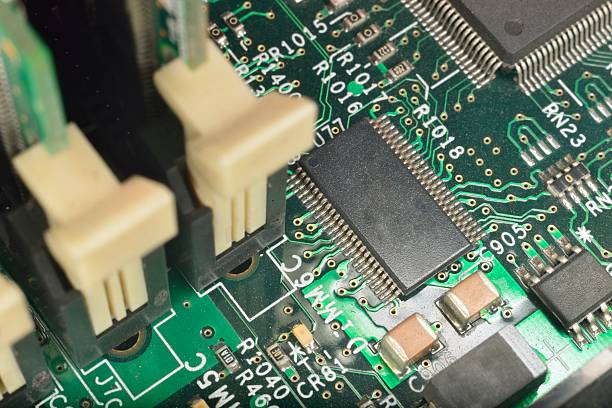
PCB reliability begins during the design stage rather than after manufacturing.
Engineers should consider the operating environment, electrical requirements, mechanical constraints, thermal conditions, EMC requirements, and manufacturing capabilities before finalizing the PCB layout.
Important design considerations include:
- Component placement
- Power distribution
- Ground-plane design
- Signal routing
- Thermal management
- High-current traces
- Differential pairs
- Controlled impedance
- Via structures
- Creepage and clearance
- Mechanical mounting
- Connector positioning
- Environmental protection
Early engineering review can identify potential manufacturing and reliability problems before production begins.
For complex railway electronics, PCB Design and Manufacturing Services can integrate PCB engineering, fabrication, assembly, and testing into a coordinated development process.
PCB Assembly for Rail Transit Control Boards
The bare PCB is only one part of a complete railway control board. Component selection, soldering quality, inspection, and functional testing also have a direct impact on system reliability.
Depending on the design, rail transit control boards may combine SMT components, through-hole components, connectors, relays, power devices, and other components.
Mixed-technology assembly can therefore be useful for control boards that combine high-density surface-mount components with mechanically robust through-hole components.
Assembly quality should focus on:
- Component placement accuracy
- Solder-joint quality
- Thermal profiles
- BGA and fine-pitch assembly
- Through-hole soldering
- AOI inspection
- Electrical testing
- Functional testing
- Conformal coating when required
- Final inspection
A complete manufacturing partner can help coordinate bare PCB fabrication and PCBA production, reducing the complexity of managing multiple suppliers.
PCB Reliability and Rail Transit System Performance
A rail transit control PCB does not operate independently. It works together with sensors, controllers, communication interfaces, power systems, actuators, and other electronic modules.
Reliable PCB performance contributes to faster signal processing, stable communication, accurate control commands, and predictable equipment operation.
For example, when a train control system receives a braking command, the relevant control electronics must process and transmit that command reliably to the appropriate subsystem. Similar requirements apply to door control, signaling, monitoring, communication, and diagnostic functions.
A robust PCB design and manufacturing process therefore contributes to the overall reliability and availability of the railway system.
Future Trends in Rail Transit Control PCB Technology
Rail transportation is becoming increasingly digital, connected, automated, and intelligent. These developments are driving new requirements for control electronics.
Future rail transit PCBs are likely to emphasize:
- Higher integration
- Greater routing density
- More compact form factors
- Improved thermal performance
- Stronger EMC performance
- Higher signal integrity
- Greater environmental resistance
- More reliable multilayer structures
- Advanced HDI technology
- Improved manufacturing traceability
As railway systems incorporate more sensors, communication modules, automated control functions, and intelligent monitoring, PCB technology will continue to play an important role in supporting these developments.
Higher integration may also increase the need for advanced multilayer, HDI, high-Tg, high-speed, and other specialized PCB technologies.
Why Choose GOPCBA for Rail Transit Control PCB Manufacturing?
GOPCBA provides PCB fabrication and PCBA manufacturing solutions for demanding industrial, transportation, telecommunications, automotive, and other electronic applications.
Its capabilities include multilayer PCB manufacturing, high-Tg PCB fabrication, HDI technology, high-speed PCB manufacturing, controlled-impedance structures, PCB assembly, component sourcing, testing, and other manufacturing services.
For rail transit control applications, GOPCBA can support requirements involving:
- Railway control PCBs
- Industrial control PCBs
- Multilayer PCBs
- High-Tg PCBs
- High-reliability PCBs
- High-speed signal boards
- HDI PCBs
- Heavy-copper PCBs
- Controlled-impedance PCBs
- SMT and through-hole assembly
- Prototype and production manufacturing
By integrating PCB fabrication, assembly, engineering review, and testing, GOPCBA can support customers from prototype development through production.
Conclusion
Rail transit control board PCBs operate in environments that are considerably more demanding than those encountered by many conventional electronic products.
Vibration, mechanical shock, temperature fluctuations, electromagnetic interference, humidity, dust, high-current requirements, and long operating cycles all need to be considered during PCB design and manufacturing.
A reliable Rail Transit Control Board PCB therefore requires an integrated approach covering material selection, multilayer construction, thermal management, EMC design, precision fabrication, surface finishing, assembly, inspection, and electrical testing.
As rail transportation becomes more intelligent and automated, control electronics will continue to become more integrated and sophisticated. PCB manufacturers with strong engineering capabilities and reliable manufacturing processes will play an increasingly important role in supporting the next generation of safe, efficient, and connected rail transit systems.