Renewable Energy Custom PCB Manufacturing Services – Full Analysis
December 6, 2025 — As the global energy mix rapidly shifts toward solar, wind, hydro, and energy storage systems, “high-reliability electronic control” has become the industry’s core. Within all renewable energy electronics, printed circuit boards (PCBs) carry critical functions: power transmission, signal processing, heat dissipation, insulation, and safety protection.
Unlike consumer electronics, renewable energy applications demand PCBs that must meet:
- High voltage & high current carrying capability
- Extreme temperature and humidity resistance
- Strong corrosion resistance
- Long service life and low failure rate
Therefore, custom PCB manufacturing has become the core need for solar inverter PCBs, wind control PCBs, storage BMS PCBs, EV charging station PCBs, and more.
This article provides a comprehensive analysis of renewable-energy custom PCB manufacturing: technical requirements, material selection, cost breakdown, reliability indicators, and GoPCB’s competitive advantages.
1. Critical Roles of PCBs in Renewable Energy Systems
1.1 Solar Inverter PCBs
- High voltage tolerance (600V–1500V)
- High thermal stability
- High power density
- Typical construction: 2~6 layer FR4 high-Tg, 2–4 oz thick copper; some modules use aluminum-core MCPCB for heat dissipation
1.2 Wind Turbine Controller PCBs
Must withstand strong vibration, thermal cycling, lightning strikes, and transient surges.
1.3 BMS PCBs for Energy Storage
Require precise current sensing, low noise, low crosstalk, and long-term communication stability.
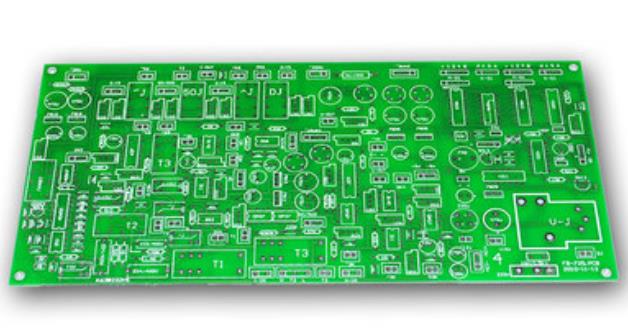
1.4 EV Charging / DC Fast-Charging PCBs
Need ultra-thick copper (6–10 oz), high dielectric strength, and superior thermal design.
1.5 Grid-Tie Systems & Power Converters
Include MPPT control boards, DC-DC, DC-AC conversion modules, etc.
2. Renewable Energy Grade PCB Manufacturing Requirements
2.1 High Voltage & High Current Capability
Typical system voltage: 48V–1500V. PCBs must have: increased creepage and clearance, high-CTI (600+) insulating materials, 2–10 oz thick copper conductors.
2.2 Thermal Management & Heat Dissipation
Common solutions: MCPCB (aluminum-core), high-thermal-conductivity fillers, dense thermal vias.
2.3 Specialized Material Selection
| Material | Application |
|---|---|
| FR4 High-Tg | Inverters, wind control |
| Aluminum-core (MCPCB) | LED, power supply heat sinking |
| Ceramic (Al₂O₃/AlN) | High-temperature modules |
| Rogers high-frequency | Wind monitoring, remote communication |
2.4 Environmental Durability
Renewable PCBs must resist UV exposure, salt spray, wide temperature swings, and high humidity.
2.5 EMC/EMI Control
Key techniques: multi-layer ground planes, routing to reduce parasitic inductance, shielding materials, and filter optimization.
3. Core Capabilities for Renewable Custom PCBs
- High-power custom stack-up – tailored to voltage and thermal needs
- Thick copper PCBs (2–10 oz) – for storage, inverters, power modules
- MCPCB (aluminum / copper base) – superior heat dissipation
- HDI boards – for compact IoT energy devices and sensors
- Rigid-flex PCBs – improved vibration resistance and longevity
- Conformal coating – moisture, salt spray, fungus, and dust protection
For advanced PCB design and layout services, GoPCB offers comprehensive DFM support. Learn more about PCB design & layout.
4. Renewable Energy PCB Manufacturing Process
- 4.1 DFM engineering review – GoPCB team provides manufacturability optimization
- 4.2 Material prep & lamination – high-Tg / high-CTI materials
- 4.3 Pattern transfer & plating – uniform copper deposition for high-current paths
- 4.4 Drilling & metallization – laser micro-vias, blind/buried, via filling
- 4.5 Surface finishes – ENIG, ENEPIG, lead-free HASL, OSP
- 4.6 Testing & certification – high-voltage insulation, AOI, thermal cycling
5. Quality Standards & Certifications
- ISO 9001 / ISO 14001
- IPC-A-600 / IPC-6012 Class 2, Class 3
- UL, RoHS, REACH
- HALT/HASS, thermal shock, life testing
6. Cost Structure & Price Ranges for Renewable PCBs
6.1 Cost Factors
Layer count, material type, copper weight, size, surface finish, reliability test level.
6.2 Prototype vs. Volume
Prototyping has higher unit cost but enables validation; volume production significantly reduces cost.
6.3 Typical Price Ranges (USD)
| PCB Type | Specification | Price (USD) |
|---|---|---|
| 2-layer FR4 | 2 oz copper | $0.8–$1.6/pcs |
| 4-layer FR4 high-Tg | 1–2 oz | $2.5–$5.0/pcs |
| MCPCB aluminum | thermal grade | $3.5–$8.0/pcs |
| 6 oz thick-copper high-power | industrial | $6–$18/pcs |
6.4 Cost-Reduction Strategies
- Panelization optimization
- Use standard stack-ups
- Control blind/buried via types
- Avoid non-standard exotic materials
7. GoPCB: Renewable Energy Custom PCB Manufacturing Capabilities
7.1 About GoPCB
GoPCB specializes in high-reliability industrial and renewable energy PCB manufacturing, with expertise in high-current, high-thermal, thick-copper structures.
7.2 Core Capabilities
- 1–20 layers
- Thick copper 2–10 oz
- Aluminum-core / ceramic / Rogers high-frequency
- 48-hour quick-turn prototypes
7.3 Real Price Examples
| Application | Specification | Unit Price (USD) |
|---|---|---|
| Solar inverter PCB | 4-layer 2 oz | $2.8/pcs (1000 pcs) |
| Energy storage BMS PCB | 6-layer HDI | $5.5/pcs (500 pcs) |
| Wind control PCB | 2-layer 4 oz | $3.2/pcs (2000 pcs) |
7.4 Lead Time
- Prototype: 48–72 hours
- Volume: 7–12 days
7.5 Application Areas
- Solar photovoltaic inverters
- Energy storage BMS
- Wind turbine monitoring & control
- New energy power conversion modules
GoPCB provides full PCB manufacturing and turnkey PCB assembly services, ensuring seamless production for renewable energy projects.
8. Custom PCB vs. Standard PCB for Renewable Applications
| Feature | Custom PCB | Standard PCB |
|---|---|---|
| Copper thickness | Up to 10 oz | Typically 1 oz |
| Heat dissipation | Excellent | Moderate |
| Environmental resistance | High | Moderate |
| Cost | Higher | Lower |
| Service life | Long | Moderate |
9. How to Choose a Renewable Energy PCB Manufacturer
- Thick copper processing capability
- High-frequency / high-voltage design experience
- MCPCB & ceramic board manufacturing experience
- Material inventory (Rogers, ceramic, aluminum-core)
- Test equipment: flying probe, AOI, high-voltage insulation
- Engineering support: DFM, stack-up, EMC optimization
- Green manufacturing (ISO 14001)
GoPCB excels in all these areas, offering prototype PCB assembly and low-volume PCB assembly to meet diverse project needs.
10. Common Problems & Solutions in Renewable PCB Manufacturing
- High-temperature failure: use MCPCB / ceramic
- High-frequency noise & harmonic interference: multi-layer ground + EMI shielding
- Outdoor corrosion: ENIG + conformal coating
- Vibration fatigue: rigid-flex boards, reinforced vias
- High-current heating: 6–10 oz thick copper + thermal via array
11. FAQ
- Q1: Which PCB material is best for solar inverters?
FR4 high-Tg (150–170°C) with 2–4 oz copper. - Q2: What copper weight is needed for BMS PCBs?
Typically 1–2 oz; high-current versions up to 3–6 oz. - Q3: What are the main threats to wind control boards?
Vibration + lightning surges; thick copper and robust protection are essential. - Q4: Does GoPCB offer quick-turn prototyping?
Yes, 48–72 hours. - Q5: Are renewable PCBs more expensive than consumer PCBs?
Yes, due to thick copper, high voltage, and high-reliability testing.
12. Conclusion
Renewable energy equipment demands PCBs with superior voltage, thermal, stability, and environmental resilience. Choosing a manufacturer with thick copper, MCPCB production, high-voltage testing, and robust engineering support is critical for long-term system reliability.
GoPCB delivers cost-effective, quick-turn, renewable-energy-focused PCB manufacturing to help global customers build more efficient and reliable solar, wind, and storage power systems.
For more information on our services, visit GoPCB official website.
Explore our SMT PCB assembly and through-hole PCB assembly options for complete manufacturing solutions.