Direct Bonded Copper PCB vs Traditional PCB Materials: Complete Guide
High-power electronics places demands that ordinary circuit board materials cannot always meet. When a module must switch hundreds of amperes, shed heat from IGBTs or SiC devices, and survive years of thermal cycling, the board itself becomes a thermal component. Direct bonded copper (DBC) substrates answer that challenge by joining thick copper directly to a ceramic base, creating a structure with excellent heat spreading, strong electrical insulation, and high mechanical reliability. Engineers increasingly choose DBC for EV power electronics, motor drives, photovoltaic inverters, and automotive lighting, while conventional materials such as FR-4 and aluminum-based IMS boards remain the workhorses of mainstream electronics. This guide compares direct bonded copper PCB technology with traditional PCB materials across manufacturing, thermal performance, electrical behavior, reliability, cost, and applications.
What Is a Direct Bonded Copper PCB?
A direct bonded copper PCB uses a ceramic substrate, normally alumina (Al2O3) or aluminum nitride (AlN), onto which copper layers are bonded at high temperature without adhesive. The copper and ceramic are heated together to roughly 1065 degrees Celsius, close to the copper-oxygen eutectic point, so that a thin copper-oxide layer forms and creates a strong metallurgical bond. The result is a composite board where thick copper conductors sit directly on a thermally conductive, electrically insulating ceramic body.
The construction differs fundamentally from a standard laminate. There is no glass fabric, no resin, and no adhesive layer between the copper and the dielectric. Removing the adhesive eliminates the weakest link that limits thermal performance and long-term reliability in conventional boards, which is why DBC handles power densities that would quickly damage FR-4. Boards of this type appear in IGBT modules, motor drives, on-board chargers, solar inverters, high-power LED drivers, and other designs where junction temperatures and current levels are high.
Traditional PCB Materials in Perspective
Conventional PCB materials include FR-4 epoxy-glass laminates, aluminum-based insulated metal substrates, and standard copper-clad laminates. FR-4 is the default for consumer and industrial electronics because it is inexpensive, easy to fabricate, and versatile. Aluminum IMS boards add a metal backing for moderate heat spreading and appear in LED lighting, power supplies, and automotive modules. Both families work well for low- and medium-power products, but their thermal conductivity is limited, which constrains power density and can shorten service life in demanding environments.
FR-4 conducts heat at roughly 0.3 to 0.4 W/m·K, and even aluminum IMS boards conduct only about 1 to 2 W/m·K through their dielectric layer. Those numbers are far below the 20 to 30 W/m·K of alumina DBC and the 170 to 230 W/m·K of aluminum-nitride DBC. When the heat flux is low, the difference barely matters; when the module dissipates tens or hundreds of watts per square centimeter, it determines whether the design survives.
Manufacturing Process Comparison
The DBC fabrication process is a high-temperature bonding operation rather than a lamination step. Copper foil and ceramic are stacked and heated so the copper forms a eutectic bond directly with the ceramic surface. Because no organic adhesive is used, the interface resists voiding and delamination, and the copper layer can be patterned afterward by etching or laser processing to create circuits. The process produces copper layers typically ranging from 35 to 600 micrometers, letting designers carry very high currents without thick busbars.
Conventional PCB manufacturing laminates copper foil onto prepreg under heat and pressure, with resin acting as the adhesive. The organic bond is adequate for standard products but degrades under repeated thermal cycling: resin systems soften near their glass transition temperature, and mismatched expansion between copper, glass, and resin gradually stresses the laminate. Over years of operation, laminates can crack or delaminate in power applications, while the ceramic-copper bond of DBC remains stable across far wider temperature swings.
Thermal Performance and Heat Management
Heat spreading is the core reason engineers select DBC. Alumina substrates conduct heat at 20 to 30 W/m·K, about seventy times better than FR-4 and roughly ten to twenty times better than the dielectric layer of an aluminum IMS board. Aluminum nitride goes further, reaching 170 to 230 W/m·K with a coefficient of expansion close to silicon, which makes it valuable for high-power IGBT and SiC modules that mount bare dies. The thick copper layers also spread heat laterally, reducing hot spots under the die and lowering junction temperature for the same dissipation.
Better heat spreading changes the whole system design. A DBC module may eliminate a heat spreader layer or allow a smaller heatsink, and it keeps junction temperatures lower under transient loads, which extends semiconductor lifetime. Designers should compare the full thermal path, from die to case, rather than looking only at board cost. In many power systems, the savings in cooling hardware and the gain in reliability outweigh the higher substrate price.
Electrical Performance and Insulation
DBC substrates combine high current-carrying capacity with strong electrical insulation. The ceramic layer provides dielectric strength of roughly 10 to 15 kV/mm for alumina and 17 to 20 kV/mm for aluminum nitride, values far above FR-4 and similar to the best conventional materials. Because the copper is thick and bonded directly, DBC carries high current with low resistance and tolerates voltage stress better than adhesive-based constructions, which can fail through the organic layer under repeated high-voltage pulses.
For standard digital circuits, FR-4 remains entirely adequate and far cheaper. The advantage of DBC appears in power switching, where currents are large and voltage transients are severe. In traction inverters, charging systems, and industrial drives, the insulation system must survive both high DC-link voltages and fast switching edges, and the stable ceramic dielectric of DBC provides a safety margin that resin-based boards cannot match.
Mechanical Strength and Reliability
Reliability testing highlights the difference between bonded ceramic and laminated resin systems. DBC copper adhesion typically exceeds 10 N/mm, and the ceramic-copper interface withstands thousands of thermal cycles without forming cracks at the bond line. The structure is rigid and dimensionally stable, which matters for modules that are potted, screwed down, or exposed to vibration in vehicles and industrial equipment.
Conventional laminates face well-documented failure modes in power applications: copper migration under voltage stress, cracking of plated vias from expansion mismatch, and delamination after repeated thermal shock. These failures are rare in benign environments but dominate field returns in harsh ones. For mission-critical systems, the reliability margin of DBC translates directly into lower warranty costs and longer service intervals, which is why automotive and energy customers qualify ceramic substrates so carefully. Verification programs that combine electrical test and thermal cycling with PCBA testing give OEMs the data needed to approve ceramic modules for production.
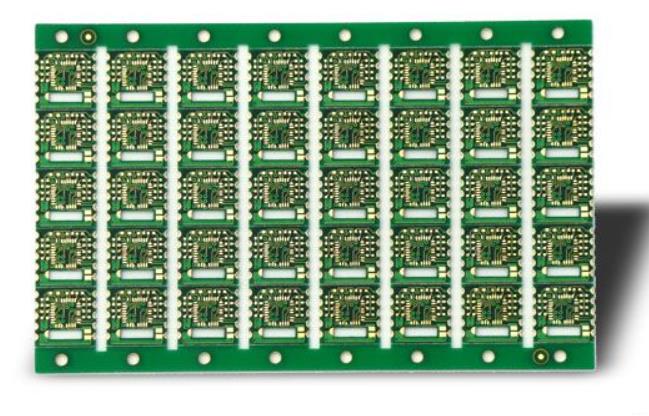
Cost Comparison: DBC vs. FR-4 vs. Aluminum IMS
Price differences between the material families are significant. Conventional FR-4 boards typically cost USD 0.25 to 2.2 per piece, and aluminum IMS boards run from USD 1 to 3 per piece, depending on size, layer count, and quantity. DBC substrates are more expensive, generally USD 3.8 to 9.5 per piece, with the exact figure set by the ceramic grade, copper thickness, pattern complexity, and order volume. Aluminum-nitride versions sit at the top of the range because the raw material and sintering process cost more than alumina.
Cost per piece, however, is the wrong number to optimize in power electronics. A DBC module can run at higher junction temperature margins, use a smaller heatsink, and avoid a separate thermal pad or baseplate. When system cost, cooling design, and field failure rates are included, ceramic substrates frequently deliver a lower total cost of ownership. The decision framework should be system-level, not a line-item comparison of substrate prices.
Applications: Where Each Material Belongs
DBC substrates dominate high-power modules: IGBT power modules for industrial drives, motor controllers for EVs, photovoltaic and wind inverters, on-board chargers, and high-brightness automotive LED lighting. These applications share a common profile of high current, high switching frequency or high ambient temperature, and long service life requirements. The same properties also make DBC suitable for laser diode packages, aerospace power supplies, and railway traction electronics.
Traditional materials remain the right answer for a much larger volume of products. Smartphones, tablets, routers, USB devices, and most low-power consumer electronics never approach the power density that justifies ceramic. Between the extremes, aluminum IMS covers mid-power LED and power-supply designs. Engineers should choose by requirement: operating temperature, power density, mechanical stress, environmental conditions, and total system cost, rather than by habit or fashion. Because ceramic modules rely on specialized soldering and bonding steps, working with an assembly partner that understands DBC handling, such as a service with proven SMT PCB assembly experience, reduces yield loss during ramp-up.
How to Select the Right Substrate
A practical rule of thumb used by power electronics teams: if the design power density exceeds about 30 W/cm2, evaluate DBC ceramic substrates seriously. Below that level, aluminum IMS or improved FR-4 grades may be sufficient. The comparison should also weigh thermal cycling requirements, isolation voltage, and whether the module will be potted or encapsulated, because encapsulation changes how heat leaves the top surface.
When a project moves to DBC, work with a manufacturer that can support the whole chain. Ceramic quality, copper thickness control, pattern etching, and testing all affect yield, so the substrate supplier should document materials and test data as carefully as a conventional PCB manufacturing partner documents laminate lots. Power modules often combine the ceramic substrate with surrounding control electronics, which makes a partner that offers both fabrication and assembly experience valuable for time to market.
Advantages and Limitations at a Glance
The strengths of direct bonded copper are clear: outstanding heat spreading, high dielectric strength, long thermal-cycle life, and high current capacity. The trade-offs are equally real: higher substrate cost, more complex manufacturing, and less design flexibility than standard laminates. Ceramic boards are brittle compared with resin boards, so mechanical mounting must be planned carefully, and large-area substrates need support to avoid cracking under mechanical stress.
Traditional boards offer low cost, easy fabrication, and mature supply chains, with the limitation that their thermal conductivity and long-term stability cap the usable power density. In practice, most products are best served by conventional materials, and only genuinely high-power modules need DBC. The engineering skill is knowing where the boundary lies for each specific design.
Future Trends in DBC Technology
Demand for direct bonded copper is growing with the electrification of transport and the expansion of renewable energy. EV traction inverters, on-board chargers, data-center power management, and solar inverters all push power density upward, and silicon carbide devices operating at higher junction temperatures favor aluminum-nitride substrates whose expansion matches the die. High-brightness automotive LED lighting is another growth area, because ceramic substrates handle the heat of compact, densely packed emitters.
Process development continues on thicker copper, finer patterning, and larger panel formats to lower cost per module. Active-metal-brazed substrates and hybrid constructions that combine DBC islands with standard laminate areas are extending the design space. As volume grows, ceramic substrate prices are expected to ease gradually, bringing DBC into modules that previously could not justify it.
Direct Bonded Copper PCB FAQ
Q1: Is DBC suitable for consumer electronics? Usually not. Standard FR-4 handles consumer power levels, and ceramic adds cost without benefit unless the design has high power density or extreme thermal requirements.
Q2: How much more expensive is DBC than aluminum IMS? In typical configurations DBC costs roughly two to four times more than an equivalent aluminum IMS board, before system-level savings in cooling are counted.
Q3: What copper thickness range is available? Common DBC copper layers range from 35 to 600 micrometers, selected according to the current each trace must carry.
Q4: Can DBC substrates be built into multilayer stacks? Yes, multilayer ceramic modules are possible, but they require specialized process steps and careful design rules, so they are usually reserved for high-value applications.
Q5: Which ceramic should I choose, alumina or aluminum nitride? Alumina is the economical default; aluminum nitride is worth its premium when heat flux is extreme or die expansion matching is critical.
Conclusion
Direct bonded copper PCB technology earns its place in high-power electronics through thermal performance, electrical insulation, and mechanical reliability that conventional laminates cannot match. It costs more per board, but it simplifies cooling, raises current capability, and extends module life, which usually improves total system economics in traction, energy, and industrial applications. For everything from IGBT modules to EV chargers and solar inverters, pairing the right ceramic substrate with an experienced fabrication and prototype PCB assembly partner gives power electronics teams a reliable path from first samples to volume production.