PCB Manufacturing Industry Outlook: Trends and Growth Drivers
Why the PCB Manufacturing Industry Is Entering a New Growth Phase
The PCB manufacturing industry has always worked quietly behind the products we rely on, but today it sits at the center of the electronics economy. Every connected device, from a smartphone to an industrial controller, depends on a printed circuit board to carry power, signals and data between its components. As the Internet age gives way to the intelligent era, smart equipment is spreading into every corner of daily life, and each new product adds to the demand for boards. Engineers and market analysts who follow the sector broadly agree that the industry is starting a new phase of expansion driven by changes in communications, computing and electronics rather than by simple population growth.
The reasoning behind that view is easy to follow. Smart tools have become indispensable, and they now sit in homes, vehicles, factories, hospitals and public infrastructure. Wherever a network connection exists, a printed circuit board assembly is usually nearby, quietly handling the signals that make the device useful. Future smart products will lean even harder on fast connectivity and will evolve toward capable, self-learning systems, which means more electronic content in every unit that ships. The direction of the market is clear: the number of boards produced, the density of components on them and the complexity of their designs will all keep rising together.
Several converging trends explain why this moment differs from earlier cycles. Communication networks are being rebuilt around 5G, which needs many more radio and processing boards than the systems it replaces. Computing is shifting to cloud services, creating steady demand for servers, switches and storage. The automotive industry is electrifying and automating vehicles, multiplying the board area inside every car. And new generations of mobile and wearable devices keep reaching record shipment volumes. Together these forces form what many observers call the four main pillars of future electronics demand.
The Four Demand Pillars Reshaping the PCB Market
5G is probably the strongest single driver for the PCB manufacturing industry over the next several years. A 5G base station contains far more antenna, radio frequency and backhaul boards than a fourth-generation station, and network rollout continues across most of the world. Because high-frequency materials, tight impedance control and dense layer stacks are required, the value of each board is higher than in earlier network generations, which lifts the whole sector rather than only its volume.
Cloud computing is the second pillar. Data centers are being expanded to host streaming, enterprise software and artificial intelligence workloads, and every server, switch, accelerator and storage unit is built around printed circuit boards. AI training clusters in particular demand large, high-layer-count motherboards and fast interconnect cards, pushing both materials technology and assembly capability. The segment is growing quickly enough to change the product mix of the entire supply chain, not only of the biggest factories.
Automotive electronics and new-generation mobile devices complete the picture. A modern electric vehicle carries several times the board area of a conventional car, spread across battery management, powertrain, driver assistance and infotainment systems, and those boards must tolerate vibration, temperature extremes and a long service life. Smartphones, tablets and wearables likewise appear in new generations every year with denser packaging and more wireless modules.
Every one of these products is populated with surface mount technology, so the growth of the four pillars is also the growth of the SMT industry, from placement capacity to reflow and inspection equipment. OEMs that want to ride this wave usually start by selecting an experienced SMT PCB assembly partner early, so that board design, process choices and capacity plans are made together rather than patched together later.
Growth Forecasts for the Next Five Years
Because the four pillars are expanding at the same time, most published outlooks for the sector are strongly positive. Some industry estimates have put the annual comprehensive growth of the PCBA manufacturing industry at as much as twelve percent over the next five years, a figure that would make printed circuit boards one of the fastest growing hardware segments in electronics. Not every forecast is that optimistic, and actual results will depend on the pace of 5G rollout, consumer spending and the health of the global economy, but the direction of travel is not seriously disputed: the capacity that exists today will begin to look insufficient before the decade is out.
Foreign markets add a further layer of opportunity. Demand from overseas buyers, which contracted during the years of disrupted supply chains, has been recovering slowly and steadily, and customers are returning to manufacturers that can show mature processes, clean documentation and dependable delivery. The supporting industries are growing with the market as well: components, solder paste, placement machines, inspection systems and substrate materials all follow the same curve. For board producers, the practical question is no longer whether growth will come, but whether their production lines, quality systems and engineering teams are ready for it.
Integrated Circuits and the Board Industry Grow Together
The history of industrial progress is the history of technology and industry reinforcing each other, and microelectronics is the clearest example in our time. Integrated circuits are the foundation of the information industry, and together with software they form the core of modern computing. Governments treat semiconductor capability as a strategic priority and support the weak links in the upstream and downstream electronics chain, because the sector shapes economic growth, employment and competitiveness. Every advance in that chain, however, must reach the physical world through a printed circuit board, which is why chip innovation and PCB manufacturing develop as one story rather than two.
That relationship is becoming more visible as conventional chip scaling approaches its physical limits. Instead of placing every function on a single die, designers combine chips with advanced packaging, chiplets and high-speed interconnects, and the board underneath must keep up with higher signal rates, finer features and tighter thermal budgets. Boards are growing in layer count, adopting HDI microvias and moving to low-loss materials for high-speed channels. This is why modern PCB manufacturing is an engineering discipline rather than a routine job: the choices made on the factory floor decide whether a leading edge chip can actually deliver its performance inside a product.
Smarter Devices, Denser Boards, Higher Stakes
Consumer electronics is moving toward more intelligent, context-aware products. Smart speakers, health monitors, augmented reality glasses and home robots must sense their surroundings, connect to the cloud and make decisions locally, and every added function brings sensors, memory, radios and power management onto the board. Because these devices have to fit into smaller and thinner enclosures, the PCB design layout determines whether the product is practical to manufacture: routing space, component clearance, thermal relief and assembly access all need to be settled before the first prototype is ordered.
The stakes are higher than in earlier consumer cycles. A medical wearable or an industrial sensor may run for years on a small battery, so the board must be efficient as well as compact, and devices that operate unattended cannot tolerate intermittent solder joints. That reality pushes manufacturers toward controlled processes, automated optical inspection, X-ray checks of hidden joints and thorough functional testing. Designers who keep these constraints in mind from the start avoid the most common failure modes, and manufacturers who test at every stage protect customers from field failures.
Capabilities That Will Separate the Leaders
The companies that grow fastest will be those that can build what the four pillars need. High-frequency laminates with controlled impedance are required for 5G and automotive radar, HDI construction with microvias is standard in compact consumer products, and thicker copper with sound thermal management serves power electronics and electric vehicles. Registration accuracy, panel utilization and process capability set the cost structure, so advanced fabrication equipment is a competitive weapon rather than a luxury.
Assembly technology matters just as much. Fine-pitch packages, bottom-terminated components, mixed-technology boards and rigid-flex constructions all make heavier demands on placement, soldering and inspection. Alongside the machines stands data: good manufacturers record process parameters, trace materials and keep first-article records, because customers increasingly demand proof of quality rather than promises. That is why PCBA testing, from automated optical inspection to functional test, has moved from an optional step to a standard requirement in serious programs.
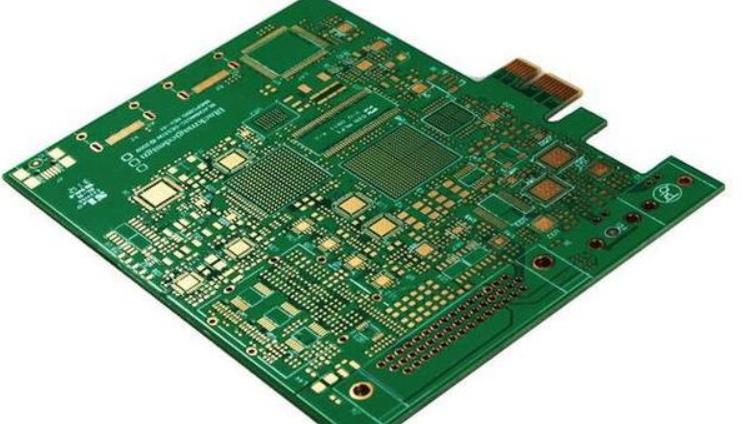
What Buyers Should Do Now to Prepare for Growth
For companies designing the products of the next decade, preparation starts before production. Specifications should be realistic about materials and tolerances, and the design should be reviewed for manufacturability while changes are still cheap. A common route is to validate a small prototype batch, resolve the process issues and only then move to volume, because the cost of a design error multiplies at every step of the ramp.
Buyers should also look at the whole chain rather than at a single price. Component availability, material lead times, testing coverage and documentation decide whether a program ships on schedule, so the choice of supplier should rest on engineering depth and process control as much as on cost. A manufacturer that combines fabrication, assembly and testing under one roof removes the hand-off risk between separate vendors and offers a single point of accountability, which becomes more valuable as volumes and expectations both rise.
How gopcb Prepares for the Future of PCB Manufacturing
gopcb follows exactly this logic when it invests in people, equipment and processes. Its fabrication lines build multilayer and HDI boards for communication, automotive and industrial applications; its assembly lines cover surface mount and mixed-technology production; and every order passes through defined quality gates with documented results, from incoming component checks to automated optical inspection and final testing. The engineering team reviews each design before production, verifies impedance requirements and assembly clearance, and agrees on the process with the customer at the quotation stage, so that quality is planned rather than inspected in afterwards.
For customers who want the entire chain handled by one supplier, board fabrication, component procurement and assembly can be combined through turnkey PCB assembly, keeping design files, materials and quality records under one roof from prototype to volume production. Send gopcb your Gerber files, bill of materials and target volumes for a free DFM and manufacturability review, and the team will recommend the board construction, assembly process and test strategy that fit your product for the growth years ahead.